
Reviewed · HARLEM TOURS
Harlem Walking Tour: Mount Morris Park Historic District w/ Lunch
Harlem reads like a living textbook. This 3-hour guided walk through the Mount Morris Park Historic District is a practical way to see architecture, neighborhood life, and a few big historical moments, without relying on random wandering. I especially liked the mix of buildings and stories (St. Martin’s Episcopal Church has layers you can spot up close) and the fact that lunch is included, with lots of good feedback about portion size and choice. One thing to consider: the pace can be slower than you expect, and some versions run longer than 3 hours.
I love that guides here are often long-time Harlem residents, like Doris, who’s described as a local fixture and a true walking storyteller. You’ll cover landmarks most people miss when they only aim for Broadway, and you’ll get your bearings fast with a real route and context. The main drawback is that you’re on foot for a few hours, so bring comfortable shoes and be ready to hear your guide over street noise at certain stops.
In This Review
- Key highlights worth planning for
- Why Mount Morris Park Harlem Works Better on a Walking Tour
- Price and value: what $82 buys you (and what it doesn’t)
- Getting started at 145 W 122nd St (and how to time your day)
- St. Martin’s Episcopal Church: Romanesque Revival plus hidden symbolism
- The “Welcome to Harlem” orientation stop (why it matters)
- Marcus Garvey Memorial Park: a quieter 30 minutes with big-name history
- Apollo Theater stop: street-level context for a music icon
- Lunch included: where the tour actually scores points
- What your guide adds (and why Doris shows up so often)
- How long will it really take? (3 hours on paper, time in the streets)
- Who this Harlem tour is best for
- Should you book the Harlem Walking Tour with Lunch?
Key highlights worth planning for
- St. Martin’s Episcopal Church details you can actually see, including Romanesque Revival architecture and symbolic features
- Marcus Garvey Memorial Park stop (plus the 1960 Fidel Castro connection tied to the area)
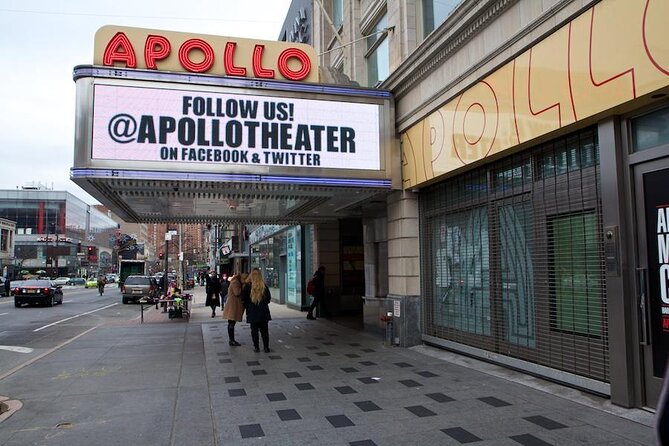
- Apollo Theater exterior stop with neighborhood context that’s easier than reading alone
- Lunch included at a local eatery, with reports of plentiful portions and options for different diets
- Small-group feel (maximum 30) guided by local residents, not a giant bus-tour script
More of Harlem, from gospel to soul food
- NYC Highlights Tour: Bronx, Brooklyn, Harlem, Queens & Coney
★ 4.5 · 2,846 reviews - NYC: Contrasts Tour of Harlem, The Bronx, Queens & Brooklyn
★ 4.5 · 2,167 reviews - NYC: Harlem Hallelujah! Gospel Wednesday Concert
★ 4.7 · 1,638 reviews - New York City: Harlem Gospel Live Music Concert
★ 4.7 · 1,479 reviews
Why Mount Morris Park Harlem Works Better on a Walking Tour
If you’ve ever tried to “see Harlem” on your own, you know the problem: you can walk for hours and still not understand what you’re looking at. This tour fixes that. You’re not just passing buildings—you’re being shown what matters and why it matters.
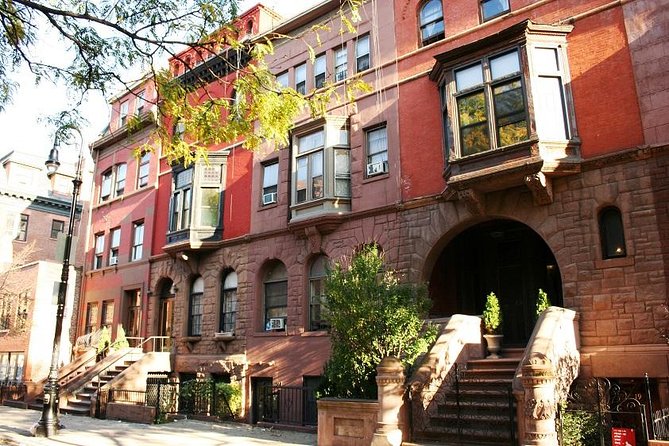
Mount Morris Park Historic District is the sweet spot for architecture and community history. You get streetscapes that feel lived-in, plus a few landmark stops that help you connect Harlem’s past to the present-day neighborhood. And because the tour has a set route, you won’t waste half your time figuring out where to go next.
Price and value: what $82 buys you (and what it doesn’t)
At $82 per person for about 3 hours, the best value part is that it bundles a professional guide and lunch. Many walking tours charge similar prices but leave you to pay for your meal separately. Here, the cost structure is simple: you’re paying for guided time plus food.
Also, the stops are marked as free for admission at the points you’ll visit, so you’re not stacking extra entry fees on top. You should still budget time for walking shoes, water, and anything you want to buy during breaks.
What’s not included: hotel pickup and drop-off. You’ll need to get yourself to the start.
Getting started at 145 W 122nd St (and how to time your day)
The tour starts at 145 W 122nd St at 11:00 am. It ends in Harlem. That sounds simple, but timing matters in a city like New York, where transfers can chew up your schedule.
I like starting at late morning because you’re not rushing out at dawn, and you’re set up for a relaxed lunch mid-tour. If you’re pairing this with other Harlem plans, I’d give yourself breathing room afterward—some people report tours running longer than the stated length, depending on pace and how the group gels.
Practical tip: bring layers. Even in comfortable weather, you’ll be outside long enough for the temperature to shift. And yes, it’s a walking tour—so wear shoes you trust.
New York City at street level, a few more walks


St. Martin’s Episcopal Church: Romanesque Revival plus hidden symbolism
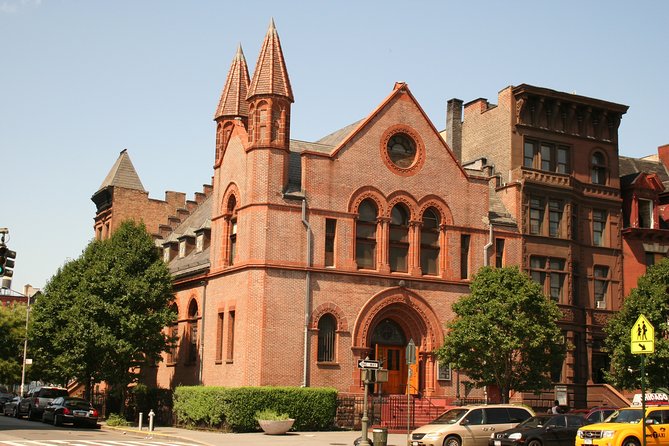
This is one of the stops where the tour earns its keep. St. Martin’s Episcopal Church is described as a stunning Romanesque Revival building constructed between 1887 and 1889. It became a recognized landmark in 1966, so you’re standing in a place with official preservation status, not just a pretty facade.
But the story doesn’t stop at the architecture. The church’s history includes community shifts: since 1928, it has been one of several congregations founded by Caribbean immigrants. That gives you a real sense of how Harlem has constantly reshaped itself through migration and neighborhood growth.
Then comes the detail that makes you slow down and look. The building’s earlier religious use connects to Jewish community history in Harlem. It was originally Temple Israel, tied to the first Jewish congregation incorporated in Harlem as Hand-In-Hand in 1873.
When you’re there, look closely for symbolic features:
- Stars of David are mentioned as being in leafy capitals on four Corinthian columns
- You can also find them embedded in window casements
That’s the kind of information you simply won’t pick up wandering. You’ll come away seeing the building as a layered record of people, worship, and cultural change.
Possible drawback: at this kind of architectural stop, the street can be busy. If you’re sensitive to noise, position yourself where you can hear your guide without getting pushed back into traffic flow.
The “Welcome to Harlem” orientation stop (why it matters)
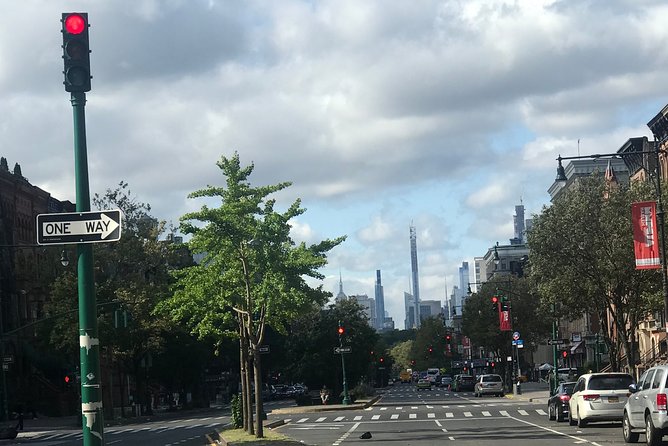
There’s a shorter orientation moment built into the schedule (about 15 minutes). Even though it’s not the longest stop, it’s useful because it gives you a framework for the rest of the walk.
This is where the guide typically helps you connect what you’re seeing—housing styles, church facades, and street layout—with the bigger story of Harlem’s development. You’ll also learn how to read the neighborhood like a map: what to notice first, what’s local, and what’s tied to major eras (Harlem’s music scene, civil rights-era changes, and more).
On a first visit, this kind of orientation reduces that post-tour feeling of I saw things, but I don’t know what they meant.
Marcus Garvey Memorial Park: a quieter 30 minutes with big-name history
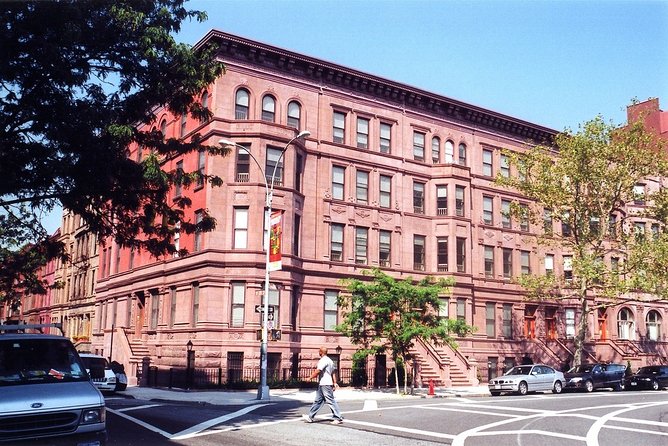
Next you’ll spend about 30 minutes at Marcus Garvey Memorial Park. The tour frames it as one of New York City’s oldest parks, which is a nice reminder that Harlem isn’t only made of museums and stages. It has green space and daily life.
The park also connects to a major historical reference: one of the architectural gems in this area is described as the place where Fidel Castro spoke in 1960. That’s the kind of fact that changes how you think about a neighborhood. You’re standing in a spot that mattered on the global stage, not just a local corner.
What to expect in practice: this stop tends to be a “pause and absorb” moment. You’ll likely get a slower conversation from your guide and a few photo opportunities that feel less frantic than street-level walking.
Apollo Theater stop: street-level context for a music icon
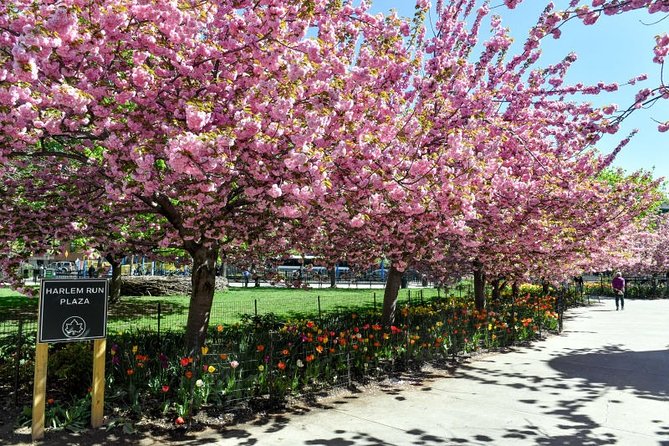
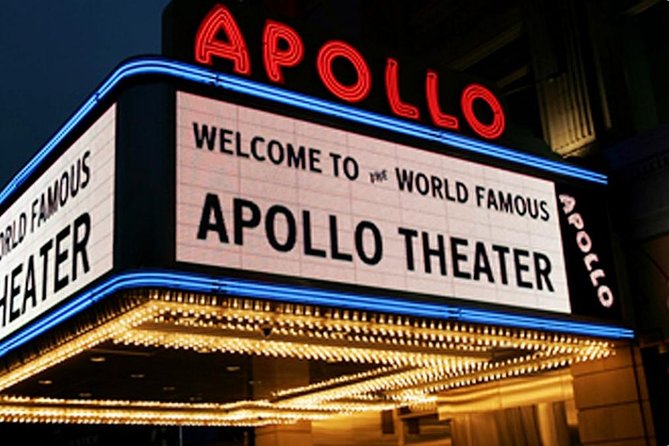
You’ll also stop at the Apollo Theater. The tour doesn’t treat it like a distant landmark you only admire from afar. Instead, you get the surrounding neighborhood context—how the area fits into Harlem’s music culture and broader community story.
For first-time visitors, this is a good approach. If you just show up at Apollo without context, you may know the name but not the why. With a guide, you’ll connect the venue to the streets and institutions around it that helped shape the cultural waves people associate with Harlem.
Practical note: expect foot traffic near the theater. Keep your group close when you’re told to move.
Lunch included: where the tour actually scores points
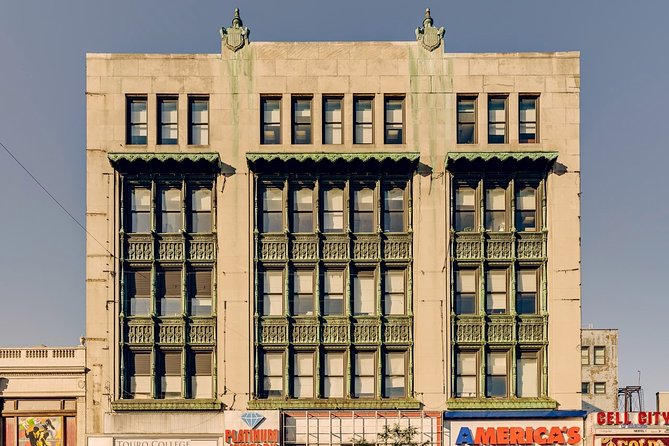
Lunch is included, and it’s one of the most praised parts of the entire experience. In the feedback, people talk about lunch being plentiful, with multiple choices, and staff who understand how to handle a group.
A common detail in feedback is that the lunch stop can include soul food-style comfort, plus items like cake. One person specifically mentions a slice of red velvet cake linked to a local baker with a Guinness Record. Another mentions options that worked for vegetarians. That doesn’t guarantee every lunch is the same each day, but it does tell you the operator has managed lunch in a way that works for a range of people.
Where lunch fits best: you’re already walking and hearing architecture and history. Lunch turns the tour from information overload into an actual experience—sit, eat, talk, and let the stories land.
Diet tip: the tour data doesn’t list detailed dietary accommodations. If you have a specific requirement (vegetarian, allergies, or restrictions), I’d plan to ask the operator or confirm with the lunch venue ahead of time when possible. Based on the reviews, they’ve shown flexibility, but you don’t want to gamble with a strict diet.
What your guide adds (and why Doris shows up so often)
The tour lists a professional guide, and the name Doris appears repeatedly in the feedback as a standout. People describe her as a long-time Harlem resident with deep neighborhood familiarity, and they also mention how she adapts the walk—mixing architectural history with neighborhood lore and music-related storytelling.
That matters because Harlem isn’t just monuments. It’s people, rhythms, and community memory. When a guide knows the neighborhood like this, you tend to get:
- more precise explanations of what you’re seeing on the buildings
- extra details that make the stories feel connected, not random
- a more personal pace, especially for solo visitors
You can also get lots of local interactions during the walk, like quick greetings from residents along the route. That’s not something you can buy with tickets on your own.
One thing to be honest about: several people note that the walk can be slow. If you’re the type who wants fast checkmarks and minimal conversation, this may test your patience. If you prefer learning and time to ask questions, it’s often a plus.
How long will it really take? (3 hours on paper, time in the streets)
The tour length is listed as about 3 hours, and the maximum group size is 30 travelers. But real life can stretch it. Some feedback mentions tours running closer to 4 hours or even 5 hours, usually because of pace, the guide’s style, and how much time gets spent at certain stops.
So here’s how I’d plan your day:
- Treat 3 hours as the minimum likely time
- Add buffer time if you want to shop, visit another site, or catch a show later
- Don’t schedule another tight activity right after lunch without a cushion
Who this Harlem tour is best for
This tour works well for:
- First-time Harlem visitors who want context beyond a few big-name stops
- People who love architecture and want to learn what to look for on facades and columns
- Food-included day plans (you get lunch built into the flow)
- Solo travelers who want a friendly group experience with a guide who can make you feel included
It’s also a good fit if you care about neighborhood stories—Caribbean immigrant community history, older Jewish community connections, and how musical culture connects to place.
Should you book the Harlem Walking Tour with Lunch?
Yes, if you want a guided route that takes you past the obvious stops and teaches you how to read Harlem as a real neighborhood. The strongest reasons to book are St. Martin’s Episcopal Church details you can see, the park-and-theater pairing that connects local and global references, and lunch included with solid feedback on quality and portion size.
Hold off or plan carefully if:
- you hate a slower walking pace
- you have very tight time constraints after the tour
- you prefer to control every minute yourself and don’t want guide-led stops
If your goal is to leave Harlem understanding more than you walked in knowing, this one is a strong bet.
More Tour Reviews in New York City
- NYC: SUMMIT One Vanderbilt Tickets★ 4.7 · 51,195 reviews
- NYC: Empire State Building Tickets – Observatory & Museum★ 4.7 · 25,757 reviews
- New York City: Statue of Liberty & Ellis Island with Ferry★ 4.6 · 18,683 reviews
- New York City: American Museum of Natural History Ticket★ 4.5 · 15,447 reviews
- Statue of Liberty and Ellis Island Tour: All Options★ 5.0 · 13,571 reviews
New York City, One Block at a Time
- SoHo, Little Italy, and Chinatown Walking Tour in New York★ 5.0 · 3,153 reviews
- Secrets of Grand Central Station Walking Tour New York City★ 5.0 · 1,796 reviews
- Greenwich Village Walking and Food Tasting Tour★ 5.0 · 1,572 reviews
- Artistic, Alternative Greenwich Village Walking Tour★ 5.0 · 971 reviews
- Brooklyn Bridge & DUMBO Neighborhood Tour – from Manhattan to Brooklyn★ 5.0 · 826 reviews
Uptown Sundays: More of Harlem
- NYC Highlights Tour: Bronx, Brooklyn, Harlem, Queens & Coney★ 4.5 · 2,846 reviews
- NYC: Contrasts Tour of Harlem, The Bronx, Queens & Brooklyn★ 4.5 · 2,167 reviews
- NYC: Harlem Hallelujah! Gospel Wednesday Concert★ 4.7 · 1,638 reviews
- New York City: Harlem Gospel Live Music Concert★ 4.7 · 1,479 reviews
- Harlem Sunday Morning Gospel Tour★ 4.0 · 995 reviews
Just in: the newest New York City reviews on our desk





Harlem Tours, compared.
 ★ 4.5NYC Highlights Tour: Bronx, Brooklyn, Harlem, Queens & ConeyFrom $462,846 reviews
 ★ 4.5Contrasts Tour of Harlem, The Bronx, Queens & BrooklynFrom $392,167 reviews
 ★ 4.7Harlem Hallelujah! Gospel Wednesday ConcertFrom $251,638 reviews
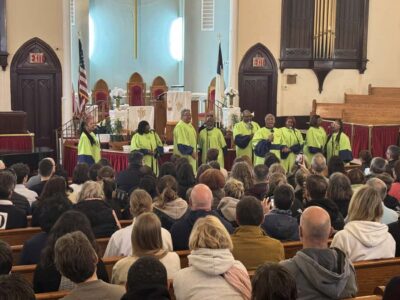 ★ 4.7Harlem Gospel Live Music ConcertFrom $281,479 reviews
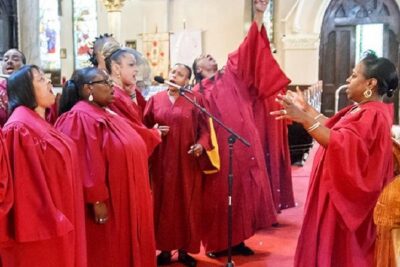 ★ 4.0Harlem Sunday Morning Gospel TourFrom $85995 reviews
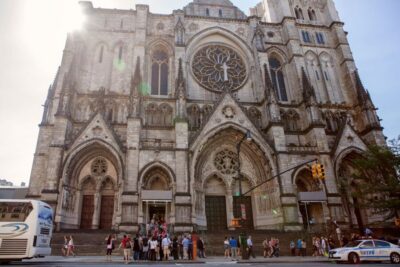 ★ 4.04-hour Harlem Gospel Tour in New York CityFrom $79935 reviews
 ★ 3.9Harlem: Central Harlem Sunday Gospel with LocalsFrom $25499 reviews
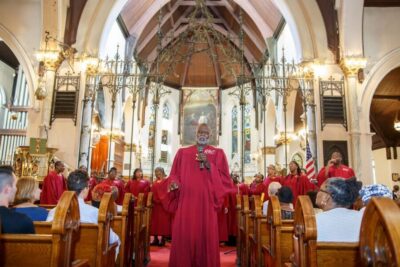 ★ 4.3Sunday Harlem Gospel Guided TourFrom $89438 reviews
Browse the lists this tour appears in