
Reviewed · NYC WALKING TOURS
Hell Gate Walking Tour
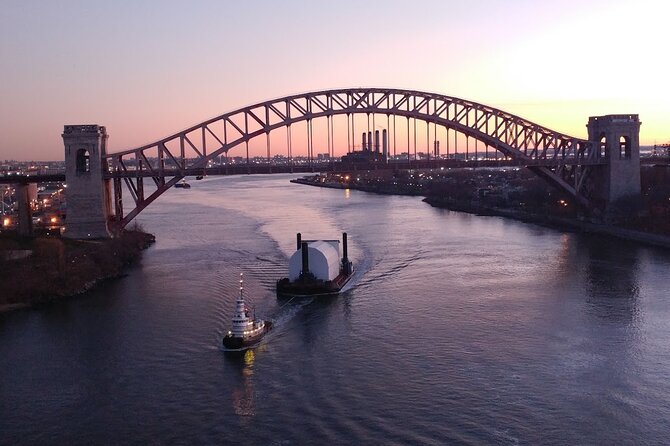
Hell Gate has stories you can walk to. This small-group tour takes you around Randalls and Wards Islands between Harlem and Astoria, with guided stops built around the treacherous waterway called Hell Gate, the Hell Gate Bridge, and the long-ago plot tied to it.
I especially like two things: the guide-led storytelling (including the name Krombie, praised for keeping the pace lively and the details well researched) and the fact that you’re not just hearing history—you’re getting viewpoints. You’ll look out toward Roosevelt Island, Mill Rock, Astoria Park, and Triborough Bridge, while the guide explains why this stretch of the East River mattered so much.
One possible drawback: this is an island walk with some uneven ground and a moderate fitness requirement, and it runs best in good weather. Also, coffee or tea isn’t included, so plan accordingly.
In This Review
- Key things to know before you go
- Wards Island Park: your first real look at Hell Gate
- Randalls and Wards Islands between Harlem and Astoria
- Hell Gate Bridge: engineering details and the plot to blow it up
- Randall’s Island Park: film locations, power plants, and prison-adjacent views
- The stories your guide strings together (and why that matters)
- Price and timing: what you get for $34 in ~2.5 hours
- Should you book the Hell Gate walking tour?
- FAQ
- How long is the Hell Gate walking tour?
- What does the tour cost?
- How many people are in the group?
- Where does the tour start?
- Where does the tour end, and how do I continue afterward?
- Is the ticket mobile?
- Are any admissions or fees included?
- Is coffee or tea included?
- What fitness level do I need?
- Is the tour dependent on weather?
Key things to know before you go
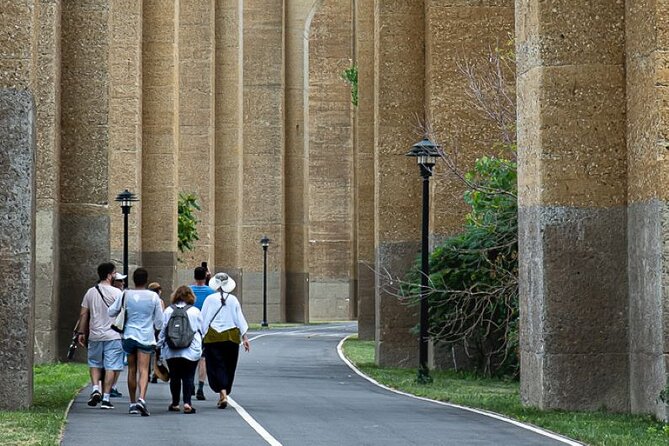
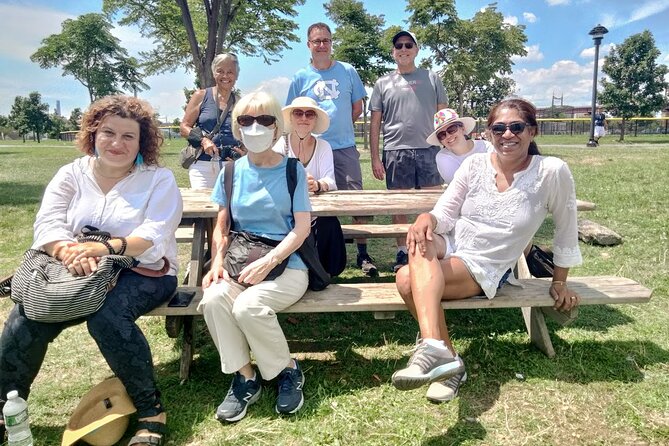
- Small-group size (max 15) means questions don’t get lost and the pace stays human.
- Krombie-led storytelling is a major part of the value, with dark, oddly specific New York threads woven together.
- Big-water viewpoints: you’ll get lookouts over Hell Gate, Mill Rock, and surrounding islands and bridges.
- Hell Gate Bridge stop includes both engineering details and the plot to blow it up.
- Randall’s Island Park finale ties what you see to film locations, power plants, and well-known prison-adjacent places.
- All fees and taxes are covered, with a mix of stops that include admissions or are ticket-free.
New York City at street level, a few more walks
- SoHo, Little Italy, and Chinatown Walking Tour in New York
★ 5.0 · 3,153 reviews - Secrets of Grand Central Station Walking Tour New York City
★ 5.0 · 1,796 reviews - Greenwich Village Walking and Food Tasting Tour
★ 5.0 · 1,572 reviews - Artistic, Alternative Greenwich Village Walking Tour
★ 5.0 · 971 reviews
Wards Island Park: your first real look at Hell Gate
You start on Randall’s Island, at the Randall’s Island Athletic Field area near E River Ln. From there, the first stop is Wards Island Park—short and focused, about 15 minutes, designed for your eyes to lock onto the waterway.
This is where the tour’s theme clicks: Hell Gate wasn’t just a dramatic name. It’s the kind of place where currents, narrow channels, and surrounding land shapes make navigation hard. Standing at this vantage, you’re meant to connect that idea to what you can actually see: Hell Gate itself, plus nearby landmarks like Mill Rock and Roosevelt Island.
What I like about this opening is that it avoids the usual “random facts at random corners” problem. The guide sets the scene with the physical geography first, then the stories make more sense. If you’re the type who gets bored by dates alone, you’ll probably find the way the guide connects water, bridges, and incidents far more memorable.
Randalls and Wards Islands between Harlem and Astoria
After the first lookout, you move to the main island-hopping stretch between Randalls and Wards Islands, with a stop that’s about 20 minutes. The goal here is not to rush. It’s to give you time to take in how this part of the city sits between neighborhoods that feel totally different.
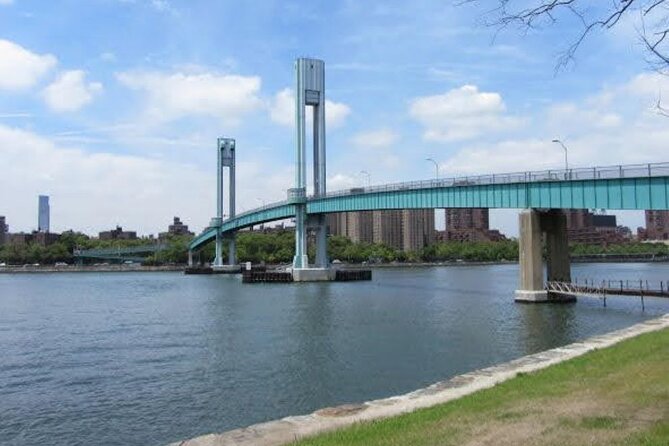
From the vantage at this stage, you’re aiming toward Astoria Park and the Triborough Bridge area, plus features on Wards Island. This matters because you’re watching the city’s infrastructure do what it always does in New York: turn rough terrain and tricky waterways into routes people can trust.
One practical benefit: because the group is small (up to 15), the guide can point out details without that “everyone stare forward” energy that sometimes happens on busier tours. You’ll also hear why this island-to-island part of the East River became a magnet for major engineering and major trouble—two themes the tour keeps returning to.
If you’re used to Manhattan streets, this segment feels like a change of altitude. You get big sightlines and a calmer rhythm than you’d expect for New York.
Hell Gate Bridge: engineering details and the plot to blow it up
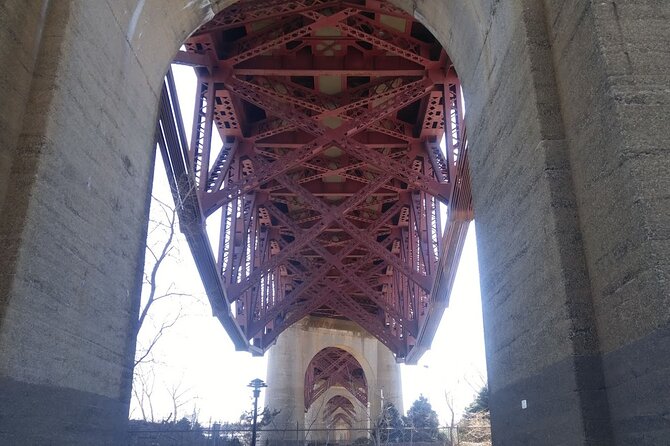
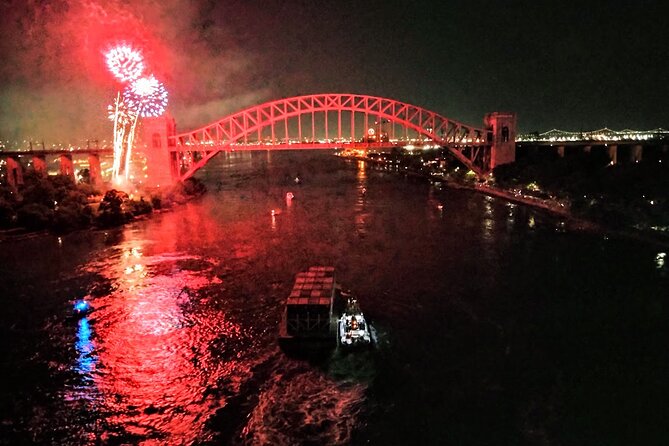
The standout “story stop” is at the Hell Gate Bridge, near the Wards Island end. It’s about 15 minutes, but it’s packed: you get both the unusual engineering of the bridge and the historical plot that targeted it.
This is also the stop where the tour earns its reputation for strong narration. In multiple accounts, the guide Krombie is singled out for animated explanations and an ability to keep the room engaged even when the subject matter gets dark. One example is the foiled plan connected with the bridge.
Even if you already know the bridge is famous, you’re likely to appreciate the focus on how it was built and why the engineering mattered in this exact location. Hell Gate is hard water. That means bridge design wasn’t just about spanning. It was about surviving the reality of wind, current, and the surrounding channel behavior.
A tip for you here: don’t only look at the bridge as a postcard. Listen for what the guide says about why the structure is shaped the way it is. If you treat it like a “why it looks like that” puzzle, the stop becomes more than a historical anecdote.
New York City on foot, a few more routes

Randall’s Island Park: film locations, power plants, and prison-adjacent views
The longest segment is the finale at Randall’s Island Park, around 35 minutes. This is where the tour widens its lens from bridge and water to what humans did along the edges of Hell Gate.
You’ll see and hear about:
- the portion of what was called Little Hell Gate that separated the islands
- a truss bridge over a covered strait
- classic film locations tied to the area
- viewpoints that include the northern part of Hell Gate seen from around Sunken Meadow
- how former islands relate to the Astoria-adjacent area
- the power plants of the East River
- and distant or adjacent views tied to Rikers Island, North and South Brother Islands, plus discussion of the biggest prison barge in the world
That’s a lot of themes for one walking stop. The reason it works is that you’re not asked to memorize a lecture. You’re using landmarks to anchor the story. You can literally look where the guide wants you to look, then the historical context lands with less effort.
One note to keep expectations realistic: this isn’t a gentle “flowers and birds” island walk. The subject matter can include heavy topics, including incarceration and other New York-era dark chapters. The tone you’ll get is described as entertaining and humorous in places, but the content itself can be serious. If you prefer lighter history only, know what you’re choosing.
Also, because this is the last stretch, it’s a good time to ask any questions you’ve been saving up. This is the part where people often remember the most because the guide ties the scenery to the stories in a tight chain.
The stories your guide strings together (and why that matters)
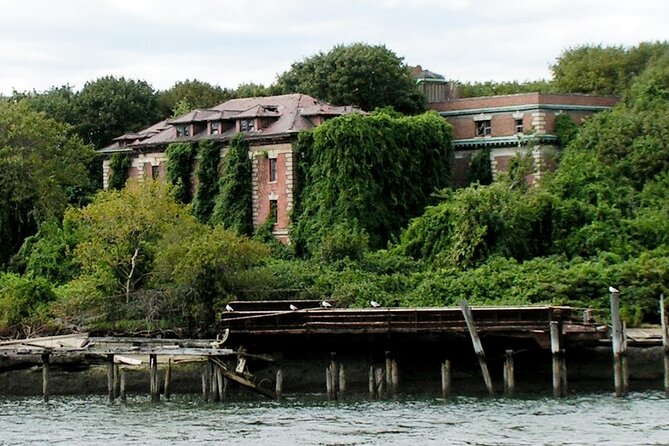
This tour is not built like a standard museum talk. It’s built like a guided conversation with the city, using Hell Gate as the linking character.
Across the experience, the storytelling themes that stand out include:
- human behavior under pressure around dangerous waters
- colorful incidents that connect to piracy-like river legends
- medical and public-health references, including Typhoid Mary
- references to psychiatric patients in the area’s broader historical web
- prison-related history, including Rikers Island prisoners
- and the Nazi plot connection tied to the bridge
Whether every story detail is perfectly familiar to you or not, the value is in how the guide connects them to place. New York history can feel like separate chapters. Here, those chapters get stitched together through one corridor: the narrow, risky water around Hell Gate and the bridges that follow.
This is also where you’ll notice the benefit of a guide who can keep energy up without turning the facts into a comedy act. Multiple accounts highlight Krombie specifically for maintaining attention through well-researched narration. For your trip, that means less time trying to figure out what matters, and more time actually learning something new.
Price and timing: what you get for $34 in ~2.5 hours

At $34 per person for about 2 hours 30 minutes, this is priced like a value play for a guided walking experience. For a city that can charge a lot more for short “look and listen” tours, you’re getting a full arc: multiple island viewpoints, the bridge stop, and the extended final section.
A big part of the value is that all fees and taxes are included. You’ll also notice that admissions/tickets are handled inside the tour structure—some stops are ticketed, others are free, and the cost covers the experience as a whole. That removes guesswork for you on the ground.
Timing-wise, the route also makes sense. Instead of cramming everything into one long slog, the tour uses short stops (often 15 to 20 minutes) to reset your attention, then finishes with the longer park segment so the last act has room to breathe.
Logistics that matter for your comfort:
- The tour is designed for people with moderate physical fitness.
- It’s near public transportation, and you’ll end near Sunken Meadow close to an M35 bus stop.
- Coffee or tea is not included, so if you get snack-y, grab something before you meet.
- Service animals are allowed.
One more practical note: the tour runs with the expectation of good weather. If conditions are poor, you should plan for an offered alternative date or a full refund.
Should you book the Hell Gate walking tour?
If you want a New York experience that feels less like “the usual highlights” and more like a guided field trip to an area locals don’t think about as much, this is a strong pick. The combination of Hell Gate + Hell Gate Bridge + island viewpoints gives you real scenery plus real context, and the guide’s storytelling (including Krombie) is a big reason the tour has such strong ratings.
Book it if:
- you like history that’s tied to place you can actually see
- you enjoy dark, true-to-New-York stories (with humor) more than dry timelines
- you’d rather spend 2.5 hours outside looking at bridges and water than scrolling photo spots
Skip it or think twice if:
- you want only light, feel-good content
- you dislike walking on uneven island terrain
- weather changes would throw off your day
FAQ
How long is the Hell Gate walking tour?
It runs for about 2 hours 30 minutes.
What does the tour cost?
The price is $34.00 per person.
How many people are in the group?
The tour has a maximum of 15 travelers.
Where does the tour start?
It starts at Randall’s Island Athletic Field #8340.7848166 -73.9352736 on E River Ln, New York, NY 10035.
Where does the tour end, and how do I continue afterward?
It ends at Sunken Meadow near the M35 bus stop. From there you can transfer to the 4, 5, or 6 subway trains, and the guide can walk you to various pedestrian exits off the island.
Is the ticket mobile?
Yes, the tour uses a mobile ticket.
Are any admissions or fees included?
Yes. All fees and taxes are included, and the tour notes that some stops include admission while another stop is ticket-free.
Is coffee or tea included?
No. Coffee and/or tea is not included.
What fitness level do I need?
You should have a moderate physical fitness level.
Is the tour dependent on weather?
Yes. It requires good weather. If it’s canceled due to poor weather, you’ll be offered a different date or a full refund.
More Tours in New York City
- Statue of Liberty and Ellis Island Tour: All Options★ 5.0 · 13,571 reviews
- New York in One Day Guided Sightseeing Tour★ 5.0 · 13,166 reviews
- Central Park Pedicab Guided Tours★ 5.0 · 7,108 reviews
- New York City: Manhattan Helicopter Tour★ 4.7 · 7,076 reviews
- Private Central Park Pedicab Tour★ 5.0 · 6,981 reviews
More Tour Reviews in New York City
- NYC: SUMMIT One Vanderbilt Tickets★ 4.7 · 51,195 reviews
- NYC: Empire State Building Tickets – Observatory & Museum★ 4.7 · 25,757 reviews
- New York City: Statue of Liberty & Ellis Island with Ferry★ 4.6 · 18,683 reviews
- New York City: American Museum of Natural History Ticket★ 4.5 · 15,447 reviews
- Statue of Liberty and Ellis Island Tour: All Options★ 5.0 · 13,571 reviews
New York City, One Block at a Time
- SoHo, Little Italy, and Chinatown Walking Tour in New York★ 5.0 · 3,153 reviews
- Secrets of Grand Central Station Walking Tour New York City★ 5.0 · 1,796 reviews
- Greenwich Village Walking and Food Tasting Tour★ 5.0 · 1,572 reviews
- Artistic, Alternative Greenwich Village Walking Tour★ 5.0 · 971 reviews
- Brooklyn Bridge & DUMBO Neighborhood Tour – from Manhattan to Brooklyn★ 5.0 · 826 reviews
Just in: the newest New York City reviews on our desk





NYC Walking Tours, compared.
 ★ 5.0SoHo, Little Italy, and Chinatown Walking Tour in New YorkFrom $393,153 reviews
 ★ 5.0Secrets of Grand Central Station Walking Tour New York CityFrom $391,796 reviews
 ★ 5.0Greenwich Village Walking and Food Tasting TourFrom $941,572 reviews
 ★ 5.0Artistic, Alternative Greenwich Village Walking TourFrom $39971 reviews
 ★ 5.0Brooklyn Bridge & DUMBO Neighborhood Tour – from Manhattan to BrooklynFrom $49826 reviews
 ★ 5.0Central Park Guided Walking TourFrom $44774 reviews
 ★ 4.6Private Walking Tour with a LocalFrom $55771 reviews
 ★ 5.0NYC Lower East Side Walking and Food TourFrom $94646 reviews