
Reviewed · NYC WALKING TOURS
Holdouts: A NYC Architecture Walking Tour
Midtown has leftovers. This tour of NYC architecture zeroes in on holdouts and the buildings that refused to move, shaping the streetscape you walk past every day. You’ll also hear how people, zoning, and money kept certain structures alive while the rest of Midtown surged ahead with modern skyscrapers.
I especially love how the guide frames the walk around the human side of city planning, not just pretty facades. You’ll pick up real concepts like privately-owned public places, air rights, and why some buildings get warehoused until a lease ends. The route also moves you through true Midtown contrasts, from quick “stop-and-look” exteriors to moments where you can actually feel like you stepped into a different era.
One thing to consider: the pace can be fast, especially early on. There’s sometimes a quick setup moment before you’re outside, and the best photos and long question time may require you to be ready to ask smart, short questions as you go.
In This Review
- Key things I think you’ll like
- Holdouts in Midtown: the Side of Manhattan You Usually Miss
- Value for $59: What You Get in 2–3 Hours
- Meet the Route: From 3rd Avenue to 54th Street
- Stop 1 at TPR Holdings: A Building Shaped by Holdouts
- Wollensky’s Grill: A Holdout Hiding in Industrial Past
- Amster Yard and the City/Suburbs Time Warp
- Sparks Steak House: Mob-Adjacent History Meets a Neighbor Holdout
- 42nd Street: When Only One Holdout Survived
- Grand Central Terminal: The Icon You Can’t Skip, Even on a Holdout Walk
- Brooks Brothers and Terminal City: Grand Central’s Hotel Connection Before Air Travel
- Rockefeller Center: Thought-Provoking Holdouts in Midtown’s Showpiece Zone
- Papillon Bistro & Bar: The Hold-In That Lets You Step Inside 19th-Century Walls
- How to Get the Most Out of the Walk (Photos, Questions, and Pace)
- Who Should Book This Holdouts Tour
- Should You Book This Holdouts Tour?
- FAQ
- How long is the Holdouts: A NYC Architecture Walking Tour?
- How much does the tour cost?
- How many people are in a group?
- Where does the tour start and end?
- Is the tour offered in English?
- What should I wear?
- What happens if the weather is bad?
- Can I cancel for a full refund?
Key things I think you’ll like
- A small group (max 5) that makes it easier to ask questions and talk building-by-building
- Holdouts as a theme: you’ll learn how a few “refusals” shaped whole blocks
- Real Midtown variety: lobbies, courtyards, mob-adjacent history, and inside-access moments
- Architecture meets city policy: air rights, privately-owned public spaces, and leasing realities
- Practical city atmosphere: you’re walking while NYC does its thing, not stuck in a museum room
New York City at street level, a few more walks
- SoHo, Little Italy, and Chinatown Walking Tour in New York
★ 5.0 · 3,153 reviews - Secrets of Grand Central Station Walking Tour New York City
★ 5.0 · 1,796 reviews - Greenwich Village Walking and Food Tasting Tour
★ 5.0 · 1,572 reviews - Artistic, Alternative Greenwich Village Walking Tour
★ 5.0 · 971 reviews
Holdouts in Midtown: the Side of Manhattan You Usually Miss
Most visitors race through Midtown like it’s one big, finished product. This walk flips that mindset. Holdouts are the reason you can still see older structures tucked into newer development patterns, like stubborn punctuation marks in the middle of a sentence.
The best part is that “holdout” isn’t just a trivia term here. The guide uses it to explain why Midtown looks the way it does: when planners wanted to straighten streets, add space, or redevelop land, some owners negotiated, resisted, or simply outlasted the push for change. Those decisions shaped what you’re seeing now—street widths, building alignments, and those odd, leftover nooks that feel almost accidental.
If you like noticing details when you walk—windows, setbacks, lobbies, odd pillar placement—this kind of tour turns your “passing glance” into a focused look. And even if architecture isn’t your main hobby, the stories behind buildings make the blocks feel personal.
Value for $59: What You Get in 2–3 Hours
At $59 per person for about 2 to 3 hours, you’re paying for a professional guide and a compact route through places that many people never slow down for. You’re also not buying separate paid admissions for the listed stops; the stops are described as ticket-free as part of the experience.
The “value math” here is simple: Midtown walking tours add up fast, especially when you’re paying for entry fees or long transit segments. This one stays walkable and focused, with a small group size that helps the guide spend time explaining, not managing crowds.
There’s another value angle too: you’re learning a framework you can use later. After a tour like this, you’ll spot holdout patterns on your own—especially the strange alignments, courtyards that seem too tucked-away for the skyline around them, and the buildings that look newer but keep older bones inside.
Meet the Route: From 3rd Avenue to 54th Street
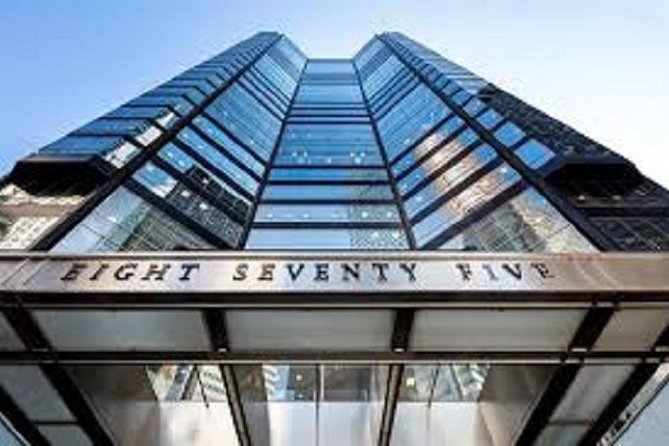
The walk starts at 875 3rd Ave and ends at 22 E 54th St at Papillon Bistro & Bar. That matters because you’re not zig-zagging randomly. You’re moving through a downtown-to-uptown arc that connects Grand Central’s orbit with the larger Midtown grid.
The tour is English-language, uses a mobile ticket, and keeps the group small. It’s designed for people with moderate physical fitness, and the provider recommends comfortable shoes. In real terms, this is a walking tour: plan for a steady pace and for standing at stops long enough to hear the story behind each building.
You’ll also want a phone charged. The ticket is mobile, and the experience includes multiple exterior viewing moments where you’ll likely want to take notes quickly—then use Google Maps later to revisit anything that sparks your curiosity.
New York City on foot, a few more routes

Stop 1 at TPR Holdings: A Building Shaped by Holdouts
You begin in the lower lobby of TPR Holdings, and the building becomes your first “proof” that holdouts are physical, not just historical. The tour frames the structure as a result of holdout decisions, then points you toward what makes it feel distinctive.
One of the standout details is the building’s unusual support/pillar logic: the main pillar supports are described as being not in the corners, but in the middle of the side. Whether you’re an architecture nerd or you just enjoy a good “wait, how is that possible?” moment, this is the kind of structural clue that makes the story click.
Why this stop matters for the rest of the tour: it teaches you what to look for. After TPR Holdings, you start seeing how architecture can carry negotiations and compromises inside the form of the building.
Wollensky’s Grill: A Holdout Hiding in Industrial Past
Wollensky’s Grill is a quick stop, but it’s a smart one. The tour describes it as an old buggy whip factory that became, over time, part of a holdout story.
That combination is the point: Midtown today is mostly associated with offices and towers, but the city’s earlier trades and crafts left building shells behind. The holdout element means the shell didn’t get erased when the surrounding blocks evolved.
Even in a short window, this kind of stop trains your eyes. You’ll start thinking about older building uses and how adaptive reuse changes the meaning of a “historic” structure. It’s not only that the building survived; it’s that it found a new role and stayed visible.
Amster Yard and the City/Suburbs Time Warp
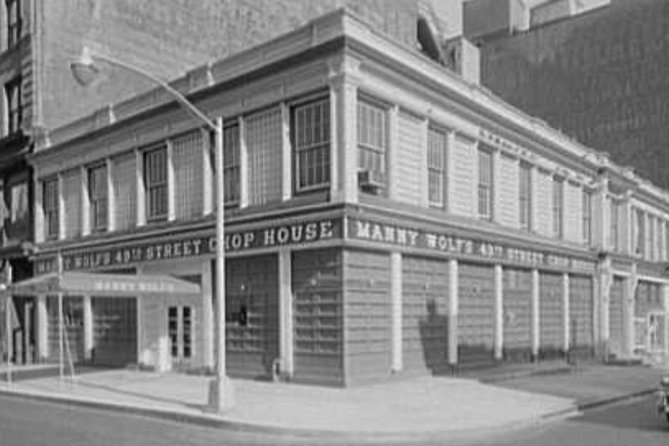
Next comes Amster Yard, described as an oasis that’s a lot older than the skyline conversation around it. The tour notes you’ll stop in if it’s open during your timing, so treat it as a “nice chance,” not a guaranteed inside moment.
The story lens here is great: Amster Yard is presented as a time capsule where histories clash—where the city’s development meets the suburbs, and the result feels earlier than the Midtown blocks around it.
Why I like this stop: courtyards and small outdoor spaces are where you notice how development choices affect daily life. Even for a short walk-by, places like this change your sense of scale. You stop thinking only about tall buildings and start noticing how people used space back when Midtown was less uniform.
Sparks Steak House: Mob-Adjacent History Meets a Neighbor Holdout
Sparks Steak House is next door to an interesting holdout, and it also carries the weight of being associated with a notorious mob hit. That pairing can sound dark, but it does something useful for your understanding of Midtown: it shows how the city’s layers stack, even when you’re focused on architecture.
The tour includes the idea that you’ll pick up stunning views along this stretch and continue onward while discussing how holdouts influenced today’s streetscapes. There’s also mention of seeing the Secretariet Building down the block as you continue.
This is a good stop for picture-taking, even if you’re not the type who takes dozens of photos. If you want skyline shots from a different angle than the usual avenues, this stretch is where that can happen.
42nd Street: When Only One Holdout Survived
The end of the downtown part of the walk happens at 42nd Street, where the tour describes a single holdout that survived history. This isn’t a long stop, but it’s a meaningful one.
Here’s what the tour is really teaching you: sometimes the “holdout” story isn’t a whole cluster of surviving structures. Sometimes it’s one stubborn building that becomes a last visible anchor for an older planning intention, an older alignment, or a redevelopment that didn’t fully erase the past.
I like this kind of stop because it helps you interpret what you see outside the tour. A lone surviving building can look random until you know it was the last survivor of a broader change.
Grand Central Terminal: The Icon You Can’t Skip, Even on a Holdout Walk
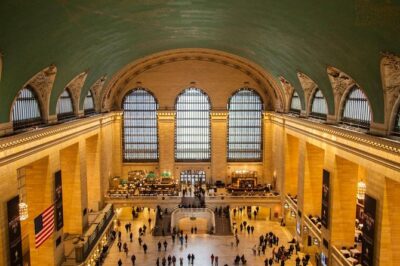
As the tour moves toward the west side and uptown portion, it passes through Grand Central Terminal. While Grand Central isn’t tied directly to holdouts in the way the other stops are, the tour notes that a mini-tour of this iconic landmark is very possible.
There’s also a timing note: the city-in-a-building you’re looking at may still be under construction at the time of the writing. In practical terms, that’s a reminder that even the most famous places are always changing and being worked on.
This is a helpful pivot stop. It widens your perspective from “holdouts on this block” to “Midtown is always in motion.” Even when a building seems finished and permanent, the city keeps updating the details.
Brooks Brothers and Terminal City: Grand Central’s Hotel Connection Before Air Travel
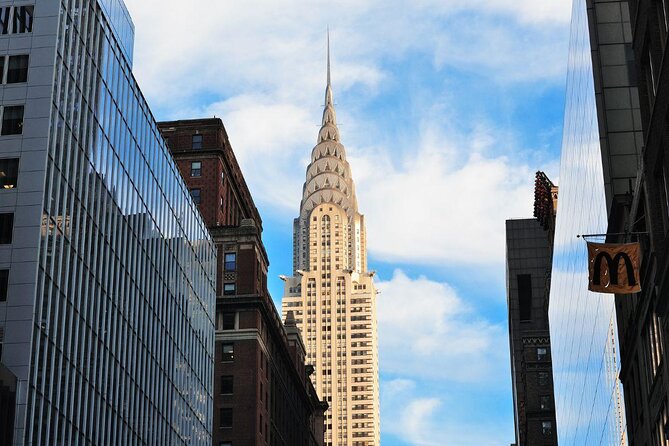
The tour then hits Brooks Brothers, a historic NYC institution that had a holdout as a neighbor. You’ll also see mention of viewing the side of a crystal shard–iceberg mashup of a building while passing the area, which should help you visualize how modern forms can rise next to older survivors.
The most fascinating thread here is the reference to Terminal City, described as a time before air travel when Grand Central linked to three hotels to receive cross-country travelers. The tour suggests you’ll pass by the sole survivor of Terminal City from that earlier era.
Why this stop is worth your attention: it shows that “holdout” stories aren’t only about architecture aesthetics. They can explain transportation patterns, traveler routines, and how the city served distance when trains—not planes—were the long-haul default.
It also makes Grand Central feel more like a hub of systems than just a photo backdrop.
Rockefeller Center: Thought-Provoking Holdouts in Midtown’s Showpiece Zone
Next is Rockefeller Center, where the tour frames rich context through the lens of holdouts. The emphasis here is on history plus the built results: how certain decisions and negotiations left survivors and shaped what you see today.
Rockefeller Center can be a tough area for tours because it’s famous, and people can expect it to feel like a crowded highlight. The holdout approach helps you slow down. Instead of only admiring the big statement buildings, you learn to search for the smaller “why is that there?” elements and the ways older development patterns influenced later ones.
If you like city design logic, this is a strong link between the personal stories you hear at earlier stops and the broader Midtown development narrative.
Papillon Bistro & Bar: The Hold-In That Lets You Step Inside 19th-Century Walls
You end at Papillon Bistro & Bar, and the tour calls this one of the most compelling examples of a holdout story—except it’s more of a hold-in. The premise is that a restaurant proprietor negotiated additional square footage to expand the restaurant into the future skyscraper.
The payoff is physical and immediate: you can enter the skyscraper today and stand within the walls of a 19th-century brownstone. That kind of inside access is rare on architecture walks and it’s one reason this ending works well. You’re not just looking at an exterior and hearing a legend. You’re ending with a contrast you can feel.
If you’re the type who always wonders what “historic preservation” looks like when it’s messy and negotiated, this is the moment. It’s history that got folded into the modern skyline instead of being parked away in a museum.
How to Get the Most Out of the Walk (Photos, Questions, and Pace)
This is a walking tour with stop-and-explain moments. The small group size helps a lot, but it doesn’t automatically mean there’s endless time at each location.
A theme to plan for: a bit of a brisk pace can happen early, including a setup period before you’re fully outside. There may be some context delivered up front that could feel like you’re waiting for the fun part if you’re ready to start shooting photos immediately.
So here’s how you can work with the pace:
- Keep your questions short and specific, like which structural detail matters at the stop in front of you.
- If photos are important, think of them as “capture the story” images rather than a full album. One or two smart shots per stop go farther.
- Wear shoes you can move in, because the tour’s timing assumes steady walking and quick transitions.
I also like that the guide is described as adapting to what people want to talk about. When the group is small, it’s easier to match your interests—urban planning, building layout, or the human stories behind redevelopment decisions.
Who Should Book This Holdouts Tour
This tour is a great fit if you:
- Like architecture details and want a reason to look up and around
- Enjoy urban planning topics like air rights and privately-owned public spaces
- Prefer a smaller group over large, crowded walks
- Want stories that connect older NYC uses to today’s Midtown form
It may be less satisfying if you need lots of downtime for photos and wandering on your own at each stop. The tour works best when you’re ready to listen, walk, and respond to the guide’s pacing.
Should You Book This Holdouts Tour?
Yes, if you’re curious about why Midtown looks the way it does when you stop treating it like a finished product. For $59, you get a focused route, a professional guide, and a mix of exterior viewing plus a truly special inside moment at the end with Papillon.
Book it especially if you like the idea of learning a lens—holdouts, negotiations, and city policy—that you can apply while you’re still walking around New York after the tour ends.
FAQ
How long is the Holdouts: A NYC Architecture Walking Tour?
It typically lasts about 2 to 3 hours.
How much does the tour cost?
The price is $59.00 per person.
How many people are in a group?
The tour has a maximum size of 5 travelers.
Where does the tour start and end?
The tour starts at 875 3rd Ave, New York, NY 10022 and ends at 22 E 54th St, New York, NY 10022 near Papillon Bistro & Bar.
Is the tour offered in English?
Yes, it is offered in English.
What should I wear?
Wear comfortable shoes, since it’s a walking tour.
What happens if the weather is bad?
The experience requires good weather. If it’s canceled due to poor weather, you’ll be offered a different date or a full refund.
Can I cancel for a full refund?
You can cancel for a full refund if you cancel at least 24 hours before the start time. Cancellation is free up to that window.
More Tours in New York City
- Statue of Liberty and Ellis Island Tour: All Options★ 5.0 · 13,571 reviews
- New York in One Day Guided Sightseeing Tour★ 5.0 · 13,166 reviews
- Central Park Pedicab Guided Tours★ 5.0 · 7,108 reviews
- New York City: Manhattan Helicopter Tour★ 4.7 · 7,076 reviews
- Private Central Park Pedicab Tour★ 5.0 · 6,981 reviews
More Tour Reviews in New York City
- NYC: SUMMIT One Vanderbilt Tickets★ 4.7 · 51,195 reviews
- NYC: Empire State Building Tickets – Observatory & Museum★ 4.7 · 25,757 reviews
- New York City: Statue of Liberty & Ellis Island with Ferry★ 4.6 · 18,683 reviews
- New York City: American Museum of Natural History Ticket★ 4.5 · 15,447 reviews
- Statue of Liberty and Ellis Island Tour: All Options★ 5.0 · 13,571 reviews
New York City, One Block at a Time
- SoHo, Little Italy, and Chinatown Walking Tour in New York★ 5.0 · 3,153 reviews
- Secrets of Grand Central Station Walking Tour New York City★ 5.0 · 1,796 reviews
- Greenwich Village Walking and Food Tasting Tour★ 5.0 · 1,572 reviews
- Artistic, Alternative Greenwich Village Walking Tour★ 5.0 · 971 reviews
- Brooklyn Bridge & DUMBO Neighborhood Tour – from Manhattan to Brooklyn★ 5.0 · 826 reviews
Just in: the newest New York City reviews on our desk





NYC Walking Tours, compared.
 ★ 5.0SoHo, Little Italy, and Chinatown Walking Tour in New YorkFrom $393,153 reviews
 ★ 5.0Secrets of Grand Central Station Walking Tour New York CityFrom $391,796 reviews
 ★ 5.0Greenwich Village Walking and Food Tasting TourFrom $941,572 reviews
 ★ 5.0Artistic, Alternative Greenwich Village Walking TourFrom $39971 reviews
 ★ 5.0Brooklyn Bridge & DUMBO Neighborhood Tour – from Manhattan to BrooklynFrom $49826 reviews
 ★ 5.0Central Park Guided Walking TourFrom $44774 reviews
 ★ 4.6Private Walking Tour with a LocalFrom $55771 reviews
 ★ 5.0NYC Lower East Side Walking and Food TourFrom $94646 reviews