
Reviewed · NYC WALKING TOURS
Lower Manhattan Secrets And History Walking Tour
Lower Manhattan history can feel like homework. This 3-hour walk turns famous landmarks into stories you can actually remember, with Brooklyn Bridge history and a New York pizza finish that feels like a reward. The main trade-off is simple: you’ll be walking and standing quite a bit, so wear comfortable shoes.
What I like most is the pacing and care from the guide. I’ve seen how Meghan Sara keeps the tone fun and story-driven, while also finding shade, restrooms, and smart spots to pause when the day gets hot or wet.
For logistics, this runs on a mobile ticket and keeps the group small (max 15), so the walk stays relaxed instead of chaotic. You meet at Tweed Courthouse (52 Chambers St) and end near the World Trade Center area, around 110 Cedar St.
In This Review
- Key things to know before you go
- Lower Manhattan made human in 3 hours
- Meeting point and route flow: what it feels like on your feet
- Brooklyn Bridge: the engineering story behind the postcard
- South Street Seaport: trade, nicknames, and the waterfront roots
- Wall Street: from ordinary streets to global finance
- New York Stock Exchange: the building and how finance evolved
- Federal Hall: the moment freedom became real here
- Fearless Girl: the story behind a symbol on Wall Street
- Trinity Church NYC: Washington, Hamilton, and what you can ask for
- Charging Bull: the origin of the Wall Street icon
- Battery Park: harbor views, Lady Liberty, and port history
- One World Trade Center: 9/11 context and reflection time
- Pizza at the end: a real New York finish
- Who this tour fits best (and who should think twice)
- Price and value: $60 where it actually matters
- Should you book Lower Manhattan Secrets And History?
- FAQ
- What is the duration and start time?
- Where do I meet, and where does the tour end?
- How much does the tour cost?
- Is a pizza slice included?
- How big is the group?
- Is the tour offered in English?
- Do I need separate admission tickets at any stops?
- What happens if the weather is bad?
- Is it free to cancel, and how late can I cancel?
- Are service animals allowed?
Key things to know before you go
- Small group (up to 15) means more chances to ask questions and get personalized attention
- Pizza included at the end gives you a satisfying, New York-style capstone
- Wall Street landmarks plus founding-era sites keep the story moving from origins to modern finance
- One World Trade Center stop includes reflection time for a respectful, slower moment
- Two major stops may require extra tickets (New York Stock Exchange and One World Trade Center)
- The guide adapts to real conditions like rain, heat, and accessibility needs
New York City at street level, a few more walks
- SoHo, Little Italy, and Chinatown Walking Tour in New York
★ 5.0 · 3,153 reviews - Secrets of Grand Central Station Walking Tour New York City
★ 5.0 · 1,796 reviews - Greenwich Village Walking and Food Tasting Tour
★ 5.0 · 1,572 reviews - Artistic, Alternative Greenwich Village Walking Tour
★ 5.0 · 971 reviews
Lower Manhattan made human in 3 hours
This tour is built around the idea that Lower Manhattan isn’t just a list of icons. It’s a place where politics, trade, money, and big turning points all layered over each other—bridge by bridge, street by street.
You’ll cover the waterfront-to-finance-to-9/11 arc without the usual rush. Each stop is brief enough to keep energy up, but the guide’s storytelling connects the dots so the area starts to feel logical, not random.
At $60 per person for about 3 hours, you’re paying for two things: a guided route that saves you from bouncing between far-flung sites on your own, plus a story-focused experience that turns sightseeing into context. The pizza finish also matters; it’s a small thing that makes the tour feel complete.
One watch-out: the tour is outdoors and active. If you hate standing in crowds or you’re expecting a sit-down museum experience, this may feel like more walking than you planned.
Meeting point and route flow: what it feels like on your feet
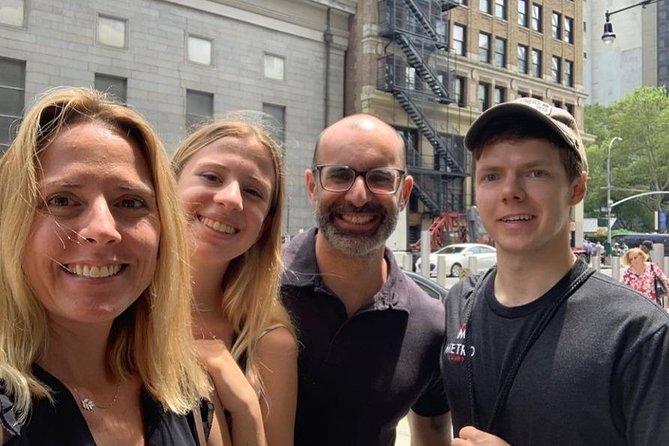
You start at Tweed Courthouse, 52 Chambers St, and the tour runs toward the World Trade Center area, finishing near 110 Cedar St. The meeting spot is convenient for getting going, and the route is designed to hit major Lower Manhattan landmarks in a logical order.
Expect a steady walking rhythm. The time at each highlight is short—often around 10 minutes—so you’ll get a focused introduction rather than a long, deep visit. That works well when you want the big picture and the stories behind what you’re seeing.
Because this is a small group with a cap of 15 people, you’re less likely to feel swallowed by the crowd. Still, Lower Manhattan is busy, so you’ll want to bring a good attitude for sidewalks, curb cuts, and brief pauses.
Comfort tip: plan for heat and rain. One of the most consistent themes in how people talk about the guide is practical flexibility—like finding shade and using overhangs when weather turns.
Brooklyn Bridge: the engineering story behind the postcard
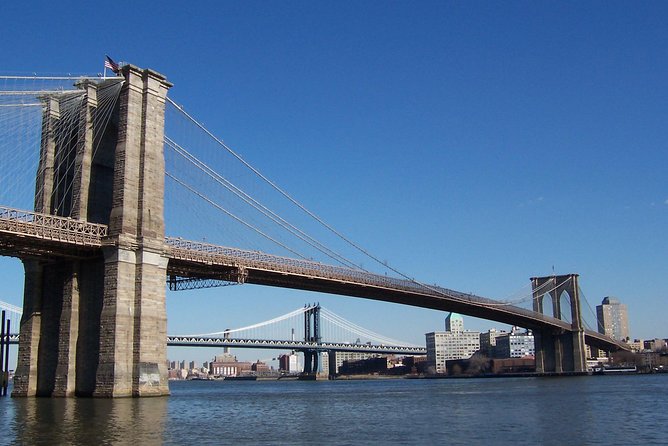
Your walk begins with the Brooklyn Bridge, one of those landmarks that looks inevitable until you learn what it took to build it. The tour’s angle here is history and ambition: how this huge undertaking shaped the landscape and why it mattered when it was new.
The stop is around 10 minutes, which is just enough time to get the key story beats without turning it into a slow slog. If you like photography, this is also one of the better early stops because the bridge area gives you instant visual anchors.
Practical note: even if you’ve seen it a hundred times in photos, seeing it in person while a guide frames the construction story makes you look at details differently—like cables, scale, and how people used to move across the river.
New York City on foot, a few more routes

South Street Seaport: trade, nicknames, and the waterfront roots
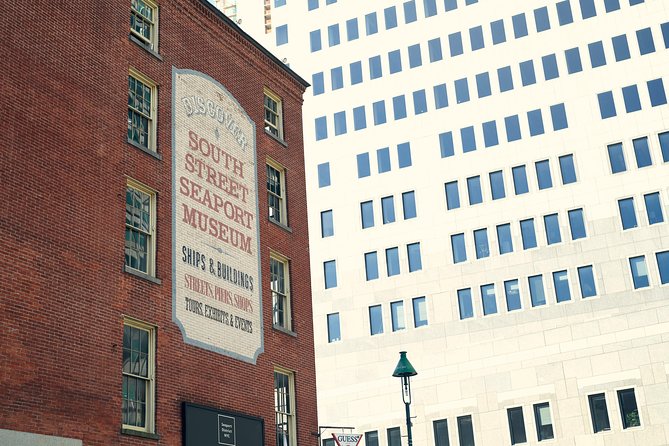
Next up is the South Street Seaport Historic District, which the tour treats as more than a pretty waterfront. You’ll hear how it played a major role in shaping New York City as it became known to the world—and how it gave the city one of its famous nicknames.
This stop is also about 10 minutes, and that brevity is useful. It helps you absorb the waterfront origin story without getting stuck in one zone too long.
If you’ve ever wondered why New York feels tied to the sea even when the city is far from beaches, this is the reminder. Lower Manhattan’s story isn’t only about skyscrapers and suits—it starts with ports and movement of goods.
Wall Street: from ordinary streets to global finance
Then the tour pivots to Wall Street, framed with a key contrast: today it’s the financial epicenter of the world, but it wasn’t always that way.
This is a quick 10-minute stop, but the value is the shift in perspective. Instead of treating Wall Street as a timeless symbol, you’ll hear how the area transformed over time—so you can connect today’s street-level reality to a longer change story.
Even if you don’t care about markets, it’s worth it for the way the guide explains how power and money concentrate in a city. Wall Street becomes easier to interpret when you know what came before the modern version.
New York Stock Exchange: the building and how finance evolved
You’ll spend about 15 minutes at the New York Stock Exchange. The focus here is how the exchange developed into the home of the financial market as we recognize it now.
One important detail: admission for the NYSE is not included. That means you should budget time and expectations accordingly. You’re not walking in assuming it’s a guaranteed interior visit. Instead, you’re getting the architectural and historical context from the outside and nearby viewing areas.
This stop is best for people who enjoy stories that connect institutions to place. It’s also good if you’ve passed the building before and wished someone explained why it looks like it does and what role it played as finance grew.
Federal Hall: the moment freedom became real here
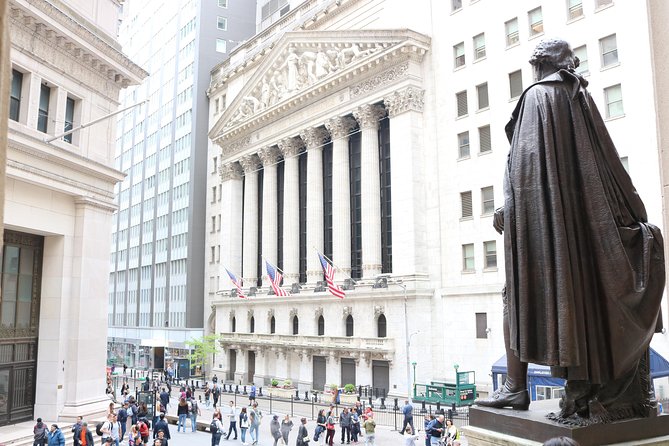
At Federal Hall, the tour zeroes in on an event tied to freedom, when the colonies became free and that big moment happened right in this part of Lower Manhattan.
This stop is about 10 minutes, and it’s powerful because it lands early in the area’s national story. You’re not just seeing old architecture—you’re hearing about why this specific location matters.
If you’re the type who likes to understand the “why” behind American political history, this is one of the key anchors of the whole route. It bridges the gap between the founding era and the later buildings you’ll see immediately after.
Fearless Girl: the story behind a symbol on Wall Street
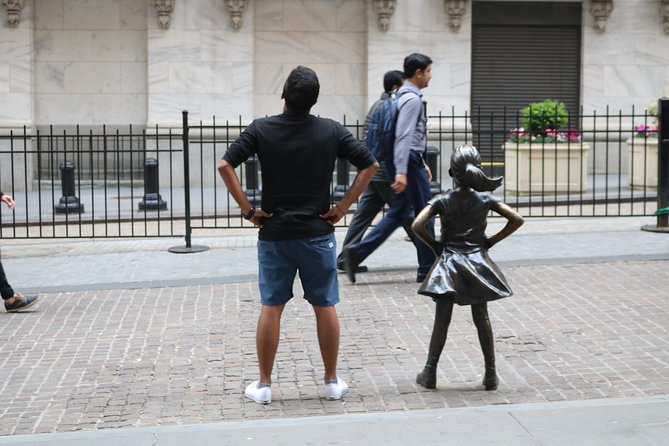
Next: Fearless Girl, where you’ll learn the statue’s origin story and what it represents. This stop is around 10 minutes, which works well because the value is in the backstory and interpretation, not in lingering.
Here’s what makes it more than an Instagram subject: the guide explains the meaning that someone intended, and what that meaning has become over time in a place associated with power and money.
If you care about symbolism—how objects represent ideas—this is one of the most interesting moments on the walk.
Trinity Church NYC: Washington, Hamilton, and what you can ask for
Then you’ll hit Trinity Church NYC, a stop that packs a lot into about 10 minutes. The tour connects famous historical figures associated with the church, including George Washington and Alexander Hamilton.
A really practical, experience-shaping detail: if you’re a Hamilton fan, you can end up with a more tailored moment. In at least one past walk, the guide matched the focus and led the group into the Trinity Church graveyard to see connections connected to Hamilton.
That’s not something I’d treat as guaranteed, since access and what’s possible can vary by day. But it’s a great reminder to ask your guide about the Hamilton angle when you’re there—if it fits, it can turn this stop from interesting into unforgettable.
Charging Bull: the origin of the Wall Street icon
Charging Bull follows, another quick stop of about 15 minutes. You’ll hear the origin story of how a bull on Wall Street became a beloved icon and how it got placed on one of the world’s most famous streets.
This part is surprisingly fun because it’s not just about the statue itself. It’s about how public art turns into public meaning, and how the city decides what it wants to celebrate.
It also gives you a natural place to pause and take pictures without it feeling like a frantic photo sprint.
Battery Park: harbor views, Lady Liberty, and port history
At Battery Park, you get the viewpoint side of the Lower Manhattan story. The tour highlights the harbor outlook and Lady Liberty, while also connecting the waterfront to the huge flow of arrivals over time—millions of guests to New York City through the port.
This stop is about 15 minutes, and it’s one of the more scenic breaks in the route. If you’ve been wrapped up in finance and government symbols, this is your palate reset: the city looking outward, toward ships and arrivals.
It’s also one of the most natural spots to slow down for photos. Just keep an eye on wind and weather, since this area can feel more exposed than the streets inland.
One World Trade Center: 9/11 context and reflection time
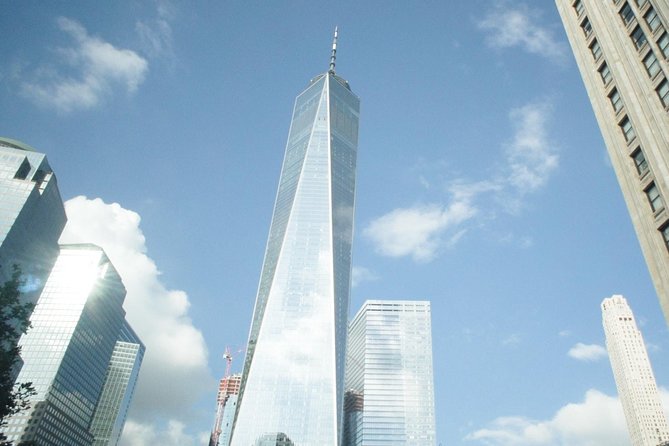
The final major stop is One World Trade Center, with about 25 minutes set aside for discussion of 9/11 and the massive rebuilding effort that followed. The tour also includes time for walking the solemn grounds and taking a private moment for reflection.
Admission here is not included, so again, this is about the guided experience and the area around it rather than a guaranteed paid-entry plan.
This is the part of the walk where your guide’s tone matters. The tour’s structure gives you room to process what you’re learning without turning it into a quick stop-and-go checkpoint.
If you want Lower Manhattan in one coherent storyline—origins, finance, power, and then resilience—this is where the narrative lands.
Pizza at the end: a real New York finish
To cap it off, you’ll savor a slice of New York pizza near the World Trade Center area (ending around 110 Cedar St). This isn’t just food—it’s an experience reset after standing and walking for hours.
If you’ve had a long sightseeing day, the pizza also helps you avoid the all-too-common post-tour problem: realizing you’re hungry and the nearest good bite is a scramble.
It’s a simple perk, but it’s one of those small details that makes this feel like a complete half-day outing instead of a series of unrelated photos.
Who this tour fits best (and who should think twice)
This walking tour is a great fit if you want the big Lower Manhattan landmarks with story context and a guide who keeps things moving. It’s also a strong choice for families and couples because the route stays manageable in time and the guide’s approach tends to keep kids engaged too.
It’s especially good for people who like tailoring. When the group is small, the guide can adjust the focus so your interests get folded into the route.
Think twice if you need lots of seating breaks, because even when the guide finds shade and restrooms, this is still a walk-first experience. Also plan around weather since the tour requires good conditions, and schedules can change if weather forces it.
Price and value: $60 where it actually matters
At $60 per person, the value comes from the mix of:
- a tight, efficient route across major Lower Manhattan landmarks
- guided story context that turns recognizable sites into something you can explain later
- pizza included at the end
The places where you should budget extra are the stops with admission not included, specifically the New York Stock Exchange and One World Trade Center. If you’re hoping to go inside both, you’ll likely need to pay those tickets separately. If you’re content with the guided exterior context and reflection areas, you can still get a lot out of the tour without extra spending.
If you’re comparing DIY wandering, this is where the guide earns the price: you save time and you avoid the blank “what am I looking at” feeling that happens when you stroll without a narrative.
Also, this tour tends to book ahead. If your dates are set, I’d reserve earlier rather than gambling on last-minute availability.
Should you book Lower Manhattan Secrets And History?
Book it if you want an easy, story-led way to connect Lower Manhattan’s landmark list into one timeline—from bridge-building ambition, to waterfront origins, to Wall Street’s rise, and then to 9/11 and rebuilding.
Skip it (or consider a different format) if you dislike walking and standing, or if you only want indoor ticketed attractions. With this tour, you’re paying for the guided narrative and the route, not for a museum-style, mostly indoors experience.
If you go, bring comfy shoes, ask your guide about the Hamilton connection at Trinity Church if that matters to you, and be ready to learn while you walk.
FAQ
What is the duration and start time?
The tour runs for about 3 hours and starts at 11:00 am.
Where do I meet, and where does the tour end?
You meet at Tweed Courthouse, 52 Chambers St, New York, NY 10007, and the tour ends near 110 Cedar St, New York, NY 10006, close to the World Trade Center area.
How much does the tour cost?
The price is $60.00 per person.
Is a pizza slice included?
Yes. The tour includes a slice of New York pizza at the end.
How big is the group?
The tour has a maximum size of 15 people, keeping it a small-group experience.
Is the tour offered in English?
Yes. The tour is offered in English.
Do I need separate admission tickets at any stops?
Yes. Admission tickets are not included for the New York Stock Exchange and One World Trade Center. Other listed stops have admission ticket costs marked as free.
What happens if the weather is bad?
The tour requires good weather. If it’s canceled due to poor weather, you’ll be offered a different date or a full refund.
Is it free to cancel, and how late can I cancel?
Cancellation is free up to 24 hours before the experience’s start time. If you cancel later than that, you won’t receive a refund.
Are service animals allowed?
Yes. Service animals are allowed, and the tour is near public transportation.
More Tours in New York City
- Statue of Liberty and Ellis Island Tour: All Options★ 5.0 · 13,571 reviews
- New York in One Day Guided Sightseeing Tour★ 5.0 · 13,166 reviews
- Central Park Pedicab Guided Tours★ 5.0 · 7,108 reviews
- New York City: Manhattan Helicopter Tour★ 4.7 · 7,076 reviews
- Private Central Park Pedicab Tour★ 5.0 · 6,981 reviews
More Tour Reviews in New York City
- NYC: SUMMIT One Vanderbilt Tickets★ 4.7 · 51,195 reviews
- NYC: Empire State Building Tickets – Observatory & Museum★ 4.7 · 25,757 reviews
- New York City: Statue of Liberty & Ellis Island with Ferry★ 4.6 · 18,683 reviews
- New York City: American Museum of Natural History Ticket★ 4.5 · 15,447 reviews
- Statue of Liberty and Ellis Island Tour: All Options★ 5.0 · 13,571 reviews
New York City, One Block at a Time
- SoHo, Little Italy, and Chinatown Walking Tour in New York★ 5.0 · 3,153 reviews
- Secrets of Grand Central Station Walking Tour New York City★ 5.0 · 1,796 reviews
- Greenwich Village Walking and Food Tasting Tour★ 5.0 · 1,572 reviews
- Artistic, Alternative Greenwich Village Walking Tour★ 5.0 · 971 reviews
- Brooklyn Bridge & DUMBO Neighborhood Tour – from Manhattan to Brooklyn★ 5.0 · 826 reviews
Just in: the newest New York City reviews on our desk





NYC Walking Tours, compared.
 ★ 5.0SoHo, Little Italy, and Chinatown Walking Tour in New YorkFrom $393,153 reviews
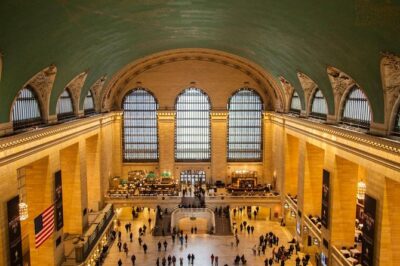 ★ 5.0Secrets of Grand Central Station Walking Tour New York CityFrom $391,796 reviews
 ★ 5.0Greenwich Village Walking and Food Tasting TourFrom $941,572 reviews
 ★ 5.0Artistic, Alternative Greenwich Village Walking TourFrom $39971 reviews
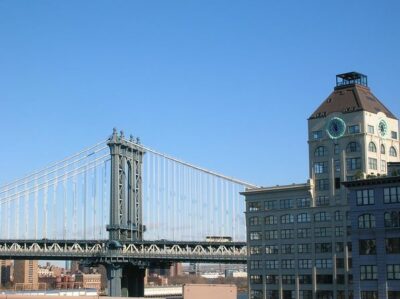 ★ 5.0Brooklyn Bridge & DUMBO Neighborhood Tour – from Manhattan to BrooklynFrom $49826 reviews
 ★ 5.0Central Park Guided Walking TourFrom $44774 reviews
 ★ 4.6Private Walking Tour with a LocalFrom $55771 reviews
 ★ 5.0NYC Lower East Side Walking and Food TourFrom $94646 reviews
Browse the lists this tour appears in