
Reviewed · NYC WALKING TOURS
Lower Manhattan Self-Guided Walking Tour and Scavenger Hunt
Lower Manhattan feels like a game board. This self-guided scavenger hunt turns big landmarks into clue stops, and I love how the smartphone challenges keep you moving while explaining what each place means. One thing to watch: the route starts near Battery Park, and if construction blocks access, early clue locations can be harder to reach.
You can take it at your own pace, and it’s built for an easy 2 to 3 hours of walking. You’ll also get a fun extra layer: film and TV scene locations mixed into the sights, plus a long list of over 30 challenges to solve on your phone.
Because you’re relying on a mobile website, you’ll want reliable internet (Wi‑Fi isn’t included). With moderate walking needs and a downtown crowd vibe, I’d bring comfortable shoes and a charged phone.
In This Review
- Key things to know before you go
- How the scavenger hunt really works on your phone
- Price and value: $44.85 per group (up to 6)
- Starting at Bowling Green: the clues kick off near the waterfront
- Walloon Settler’s Monument
- The Battery
- Korean War Veterans Memorial
- Castle Clinton National Monument
- Governors Island Ferry
- Ellis Island and The Immigrants
- Netherland Monument
- National Museum of the American Indian
- Bowling Green (again)
- From Charging Bull to Trinity: iconic photos with actual context
- Charging Bull (Wall Street Bull)
- Site of Second Presidential Mansion
- Trinity Church NYC
- FDNY Memorial Wall
- 9/11 Memorial Pools
- One World Trade Center
- The Oculus
- St. Paul’s Chapel
- Woolworth Building
- Jacob Wrey Mould Fountain
- New York City Hall
- Manhattan Bridge (passed en route)
- Pace University (walk through)
- The walk toward Federal Reserve, Federal Hall, and Wall Street’s final stretch
- Brooklyn Bridge (included)
- Benjamin Franklin Statue
- Federal Reserve Bank of New York
- Federal Hall
- Fearless Girl
- New York Stock Exchange (NYSE)
- What you’ll learn without it feeling like a textbook
- Comfort, crowds, and keeping the hunt moving
- When this hunt is a smart fit
- Should you book the Lower Manhattan self-guided scavenger hunt?
- FAQ
- How long is the Lower Manhattan self-guided walking tour?
- Where does the tour start and end?
- What is included in the scavenger hunt?
- Do I need internet on my phone?
- What language is the tour offered in?
- What’s the group size and pricing?
- What areas and landmarks does the route cover?
- What fitness level do I need?
- Is free cancellation available?
Key things to know before you go

- Self-guided, start anytime: you’re not tied to a group schedule once you’re set up
- Phone-based challenges: over 30 clue moments plus history prompts at key stops
- Major Lower Manhattan sights: from Battery and Bowling Green to the 9/11 Memorial area and Wall Street
- Film and TV tie-ins: 16 locations tied to popular movies and series
- Good family option: especially if your kids can follow clues and enjoy a bit of walking
- Construction can interrupt the early stretch: Battery Park area access can affect the first clues
New York City at street level, a few more walks
- SoHo, Little Italy, and Chinatown Walking Tour in New York
★ 5.0 · 3,153 reviews - Secrets of Grand Central Station Walking Tour New York City
★ 5.0 · 1,796 reviews - Greenwich Village Walking and Food Tasting Tour
★ 5.0 · 1,572 reviews - Artistic, Alternative Greenwich Village Walking Tour
★ 5.0 · 971 reviews
How the scavenger hunt really works on your phone
This isn’t a guided lecture where you stand still and listen. The hunt is built around your smartphone: you follow instructions through a mobile website, solve challenges at stops, and learn as you go. The fun part is that the landmarks aren’t just “things to look at.” They become answers you’re hunting for, and that pushes you to notice details you’d normally walk past.
At a practical level, your biggest job is staying ready: you need a data connection since Wi‑Fi isn’t provided. That means planning for a normal cellphone day—enough battery, enough signal, and enough patience if your connection is spotty in busy areas.
Also, this works best when you’re not rushing. Even though the tour is self-guided and you can go at your own pace, the clue flow is what makes it feel like an experience instead of just a walk between monuments. If you want to stop for photos, snack, or crowds get in your way, you’ll still feel like you’re moving with purpose.
Price and value: $44.85 per group (up to 6)
The price is $44.85 per group, and the group limit is up to 6 people. The value depends on how you split it. If you’re a small family or a couple, it’s still a reasonable way to turn a famous neighborhood into a structured activity. If you’re a trio or bigger, it becomes especially cost-friendly per person.
What you’re paying for is not just “route planning.” You’re paying for:
- a set walking route across Lower Manhattan,
- 30+ challenge prompts that guide your attention,
- and included film and TV location tie-ins (16 spots).
If you love games on trips and you’d rather explore actively than passively, this can feel like a good deal. If you mostly want a quick sightseeing sampler and you don’t like clue hunts, you may prefer a more traditional tour or an audio guide.
Starting at Bowling Green: the clues kick off near the waterfront
Your day begins at Bowling Green (New York, NY 10004), then you’re meant to work the route and end back at the meeting point. That loop is helpful. It gives you a natural “finish line,” and it makes it easier to keep momentum even if a stop takes longer than you expected.
Early on, you’re in the Battery and Lower Manhattan waterfront zone, which is where the experience can be most sensitive to real-world changes. In plain terms: if scaffolding or barriers block access, the first clue points can get annoying. One advantage is that the overall theme is still there—early Manhattan, settlement-era monuments, and the waterfront story—so even if you hit delays, you won’t feel like you’re lost.
Here’s what the opening stretch is designed to teach you.
New York City on foot, a few more routes

Walloon Settler’s Monument
This sets the tone with an early-settler angle. It’s the kind of stop that’s easy to overlook if you’re just rushing to the next famous photo spot. The hunt format makes it more likely you’ll slow down enough to read what you’re standing in front of.
The Battery
You’ll be in the Battery area, which helps frame Lower Manhattan as a place shaped by water, shipping, and early European presence. It’s also a good area to gauge your walking pace and phone readiness before you head deeper into the more crowded parts of downtown.
Korean War Veterans Memorial
This adds a modern layer to the neighborhood’s monument mix. It’s a reminder that Lower Manhattan isn’t only old buildings and financial power—there are dedicated memorials that stand out when you stop and actually look.
Castle Clinton National Monument
Castle Clinton is one of those names that sounds historic—and it is. Within the hunt, it typically feels like a checkpoint that connects early city development to the broader story of immigration and arrivals.
Governors Island Ferry
This is a clue stop that points you to the geography of arrivals and movement. Even without a ferry ride, the area helps you understand how the islands off the waterfront relate to New York’s bigger story.
Ellis Island and The Immigrants
These stops push you into immigration history. The hunt’s structure makes the subject easier to follow because you’re prompted at each point instead of trying to absorb everything at once from signage.
Netherland Monument
Another “don’t just photograph it” moment. This kind of monument stop is where the app-style challenges can make the learning feel game-like rather than like homework.
National Museum of the American Indian
This is an important cultural anchor in the route. It also gives your walk variety—you’re not only cycling through financial icons. You’re also seeing how Lower Manhattan includes institutions tied to Native history and contemporary culture.
Bowling Green (again)
Even though Bowling Green is your start point, coming back through it makes sense in a route like this. It’s a major square in downtown history, and the hunt uses it like a hub: you’re resetting your bearings before the Wall Street intensity begins.
From Charging Bull to Trinity: iconic photos with actual context
As you move east and deeper into the financial district, the hunt turns the volume up. You’ll hit places that everyone recognizes—then the phone prompts try to make you notice something besides the crowd.
Charging Bull (Wall Street Bull)
Yes, it’s famous. But the trick is that the hunt pushes you to treat it like a clue location instead of a quick stop-for-a-photo. In a crowded spot like this, having a task helps you navigate the lines and pick better moments to look closely.
Site of Second Presidential Mansion
This adds a curveball to the Wall Street storyline. It’s a reminder that presidents and early government buildings were once part of this same neighborhood. The hunt format helps prevent that “I’ve seen that sign before” feeling.
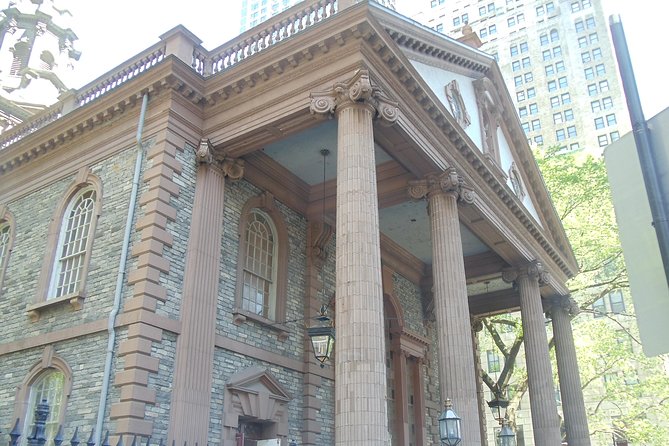
Trinity Church NYC
Trinity is the kind of stop where the architecture and history usually deserve more than a glance. The scavenger hunt approach encourages you to slow down and absorb what you’re looking at, instead of treating it like a photo backdrop.
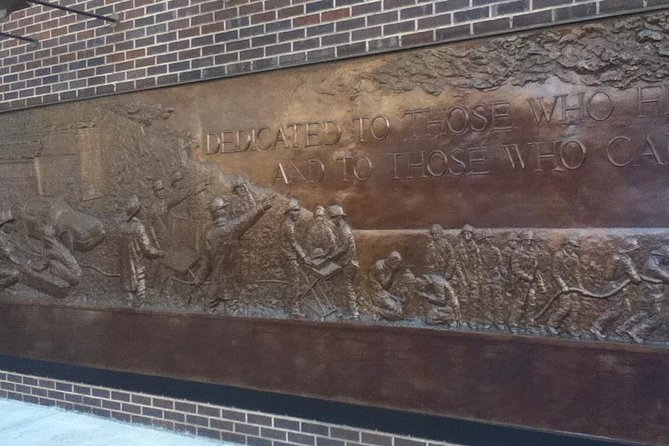
FDNY Memorial Wall
This is one of the route’s more solemn stops. The way the hunt uses it matters: it’s not only about seeing the wall, but also about understanding why it’s there in the larger story of the area.
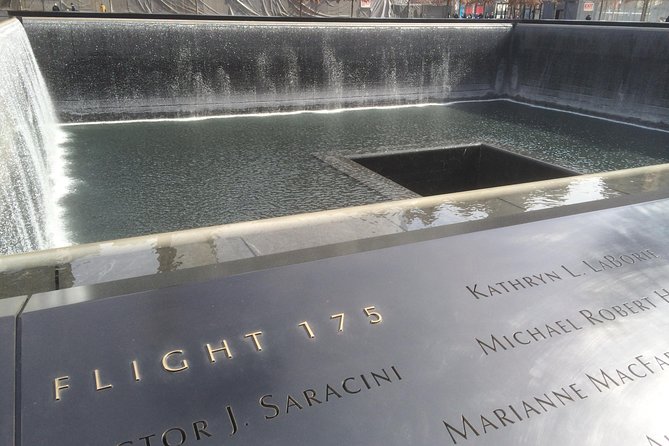
9/11 Memorial Pools
The hunt takes you to the 9/11 Memorial area and keeps you connected to the site through clue challenges. This is the stretch where you’ll feel the power of doing a structured walk rather than rushing from monument to monument. It’s also where you should expect crowds and slow pacing.
One World Trade Center
This is a “look up” moment. It gives you the skyline reference point that makes the rest of the area easier to orient. In a hunt like this, landmarks like this help you understand distance and direction between stops.
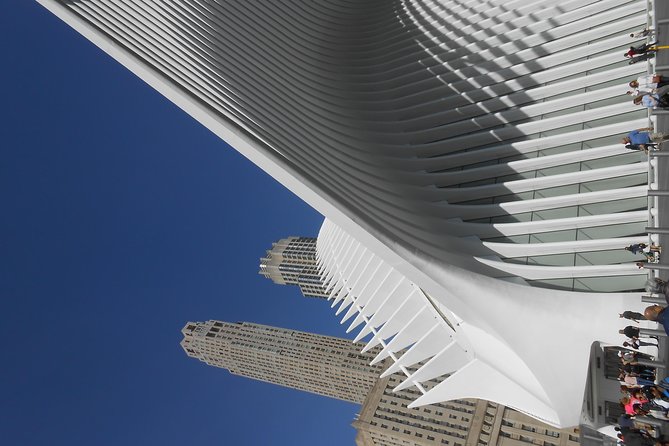
The Oculus
The Oculus is a visual break: modern design, open space, and a clear sense of movement through the transit area. In clue-driven travel, these stops are helpful because they give you a rhythm change between heavier memorials and busy commercial streets.
St. Paul’s Chapel
You’ll pass this on the way as the route moves through the memorial/transit zone and onward. It’s a stop that tends to feel meaningful because it contrasts with the modern surroundings around it.
Woolworth Building
This is a classic skyline detail for a reason. The hunt makes it more than a pretty exterior stop by giving you prompts that connect the building to the wider story of Lower Manhattan’s growth.
Jacob Wrey Mould Fountain
This is a great “slow your pace” stop. Fountains and plazas are often where you can actually breathe, grab water, and reset your phone before continuing.
New York City Hall
City Hall brings the route into civic New York—government, policy, and the public face of the city. If you’ve been thinking only about finance and memorials, this stop helps balance the story.
Manhattan Bridge (passed en route)
Even though not every route point is a dramatic landmark, the idea of seeing the bridge area is built into this walk. It helps you feel the physical layout of the city as you work from one historic zone to another.
Pace University (walk through)
This gives you a “real living neighborhood” feeling. Adding an educational area in the walking path breaks up the pure monumental loop and makes the walk feel like it’s happening in a city, not just on a museum circuit.
The walk toward Federal Reserve, Federal Hall, and Wall Street’s final stretch
After City Hall and the civic corridor, the route leans hard into the money-and-government core of Lower Manhattan.
Brooklyn Bridge (included)
Seeing the Brooklyn Bridge is a payoff moment. It’s a big vista that helps tie your understanding of Lower Manhattan to a broader city connection. It’s also one of the places where walking feels fun because you get long lines of sight.
Benjamin Franklin Statue
This functions like a narrative anchor—someone you recognize, tied to a place you might otherwise treat like background. The hunt format gives it a reason to matter.
Federal Reserve Bank of New York
This stop matters because it’s literally the modern symbol of money systems. The hunt’s clue structure makes it more engaging than just standing outside a major institution.
Federal Hall
Federal Hall connects government roots to the neighborhood that later became a financial hub. If you like political and economic history in the same breath, this part of the walk can feel especially satisfying.
Fearless Girl
Fearless Girl is another crowd magnet, but in a hunt it works better. The phone challenges help turn a quick “look, I’ve seen that statue” moment into something you actually read and interpret.
New York Stock Exchange (NYSE)
Ending your Wall Street loop at the NYSE gives the route a strong finish. It’s one of those stops where the atmosphere alone tells you you’re in the center of the action—then the hunt helps you link the symbolism to the place’s meaning.
What you’ll learn without it feeling like a textbook
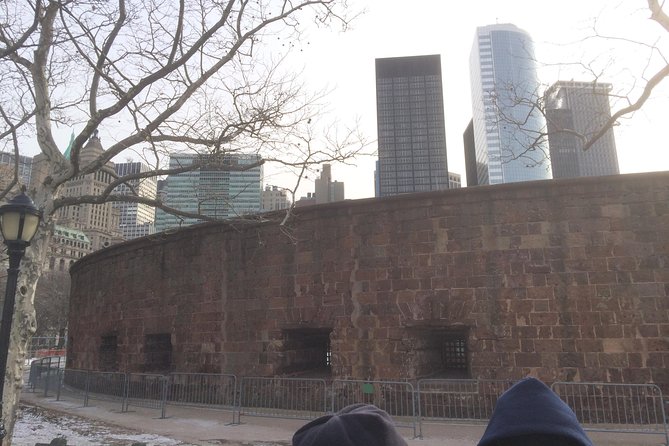
One of the best things about this tour style is that the route is built around the idea that you’ll connect names, monuments, and places into a story as you walk. Instead of memorizing, you’re solving. Instead of wandering, you’re guided by clue moments.
That’s why the “over 30 challenges” piece is more than a number. It’s a built-in pace controller. Each stop gives you a reason to pay attention, and that turns Lower Manhattan into a sequence you can recall later instead of ten random photo stops.
And the bonus film and TV tie-ins—16 locations—are a sneaky way to get extra engagement. If you watch movies and series set in New York, the hunt gives you a chance to go from viewer to detective.
Comfort, crowds, and keeping the hunt moving
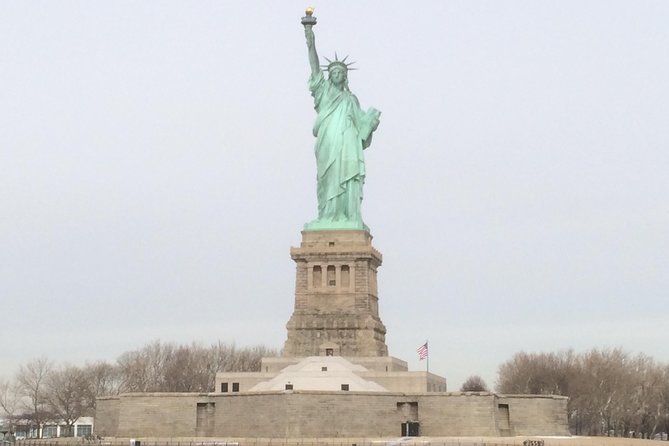
Lower Manhattan is crowded. That’s not the tour’s fault. What you control is how you handle it.
- Bring comfortable shoes and expect uneven sidewalks.
- Keep your phone charged because the hunt depends on a mobile website and internet access.
- Plan for pauses. Even when you go at your own pace, you’ll want time to read clues, answer questions, and stand somewhere safe while looking up at landmarks.
- If you run into access blocks early in the route near Battery Park, you may lose time. The experience is structured around stop points, so delayed access can make those early tasks feel frustrating.
The route is also listed as requiring moderate physical fitness. That’s enough walking for a full afternoon for many people, even if it’s not a long-distance hike. If you’re traveling with kids, it helps to have a mix of energy: the best moments are when everyone enjoys the clue-solving part.
When this hunt is a smart fit

This is a great pick if you:
- enjoy independent activities where you can start and go at your own pace,
- like learning through challenges rather than lectures,
- want to hit the biggest Lower Manhattan landmarks without booking separate stops,
- and you’re traveling with family members old enough to follow clue prompts.
It also makes sense if you’re the kind of person who likes to “see New York” but hates wasting a day on aimless walking. The hunt keeps you moving in a line, with enough landmarks to feel like a real tour.
Should you book the Lower Manhattan self-guided scavenger hunt?
Book it if you want a fun, phone-driven way to connect major Lower Manhattan sights—from Bowling Green and the Battery to the 9/11 Memorial area and Wall Street—while solving 30+ challenges and spotting film and TV locations. It’s especially good value when split among a group of up to six.
Skip it or go in with eyes open if you know you’ll be stressed by construction or blocked access near the Battery Park start area, or if you’d rather have a human guide talking you through instead of working from a mobile prompt. If you’re flexible and like clue-based sightseeing, this is a very satisfying way to turn famous landmarks into something you actually remember.
FAQ
How long is the Lower Manhattan self-guided walking tour?
It’s listed as about 3 hours, and it’s described as a 2 to 3-hour self-guided scavenger hunt.
Where does the tour start and end?
It starts at Bowling Green, New York, NY 10004, USA, and it ends back at the meeting point.
What is included in the scavenger hunt?
You get the scavenger hunt with over 30 challenges, a historical and architectural self-guided walking tour, and you’ll see 16 film locations from favorite movies and TV series.
Do I need internet on my phone?
Yes. Wi-Fi is not included, and you need internet access to complete the scavenger hunt.
What language is the tour offered in?
It’s offered in English.
What’s the group size and pricing?
It costs $44.85 per group and is for up to 6 people. It’s private, so only your group participates.
What areas and landmarks does the route cover?
The route begins around Bowling Green and the Battery, then goes up Broadway toward the National September 11 Memorial & Museum area. It continues past places like City Hall, the Federal Reserve, Federal Hall, and the New York Stock Exchange.
What fitness level do I need?
The tour notes that you should have a moderate physical fitness level.
Is free cancellation available?
Yes. Free cancellation is available up to 24 hours in advance for a full refund. If you cancel less than 24 hours before the start time, the amount paid is not refunded.
More Tours in New York City
- Statue of Liberty and Ellis Island Tour: All Options★ 5.0 · 13,571 reviews
- New York in One Day Guided Sightseeing Tour★ 5.0 · 13,166 reviews
- Central Park Pedicab Guided Tours★ 5.0 · 7,108 reviews
- New York City: Manhattan Helicopter Tour★ 4.7 · 7,076 reviews
- Private Central Park Pedicab Tour★ 5.0 · 6,981 reviews
More Tour Reviews in New York City
- NYC: SUMMIT One Vanderbilt Tickets★ 4.7 · 51,195 reviews
- NYC: Empire State Building Tickets – Observatory & Museum★ 4.7 · 25,757 reviews
- New York City: Statue of Liberty & Ellis Island with Ferry★ 4.6 · 18,683 reviews
- New York City: American Museum of Natural History Ticket★ 4.5 · 15,447 reviews
- Statue of Liberty and Ellis Island Tour: All Options★ 5.0 · 13,571 reviews
New York City, One Block at a Time
- SoHo, Little Italy, and Chinatown Walking Tour in New York★ 5.0 · 3,153 reviews
- Secrets of Grand Central Station Walking Tour New York City★ 5.0 · 1,796 reviews
- Greenwich Village Walking and Food Tasting Tour★ 5.0 · 1,572 reviews
- Artistic, Alternative Greenwich Village Walking Tour★ 5.0 · 971 reviews
- Brooklyn Bridge & DUMBO Neighborhood Tour – from Manhattan to Brooklyn★ 5.0 · 826 reviews
Just in: the newest New York City reviews on our desk





NYC Walking Tours, compared.
 ★ 5.0SoHo, Little Italy, and Chinatown Walking Tour in New YorkFrom $393,153 reviews
 ★ 5.0Secrets of Grand Central Station Walking Tour New York CityFrom $391,796 reviews
 ★ 5.0Greenwich Village Walking and Food Tasting TourFrom $941,572 reviews
 ★ 5.0Artistic, Alternative Greenwich Village Walking TourFrom $39971 reviews
 ★ 5.0Brooklyn Bridge & DUMBO Neighborhood Tour – from Manhattan to BrooklynFrom $49826 reviews
 ★ 5.0Central Park Guided Walking TourFrom $44774 reviews
 ★ 4.6Private Walking Tour with a LocalFrom $55771 reviews
 ★ 5.0NYC Lower East Side Walking and Food TourFrom $94646 reviews
Browse the lists this tour appears in