
Reviewed · NYC WALKING TOURS
Midtown Manhattan Art and Architecture Walking Tour
Midtown turns into a lesson when you walk it. I love how the tour explains NYC’s building rules through real places (zoning and POPS), and I especially love the small group feel, where someone like Robert Amell (often called Rob) can actually keep up with your questions. You’ll also get access to art you normally only notice from a street corner, inside lobbies and through passageways.
My one caution: you’ll cover a lot of ground in 2 to 3 hours, so plan for steady walking and dress for the season, since the schedule depends on weather conditions.
In This Review
- Key highlights you’ll feel on the sidewalk
- A Midtown walk that teaches you how NYC gets put together
- Starting near Hells Kitchen and Times Square: zoning turns into a sightseeing tool
- Stop-by-stop: the “rules of the game” phase
- Why this early section is worth your attention
- Times Square’s cultural engines, plus the public art you’d miss
- The Brill Building stop: music and media as a Midtown superpower
- 787 7th Avenue and the corporate art shift
- 6 1/2 Avenue: the Midtown in-between that feels like a secret
- Inside UBS and Time & Life: art in lobbies that act like mini-museums
- UBS Art Gallery: curated without the museum formality
- 1271 Avenue of the Americas: Modern design you can see up close
- Sixth Avenue to Rockefeller Center: the Art Deco-to-Modern story in one walking spine
- Radio City and the Roxy naming story
- The Rink: holdouts, Diego Rivera, and reversal-of-fortune energy
- International Building lobby art and the St. Pat’s connection
- Fifth Avenue through Park Avenue: St. Pat’s, then the corporate mansion-to-office evolution
- Park Avenue stop: train tracks to corporate towers
- Christie’s Sculpture Garden: a small pause with big scale
- Papillon Bistro, then POPS and billion-dollar views on 57th Street
- Practical value: who this tour is best for
- Should you book this Midtown art and architecture walking tour?
- FAQ
- What’s the duration and price of the Midtown Manhattan Art and Architecture Walking Tour?
- How big are the groups?
- Where does the tour start and end?
- Is the tour offered in English?
- Does the tour run in different weather?
- What’s the cancellation policy?
Key highlights you’ll feel on the sidewalk
- POPS made practical: you’ll see how privately owned public spaces shape what you can access
- Famous-to-you Midtown landmarks, plus the “how it was built” story from Times Square up toward St. Patrick’s
- Actual artwork in real transit and corporate spaces, not just façades
- Architecture eras you can spot fast, from Beaux-Arts to ornament-free towers
- One-on-one pacing potential thanks to a max group size of five
New York City at street level, a few more walks
- SoHo, Little Italy, and Chinatown Walking Tour in New York
★ 5.0 · 3,153 reviews - Secrets of Grand Central Station Walking Tour New York City
★ 5.0 · 1,796 reviews - Greenwich Village Walking and Food Tasting Tour
★ 5.0 · 1,572 reviews - Artistic, Alternative Greenwich Village Walking Tour
★ 5.0 · 971 reviews
A Midtown walk that teaches you how NYC gets put together
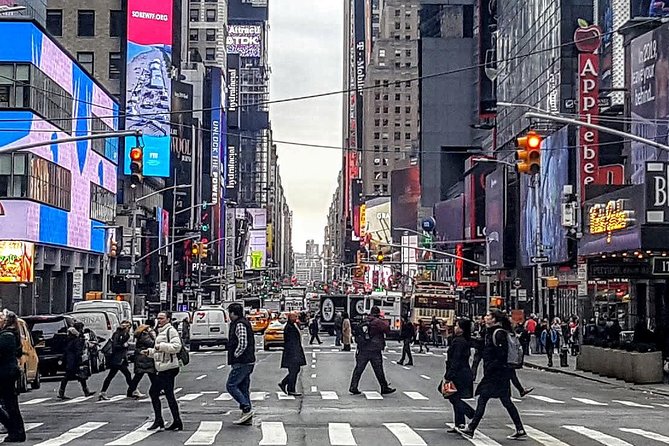
If you’ve ever wandered Midtown thinking, I know this place, then somehow you still feel lost, this tour helps you fix that. It doesn’t just point at pretty buildings. It explains why they look the way they do—using the city’s zoning logic and the public spaces created inside private properties.
The “secret sauce” is the mix. You start near Times Square, then work your way uptown toward St. Patrick’s Cathedral and end on 57th Street near Billionaire’s Row. Along the way, you bounce between outdoor streetscapes and semi-public interiors: hotel art, corporate lobbies, arcades, and the kind of places you’d miss if you weren’t looking for them.
And at $59 per person for about 2 to 3 hours, it’s a pretty efficient use of your time. You’re not paying for individual entries to attractions; instead, you’re paying for a guide who can connect the dots between architecture, public art, and the city’s development rules.
Starting near Hells Kitchen and Times Square: zoning turns into a sightseeing tool
The tour begins at 810 8th Ave and heads toward the boundary of Hells Kitchen and Times Square. This first stretch is about getting your bearings and learning the language Midtown uses.
Stop-by-stop: the “rules of the game” phase
Eighth Avenue is where the guide sets the framework. You get a quick path through historical building styles—how Midtown moved uptown over time, how the city’s architecture shifted from overblown Beaux-Arts to skyscrapers that prefer restraint. The tour also introduces the fundamentals of zoning, plus POPS—those privately owned spaces that act public enough for you to use them, often through lobbies, arcades, or small plazas.
A detail I think you’ll appreciate here: the guide doesn’t treat POPS like a random bonus. They’re treated like a key to understanding the city layout. Without that, Midtown can feel like a wall of buildings. With it, it starts to feel like a system.
Next, you head to the subway-level space below Worldwide Plaza at 350 W 50th St. The focus is on how evolving zoning law can show up in the built environment—down to granite and art embedded in the public realm. This is the point where the tour starts feeling different from the usual “look at that building” walk.
Then you step into the area around citizenM New York Times Square, with a short stop near public-facing wall art by Julian Opie. The skyline scan matters too: you learn how to track larger Midtown features like Hearst Tower and the New York Times Building from this chunk of the city.
From there, the tour takes a northward view direction near the Allianz Building and Warner Music Group. The guide points out how zoning helped produce a look inspired by Tokyo—another reminder that city rules don’t just control height. They control style and massing, and you can actually see the results.
New York City on foot, a few more routes

Why this early section is worth your attention
Most Midtown tours start with landmarks and hope you’ll care about the history later. This one does it the other way around. Once you understand zoning logic and POPS, the rest of the day turns into a set of “oh, that’s why” moments.
It also helps that the group is ultra-intimate: max five people. When the guide can slow down for questions, you don’t miss the why.
Times Square’s cultural engines, plus the public art you’d miss
After the zoning primer, the tour swings into Midtown’s cultural role—especially around Times Square and what came before today’s mix of screens, stages, and corporate signage.
The Brill Building stop: music and media as a Midtown superpower
At the Brill Building, the guide connects the area to the history of American popular culture—music, theater, radio, television, magazines, newspapers, advertising, and even the automotive world. It’s not a vague storyline. It’s tied to the way Midtown functioned like a hub, pushing media and entertainment outward.
If you like to understand cities as systems, this stop makes Midtown feel less like a collection of blocks and more like a machine that kept producing culture.
787 7th Avenue and the corporate art shift
Next you move through a cluster of buildings and urban “in-between” spaces, including views toward the Winter Garden and the Taft Hotel area, plus a stop connected to the building that inspired the song MONY MONY.
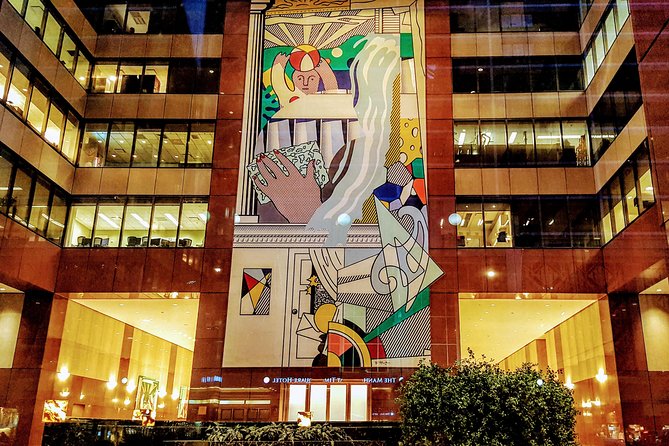
The tour then transitions into private corporate space—starting with the lobby of 787 7th Avenue. This is where public access and corporate money meet public-facing art. You’ll see Roy Lichtenstein’s Mural with Blue Brushstroke, a work that was painted in place before the building opened. It’s a great example of how Midtown corporate buildings didn’t just store offices. They also became canvases.
Behind the main lobby area, you’ll spot works by Sol LeWitt and Barry Flannagan in a POPS setting. That pairing is smart: it lets you compare approaches to abstraction and sculpture without needing a museum ticket.
6 1/2 Avenue: the Midtown in-between that feels like a secret
Then comes 6 1/2 Avenue, described as a mid-block arcade that doesn’t quite connect Times Square with Central Park. This is the kind of space you’d probably never stumble into on your own, which is exactly the point of a tour built around access.
Short, useful, and strangely satisfying—because it’s not a “big moment,” it’s a small structural clue about how Midtown got stitched together.
Inside UBS and Time & Life: art in lobbies that act like mini-museums
As the tour moves uptown, you’ll start noticing a pattern: Midtown’s most interesting art is often placed where you’re forced to slow down—lobbies, public galleries, and transit-adjacent spaces.
UBS Art Gallery: curated without the museum formality
At the UBS Art Gallery, you get the lobby experience: temporary and permanent exhibits in a setting that feels designed for quick looking. The guide highlights works including Frank Stella and Sarah Morris.
Even if you don’t consider yourself an art person, this stop works because you’re not asked to “understand everything.” You’re shown how to look, and the guide gives you just enough context to make the art land.
1271 Avenue of the Americas: Modern design you can see up close
Next is the Time and Life building at 1271 Avenue of the Americas, with stainless steel panels and a terrazzo floor—classic Modern cues you can spot quickly. Large wall art by Fritz Glarner, a student of Mondrian, ties Midtown to a longer thread of European modernism.
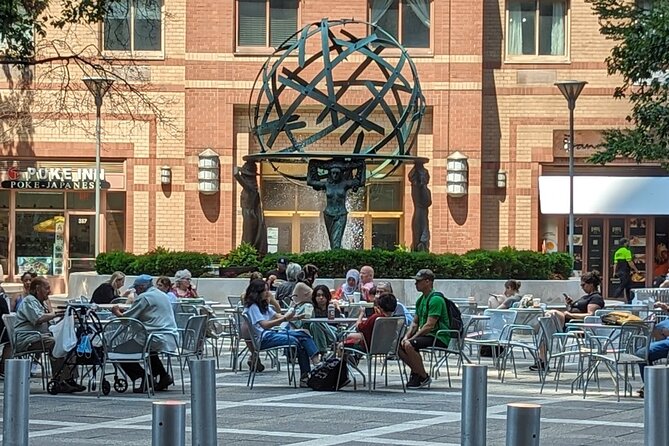
Then the tour shifts again to monumental public-facing works connected with artists including Hiroshu Senju and Kan Yasuda, with La Gran Manzana outside on the plaza. This is the “bigger scale” moment where the guide helps you read public art as part of city planning, not decoration.
Sixth Avenue to Rockefeller Center: the Art Deco-to-Modern story in one walking spine
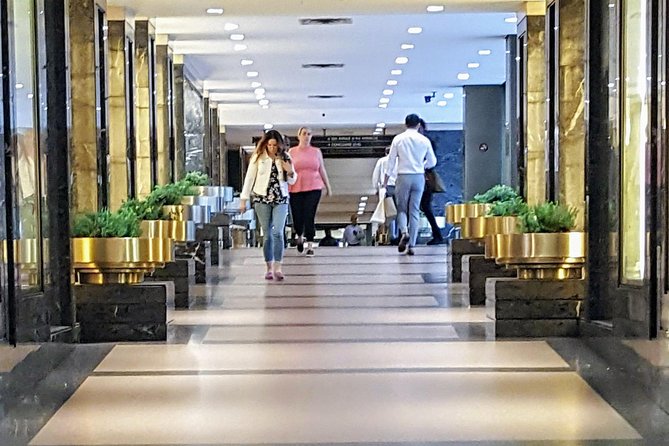
Now you hit Sixth Avenue (Avenue of the Americas), and the day turns into a story you can almost see written in the buildings.
First, you pause near 1221 Avenue of the Americas (the McGraw Hill building) for a look at a work by Mark Bradford. This stop is a nice contrast: street-level thinking and modern visual language inside a Midtown setting known for heavy corporate design.
Then you step under the idea of Skyscraper Alley, where the guide points out the worst outcomes of zoning-driven design. It’s not just negativity. It’s an important counterbalance. You’ll also notice how the “across the street” side begins to feel more intentional.
That leads directly into Rockefeller Center, where the guide ties it to a civic-minded entrepreneurial push—seriously, the project has stories built into it. The tour points out how Art Deco defined the early look, then explains subtle shifts as the project progressed after the passing of Raymond Hood.
Radio City and the Roxy naming story
At Radio City Music Hall, you get the origin story for the name Roxy that’s still used in many venue titles. It’s a small detail, but it makes Midtown feel connected across time: what you see today can be traced to how the industry was branded back then.
The guide also connects the dots between radio history and David Sarnoff, adding politics and Rockefeller family dynamics to the backdrop. If you like story-driven architecture, this part gives meaning to what could otherwise feel like famous buildings with no emotional thread.
The Rink: holdouts, Diego Rivera, and reversal-of-fortune energy
Outside at Rockefeller Center’s rink, you see the Christmas-tree setting year after year. But the guide talks about it like it had a plot arc: holdouts, Diego Rivera and the Rockefellers, the ice-skating rink story, and a major reversal-of-fortune element tied to how the place ended up becoming iconic. It’s the kind of “you wouldn’t guess this from the view” story that makes walking tours worth the money.
International Building lobby art and the St. Pat’s connection
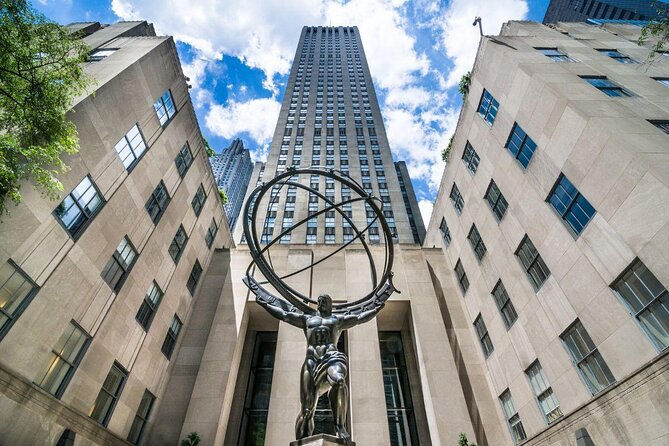
In the International Building, you get Light and Movement by Michio Lhaza inside. Outside, Atlas by Lee Lawrie faces St. Patrick’s Cathedral, which helps you understand why this stretch feels like a composed urban theater—buildings placed for sightlines, not just profit.
Fifth Avenue through Park Avenue: St. Pat’s, then the corporate mansion-to-office evolution
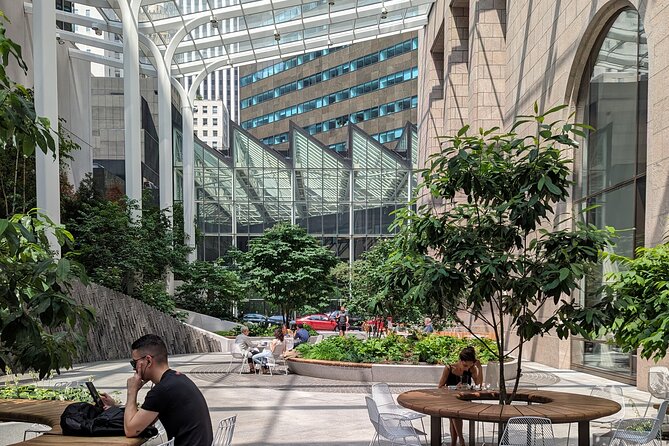
Once you reach St. Patrick’s Cathedral, the guide frames the whole area as a kind of architectural timeline. Fifth Avenue becomes a storyline told through buildings, not just a street you walk down.
Then you cross toward Park Avenue, where you’ll spot juxtapositions—Modern against Beaux-Arts—and a notable transformation: the Villard Houses are now the Palace Hotel.
Park Avenue stop: train tracks to corporate towers
At Park Avenue, the tour covers the evolution from open train tracks to high-end residential, then to corporate buildings. It’s a useful way to make sense of why Park Avenue looks both polished and strangely layered.
You’ll specifically discuss major buildings including:
- The Health and Racquet Club (1918)
- St. Bart’s (1919)
- The New York Central Building (1929)
- The Waldorf Astoria (1931)
- The GE Building (1931)
- Lever House (1952)
- The Seagram Building (1958)
- The Met Life Building (1963)
If you’ve ever wondered why Midtown feels like it keeps rewriting itself every few decades, this stop is the explanation.
Christie’s Sculpture Garden: a small pause with big scale
At Christie’s Sculpture Garden (535 Madison Avenue), the tour ties together architecture, zoning, and sculpture, focusing on French artists spaced about 20 years apart: Leger, DuBuffet, and Francois-Xavier LaLannes. It’s a good moment to slow down before you head toward the final corporate POPS stretch.
Papillon Bistro, then POPS and billion-dollar views on 57th Street
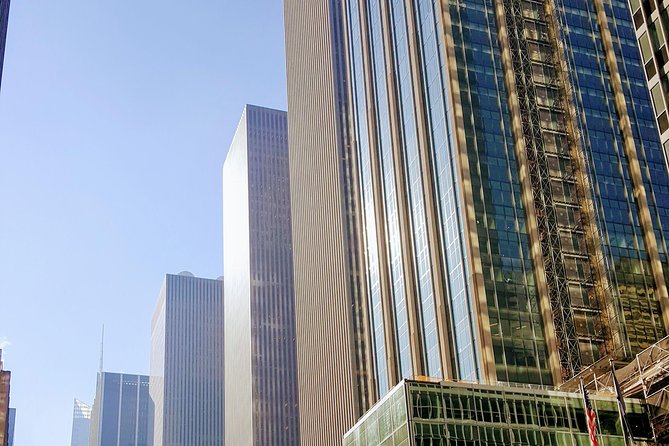
After the sculpture garden, you get a built-in food option: Papillon Bistro & Bar at the market-sized real estate pressure point of Midtown. The guide frames it as a successful holdout in a high pressure market. This matters because it gives you a real-life example of how some spaces survive while others get replaced.
If you have time, the tour also pushes into more POPS territory connected with designs by notable architects and artists. You may check out the outdoor POPS of a Philip Johnson building and, if time allows, go inside to see Solid Sky by Alicia Kwade.
Then you likely see the IBM Building’s POPS, which the tour treats as a standout in Midtown—plus Applefest pieces. It’s another moment where corporate art and public access overlap in a way that feels very New York.
Finally, the tour ends on 57th Street beneath Billionaire’s Row, right by the view corridor near E 57 St & 5 Av—and yes, it’s meant to close on that skyline sense of height and price.
Practical value: who this tour is best for
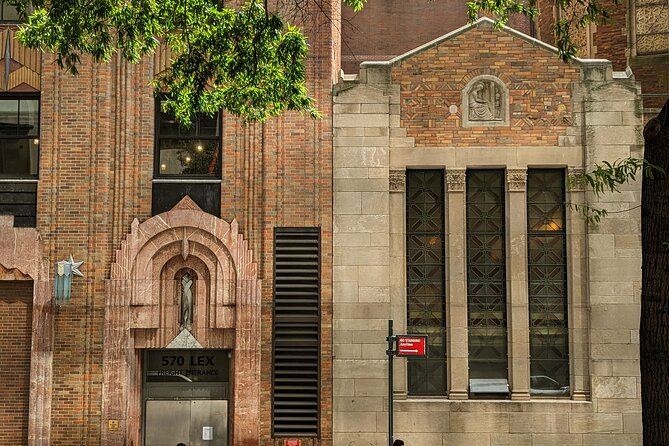
This is a strong choice if you:
- Want a Midtown walk that teaches you the logic behind what you see
- Like public art and the idea of art in places you normally pass without looking
- Prefer small groups and the chance to ask questions
- Travel with someone who enjoys architecture, but also want the stories made human
It’s also a good fit if you’ve been to New York before. The tour helps you notice Midtown’s connective tissue, not just the iconic snapshots.
Possible snag: since you move through public access spaces, some indoor or semi-private parts can be affected by holidays or special closures. On special days, your guide may adjust the route slightly, so keep an open mind if a passageway or POPS area isn’t accessible.
Should you book this Midtown art and architecture walking tour?
Book it if you want Midtown with explanations you can actually use. At $59 for 2 to 3 hours, small group size, and free-access public art stops, you’re paying for interpretation and access—not ticket gates.
Skip it if you strongly dislike walking or need a very slow pace, because you’ll be on your feet for the whole arc from 8th Avenue up toward 57th Street. Also, if you have a tight schedule where you can’t adapt to weather, it’s safer to plan around conditions.
If you can handle a brisk city stroll and you like learning why New York looks the way it does, this is one of the best ways to spend a half-day in Midtown.
FAQ
What’s the duration and price of the Midtown Manhattan Art and Architecture Walking Tour?
The tour runs about 2 to 3 hours and costs $59.00 per person.
How big are the groups?
This tour has a maximum group size of 5 travelers, which keeps the experience very intimate.
Where does the tour start and end?
It starts at 810 8th Ave, New York, NY 10019 and ends at E 57 St & 5 Av, New York, NY 10022, with the tour ending east of Tiffany’s on 57th Street.
Is the tour offered in English?
Yes, it’s offered in English.
Does the tour run in different weather?
The tour operates in all weather conditions, but it also says it may be canceled if there is poor weather, with an option to choose another date or receive a full refund.
What’s the cancellation policy?
You can cancel for a full refund up to 24 hours in advance of the experience’s start time. If you cancel less than 24 hours before, the amount paid is not refunded.
More Tours in New York City
- Statue of Liberty and Ellis Island Tour: All Options★ 5.0 · 13,571 reviews
- New York in One Day Guided Sightseeing Tour★ 5.0 · 13,166 reviews
- Central Park Pedicab Guided Tours★ 5.0 · 7,108 reviews
- New York City: Manhattan Helicopter Tour★ 4.7 · 7,076 reviews
- Private Central Park Pedicab Tour★ 5.0 · 6,981 reviews
More Tour Reviews in New York City
- NYC: SUMMIT One Vanderbilt Tickets★ 4.7 · 51,195 reviews
- NYC: Empire State Building Tickets – Observatory & Museum★ 4.7 · 25,757 reviews
- New York City: Statue of Liberty & Ellis Island with Ferry★ 4.6 · 18,683 reviews
- New York City: American Museum of Natural History Ticket★ 4.5 · 15,447 reviews
- Statue of Liberty and Ellis Island Tour: All Options★ 5.0 · 13,571 reviews
New York City, One Block at a Time
- SoHo, Little Italy, and Chinatown Walking Tour in New York★ 5.0 · 3,153 reviews
- Secrets of Grand Central Station Walking Tour New York City★ 5.0 · 1,796 reviews
- Greenwich Village Walking and Food Tasting Tour★ 5.0 · 1,572 reviews
- Artistic, Alternative Greenwich Village Walking Tour★ 5.0 · 971 reviews
- Brooklyn Bridge & DUMBO Neighborhood Tour – from Manhattan to Brooklyn★ 5.0 · 826 reviews
Just in: the newest New York City reviews on our desk




NYC Walking Tours, compared.
 ★ 5.0SoHo, Little Italy, and Chinatown Walking Tour in New YorkFrom $393,153 reviews
 ★ 5.0Secrets of Grand Central Station Walking Tour New York CityFrom $391,796 reviews
 ★ 5.0Greenwich Village Walking and Food Tasting TourFrom $941,572 reviews
 ★ 5.0Artistic, Alternative Greenwich Village Walking TourFrom $39971 reviews
 ★ 5.0Brooklyn Bridge & DUMBO Neighborhood Tour – from Manhattan to BrooklynFrom $49826 reviews
 ★ 5.0Central Park Guided Walking TourFrom $44774 reviews
 ★ 4.6Private Walking Tour with a LocalFrom $55771 reviews
 ★ 5.0NYC Lower East Side Walking and Food TourFrom $94646 reviews