
Reviewed · NYC WALKING TOURS
New York: Hamilton and Washington Revolutionary Walking Tour
History sounds loud on this Lower Manhattan walk. You’ll trace Washington and Alexander Hamilton through the streets around Bowling Green, with period-style storytelling from a licensed guide and American-history historian.
I love two things most: the Declaration of Independence reading reenactment on July 9, 1776, and the way the tour makes the Battle of Brooklyn feel close and urgent, including Washington’s retreat. The third piece is a bonus: you also get the human side of power and politics, not just dates.
One consideration: this is a tight three hours, and food is not included, so plan for a snack or water breaks on your own while the route stays moving in snow, rain, or shine.
In This Review
- Key things to know before you go
- Start at 1 Bowling Green: Hamilton’s New York address
- Bowling Green: the King George statue moment
- July 9, 1776: the Declaration reenactment that hits harder
- The Battle of Brooklyn and Washington’s retreat
- Fraunces Tavern: Washington’s farewell as a human moment
- First U.S. Congress and Washington’s presidency: where government becomes real
- Hamilton’s financial plan and the Hamilton–Burr rivalry thread
- The people history usually forgets: women, African Americans, and everyday New Yorkers
- Hamilton and Eliza’s resting place: closing the loop with legacy
- Price and value: what $47 buys in 3 hours
- Weather, pacing, and what to wear for a good experience
- Who should book this Washington and Hamilton walk
- Should you book? My decision guide
- FAQ
- FAQ
- How much does the Hamilton and Washington Revolutionary Walking Tour cost?
- How long is the tour?
- Where do we meet for the tour?
- Is the tour guide English-speaking?
- What should I bring for the tour?
- Does the tour run in rain or snow?
- Is food and drink included?
- Are pets allowed on the tour?
- What is the cancellation policy?
Key things to know before you go
- July 9, 1776 Declaration reenactment you can actually picture, not just hear about
- Battle of Brooklyn + Washington’s retreat explained through what changed on the ground
- Fraunces Tavern farewell scene where leaders say goodbye like people, not icons
- Hamilton’s financial plan and early government tied to specific places you walk past
- Period images and guided storytelling so you’re not just staring at street corners
- More than famous men: women, African Americans, and everyday New Yorkers are part of the story
New York City at street level, a few more walks
- SoHo, Little Italy, and Chinatown Walking Tour in New York
★ 5.0 · 3,153 reviews - Secrets of Grand Central Station Walking Tour New York City
★ 5.0 · 1,796 reviews - Greenwich Village Walking and Food Tasting Tour
★ 5.0 · 1,572 reviews - Artistic, Alternative Greenwich Village Walking Tour
★ 5.0 · 971 reviews
Start at 1 Bowling Green: Hamilton’s New York address
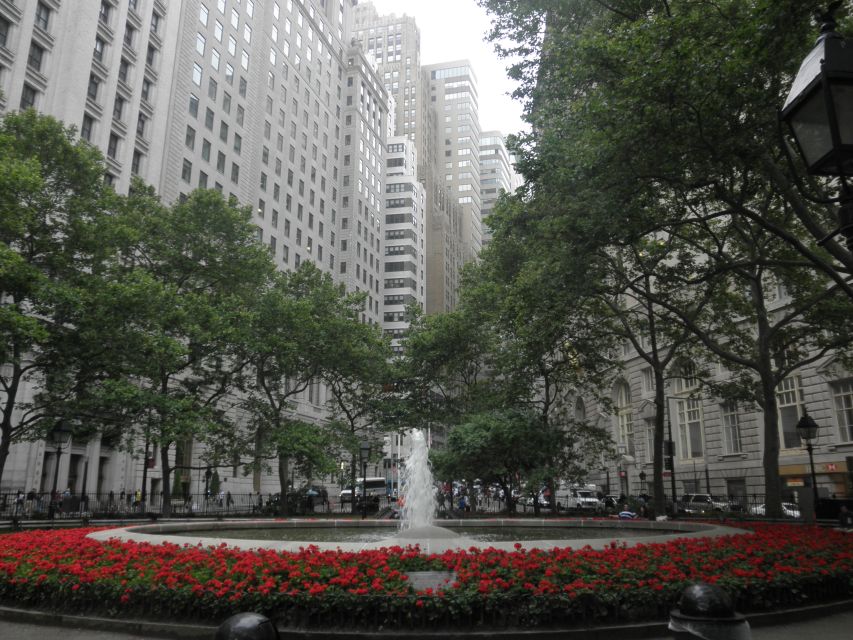
The tour meets on the steps of 1 Bowling Green, at a spot tied to the Alexander Hamilton U.S. Custom House and the National Museum of the American Indian. It’s a smart starting point because you’re already standing in Lower Manhattan’s “real estate of the Revolution,” where the Revolutionary era and early U.S. government still echo through the skyline.
Right away, the guide’s approach matters. You’re not just doing a geography lesson. You’re following a story that links two towering figures—George Washington and Alexander Hamilton—through the same kind of streets they would have recognized in concept, even if the buildings are different today.
You should also know this tour is built to keep your attention with storytelling and visuals (period images are part of the experience). That means you’re more likely to remember what you heard because you can associate it with a scene and a purpose.
If you’re a history fan, you’ll like the momentum. If you’re new to the Revolution, you’ll like that the guide doesn’t assume you already know how everything fits together.
Bowling Green: the King George statue moment
One of the stops centers on the historic park where colonists tore down a statue of King George III. That scene is a turning point in attitude, not just politics. It’s the kind of protest act that tells you what mattered to people on the ground: anger, legitimacy, and the feeling that the old order was being rejected in a very physical way.
This moment is valuable because it sets the emotional baseline for what follows. Before you get to battles and speeches, you get the sense that the Revolution wasn’t just declared—it was building, street by street, argument by argument.
Also, this is where the tour’s walking format helps. You’re seeing these events in the same Lower Manhattan corridor where the mindset was taking shape. You’re not stuck in a classroom with a map; you’re moving through the city that helped create the political energy.
Practical tip: stay mentally ready. If you’re picturing the Revolution like a distant parade of heroes, this stop is a reminder that people were angry, organized, and willing to act.
July 9, 1776: the Declaration reenactment that hits harder
The highlight that people remember is the re-enactment of the rousing reading of the Declaration of Independence on July 9, 1776. The tour doesn’t treat the Declaration as a sealed document in a museum case. Instead, you experience it as a public moment—something read aloud to real people in real time.
Why that matters: when you hear the story as an event, the Declaration stops being a schoolbook item. It becomes a kind of political tool—an announcement and a promise and a dare all at once. And by tying it to the specific date and the act of reading, the guide helps you understand why it was so loud in the moment.
This reenactment also prepares you for the tour’s larger through-line: Washington and Hamilton aren’t just famous names you’ll pass. They are political and strategic answers to the chaos that followed independence.
Even if you know the lyrics of the headlines, this part can still surprise you. A performance tends to do what pure facts sometimes can’t: it forces you to pay attention to tone, tension, and stakes.
New York City on foot, a few more routes

The Battle of Brooklyn and Washington’s retreat
The tour’s Revolutionary War segment takes you through the story of the devastating Battle of Brooklyn and Washington’s daring retreat. The guide frames it as more than a battlefield diagram. You get a sense of what a catastrophic loss meant in practice—fear, confusion, and the pressure to make the next decision quickly.
This is where a good guide earns their fee. The key isn’t only describing what happened. It’s explaining why it mattered. Washington’s retreat isn’t presented as an easy escape. It’s presented as a calculated survival move inside a war where one mistake could snowball.
As you walk, you’re also being asked to hold two timelines at once: the immediate military reality and the long-term political goal of building a new nation. That’s a tricky idea, but it’s exactly what makes the tour feel like more than a list of stops.
If you’re coming from the Hamilton musical world, you’ll recognize the name Hamilton fast. But this segment pushes you back into the war context that the musical touches only lightly.
Fraunces Tavern: Washington’s farewell as a human moment
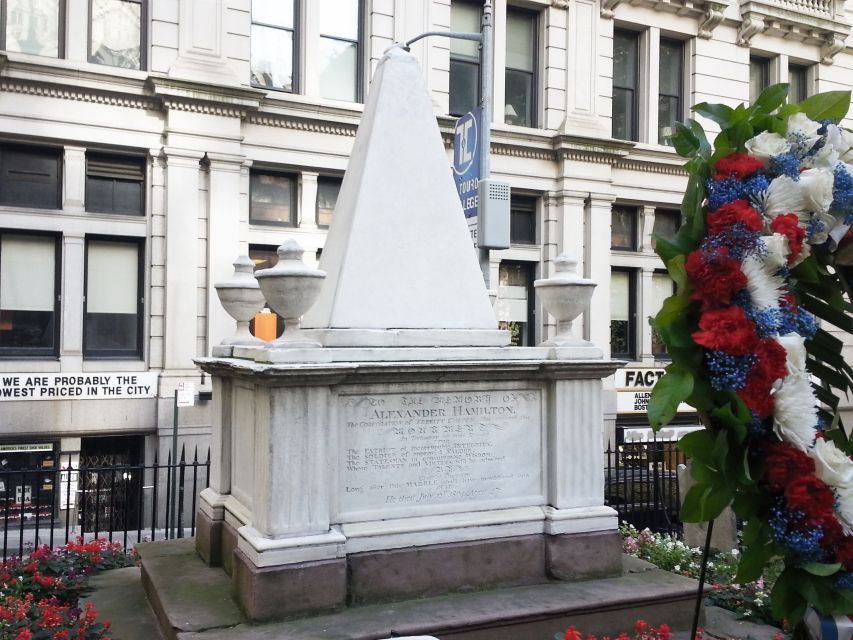
One of the most memorable locations is Fraunces Tavern, where Washington gave a moving farewell to his officers. This is the emotional counterweight to battle stories. A battlefield is loud. A farewell is quiet in a different way, and it forces you to see leadership as something personal, not just strategic.
This stop is valuable because it adds a layer that many history tours skip: the moment where the stakes become visible to people who have to live with the outcomes. A farewell is also a bridge between eras—war work to government work, risk to rebuilding, uncertainty to fragile institutions.
The guide’s focus on emotion here isn’t sentimental. It’s meant to help you understand what was on the line for the people around Washington. When you learn history only as outcome, you miss how hard it was to keep going.
If you want a lesson you can take with you, this is it: the Revolution wasn’t won by speeches alone. It was carried by people who faced endings and kept walking into the next chapter.
First U.S. Congress and Washington’s presidency: where government becomes real
The tour also takes in the political birth of the new nation, including a stop tied to the first U.S. Congress. For a lot of visitors, Congress is a name that sounds abstract. Here, it’s treated like an on-the-street milestone: the moment the country starts turning ideas into systems.
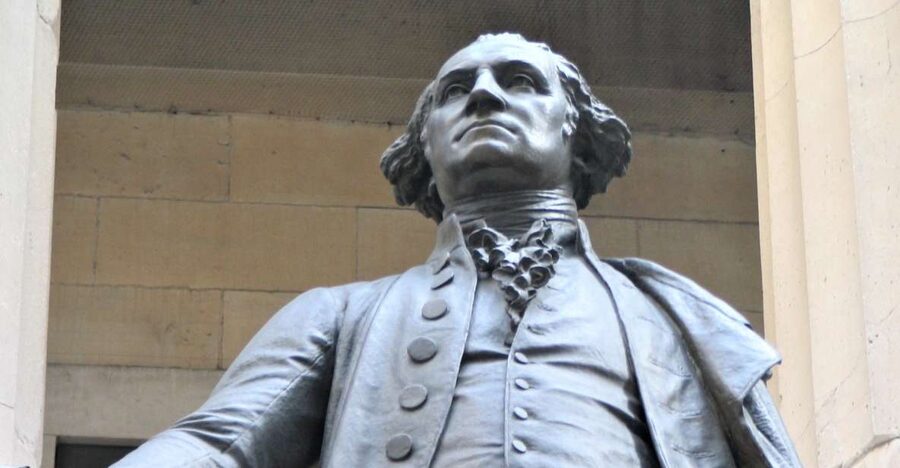
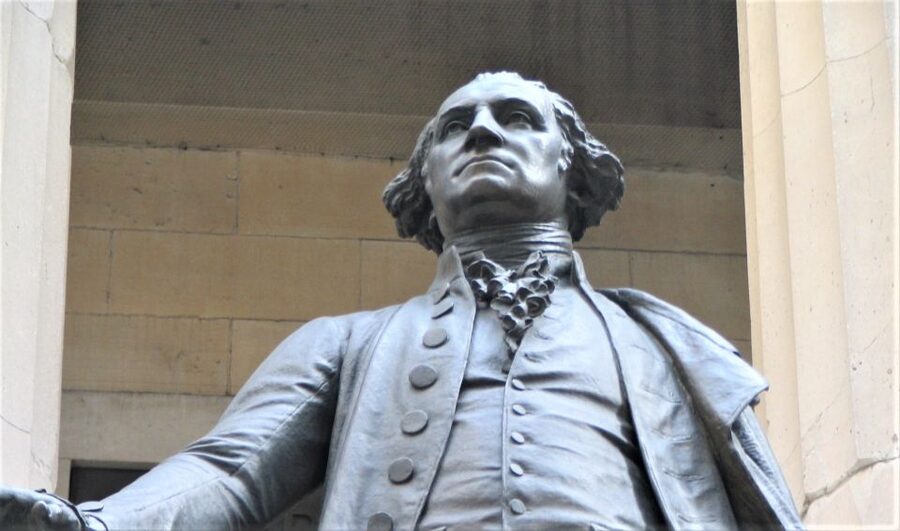
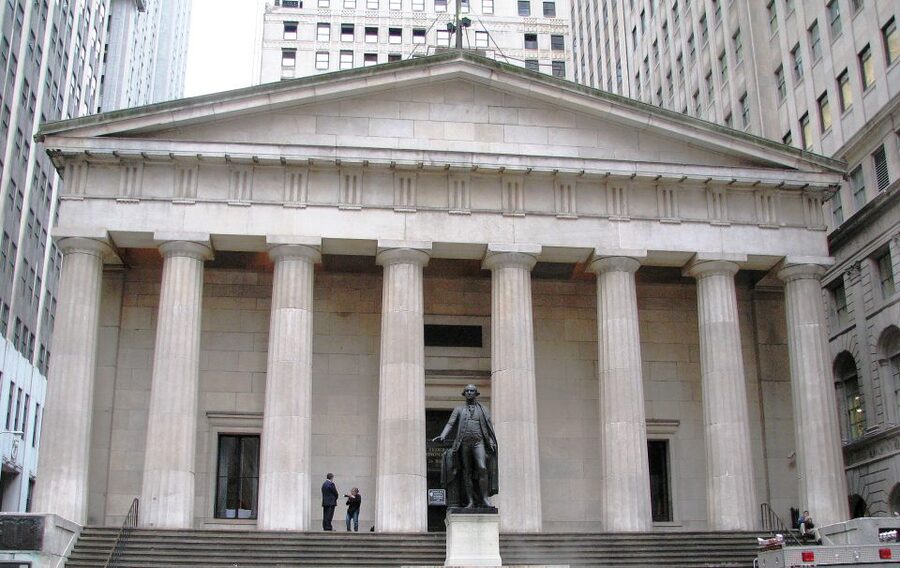
Then you move into Washington’s presidency. The tour includes the site where he was inaugurated as the first president, plus you’ll see a Washington statue associated with that location. That combination matters. A statue can turn memory into mythology. A guide can turn mythology into understanding. You’re getting both.
This section is a good payoff if you’re the type of person who likes to connect the dots. The guide doesn’t just say that the U.S. government formed. It explains how those events connect to the problems leaders had to solve—funding, legitimacy, stability, and the everyday machinery of a country being born.
If you’ve ever wondered how a new nation goes from rebellion to routine, this part gives you the short, readable answer: it’s messy, political, and urgent.
Hamilton’s financial plan and the Hamilton–Burr rivalry thread
The tour weaves in Hamilton’s ambitious financial plan and also the explosive Hamilton and Burr rivalry. What you get here is a sense that money wasn’t a side plot—it was a central character.
Hamilton’s plan is part of why the early government could function at all. Without stable finances, the country can’t pay soldiers, run agencies, or build credibility. The tour’s value is how it ties that idea back to the physical places you’re walking past and the political story you’re hearing.
And then the rivalry: the tour doesn’t present it as gossip between celebrities. It’s framed as the clash of ambition, strategy, and ideology in a world where reputations and alliances could decide careers—and sometimes lives.
If you’re a Hamilton fan, this is where your interest likely spikes. You’ll recognize the names and the themes, but you’ll also see the deeper reason they matter: personal ambition was mixed with real institutional urgency.
This is also one of the tour’s balancing acts. It keeps Hamilton from being only a genius caricature and Washington from being only a symbol. You see their partnership and how it shaped the early direction of the country.
The people history usually forgets: women, African Americans, and everyday New Yorkers
A standout promise of this tour is that it’s not only focused on big-name Founders. You’ll also learn about the contributions of women, African Americans, and everyday New Yorkers who shaped the nation’s early identity.
The usefulness here is simple: it corrects the default mental picture many people carry. The Revolution is often remembered as a story of men making decisions in rooms. This tour nudges you toward the reality that communities lived through it, pushed back, adapted, and helped decide what the future would look like.
You don’t need to be a specialist to appreciate this. It makes the whole thing feel more like history and less like a museum display.
Also, it makes your final reflection more meaningful. The tour ends up raising the kind of questions that don’t stay locked in the past—like what motivates ordinary people to participate in civic life, even when life feels comfortable now.
Hamilton and Eliza’s resting place: closing the loop with legacy
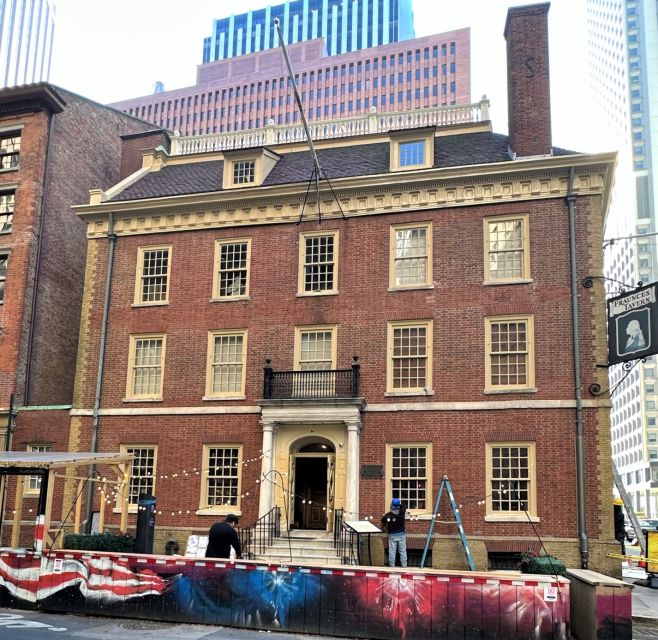
The walking route culminates with the chance to see the resting place of Alexander Hamilton and his wife, Eliza Schuyler Hamilton. This stop works as a bookend. You’ve spent the tour on politics, war, money, and power—then you end with a quiet, personal marker of a life that had consequences for the nation.
It’s a useful reminder that major history comes down to human beings. Hamilton’s story is often told through his plans and conflicts. Here, you also encounter the reality of family and lasting memory, because the guide includes both Hamilton and Eliza in the ending.
If you want one practical takeaway, it’s this: you’ll leave with a clearer sense of how the Revolution and early government weren’t just events. They were the product of decisions made by people with personal stakes.
Give yourself a moment at the end to slow down. The tour is story-heavy, and this final piece is the calm landing.
Price and value: what $47 buys in 3 hours
At $47 per person for about 3 hours, this is a fair price for a guided Lower Manhattan experience that mixes reenactment, multiple Revolutionary-era storylines, and period visual aids. You’re paying for more than a walk—you’re paying for interpretation and a historian-grade framework tying Washington and Hamilton together.
This value can be especially strong if you’re the kind of visitor who likes to understand why things mattered. The guide’s background in American history (a master’s degree) helps you feel like the narrative is organized, not random.
The one cost in your pocket is the time and energy: you’ll need comfortable shoes and weather-ready clothing, and you won’t get food included. If you treat this as a “story dose” before a meal nearby, the math works out.
Weather, pacing, and what to wear for a good experience
Plan around the fact that the tour runs snow, rain, or shine. That’s not a threat—it’s an expectation. Layer up. Bring something for wind. And wear shoes you trust on city sidewalks, because you’ll be moving continuously for the full three hours.
Also, since there’s no food provided, I recommend bringing a small water bottle and planning where you’ll eat after. You’ll get more out of the tour if you’re not focused on hunger every 20 minutes.
If you’re traveling with kids, this might work if they’re interested in history and ready for a walking pace with storytelling. If someone in your group wants a low-effort sightseeing stroll, this may feel more like a guided lecture with movement—still fun, but not slow and scenic.
Who should book this Washington and Hamilton walk
I think this tour is a great fit if you fall into one (or more) of these categories:
- You love the American Revolution and want it tied to New York’s actual streets.
- You’re drawn to Hamilton but want the Washington and wartime context that explains why the music and politics are connected.
- You like story-driven guides who use visuals and reenactments to make scenes stick.
- You want more than the usual “great men” version of early American life, with attention to women and African Americans as part of the national story.
If you’re looking for a purely factual, museum-style experience with minimal performance, you might find the reenactment approach too theatrical. But if you like feeling the pressure and drama of the era, that reenactment is the point.
Should you book? My decision guide
Book this tour if you want a focused, 3-hour story walk through Lower Manhattan that connects Washington, Hamilton, and the Revolution into one readable chain. The combination of the Declaration reenactment, the Battle of Brooklyn and retreat storyline, the Fraunces Tavern farewell, and Hamilton’s later financial and political themes gives you a strong “cause-and-effect” view of early America.
Skip it if you prefer spending your time inside buildings, if you hate weather uncertainty, or if you want food included during the experience.
If you’re aiming for good value, I’d call this one a solid choice: for $47 you get a licensed guide-historian, multiple major Revolutionary and early-government moments, and a closing stop that grounds the whole story in real legacy.
FAQ
FAQ
How much does the Hamilton and Washington Revolutionary Walking Tour cost?
It costs $47 per person.
How long is the tour?
The tour runs for 3 hours.
Where do we meet for the tour?
Meet on the steps of 1 Bowling Green, known as the Alexander Hamilton U.S. Custom House and the National Museum of the American Indian.
Is the tour guide English-speaking?
Yes, the tour is offered with a live guide in English.
What should I bring for the tour?
Wear comfortable shoes and bring weather-appropriate clothing.
Does the tour run in rain or snow?
Yes. The tour takes place snow, rain, or shine.
Is food and drink included?
No. Food and drink are not included.
Are pets allowed on the tour?
No, pets are not allowed.
What is the cancellation policy?
Free cancellation is available up to 24 hours in advance for a full refund.
More Tours in New York City
- Statue of Liberty and Ellis Island Tour: All Options★ 5.0 · 13,571 reviews
- New York in One Day Guided Sightseeing Tour★ 5.0 · 13,166 reviews
- Central Park Pedicab Guided Tours★ 5.0 · 7,108 reviews
- New York City: Manhattan Helicopter Tour★ 4.7 · 7,076 reviews
- Private Central Park Pedicab Tour★ 5.0 · 6,981 reviews
More Tour Reviews in New York City
- NYC: SUMMIT One Vanderbilt Tickets★ 4.7 · 51,195 reviews
- NYC: Empire State Building Tickets – Observatory & Museum★ 4.7 · 25,757 reviews
- New York City: Statue of Liberty & Ellis Island with Ferry★ 4.6 · 18,683 reviews
- New York City: American Museum of Natural History Ticket★ 4.5 · 15,447 reviews
- Statue of Liberty and Ellis Island Tour: All Options★ 5.0 · 13,571 reviews
New York City, One Block at a Time
- SoHo, Little Italy, and Chinatown Walking Tour in New York★ 5.0 · 3,153 reviews
- Secrets of Grand Central Station Walking Tour New York City★ 5.0 · 1,796 reviews
- Greenwich Village Walking and Food Tasting Tour★ 5.0 · 1,572 reviews
- Artistic, Alternative Greenwich Village Walking Tour★ 5.0 · 971 reviews
- Brooklyn Bridge & DUMBO Neighborhood Tour – from Manhattan to Brooklyn★ 5.0 · 826 reviews
Just in: the newest New York City reviews on our desk





NYC Walking Tours, compared.
 ★ 5.0SoHo, Little Italy, and Chinatown Walking Tour in New YorkFrom $393,153 reviews
 ★ 5.0Secrets of Grand Central Station Walking Tour New York CityFrom $391,796 reviews
 ★ 5.0Greenwich Village Walking and Food Tasting TourFrom $941,572 reviews
 ★ 5.0Artistic, Alternative Greenwich Village Walking TourFrom $39971 reviews
 ★ 5.0Brooklyn Bridge & DUMBO Neighborhood Tour – from Manhattan to BrooklynFrom $49826 reviews
 ★ 5.0Central Park Guided Walking TourFrom $44774 reviews
 ★ 4.6Private Walking Tour with a LocalFrom $55771 reviews
 ★ 5.0NYC Lower East Side Walking and Food TourFrom $94646 reviews