

Reviewed · HIGH LINE & CHELSEA TOURS
New York High Line Park Walking Tour
The High Line is New York magic with train tracks. This 2-hour guided walk takes you end to end along the park, while your guide points out the plant life and old freight-era details you’d likely miss on your own. I like that it starts in the morning, so you’re on the move before lunch crowds kick in.
Two things I really like: you get a guide to translate the scenery (why those plants are there, how the West Side line worked, and what buildings you’re looking at), and you get quick bonus stops around Chelsea and the Meatpacking District tied to big NYC stories. One drawback to keep in mind: a small number of past participants reported no-show or weak day-of communication, so I’d plan a little buffer and confirm details the morning of.
In This Review
- Quick take: when this tour is worth your $30
- Key highlights to look for
- High Line Park on foot: what you’re really paying for
- Starting at 44 9th Ave: your morning rhythm and meeting reality
- West Side railroad origins: the story that makes the walk click
- High Line Park itself: from Tiffany & Co. Overlook to the CSX Gate
- The plant-forward sections
- Sundecks and overlooks
- Meatpacking District: architecture and street-level energy (without losing the park)
- Pier 54 (White Star Pier) and the Titanic survivor connection
- Chelsea Market and the Nabisco/Oreo angle: why this stop works
- Whitney Museum area: seeing the connection, not paying for it
- Pacing, group size, and how the tour feels in real life
- Guides: what makes this tour succeed or flop
- Price and value: getting $30 to feel like more
- Who should book this High Line Park walking tour?
- Should you book this tour?
- FAQ
- How long is the High Line Park walking tour?
- What time does the tour start?
- Where is the meeting point?
- Where does the tour end?
- How much does the tour cost?
- Is the ticket mobile?
- How many people are in a group?
- What’s included in the tour price?
- Is Whitney Museum admission included?
- Is there free cancellation?
Quick take: when this tour is worth your $30
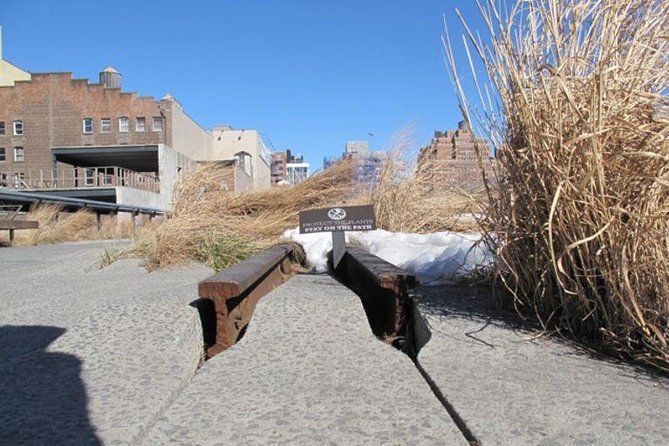
If you want High Line time but also want context—railroad engineering, neighborhood evolution, and why the park feels so alive—this tour makes sense. The $30 price is mainly for the guide’s perspective plus the couple of included admission moments (and the short guided stops at key sights). If you’re the type who just wants photos and a free-form stroll, you might feel the guide pacing isn’t for you.
Along the rails: more High Line and Chelsea
- High Line and Chelsea Small Group Tour
★ 5.0 · 1,238 reviews - Chelsea Market and High Line Guided Food Tour
★ 5.0 · 827 reviews - Manhattan Adventure Sightseeing Boat Tour – from Chelsea Piers
★ 5.0 · 688 reviews - High Line Park and Greenwich Village Food Tour
★ 5.0 · 398 reviews
Key highlights to look for
- 1.45-mile full-length walk along the High Line, from the Tiffany & Co. Foundation Overlook area toward the CSX Transportation Gate
- Old West Side railroad context: the freight line story, including how it became High Line Park
- The “miniature forest” section with dense planting like dogwoods, bottlebrush buckeye, hollies, and roses
- Plant details + skyline views from sundecks and overlooks facing both the Hudson River side and downtown
- Short, meaningful stops in the Meatpacking/Chelsea area, with Pier 54 (Titanic survivors) and Chelsea Market (Nabisco/Oreo connection)
- A small group cap of 25 plus a 10:00 am start time that keeps your day flexible
High Line Park on foot: what you’re really paying for

The High Line is an easy “yes” in any season. You’re walking on a park built along an old New York Central Railroad freight corridor—so every few minutes you get that double perspective: Manhattan street life below, park life above, and big city views in between. But the best part of a guided tour is that it turns the walk from pretty into understandable.
Your guide isn’t just pointing at skyline angles. They connect what you see—planting style, overlooks, public art, nearby architecture—to how this rail line used to function. That matters because the High Line isn’t a typical city park. It’s a rails-to-trails repurposing, and the design leans into the original rail infrastructure instead of pretending it never existed.
At the same time, this isn’t a lecture marathon. The tour runs about 2 hours, with short stops (listed as around 10 minutes at key points). That pacing works if you like to keep walking, then absorb the details in bite-sized chunks.
Starting at 44 9th Ave: your morning rhythm and meeting reality
The meeting point is 44 9th Ave, New York, NY 10011, and the tour starts at 10:00 am. It ends back at the meeting point. That “loop back” structure is useful: you can plan lunch without guessing how far you’ll be from where you started.
You’ll want a moderate fitness level. The High Line is not a sprint, but it’s still a sustained walking route plus stop-and-look moments. If your idea of a “tour” is sitting in a van or only strolling for photo breaks, this may feel like more walking than you expect. If you can handle a couple of miles total in an easy-to-moderate way, you’re set.
One practical tip: because a few past participants reported day-of confusion, I suggest you arrive early, get your bearings at the spot, and keep the phone number from your confirmation handy. Don’t rely on mind-reading. Build in a short buffer so a late start doesn’t wreck your morning plans.
New York City at street level, a few more walks
West Side railroad origins: the story that makes the walk click
Before you settle into the park itself, your guide frames the bigger picture: the West Side line and how street-level freight rail became dangerous and accident-prone. The guide covers the shift toward building the High Line as part of the Manhattan West Side improvement effort, and then what happened after freight rail use declined.
This is the part that makes your eyes “upgrade” while you walk. When you know what this rail corridor was built for, you notice details differently: the way the park’s layout uses the original path, the sense of engineering behind the sightlines, and the way public art and planting coexist with the old structure.
If you’re the kind of visitor who loves context, this section is often the reason people feel the tour is worth it. If you’re hoping for more time at every single building facing the park, you might find the 2-hour format limits how granular it gets.
High Line Park itself: from Tiffany & Co. Overlook to the CSX Gate
The route is designed to run the length of the High Line—about 1.45 miles (2.33 km)—linking major overlook areas and planting zones.
You’ll see a lot of the signature “deck” and overlook design, where you can pause and look across Manhattan. The description specifically notes views east toward the Meatpacking District and west toward the Whitney Museum area. That east-west orientation is great for photos because you’re not stuck with one direction the whole time.
The plant-forward sections
One of the High Line’s coolest tricks is that it doesn’t treat nature like decoration. The guide highlights the dense planting along the route, including the two-block stretch that feels like a miniature forest. Depending on season and growth, you may see details like dogwoods, bottlebrush buckeye, hollies, roses, and other shrubs and trees.
The walk also includes a grove with bigleaf magnolia, sassafras, and serviceberry. And then there’s the “wild” angle—some native plants that grew up there before the park existed, such as crabapple trees, asters, sedges, goldenrods, and alumroot. When your guide points this out, it changes the feel of the park from landscaped to ecological.
What to watch for: if you like close-up nature moments, this is where the tour earns its keep. If you’re mostly there for grand skyline views, you may still enjoy it, but you might spend more time chasing pictures than listening.
Sundecks and overlooks
Sundecks and overlooks are where the High Line becomes a viewpoint walk. Expect pauses to take it in—Hudson River-side views and the skyline in both directions. This works well even if you’re not a “nature person.” It’s still a very New York way to experience the city from above.
Meatpacking District: architecture and street-level energy (without losing the park)
The tour loops through the Meatpacking District and Chelsea area as it connects neighborhood context to the park. This segment is valuable because it helps you understand why the High Line matters to the people who live and work here.
You’ll also get references to public art integrated into the park’s design. On the High Line, art isn’t just for decoration. It’s part of the way the corridor invites you to slow down, look, and connect the past use with present-day Manhattan.
One drawback: if your guide spends extra time on nearby architecture and art references, your walking pace may feel slower than you expected for a 2-hour tour. Still, for many people, that “slow enough to notice stuff” is the point.
Pier 54 (White Star Pier) and the Titanic survivor connection
One of the most compelling story stops is Pier 54, also connected to the White Star Pier where Titanic survivors arrived. The tour includes a short admission moment tied to this stop.
Even if you’ve heard Titanic stories before, the location matters. Seeing the waterfront reference within the context of Chelsea/West Side neighborhoods makes the city feel connected, not compartmentalized. It also gives you a change of pace from the park-only experience.
Practical reality: this is still a short stop. You’re not turning your tour into a full museum day. If you want deep Titanic immersion, you’ll likely want to pair this with another museum visit on a different day. But as a guided “story anchor,” it’s a strong move.
Chelsea Market and the Nabisco/Oreo angle: why this stop works
The tour includes Chelsea Market, tied to the old Nabisco factory where the original Oreo cookie was invented. Chelsea Market also pairs well with the High Line experience because it’s a nearby “real city” place you can translate into something edible and tangible.
The included stop here is short, so you’ll likely use it as a look-and-linger moment rather than a full shopping spree. Still, it gives you a concrete neighborhood connection: the High Line isn’t just a park floating above streets. It’s part of a corridor that links industries, food, retail, and today’s creative Manhattan.
Tip for planning: if you’re food-motivated, plan your actual snack meal before or after the tour based on how long you tend to browse. The guided stop isn’t designed to be a full-on eating itinerary.
Whitney Museum area: seeing the connection, not paying for it
Your route references the Whitney Museum of American Art area. The tour data lists Whitney Museum admission as not included, so you’re essentially seeing the museum area in context rather than doing a full inside visit.
This is a good setup if you’re curious about the Whitney neighborhood but don’t want to pay for museum entry during the walking tour itself. If you do want Whitney inside time, you can plan it separately.
A small consideration: if you were hoping the tour would include the museum visit, you’ll be better off setting expectations now. The High Line walk takes center stage; anything museum-related is more about placement than full ticketing.
Pacing, group size, and how the tour feels in real life
This tour caps at 25 travelers, which usually means you get a better chance to hear the guide and keep together. A smaller group also tends to make it easier to ask a question or get pointed to the best angle for photos.
The duration is about 2 hours. That sounds short, but the High Line length is long enough that you’ll be walking most of the time, with pauses used for story points and viewpoints. If you prefer tours where every stop feels like a chapter break, you might find this format a bit tighter than you like.
That said, it’s also why the morning start is smart. You get a major NYC highlight “done” before lunch, so your afternoon can be flexible for museums, parks, or just wandering.
Guides: what makes this tour succeed or flop
The biggest swing factor here is the guide experience. The best versions of this tour are led by friendly, energetic guides who know what to point out—especially in the High Line plant zones and the neighborhood context around Chelsea Market and Meatpacking.
Names that have shown up in strong experiences include Debra, Annie/Ann/Anna, Bill, and Derek. Across those accounts, the common theme is guides who explain what you’re looking at and make the walk feel like a guided walk with extras, not just a route.
On the other hand, there’s a real risk signal in the lower ratings: some participants reported no-show issues and limited communication when trying to reach someone day-of. That doesn’t mean it will happen to you, but it does mean you shouldn’t treat this like a “guaranteed smooth experience” without doing basic confirmation the morning of.
If you’re the type who hates uncertainty, you might prefer other High Line options where the meeting-time risk is lower. If you’re flexible and you’ll do quick confirmation plus have a Plan B for your morning, you can still enjoy this a lot.
Price and value: getting $30 to feel like more
At $30 per person, this tour sits in the “reasonable but not free” range. Since the High Line itself is public and you can walk it on your own, the value question becomes: what do you gain with a guide?
You’re paying for:
- A guide to translate the corridor’s railroad past and how the park is structured
- The plant-focused explanations (especially in the denser planting sections)
- Short guided stops tied to Pier 54 (White Star Pier) and Chelsea Market / Nabisco / Oreo
- A structured route that runs the full 1.45-mile stretch rather than a pick-and-choose stroll
If you’re a “look-but-don’t-know” visitor, you’ll likely feel the difference fast—because the park’s details can be invisible without guidance. If you already know the High Line story and you’re mainly there for the views, the guide may feel less essential.
My practical take: this is a strong choice when you want the High Line plus context in a single morning, without turning the day into multiple museum admissions.
Who should book this High Line Park walking tour?
This one fits best if you:
- Want to experience the High Line in a structured way within about 2 hours
- Enjoy guided explanations of plants, views, and neighborhood history connections
- Prefer a 10:00 am start that leaves you time for lunch and an afternoon plan
- Like small-group tours (max 25) more than crowded group bus-style sightseeing
It may be less ideal if you:
- Hate walking and need a slow, seated tour
- Are set on Whitney Museum admission during the tour
- Are very risk-averse about day-of guide logistics
Should you book this tour?
Yes, if you want a guided High Line walk that actually helps you understand what you’re seeing, with worthwhile short story stops in the Meatpacking and Chelsea areas. The plant details, viewpoint framing, and the Pier 54 + Chelsea Market connections are the kind of add-ons that make a public park feel like an experience.
Book with a bit of common-sense caution: arrive early at 44 9th Ave, keep your confirmation info accessible, and give yourself a small buffer so a late start doesn’t ruin your morning.
If you’re only chasing the easiest High Line route for photos, you can DIY it for free. But if you want the “what am I looking at and why does it matter?” version, this tour is a fair way to get there for $30.
FAQ
How long is the High Line Park walking tour?
It runs for about 2 hours (approx.).
What time does the tour start?
The start time is 10:00 am.
Where is the meeting point?
The meeting point is 44 9th Ave, New York, NY 10011, USA.
Where does the tour end?
It ends back at the meeting point.
How much does the tour cost?
The price is $30.00 per person.
Is the ticket mobile?
Yes, the tour uses a mobile ticket.
How many people are in a group?
The maximum group size is 25 travelers.
What’s included in the tour price?
You get a guided walking tour with a professional guide.
Is Whitney Museum admission included?
No, Whitney Museum admission is not included.
Is there free cancellation?
Yes. You can cancel up to 24 hours in advance for a full refund.
More Tour Reviews in New York City
- NYC: SUMMIT One Vanderbilt Tickets★ 4.7 · 51,195 reviews
- NYC: Empire State Building Tickets – Observatory & Museum★ 4.7 · 25,757 reviews
- New York City: Statue of Liberty & Ellis Island with Ferry★ 4.6 · 18,683 reviews
- New York City: American Museum of Natural History Ticket★ 4.5 · 15,447 reviews
- Statue of Liberty and Ellis Island Tour: All Options★ 5.0 · 13,571 reviews
New York City, One Block at a Time
- SoHo, Little Italy, and Chinatown Walking Tour in New York★ 5.0 · 3,153 reviews
- Secrets of Grand Central Station Walking Tour New York City★ 5.0 · 1,796 reviews
- Greenwich Village Walking and Food Tasting Tour★ 5.0 · 1,572 reviews
- Artistic, Alternative Greenwich Village Walking Tour★ 5.0 · 971 reviews
- Brooklyn Bridge & DUMBO Neighborhood Tour – from Manhattan to Brooklyn★ 5.0 · 826 reviews
The High Line and Chelsea, Continued
- High Line and Chelsea Small Group Tour★ 5.0 · 1,238 reviews
- Chelsea Market and High Line Guided Food Tour★ 5.0 · 827 reviews
- Manhattan Adventure Sightseeing Boat Tour – from Chelsea Piers★ 5.0 · 688 reviews
- High Line Park and Greenwich Village Food Tour★ 5.0 · 398 reviews
- NYC: High Line, Chelsea, & Meatpacking District Walking Tour★ 4.9 · 195 reviews
Just in: the newest New York City reviews on our desk





High Line & Chelsea Tours, compared.
 ★ 5.0High Line and Chelsea Small Group TourFrom $391,238 reviews
 ★ 5.0Chelsea Market and High Line Guided Food TourFrom $88827 reviews
 ★ 5.0Manhattan Adventure Sightseeing Boat Tour – from Chelsea PiersFrom $99688 reviews
 ★ 5.0High Line Park and Greenwich Village Food TourFrom $159398 reviews
 ★ 4.9High Line, Chelsea, & Meatpacking District Walking TourFrom $39195 reviews
 ★ 5.0Statue of Liberty Speedboat Tour – from Chelsea PiersFrom $60182 reviews
 ★ 5.0Foods of NY Tours Chelsea Market Food Tour & High Line ParkFrom $99141 reviews
 ★ 4.2Hudson Yards & High Line Tour with Optional Edge TicketFrom $49125 reviews
Browse the lists this tour appears in