
Reviewed · CENTRAL PARK TOURS
Private New York City Walking Tour: Central Park History and Hidden Secrets
Central Park hides in plain sight. This private walk turns the park into a story you can follow, with a licensed guide who keeps things on your timetable and points out spots most people miss. I especially like the personal pace through the main landmarks and the way the guide brings the park’s woodsy side into focus. The main drawback is cost: at $150 per person, it can feel steep if you’re traveling solo or you just need a quick, self-guided loop.
If you’re a first-time visitor, this kind of tour helps you get your bearings fast without the pressure of a big-group march. You also get practical variety: art and architecture one moment, nature paths and viewpoints the next.
You can pick a morning or afternoon start time, and the route is designed for a short, satisfying park session. It finishes near the Metropolitan Museum of Art, so you can keep the day moving right after your walk.
In This Review
- Key highlights you’ll feel right away
- Why this private Central Park walk beats a DIY slog
- Meeting at Sherman and ending by the Met: smart timing
- Central Park’s main history stop: the park as a living story
- Gar Pond: the city-to-nature edge you can actually feel
- Gapstow Bridge: viewpoint payoff without a long detour
- Literary Walk: history you can read as you stroll
- Bethesda Terrace: art and architecture as the park’s centerpiece
- The Ramble: a woodland pause in the middle of Manhattan
- Belvedere Castle: iconic structure and city views
- Shakespeare in the park and the ancient artifact finale
- Price and value: what $150 buys in practice
- Who should book this tour (and who might skip it)
- Should you book this Central Park private history walk?
- FAQ
- How much does the private Central Park walking tour cost?
- About how long is the tour?
- Is this tour private or shared with other groups?
- Do you have morning or afternoon start times?
- Where does the tour start and where does it end?
- How do I get my ticket and when will I receive confirmation?
- What is the cancellation policy?
- Are service animals allowed?
Key highlights you’ll feel right away
- Private and just for your group, so you can stop and ask questions without rushing
- Licensed expert guide who steers you through history and lesser-known corners
- Two hours with quick, well-chosen stops, so you see plenty without overdoing it
- Nature + landmarks mix: Gar Pond, The Ramble, and Belvedere Castle are part of the plan
- Art and literature stops: Bethesda Terrace and Central Park’s Literary Walk
- No entrance fees for the sights on the route, since the stops are admission-free
More ways to see Central Park
- Central Park Pedicab Guided Tours
★ 5.0 · 7,108 reviews - Private Central Park Pedicab Tour
★ 5.0 · 6,981 reviews - NYC: Central Park Bike Rentals
★ 4.2 · 2,528 reviews - Official NYC Horse Carriage Rides in Central Park since 1979 ™
★ 5.0 · 2,365 reviews
Why this private Central Park walk beats a DIY slog
Central Park can feel like a choose-your-own-adventure book. That’s fun, until you’re trying to make sense of it in a limited time window. A private guide gives you what a map can’t: explanation on the spot, plus direction on where to look and why it matters.
I like that this is truly personalized. You’re not managing a large group or trying to keep up while everyone else clumps together for photos. Instead, the guide can slow down if you want details, or move on if you’re more interested in views and quick context.
One extra plus is that a past guide named Billy was singled out for being strong on the park’s wood-related details—exactly the kind of knowledge that turns The Ramble from a name on a sign into a place with real character. That’s the real value in a guided experience: you notice more, and you walk away with clearer mental pictures.
The tradeoff is simple: because it’s a private guide, the price doesn’t behave like a standard city attraction ticket. If you’re the only person in your group, you’ll feel that cost more. If you have a small group of friends or family, it’s easier to think of it as paying for convenience and clarity.
Meeting at Sherman and ending by the Met: smart timing
You meet at the General William Tecumseh Sherman Monument at 764 Doris C Freedman Pl, New York, NY 10019. That’s a solid starting point because it gets you into the park with a strong landmark in view, rather than wandering from the curb.
Your walk ends at the Metropolitan Museum of Art, 1000 5th Ave, New York, NY 10028. That matters more than it sounds. Central Park is big. Ending near one of the most famous museum stops in the city can make your whole itinerary feel tighter—park first, art next—without you needing to backtrack.
The tour offers morning or afternoon start times, which is ideal if you want to match your day. Morning can be easier for photos and a calmer walking rhythm. Afternoon lets you connect the park experience with whatever else you’ve planned around Midtown.
You’ll also get a mobile ticket, plus confirmation at booking. In practice, that means less time spent figuring out where to go and more time walking, listening, and looking.
Central Park’s main history stop: the park as a living story
Your tour begins with a big-picture look at Central Park—history highlights plus the kinds of details that tend to get missed when you’re just walking for scenery. The guide helps you see the park as a designed space, not random green in the middle of Manhattan.
I like the way this kind of start sets you up for everything that follows. Once you understand the park’s purpose and how different areas relate, the later stops stop feeling like separate photo ops. They feel like chapters.
What makes this part practical is that the guide doesn’t just talk at you. You get direction on what to notice and when to look—especially around the features that define the park’s identity.
A possible consideration: since you’re working within a short tour length, you won’t linger in one spot for long. This is a “see the key ideas clearly” approach, not a “spend all afternoon unpacking every corner” plan.
New York City at street level, a few more walks


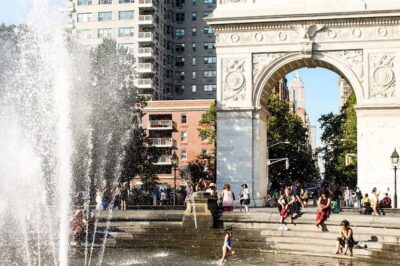
Gar Pond: the city-to-nature edge you can actually feel
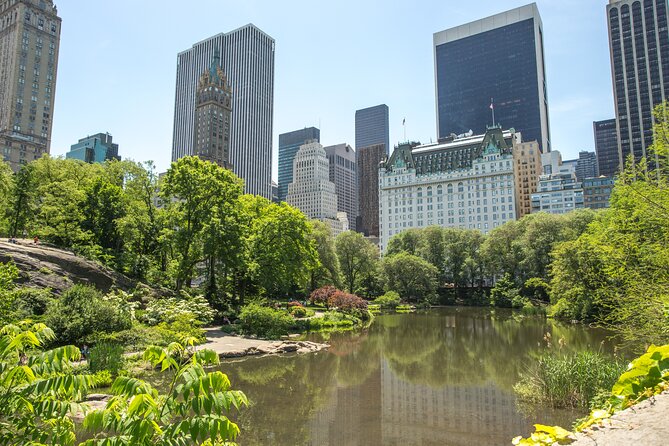
From the broader park introduction, you head toward Gar Pond, a small water setting that helps you sense the boundary between the busy city world and the park’s quieter pockets.
This stop is all about contrast. You’re walking through a place that looks built for reflection—then you remember you’re still in New York. Gar Pond is one of those Central Park features that makes you slow down because the water gives you a natural pause point.
What I’d do here as you walk: take a moment to watch reflections and pay attention to how the surrounding paths shape the view. The guide’s job is to connect that scenery to what the pond represents in the park’s design and use over time.
The drawback is mostly timing. The pond segment is relatively short, so you’ll get a good taste rather than a full sit-and-stare experience.
Gapstow Bridge: viewpoint payoff without a long detour
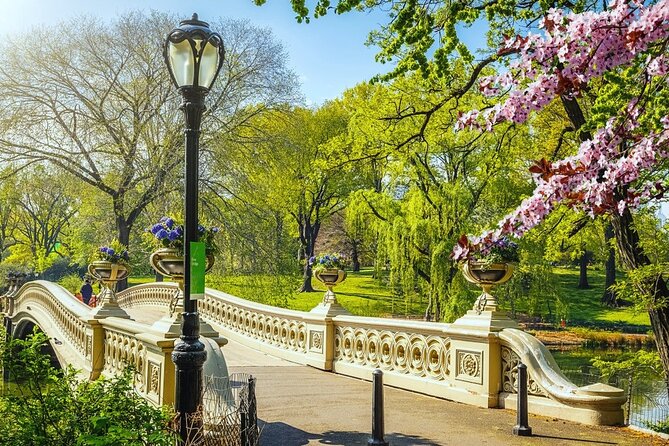
Next is Gapstow Bridge, a spot that’s famous for views and for how the bridge frames the park. Bridges in Central Park aren’t just crossings. They’re built-in camera angles and turning points in the walking story.
Here’s why it’s a smart inclusion: you get skyline-and-water-style perspective while still staying in the park’s protected feel. It’s a quick stop that adds a big visual reward for the time spent.
Also, if you’re the type who likes architecture details, this is the part where a guide can point out what you’d otherwise pass by. Even if you’ve seen photos, the bridge looks different at walking pace—especially when someone tells you exactly what lines and angles to notice.
Consideration: you’ll likely only have enough time for one or two angles. If you’re trying to nail a perfect photo set, plan for a quick session and move on with the group.
Literary Walk: history you can read as you stroll
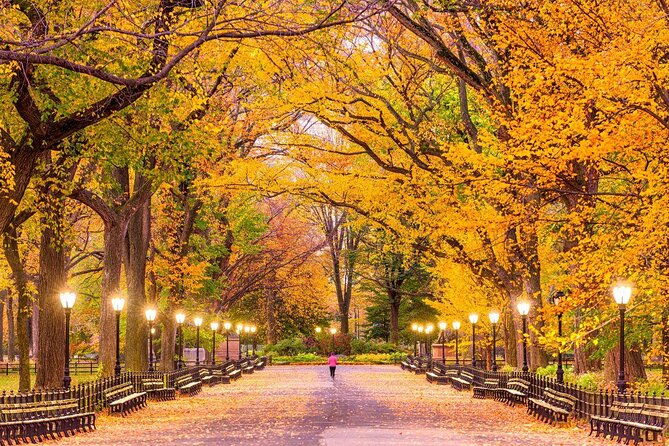
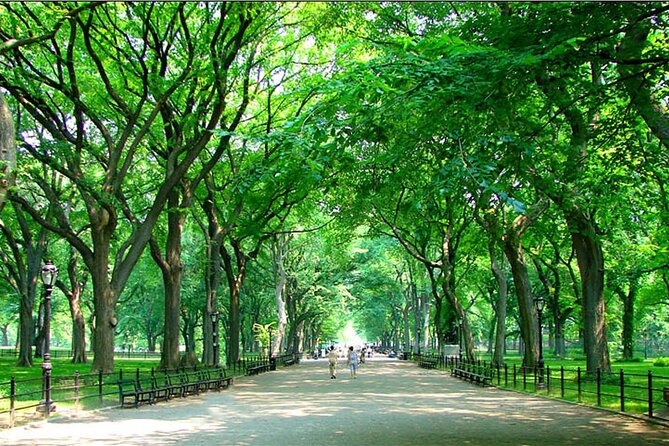
Central Park’s Literary Walk is the kind of stop that makes a tour feel like more than sightseeing. It’s tree-lined and designed to feel like a promenade with purpose, not just a path through greenery.
The value here is the combination of pacing and context. A walk like this helps you connect named landmarks and themes to something tangible—how the park’s design reinforces its identity as a place for culture and ideas.
If you’re visiting for the first time, this is also a strong way to remember Central Park as a whole. You come away with a “park has themes” mindset, not just “park has nice views.”
Tradeoff: because this is a short segment, it’s unlikely you’ll go deep enough to become a literature-and-landscape scholar. Think of it as a guided nudge into the story, not a full semester.
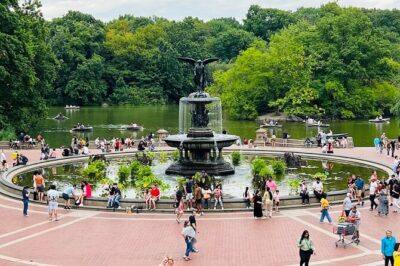
Bethesda Terrace: art and architecture as the park’s centerpiece
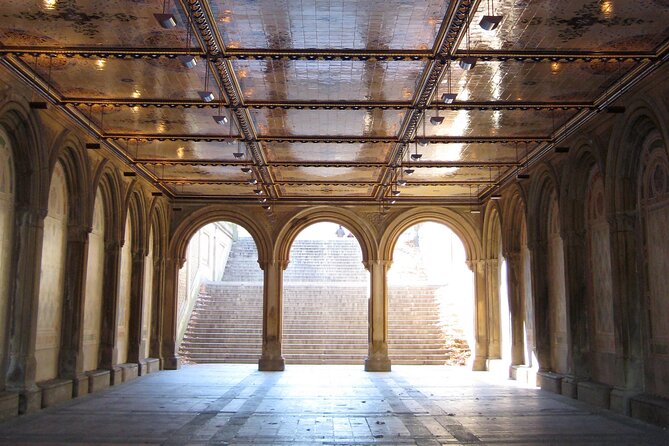
Then you hit Bethesda Terrace, which the route calls out as a centerpiece of art and architecture. This is where Central Park shifts from scenic to symbolic.
Bethesda Terrace is a place where details matter: scale, design, and the way the structure anchors the surrounding paths. With a guide, you’ll understand what you’re seeing instead of just appreciating it as pretty stonework.
Why this stop is worth the time: it acts like a hub in the visitor experience. Once you’ve stood here and absorbed the design, the rest of the park feels more intentional. You start noticing how views are planned and how different zones feel linked.
Potential drawback: this part can be visually packed. If you’re easily overwhelmed, ask your guide to pick one or two elements to focus on for your first pass. You’ll get more from less.
The Ramble: a woodland pause in the middle of Manhattan
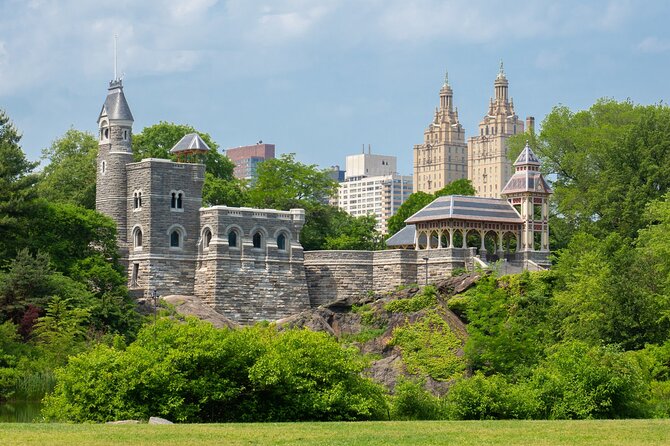
Next comes The Ramble, a natural woodland landscape and wildlife haven. This is one of the best stops for people who want Central Park to feel like nature, not just a city park with trees.
The Ramble works because it slows you down physically and mentally. The paths and greenery create a different rhythm, and the guide can help you spot what makes this area distinct.
A past highlight from the same tour style of guiding: strong attention to the woodside details. That type of explanation is exactly what makes The Ramble click. Without guidance, you might just walk through. With guidance, you start noticing patterns and the way the park supports wildlife-like experiences within city limits.
Because the segment is time-limited, don’t expect a long wander. Instead, use it to reset your senses: water, stone, views, then back into green shade and small-scale nature.
Belvedere Castle: iconic structure and city views
Belvedere Castle is next, with a focus on the views and the structure’s iconic role in the park. Even if you’re not an architecture fan, it’s hard not to appreciate how this castle-like feature signals a viewpoint moment.
This stop gives you a “lift your eyes” experience. It’s a good match after The Ramble because the change in altitude and outlook helps you reorient yourself to the city around the park.
If you care about photography, this is one of the few places where the payoff can feel immediate. The guide can also help you pick the best viewing directions so you don’t waste your limited time guessing.
Consideration: the visit is short. If you’re trying to fully sketch the scene or take many angles, plan to choose your priorities quickly.
Shakespeare in the park and the ancient artifact finale
After Belvedere Castle, the route includes two special-interest stops: an open-air public theater known for its annual production of Shakespeare in the Park, and a stop where you learn the significance of an ancient artifact located within Central Park.
These aren’t just random extras. They round out Central Park’s identity. The park isn’t only about greenery and views. It’s also a cultural stage and a home for historical objects that add surprise to the walking circuit.
What I’d expect from the guide here is context—how these pieces connect to the park’s broader purpose and why they’re meaningful in a space that many people think of as purely scenic.
A potential drawback is that time is finite. If theater and ancient-history details are your top interests, you may want to ask the guide for extra explanation during these segments so you don’t leave with unanswered questions.
Price and value: what $150 buys in practice
At $150 per person for about two hours, this tour sits in the higher mid-range for NYC walking experiences. The key question isn’t whether the price is low. It’s whether you’re paying for something you can’t easily replicate yourself.
Here’s what you’re buying:
- A licensed expert guide who can answer questions and interpret what you’re seeing
- Private time with your group, meaning no waiting, no rushing, no herd management
- A structured route that mixes history, architecture, and nature within a short window
- Admission-free stops on the route, so you’re paying for guiding rather than entry fees
Group discounts are listed, which matters if you can split the cost with friends or family. If you’re traveling as two or three, it becomes easier to see the value: you’re not just paying to be entertained. You’re paying to get clarity and better pacing in a place that otherwise takes hours to “understand.”
Also, this experience is booked on average about 48 days in advance. That’s a quiet clue that it’s popular. If your dates are set, waiting too long can limit your options for morning versus afternoon starts.
Who should book this tour (and who might skip it)
This tour is a great match for first-time visitors who want a guided orientation plus real stories behind landmarks. It’s also ideal if you enjoy a mix: architecture one moment, woodland and viewpoints the next.
It’s especially worth it if you like the idea of asking questions and getting immediate answers. The private setup makes that easy.
If you’re the type who already knows Central Park well and only wants a quick photo hit, you might find the price harder to justify. In that case, a self-guided route could work just fine—especially if you’re not looking for interpretation.
On the plus side, the tour states that most travelers can participate, and service animals are allowed. It’s also near public transportation, which helps if you’re building the day around other NYC stops.
Should you book this Central Park private history walk?
If you want Central Park to feel organized and meaningful in a short time, I’d book it. The route gives you a strong mix of Bethesda Terrace, The Ramble, and Belvedere Castle while keeping the story connected from stop to stop.
I’d skip it only if $150 per person feels out of reach for your trip budget or if you’re mainly after independent wandering. This experience shines when you want direction—and when you value a guide who can point out what your eyes might miss.
FAQ
How much does the private Central Park walking tour cost?
It costs $150.00 per person.
About how long is the tour?
The tour lasts approximately 2 hours.
Is this tour private or shared with other groups?
This is a private tour/activity. Only your group will participate.
Do you have morning or afternoon start times?
Yes. You can choose from morning or afternoon start times.
Where does the tour start and where does it end?
It starts at the General William Tecumseh Sherman Monument, 764 Doris C Freedman Pl, New York, NY 10019. It ends at the Metropolitan Museum of Art, 1000 5th Ave, New York, NY 10028.
How do I get my ticket and when will I receive confirmation?
You receive a mobile ticket, and confirmation will be received at the time of booking.
What is the cancellation policy?
Free cancellation is available. You can cancel up to 24 hours in advance for a full refund.
Are service animals allowed?
Yes, service animals are allowed.
More Tour Reviews in New York City
- NYC: SUMMIT One Vanderbilt Tickets★ 4.7 · 51,195 reviews
- NYC: Empire State Building Tickets – Observatory & Museum★ 4.7 · 25,757 reviews
- New York City: Statue of Liberty & Ellis Island with Ferry★ 4.6 · 18,683 reviews
- New York City: American Museum of Natural History Ticket★ 4.5 · 15,447 reviews
- Statue of Liberty and Ellis Island Tour: All Options★ 5.0 · 13,571 reviews
New York City, One Block at a Time
- SoHo, Little Italy, and Chinatown Walking Tour in New York★ 5.0 · 3,153 reviews
- Secrets of Grand Central Station Walking Tour New York City★ 5.0 · 1,796 reviews
- Greenwich Village Walking and Food Tasting Tour★ 5.0 · 1,572 reviews
- Artistic, Alternative Greenwich Village Walking Tour★ 5.0 · 971 reviews
- Brooklyn Bridge & DUMBO Neighborhood Tour – from Manhattan to Brooklyn★ 5.0 · 826 reviews
More of Central Park
- Central Park Pedicab Guided Tours★ 5.0 · 7,108 reviews
- Private Central Park Pedicab Tour★ 5.0 · 6,981 reviews
- NYC: Central Park Bike Rentals★ 4.2 · 2,528 reviews
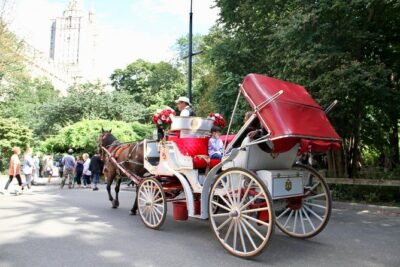
- Official NYC Horse Carriage Rides in Central Park since 1979 ™★ 5.0 · 2,365 reviews
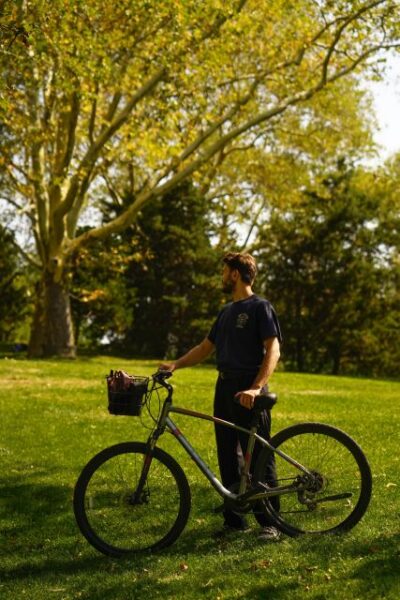
- NYC: Central Park Bike Rental★ 4.1 · 1,651 reviews
Just in: the newest New York City reviews on our desk





Central Park Tours, compared.
 ★ 5.0Central Park Pedicab Guided ToursFrom $387,108 reviews
 ★ 5.0Private Central Park Pedicab TourFrom $386,981 reviews
 ★ 4.2Central Park Bike RentalsFrom $92,528 reviews
 ★ 5.0Official NYC Horse Carriage Rides in Central Park since 1979 ™From $992,365 reviews
 ★ 4.1Central Park Bike RentalFrom $81,651 reviews
 ★ 4.9Private Central Park Pedicab TourFrom $401,637 reviews
 ★ 4.7Central Park Bike RentalFrom $91,509 reviews
 ★ 4.0Carriage Ride in Central Park (VIP – PRIVATE) Since 1964™From $141,074 reviews
Browse the lists this tour appears in