
Reviewed · NYC WALKING TOURS
Private Walking Tour: 5th Avenue and the Gilded Age Mansions
A few blocks on 5th Avenue can change how you see New York. This private walking tour links Gilded Age high society with landmarks you’ll pass every day, but usually miss the deeper meaning of. I love the way the guide sets the context up front, so each stop feels connected instead of random sightseeing, and I also like the personalized pace you get on a private group.
Two standout moments for me are the stop outside Temple Emanu-El (and the surprising Astor ties you wouldn’t guess from the street) and the architecture walk that brings C.P.H. Gilbert’s influence into focus. One possible drawback: you’ll be walking a lot for about 2.5 hours, so comfy shoes matter, and you’ll want to be ready for some outdoor time depending on weather.
In This Review
- Key highlights at a glance
- Why this private 5th Avenue walk feels different
- Grand Army Plaza: the Gilded Age gets real fast
- Temple Emanu-El: a skyline-class synagogue with Astor-era links
- Central Park Zoo: an old military armory story in disguise
- Alice in Wonderland statue: the quick reset you actually need
- French Gothic revival with C.P.H. Gilbert: the architecture ripple effect
- Art with survivor stories: modern German and Austrian collection themes
- Andrew Carnegie’s mansion idea: from wealth to “garden cottage”
- Jacqueline Kennedy Onassis Reservoir: your view reward
- Price and what a private group really buys
- Who should book this tour (and who might not)
- Should you book this private 5th Avenue and Gilded Age mansions tour?
- FAQ
- How long is the tour?
- What does the tour cost?
- Is this a private tour?
- What language is the tour offered in?
- What is the meeting point?
- Where does the tour end?
- Is there an expert guide included?
- Is a mobile ticket provided?
- Are admission tickets included at the stops?
- Are service animals allowed, and is it easy to participate?
- What is the cancellation policy?
Key highlights at a glance
- Grand Army Plaza sets the Gilded Age context before you hit the mansions and showy addresses
- Temple Emanu-El connects the city’s elite with the story of the Mrs. Astor mansion
- Central Park Zoo history ties wealthy leisure to an older military footprint
- Alice in Wonderland statue gives you a light, quick break inside Central Park’s rhythm
- French Gothic revival lessons explain how C.P.H. Gilbert shaped later Manhattan and Brooklyn mansions
- Jacqueline Kennedy Onassis Reservoir views deliver a big payoff over one of NYC’s wealthiest zip codes
New York City at street level, a few more walks
- SoHo, Little Italy, and Chinatown Walking Tour in New York
★ 5.0 · 3,153 reviews - Secrets of Grand Central Station Walking Tour New York City
★ 5.0 · 1,796 reviews - Greenwich Village Walking and Food Tasting Tour
★ 5.0 · 1,572 reviews - Artistic, Alternative Greenwich Village Walking Tour
★ 5.0 · 971 reviews
Why this private 5th Avenue walk feels different
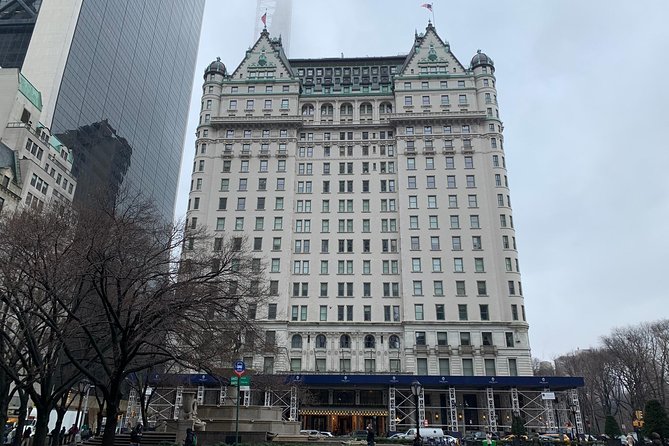
A lot of New York tours show you buildings like they’re just trophies. This one treats 5th Avenue like a scoreboard: who had money, who had influence, and how that power reshaped the city’s streets and skylines. You start with the Gilded Age story at Grand Army Plaza, so when you later look at religious buildings, museums, and grand architecture, you’re not just admiring. You’re interpreting.
Because it’s private, the guide can keep the pace right for your group. That matters on a walking tour where people want time to ask questions, take photos, or pause when a detail clicks. The tour runs about 2 hours 30 minutes, and it’s offered in English, with a mobile ticket you can keep on your phone.
If you’re the kind of traveler who likes facts with context, this style will land well. If you only want quick photo stops with minimal talking, you might find yourself wishing for more silence.
Grand Army Plaza: the Gilded Age gets real fast
You begin at the Pulitzer Fountain by Central Park South (764 Central Park S). From the start, you’re oriented to the big idea: this era made 5th Avenue the place where Manhattan’s high society showed itself. The guide uses Grand Army Plaza to introduce that shift—how money, prestige, and visibility turned an address into a social badge.
This first stop is short (about 20 minutes), but it’s the kind of shortcut your brain will use for the rest of the walk. When you know what the Gilded Age was doing socially—hosting, displaying, recruiting status—you start reading the city differently. Even the way people built nearby things starts to make sense.
Practical tip: if you’re going to ask one question early, ask it here. It’s the moment when the guide is most able to shape the meaning of everything that follows.
Temple Emanu-El: a skyline-class synagogue with Astor-era links
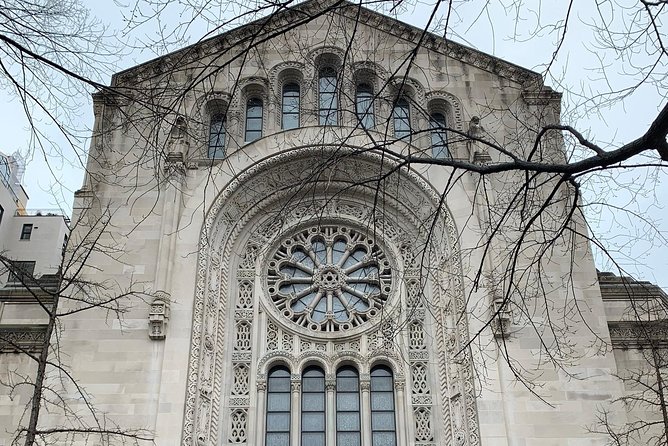
Next comes Temple Emanu-El, described as the largest synagogue in North America. Even from the outside, it’s a major civic landmark, and the stop connects it directly to the social world around it. The guide also points out the site of the Mrs. Astor mansion, where an invite meant you were somebody in the upper echelon of New York City.
That’s a powerful detail, because it turns a beautiful building into a story about access. You’re learning how elite culture worked: not only who owned what, but who could enter rooms, who could be seen, and who counted as part of the circle.
This stop runs about 15 minutes and is admission free, so you’re not scrambling over tickets or timelines. You’re just absorbing the connection between place and power.
A consideration: if your group expects the tour to be only about art and architecture, the social history angle might add a slightly heavier dose of “people politics.” For most history and architecture fans, that’s exactly the point.
New York City on foot, a few more routes

Central Park Zoo: an old military armory story in disguise
One of my favorite parts of this tour is how it uses Central Park as a time machine. The stop at the Central Park Zoo isn’t just about animals or cute photos. The guide points out that the area includes an old U.S. military armory, and that it’s among the few existing structures included in Central Park’s design.
That alone changes how you see the park. You stop thinking of it as only a scenic reset and start seeing it as layered land—built, repurposed, redesigned. Then the guide adds the social angle again: a zoo began from exotic pets wealthy people had set free in the park when the novelty wore off.
This stop is about 10 minutes with admission listed as free. Translation for you: you get the story without needing to plan an hours-long detour. You’ll likely get just enough time to look around and understand why that patch of park feels different than it looks.
If you want photo ideas, this is a good moment to shoot things that show scale—buildings around the park, the geometry of paths, and glimpses toward the reservoir later on.
Alice in Wonderland statue: the quick reset you actually need
Central Park has a way of turning “walking” into “hours,” so it helps when a guide gives you an intentional breather. The stop for the Alice in Wonderland statue is brief (around 10 minutes) and meant as a fun pause inside the park’s more restorative side.
You’re not just getting a classic photo opportunity. The guide frames it as part of how Central Park works on people’s moods—how it shifts the pace from the intensity of Manhattan streets into something lighter, playful, and calm.
This isn’t a stop you’ll remember like a mansion name, but it can be a mental reset that keeps the rest of the tour enjoyable. If your group has kids, it also helps break the history-heavy flow without killing the momentum.
French Gothic revival with C.P.H. Gilbert: the architecture ripple effect
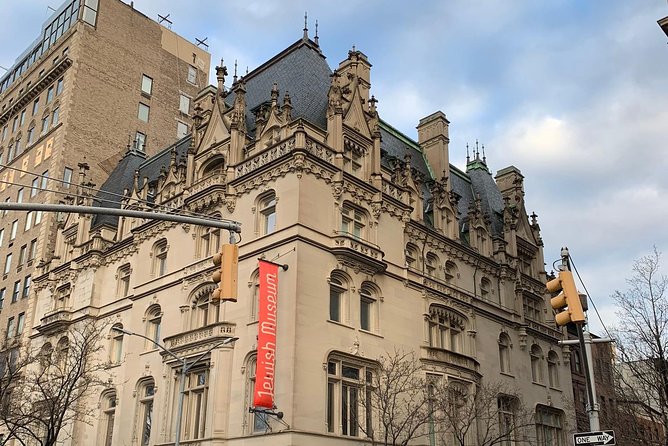
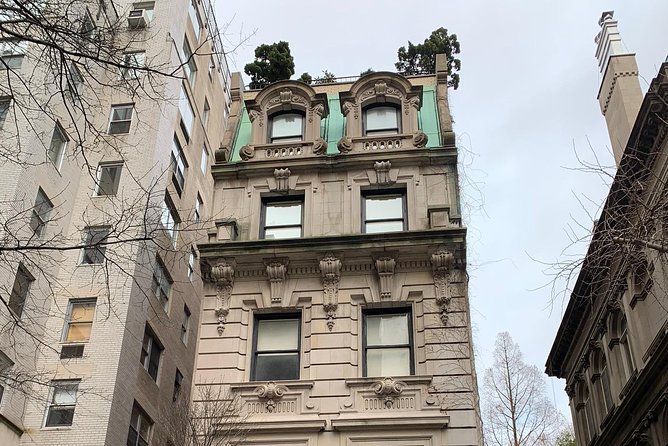
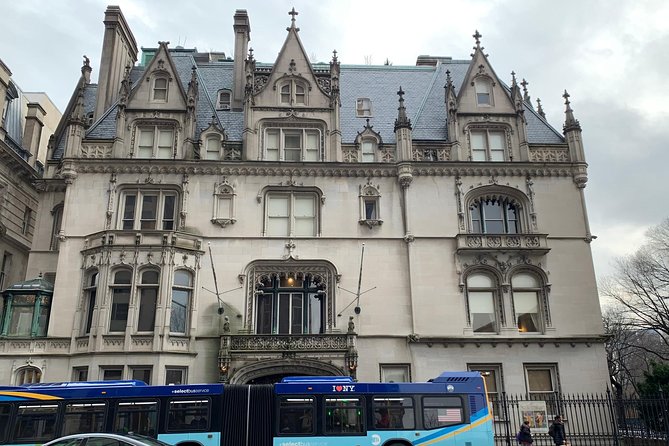
After you’ve built the social story, the tour leans hard into how the era expressed itself through buildings. You’ll get a look at the French Gothic revival architecture tied to C.P.H. Gilbert, described as an icon whose style influenced many mansions across Manhattan and Brooklyn.
What I like about this kind of architecture stop is that it changes your street-level reading. Instead of seeing “pretty old building,” you start noticing the design language—how certain historic looks traveled from one project to the next. That matters on 5th Avenue, where lots of façades are visible, but the design influence is often invisible unless someone explains what to look for.
This portion is not advertised as a formal museum-style visit. It’s more like guided architecture noticing, the kind that turns ordinary sidewalks into a learning lab.
Practical tip: if the tour pauses near a building for a feature explanation, don’t rush past. Those moments are where the style “clicks.” Look up when the guide gestures—most of these clues live on the façade.
Art with survivor stories: modern German and Austrian collection themes
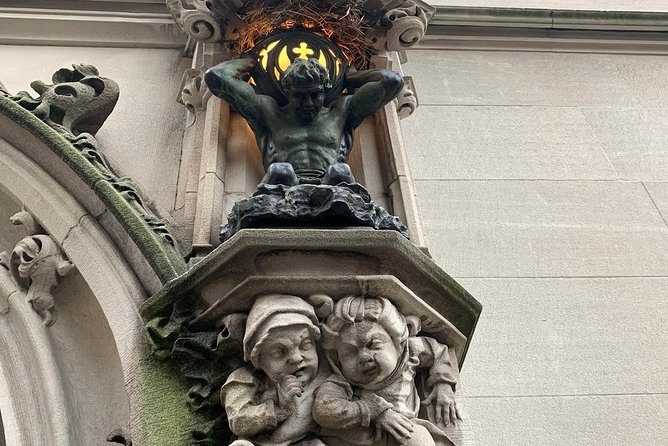
From architecture, the tour moves into art. You’ll spend time looking at the modern German and Austrian art collection, including dramatic stories about the survival of Klimpt pieces as jaw-dropping as any 20th-century saga.
Even if art isn’t your main interest, I think this stop works because the guide connects art to human history: not just what the work looks like, but what it had to outlast. That kind of context tends to make art feel less distant and more urgent.
You won’t get an art-history class that assumes you already know everything. Instead, you get a human story hook and a guided lens for what to pay attention to.
One consideration: if your group came primarily for mansion exteriors and you’re less excited about museum-adjacent art themes, this is the part where tastes can split. Still, it’s a good pairing for a tour that otherwise focuses so much on the social mechanics of wealth.
Andrew Carnegie’s mansion idea: from wealth to “garden cottage”
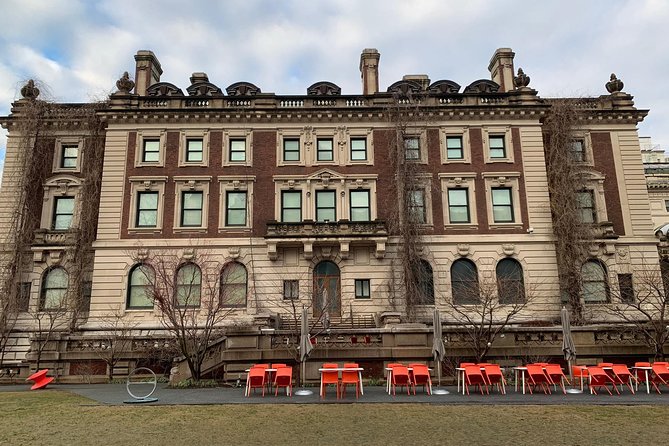
The tour also includes the story of Andrew Carnegie’s old mansion, described for him as a garden cottage. That detail might seem small, but it reframes how we talk about Gilded Age power. Carnegie wasn’t just building big; he was curating an idea of domestic life—something more controlled, more private, more intentional than the term mansion alone suggests.
On 5th Avenue, where status was public and visible, this sort of “what counts as a home” detail brings depth. It makes you ask different questions: not only what people owned, but how they wanted to be seen living.
This stop supports the tour’s central theme: how the elite expressed themselves through both visible and subtle choices—architecture, addresses, and even the way they framed home as refuge.
Jacqueline Kennedy Onassis Reservoir: your view reward
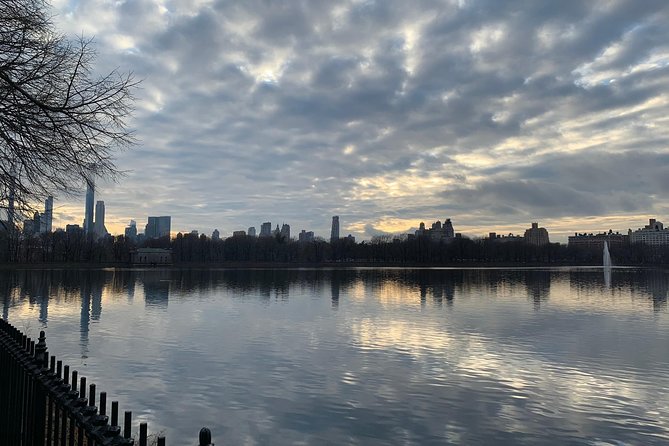
You end with the Jacqueline Kennedy Onassis Reservoir stop, about 10 minutes with admission listed as included. This is the payoff moment: one of the world’s great urban views over one of NYC’s wealthiest zip codes.
After all the talk about the Gilded Age and how power shaped 5th Avenue, you get to look at the result. The reservoir view doesn’t just feel pretty. It feels like a summary of New York’s layering: nature and design, money and geography, past and present.
Practical tip: bring your camera, but also take one minute without it. Let the view settle before you start snapping. It’s the best way to make sure this stop sticks in your memory.
Price and what a private group really buys
The tour costs $478.73 per group (up to 15 people) for about 2 hours 30 minutes. That’s a private price, but the math changes with group size. If you can fill a group with several people, the per-person cost becomes much more reasonable. If it’s just you or two people, it’s certainly a splurge.
Here’s the value logic I’d use: you’re paying for a guide to connect the dots—Gilded Age social power, architecture influences, and Central Park’s layered past—while tailoring the pace to your group. If you’d otherwise do this area on your own, you’d need multiple sources, a lot of walking, and still might miss the exact connections, like the Mrs. Astor mansion link tied to Temple Emanu-El.
The fact that it’s offered with a mobile ticket and an expert guide also helps. It keeps your planning lighter and your time on the ground more focused.
Who should book this tour (and who might not)
This works especially well for:
- History buffs who like social context, not just dates
- Architecture fans who want to learn what design choices mean
- People who enjoy Central Park but want a sharper backstory than standard park talk
- Groups who want personalized attention instead of a crowded, hurried format
It may be less ideal if you:
- Prefer a totally self-paced tour with zero guided interpretation
- Want only exterior mansion photo stops, with minimal detours into art themes
- Struggle with outdoor walking for around 2.5 hours
One more note: a private tour often shines when your group has questions. If you show up curious, you’ll get more out than if you’re hoping for a passive experience.
Should you book this private 5th Avenue and Gilded Age mansions tour?
I’d book it if you want 5th Avenue to feel like more than a postcard. The best reason is the way the tour stitches together social status, architecture influence, and Central Park’s surprising layers into one coherent walk. You’ll come away seeing buildings and streets as part of a system, not a list.
Also, pay attention to the guide quality. The tour has been highlighted with guides like Jonathan and Billy, praised for making the neighborhood and its era feel alive, fun, and well explained. And there’s even a note about guides staying patient when timing gets thrown off due to travel delays—exactly the kind of real-world flexibility you appreciate in NYC.
If your group includes a mix of interests—history, design, and a little art—you’ll likely find something worth paying attention to at every step.
If you’re mainly looking for a short, low-effort loop, skip this and choose something faster. But if you want meaning, this one has it.
FAQ
How long is the tour?
It runs about 2 hours 30 minutes.
What does the tour cost?
It costs $478.73 per group, up to 15 people.
Is this a private tour?
Yes. It’s a private tour/activity, and only your group participates.
What language is the tour offered in?
The tour is offered in English.
What is the meeting point?
The start is at Pulitzer Fountain, 764 Central Park S, New York, NY 10019.
Where does the tour end?
The tour ends at The Jewish Museum, 1109 5th Ave and E 92nd St, New York, NY 10128, at the corner of 92nd Street and 5th Avenue.
Is there an expert guide included?
Yes. An expert guide is included.
Is a mobile ticket provided?
Yes. The tour uses a mobile ticket.
Are admission tickets included at the stops?
Admission is listed as free for Grand Army Plaza, Temple Emanu-El, Central Park Zoo, and the Alice in Wonderland statue. Admission is included for the Jacqueline Kennedy Onassis Reservoir stop.
Are service animals allowed, and is it easy to participate?
Service animals are allowed, it’s near public transportation, and most travelers can participate.
What is the cancellation policy?
You get free cancellation. Cancel up to 24 hours in advance for a full refund. If you cancel less than 24 hours before the start time, no refund is given.
More Tours in New York City
- Statue of Liberty and Ellis Island Tour: All Options★ 5.0 · 13,571 reviews
- New York in One Day Guided Sightseeing Tour★ 5.0 · 13,166 reviews
- Central Park Pedicab Guided Tours★ 5.0 · 7,108 reviews
- New York City: Manhattan Helicopter Tour★ 4.7 · 7,076 reviews
- Private Central Park Pedicab Tour★ 5.0 · 6,981 reviews
More Tour Reviews in New York City
- NYC: SUMMIT One Vanderbilt Tickets★ 4.7 · 51,195 reviews
- NYC: Empire State Building Tickets – Observatory & Museum★ 4.7 · 25,757 reviews
- New York City: Statue of Liberty & Ellis Island with Ferry★ 4.6 · 18,683 reviews
- New York City: American Museum of Natural History Ticket★ 4.5 · 15,447 reviews
- Statue of Liberty and Ellis Island Tour: All Options★ 5.0 · 13,571 reviews
New York City, One Block at a Time
- SoHo, Little Italy, and Chinatown Walking Tour in New York★ 5.0 · 3,153 reviews
- Secrets of Grand Central Station Walking Tour New York City★ 5.0 · 1,796 reviews
- Greenwich Village Walking and Food Tasting Tour★ 5.0 · 1,572 reviews
- Artistic, Alternative Greenwich Village Walking Tour★ 5.0 · 971 reviews
- Brooklyn Bridge & DUMBO Neighborhood Tour – from Manhattan to Brooklyn★ 5.0 · 826 reviews
Just in: the newest New York City reviews on our desk





NYC Walking Tours, compared.
 ★ 5.0SoHo, Little Italy, and Chinatown Walking Tour in New YorkFrom $393,153 reviews
 ★ 5.0Secrets of Grand Central Station Walking Tour New York CityFrom $391,796 reviews
 ★ 5.0Greenwich Village Walking and Food Tasting TourFrom $941,572 reviews
 ★ 5.0Artistic, Alternative Greenwich Village Walking TourFrom $39971 reviews
 ★ 5.0Brooklyn Bridge & DUMBO Neighborhood Tour – from Manhattan to BrooklynFrom $49826 reviews
 ★ 5.0Central Park Guided Walking TourFrom $44774 reviews
 ★ 4.6Private Walking Tour with a LocalFrom $55771 reviews
 ★ 5.0NYC Lower East Side Walking and Food TourFrom $94646 reviews