
Reviewed · NYC WALKING TOURS
Recreate the Most Requested Walking Tour of 1840s New York
New York changes fast, but the street clues stay. This walking tour stitches together 1840s Lower Manhattan with architecture-first storytelling, so you start seeing the city like a puzzle. I like the small-group feel and the way the guide points out details you would miss on your own. One thing to consider: it leans more toward buildings and street evolution than on the usual Five Points gang folklore.
You’ll cover key stops from the early-1830s elite world near Colonnade Row to the Five Points area at the edge of today’s Court District and Chinatown. I also love that the pacing is measured, with multiple short stops so questions don’t get crushed. If you hate walking in crowds or want strictly indoor history, this may feel a bit outdoorsy—but it’s still a very manageable tour for most people with moderate fitness.
In This Review
- Key Highlights You’ll Feel on the Walk
- A Lower Manhattan Time Machine With Real Street-Level Clues
- Why Architecture Is the Secret Decoder Ring for 1840s NYC
- Stop 1: The Public Theater and the Ruins of Colonnade Row
- Stop 2: Noho on Broadway—Decoding Street Patterns
- Stop 3: The Bayard–Condict Building and Louis Sullivan’s Role
- Stop 4: Houston Street and Broadway—Where the Grid Started
- Stop 5: SoHo to Canal Street—Street Life, Retail Shifts, and Social Change
- Stop 6: Foley Square—A Lake, the African Burial Ground, and Five Points Origins
- Stop 7: Columbus Park and the Ending at 500 Pearl Street
- Price, Pace, and Who This Tour Fits Best
- Practical Tips to Get More From the 1840s Details
- Book It or Skip It: My Take on Whether It’s Worth $59
- FAQ
- How much does the tour cost?
- How long is the walking tour?
- Where do you start, and where does the tour end?
- Is the tour offered in English?
- Do I receive a mobile ticket?
- What is the group size?
- Is the walking required to be strenuous?
- Are service animals allowed?
- What happens if the weather is bad?
Key Highlights You’ll Feel on the Walk
- Small group (max 7 travelers) for real question time
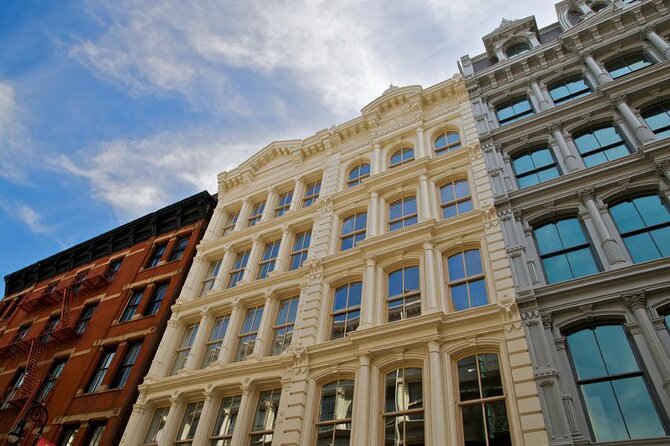
- Architecture as your timeline, not just background facts
- SoHo and Broadway decoded, including how people referred to the area before the name
- Foley Square’s lake history, tied directly to the African Burial Ground shoreline
- Louis Sullivan’s Bayard–Condict Building, framed as part of the skyscraper shift
- A strong ending at 500 Pearl Street, where the tour moves from status to hardship
New York City at street level, a few more walks
- SoHo, Little Italy, and Chinatown Walking Tour in New York
★ 5.0 · 3,153 reviews - Secrets of Grand Central Station Walking Tour New York City
★ 5.0 · 1,796 reviews - Greenwich Village Walking and Food Tasting Tour
★ 5.0 · 1,572 reviews - Artistic, Alternative Greenwich Village Walking Tour
★ 5.0 · 971 reviews
A Lower Manhattan Time Machine With Real Street-Level Clues
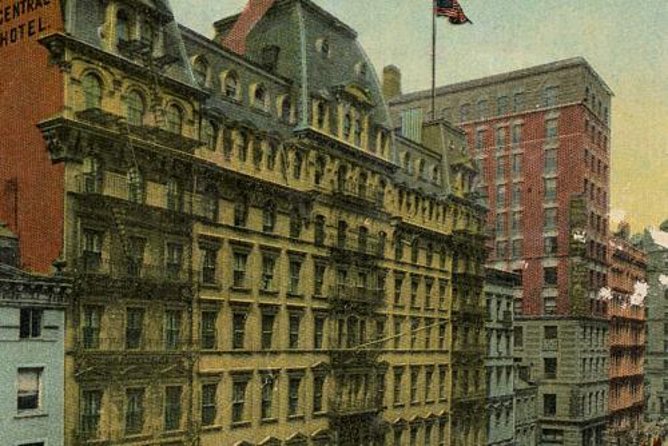
This is the kind of tour that gives you a new map in your head. You start at the Public Theater on Lafayette Street and work your way through the streets that shaped Lower Manhattan’s elite neighborhoods, commercial strips, and later, extreme poverty. The route is designed to make cause-and-effect make sense: where people stood, what the terrain looked like, and how buildings got reused as the city pushed downtown.
The tour is priced at $59 per person and runs about 2 to 3 hours. That timing matters because it’s long enough to connect the dots, but short enough to stay comfortable without rushing. And with a maximum of 7 travelers, the guide can actually slow down when someone spots a detail and wants the story behind it.
You’ll also get a mobile ticket and the tour is offered in English. Stops are generally set up so you’re not paying repeatedly to enter small sites, since the listed stops are marked admission ticket free.
The real value here is not that you’ll tick off famous names. It’s that you’ll learn how to read New York—especially the buildings and street layout that look straightforward until someone explains what changed and why.
Why Architecture Is the Secret Decoder Ring for 1840s NYC
In most tours, architecture is a side note. Here, it’s the main language. The guide pays attention to the sizes, styles, and patterns in the buildings along Broadway, then connects those choices to the neighborhoods they served. You’ll notice that the streets aren’t just scenery—they’re evidence of shifting wealth, zoning patterns, and who moved in next.
That shows up again and again in the way the tour treats adaptation and reuse. You walk past structures that have been repurposed over time, and the guide helps you understand how earlier forms could get adapted for new uses. One review specifically called out how the tour makes architectural significance click—stuff you’d otherwise glance at becomes meaningful once you know what to look for.
If you’re the kind of traveler who loves a city where everything is layered, this format is a gift. And if your goal is purely dramatic 5-point gang talk, you may feel slightly redirected. One traveler noted the emphasis is more architectural than gang-history focused.
Stop 1: The Public Theater and the Ruins of Colonnade Row
You begin at 425 Lafayette St at the Public Theater, but the history starts farther back than the theater’s current life. The tour kicks off at the ruins associated with Colonnade Row, an early-1830s residence built for the country’s elite.
This is a smart first stop because it sets the tone: the city you see today wasn’t always the center. The guide frames the area as high ground—a setting that once included a pleasure garden when “the city” was still farther downtown. In other words, you start with status, distance, and landscape, not with famous monuments.
What’s great about this opening is how it trains your attention. You learn to think about location as power. The terrain and the neighborhood reputation set up later contrasts, especially when the tour eventually drops into stories tied to Five Points.
New York City on foot, a few more routes

Stop 2: Noho on Broadway—Decoding Street Patterns
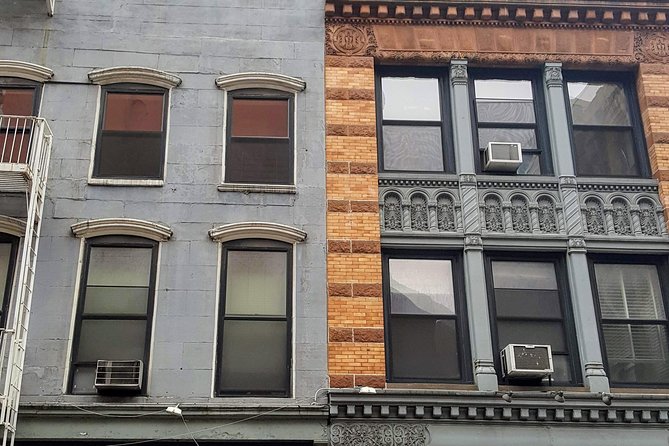
Next comes Noho, and the tour leans into what makes Broadway such a useful corridor for storytelling. You walk down Broadway and the guide decodes the streetscape by pointing out building styles, sizes, and how they might have been adapted for re-use as the city’s needs changed.
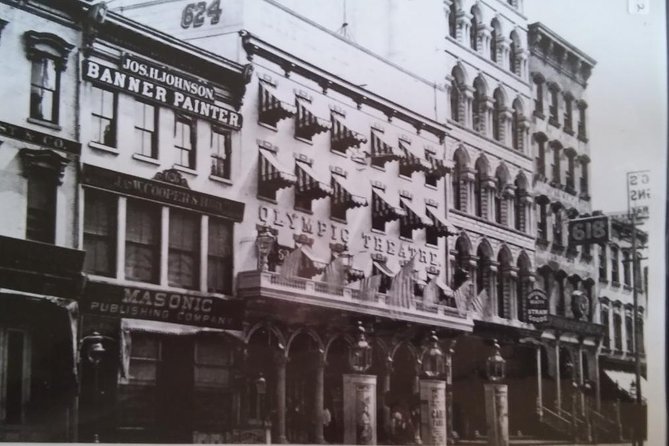
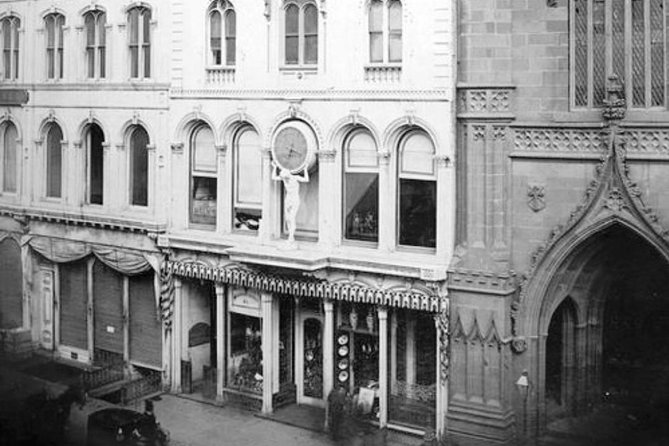
This stop is also where the tour starts playing a clever naming game. The guide uses images from the past to show how neighborhoods evolved, including the SoHo section of Broadway before it became the SoHo you know today.
One of my favorite kinds of history moments is when you realize that a neighborhood name is recent—and that people used different language for the same streets over time. The tour sets you up to ask that exact question later: if the name SoHo is relatively new, what did people call this area when it looked and worked differently?
Stop 3: The Bayard–Condict Building and Louis Sullivan’s Role
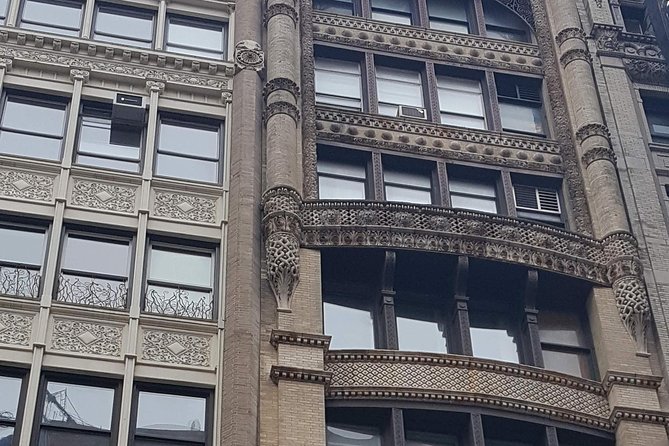
A short stop here, but it matters. You pause at the Bayard–Condict Building, highlighted for being Louis Sullivan’s only building in the city. The guide uses this to explain Sullivan’s place in the shift toward skyscraper design.
Even if you don’t consider yourself an architecture person, this kind of stop gives you a framework. The building isn’t presented as a random landmark; it’s presented as a piece in a bigger evolution story—how the skyscraper style emerged and what that shift meant for the city.
If you like getting one strong architecture reference that anchors your understanding, this is a good one. It also breaks up the walk without turning the tour into a sightseeing sprint.
Stop 4: Houston Street and Broadway—Where the Grid Started
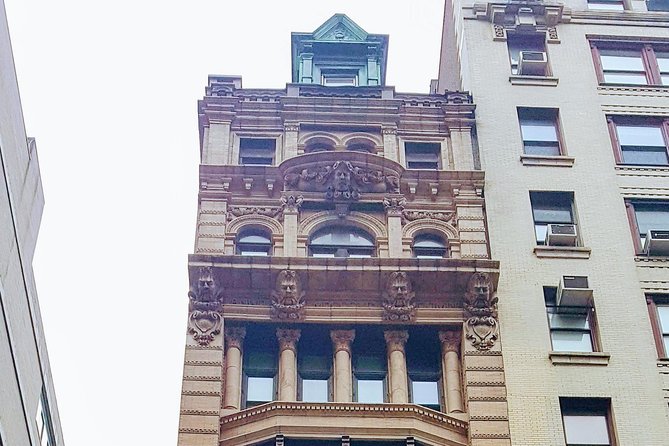
One of the tour’s most memorable ideas is that geography lives under your feet. At Houston Street and Broadway, the guide points out how the ancient geography shows up in the street layout, including the idea that the grid began here.
This stop also connects the ground to institutions. You learn about an early St. Thomas Episcopal Church site that once belonged to an upper-class residential setting. The message is clear: before Lower Manhattan became what it is now, this area had a different social role, and the street fabric reflects that.
If you tend to think of streets as modern infrastructure only, you’ll enjoy this. It helps you stop treating the city as flat and start treating it as a map with memory.
Stop 5: SoHo to Canal Street—Street Life, Retail Shifts, and Social Change
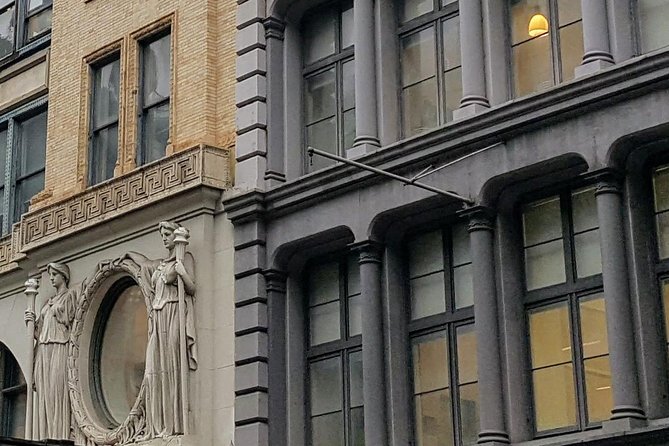
After the grid lesson, the tour keeps walking down Broadway with explanations, descriptions, and historical images to help you visualize change over time. You move through SoHo and then head toward Canal Street, where the tour leans into social and retail history.
This is where the story gets more character-driven. The guide talks about the people who would have walked the sidewalks and what businesses likely served the neighborhood at different stages. Even if you’re not a dedicated history buff, this is where the city starts to feel inhabited in the past tense.
And the SoHo naming detail keeps popping up in spirit. The tour asks you to consider how the area would have been referenced when it didn’t have a modern label. That kind of question makes the walking experience stick, because it forces you to imagine the city as locals did—not as tourists do.
Stop 6: Foley Square—A Lake, the African Burial Ground, and Five Points Origins
Then the tour makes its biggest emotional shift. At Foley Square, the guide explains that today’s Civic Center was once a lake. The shoreline had been linked to the African Burial Ground through much of the British colonial period.
You then learn what happened next: the lake was filled in, and along the old shoreline, The Five Points developed. The Five Points are presented as the most notorious slum in New York City history—an area where conditions deteriorated dramatically.
This part is valuable because it does more than say something tragic happened. It connects the physical landscape to real outcomes. A filled-in lake doesn’t feel dramatic on paper, but in the tour’s telling, it becomes the stage where later neighborhoods formed and suffered.
It also brings a more grounded seriousness to the walk. You’re not just hunting for cool photos; you’re seeing how layered the city’s past is—sometimes in ways that still require care and attention.
Stop 7: Columbus Park and the Ending at 500 Pearl Street
The tour finishes at the location of the Five Points area, now tied to 500 Pearl Street, near Columbus Park. It closes the loop: you started with elite pleasure-ground high ground near Colonnade Row, and you end where long-lived hardship once defined daily life.
The story moves through Irish-linked history and the tenements of Mulberry Bend, then points toward how the area sits today at the border of the Court District and Chinatown. That last stretch gives you contrast you can physically feel. The same block grid that now looks like part of a lively downtown connects back to a neighborhood known for miserable living conditions.
I like endings like this because they give you context for why a city is complicated. New York doesn’t replace its past—it stacks it. And a walking tour like this helps you see the stack instead of only the top layer.
Price, Pace, and Who This Tour Fits Best
At $59, this isn’t a bargain the way free neighborhood history walks can be. But it also isn’t priced like a museum-ticket day. For the value, the key is the guide quality and the group size: max 7 keeps it interactive, and the tour time (2–3 hours) gives enough runway for connections between stops.
The pacing also matters. One review described it as not fast-paced, with enough chances to stop and rest while the guide shared facts and answered questions. That’s a big deal on a Lower Manhattan route where sidewalks can get hectic.
This tour also suits you if you’re:
- visiting New York more than once and want a deeper pass on the streets
- more interested in architecture and street evolution than in major attractions alone
- ready to walk at a moderate pace (it calls for moderate physical fitness)
It’s offered in English, and you can bring service animals. It’s also described as near public transportation, which makes it easier to pair with other Lower Manhattan plans.
One more practical note: the tour requires good weather. If the forecast looks sketchy, expect the provider to adjust plans or offer a different date or refund if weather cancels it.
Practical Tips to Get More From the 1840s Details
You’ll get the best experience if you show up ready to watch closely. Here are simple things that help:
- Wear comfortable shoes. You’ll cover enough ground that blisters would ruin the “read the buildings” part.
- Bring your phone camera, but slow down first. Try to spot one clue at a time: a building style change, an odd street angle, or a repurposed façade.
- Ask questions early if you have them. With a small group, your questions matter and the guide can tailor answers to what you’re noticing.
- Use the stops to reset your brain. Each stop is short, and that’s intentional—you’re meant to absorb one layer before the next.
Book It or Skip It: My Take on Whether It’s Worth $59
I think this tour is a strong choice if you want to understand Lower Manhattan through street layout and architecture instead of only big-name landmarks. The emotional contrast—starting with the elite world tied to Colonnade Row, then ending at 500 Pearl Street—lands because the guide builds the logic step by step.
Skip it if your top priority is dramatic Five Points gang history. The tour’s focus is more about how buildings and neighborhoods evolved, with Five Points treated seriously and historically, but not as a nonstop narrative of criminals.
If that sounds like your style, I’d book it. It’s the kind of experience that makes your next walk through SoHo and Broadway feel smarter, not just longer.
FAQ
How much does the tour cost?
The price is $59.00 per person.
How long is the walking tour?
It lasts about 2 to 3 hours.
Where do you start, and where does the tour end?
It starts at 425 Lafayette St, New York, NY 10003 (The Public Theater) and ends at 169 Worth St, New York, NY 10013.
Is the tour offered in English?
Yes, it is offered in English.
Do I receive a mobile ticket?
Yes, you get a mobile ticket.
What is the group size?
The maximum group size is 7 travelers.
Is the walking required to be strenuous?
It is intended for people with moderate physical fitness.
Are service animals allowed?
Yes, service animals are allowed.
What happens if the weather is bad?
The tour requires good weather. If it is canceled due to poor weather, you’ll be offered a different date or a full refund.
More Tours in New York City
- Statue of Liberty and Ellis Island Tour: All Options★ 5.0 · 13,571 reviews
- New York in One Day Guided Sightseeing Tour★ 5.0 · 13,166 reviews
- Central Park Pedicab Guided Tours★ 5.0 · 7,108 reviews
- New York City: Manhattan Helicopter Tour★ 4.7 · 7,076 reviews
- Private Central Park Pedicab Tour★ 5.0 · 6,981 reviews
More Tour Reviews in New York City
- NYC: SUMMIT One Vanderbilt Tickets★ 4.7 · 51,195 reviews
- NYC: Empire State Building Tickets – Observatory & Museum★ 4.7 · 25,757 reviews
- New York City: Statue of Liberty & Ellis Island with Ferry★ 4.6 · 18,683 reviews
- New York City: American Museum of Natural History Ticket★ 4.5 · 15,447 reviews
- Statue of Liberty and Ellis Island Tour: All Options★ 5.0 · 13,571 reviews
New York City, One Block at a Time
- SoHo, Little Italy, and Chinatown Walking Tour in New York★ 5.0 · 3,153 reviews
- Secrets of Grand Central Station Walking Tour New York City★ 5.0 · 1,796 reviews
- Greenwich Village Walking and Food Tasting Tour★ 5.0 · 1,572 reviews
- Artistic, Alternative Greenwich Village Walking Tour★ 5.0 · 971 reviews
- Brooklyn Bridge & DUMBO Neighborhood Tour – from Manhattan to Brooklyn★ 5.0 · 826 reviews
Just in: the newest New York City reviews on our desk



NYC Walking Tours, compared.
 ★ 5.0SoHo, Little Italy, and Chinatown Walking Tour in New YorkFrom $393,153 reviews
 ★ 5.0Secrets of Grand Central Station Walking Tour New York CityFrom $391,796 reviews
 ★ 5.0Greenwich Village Walking and Food Tasting TourFrom $941,572 reviews
 ★ 5.0Artistic, Alternative Greenwich Village Walking TourFrom $39971 reviews
 ★ 5.0Brooklyn Bridge & DUMBO Neighborhood Tour – from Manhattan to BrooklynFrom $49826 reviews
 ★ 5.0Central Park Guided Walking TourFrom $44774 reviews
 ★ 4.6Private Walking Tour with a LocalFrom $55771 reviews
 ★ 5.0NYC Lower East Side Walking and Food TourFrom $94646 reviews