
Reviewed · NYC WALKING TOURS
5th & Park – Film & Fiction Walking Tour of Carnegie Hill Along Museum Mile
A stroll that turns movie trivia into street-level sightseeing. This film-and-fiction walking tour has you pairing real Carnegie Hill architecture with the scenes that put it on screen, from Woody Allen-adjacent townhouse glamour to big-name Hollywood moments. I love how it focuses on film locations you can actually stand in front of, and I also like that it keeps the pace conversational with frequent short stops for context.
One thing to factor in: this is a moderate-walking experience. It’s not a sit-and-stare bus tour, and you’ll be outside for a good chunk of time, so wear comfy shoes and plan to keep moving.
In This Review
- Key Points You’ll Appreciate
- Movie Mile Walks Best When You Look Up
- Starting at the Met Steps, Then Finding “Scene Coordinates”
- Carnegie Hill Facades Turn Into Film Set Clues
- Celebrity Homes and Literary Legends on the Same Blocks
- The Church of Heavenly Rest: Stained Glass With Movie-Scene Energy
- Central Park’s Reservoir: Waterbirds in the Middle of the Grid
- Cooper Hewitt and Andrew Carnegie’s Mansion Legacy
- St. Thomas More: Warhol and Jacqueline Kennedy Onassis Connections
- Frank Lloyd Wright Architecture: A Detour That Still Fits the Theme
- What the Guide’s Style Means for Your Enjoyment
- Timing and How to Pair It With Other Museum Mile Plans
- Price and Value: What $125 Buys You Here
- Who This Tour Is Best For (and Who Might Want Something Else)
- Should You Book This Film-and-Fiction Walk?
Key Points You’ll Appreciate
- Movie-location sightseeing without the guesswork: you’ll identify what was filmed where, right in the streetscape.
- Carnegie Hill celebrity and literary facades: multiple well-known names tied to the neighborhood.
- Landmark interiors you’ll notice from the outside: the Church of Heavenly Rest stained glass is a standout visual moment.
- Central Park’s Jacqueline Kennedy Onassis Reservoir: you get a wildlife glimpse mixed into the urban walking route.
- Museum Mile architecture lovers will grin: the route connects major cultural spaces plus Frank Lloyd Wright highlights.
New York City at street level, a few more walks
- SoHo, Little Italy, and Chinatown Walking Tour in New York
★ 5.0 · 3,153 reviews - Secrets of Grand Central Station Walking Tour New York City
★ 5.0 · 1,796 reviews - Greenwich Village Walking and Food Tasting Tour
★ 5.0 · 1,572 reviews - Artistic, Alternative Greenwich Village Walking Tour
★ 5.0 · 971 reviews
Movie Mile Walks Best When You Look Up
Carnegie Hill along 5th Avenue, Madison Avenue, and Park Avenue can feel like a movie set even before the guide points anything out. The magic here is that the tour teaches you how to read what you’re seeing—stonework, doorways, stoops, and the general rhythm of upper-class New York blocks. You’ll walk away with a mental map that makes the neighborhood easier to navigate on your own.
I also appreciate the way the tour sticks to a clear theme: film and fiction. Instead of a general history lecture, you’re getting stories that connect architecture to screen scenes and to the people who lived nearby. And the group size—up to 30—keeps the vibe from turning into a rush-hour shuffle.
Starting at the Met Steps, Then Finding “Scene Coordinates”
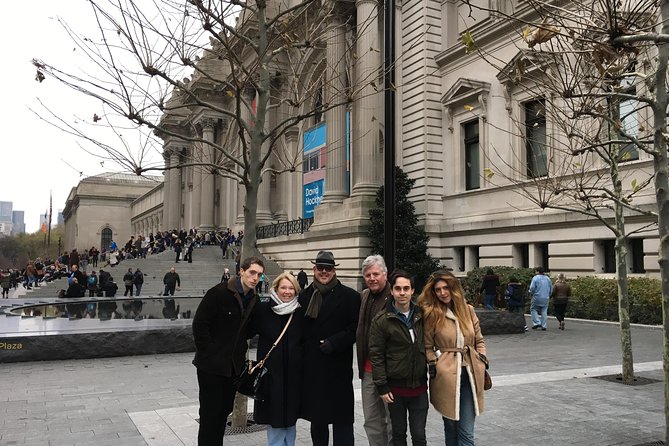
Your tour meets at the Metropolitan Museum of Art at 1000 5th Ave, on the steps. This is a smart staging point because it gives you an easy anchor—both geographically and mentally—before you start scanning the streets for details. If you’re also doing a museum visit, this start location makes the schedule feel natural because you’re already in the Museum Mile zone.
The experience is guided by Cole Smithey Tours, and the tone is friendly and information-forward. Based on my experience with the guide-style here, you’ll get a steady stream of context rather than long monologues. Expect the tour to pause in front of places for about 3 to 10 minutes, which is perfect for getting photos, listening, and then moving on before you lose the group.
Carnegie Hill Facades Turn Into Film Set Clues
After you get oriented, the walking route becomes a string of “look closer” moments. The guide describes scenes filmed at each stop as you move along 5th Avenue, Madison Avenue, and Park Avenue. It’s not just trivia—you’ll learn how the neighborhood’s look and layout became part of how stories are staged on screen.
Some of the film and fiction titles you’ll connect to real locations include:
- 84 Charing Cross Road
- Six Degrees of Separation
- The House on 92nd Street
- Ransom
- When Harry Met Sally
What I like about this approach is how it changes your eyes. Instead of walking past facades like background scenery, you start noticing things that matter to filmmakers—street width, sightlines, building character, and the way certain blocks read as “classic New York” in a camera frame.
More halls and galleries worth the hours



Celebrity Homes and Literary Legends on the Same Blocks
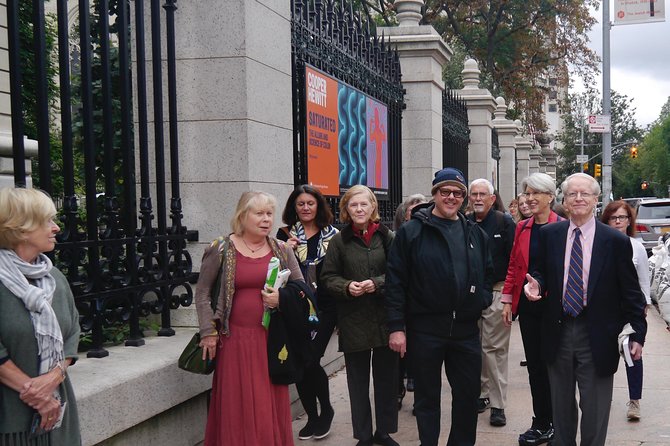
One of the most fun parts is spotting the homes linked to well-known celebrities and authors. You’ll catch sight of residences associated with names like Ralph Lauren, Faye Dunaway, Anthony Bourdain, Katie Couric, Stockard Channing, Madeline Kahn, J.D. Salinger, Truman Capote, Marlene Dietrich, Robert Redford, Jacqueline Kennedy Onassis, and Mike Nichols.
You don’t need to be a superfan to enjoy this. Even if you only recognize a few names, it still gives you a sense of why Carnegie Hill became a magnet for prominent people. The architecture reads as intentional—grand, classic, and built for privacy—so when the guide connects those facades to famous residents, it makes the neighborhood feel personal rather than generic.
The Church of Heavenly Rest: Stained Glass With Movie-Scene Energy
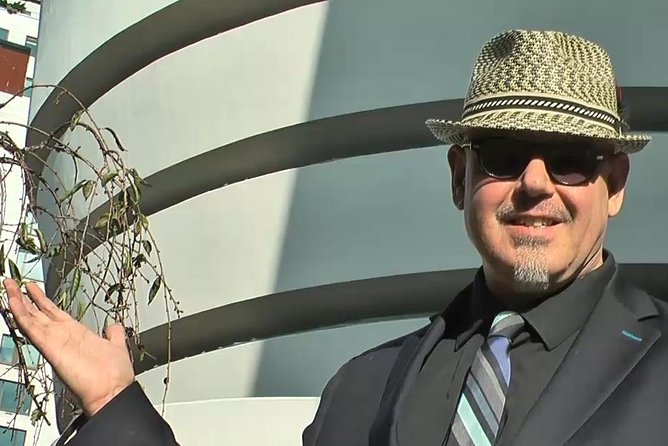
At The Church of Heavenly Rest, you’ll get a moment that’s both visual and story-driven. The big draw is the stunning stained glass murals—exactly the kind of detail that’s easy to walk past if you aren’t looking for it. This is also where the tour ties in a recognizable Hollywood setup: the guide connects this setting with the film The Devil’s Advocate, where Keanu Reeves meets Charlize Theron.
Even if you don’t remember every scene, the stained glass is worth the stop. It gives your brain a break from streetscape details and brings the tour into a more emotional, slower-looking mode. It’s also a good photo opportunity spot—just be mindful of where you stand so you don’t block other visitors.
Central Park’s Reservoir: Waterbirds in the Middle of the Grid
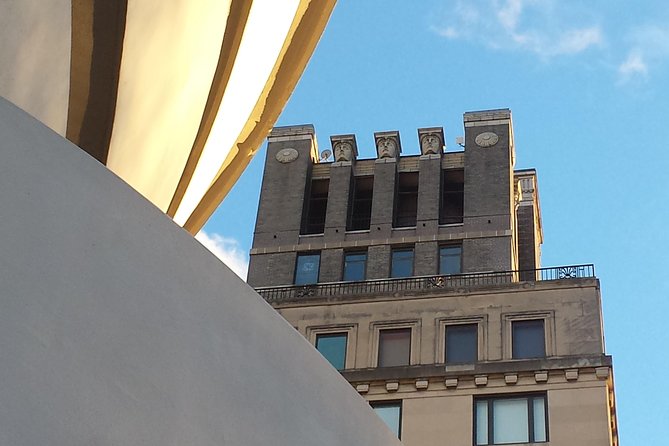
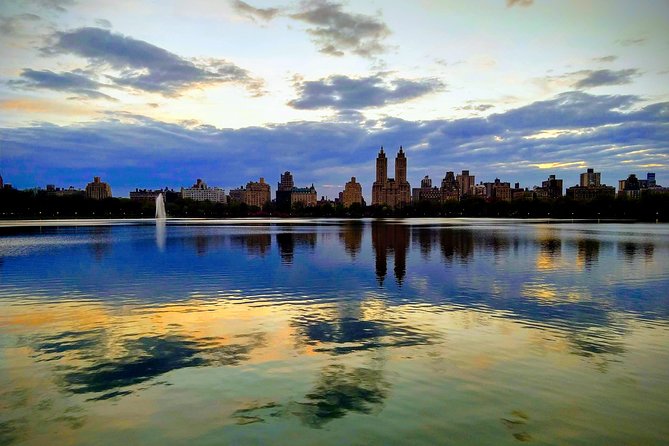
Then comes a change of rhythm. You’ll catch a glimpse of waterbirds around the Jacqueline Kennedy Onassis Reservoir in Central Park. It’s a surprisingly calming contrast to the dense streets around it, and it makes the neighborhood feel less like a single straight line of buildings.
This stop also helps you understand how New York’s movie realism works. Filmmakers often need a quick emotional shift—something natural, something living—without leaving the city’s visual grammar. Seeing wildlife from the edge of a major reservoir gives you a more “real New York” feeling than another photo of a townhouse.
Cooper Hewitt and Andrew Carnegie’s Mansion Legacy
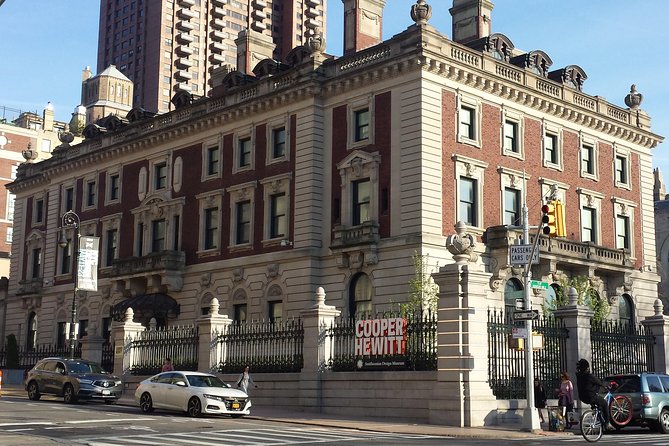
Next, you’ll learn about Andrew Carnegie’s former mansion, which is now the Cooper Hewitt Design Museum. The tour points out the building’s transformation and highlights the presence of a lovely public garden. This matters because the mansion-to-museum shift is a big part of why people now experience the area as both historic and public.
There’s also a standout design detail tied to Jewish art collections: the museum’s Châteauesque design contains over 30,000 pieces of Jewish art. You don’t have to be an art specialist to appreciate what that means. It signals that this isn’t only a pretty exterior museum stop—it’s also a serious cultural destination, even if you’re just passing by on the walking tour route.
St. Thomas More: Warhol and Jacqueline Kennedy Onassis Connections
Another stop worth slowing down for is St. Thomas More church. The tour shares that Andy Warhol and Jacqueline Kennedy Onassis were parishioners during the same era. This kind of detail does something subtle but powerful: it connects the neighborhood’s celebrity layer to a grounded community setting.
It’s also a reminder that Carnegie Hill isn’t only about aesthetics and wealth. It’s about institutions—churches, schools, cultural centers—that people actually use. On a movie-location tour, that context makes the streets feel less like a backdrop and more like a living place.
Frank Lloyd Wright Architecture: A Detour That Still Fits the Theme
The route doesn’t stay locked in old-world stone. The guide also points out filming locations connected to movies such as The International, Cactus Flower, Mr. Poppers Penguins, and Men In Black, plus other related spots. Mixed into that film focus is an architectural note: you’ll admire Frank Lloyd Wright’s fantastic architecture as part of the walk.
That combination is smart. If all you get are movie facades, you can end the tour feeling like you just studied a worksheet. But when the guide adds architecture you might not have expected in this pocket of the city, it broadens the tour’s value. You leave with a better sense of how different design eras and storytelling eras overlap in New York.
What the Guide’s Style Means for Your Enjoyment
This isn’t a rushed, constant-walking tour where you’re too busy to listen. The structure includes short front-of-attraction pauses—about 3 to 10 minutes—so you can actually absorb what you’re looking at. It’s also built for small-group attention, with a max of 30 people.
You’ll likely also appreciate the guide’s framing around film and fiction, because it gives you a way to keep score during the walk. When the guide ties a street corner to a specific story, you’re not just watching buildings; you’re building your own mini film map.
And yes, there are plenty of photo opportunities. The best photos on this kind of tour often come from standing in the right place long enough to line up a facade with the street angle the guide is describing.
Timing and How to Pair It With Other Museum Mile Plans
This tour starts at 3:00 pm and runs about 2 hours. That’s a good slot if you want an active afternoon before dinner, or if you’d like something light enough to still enjoy the rest of your day.
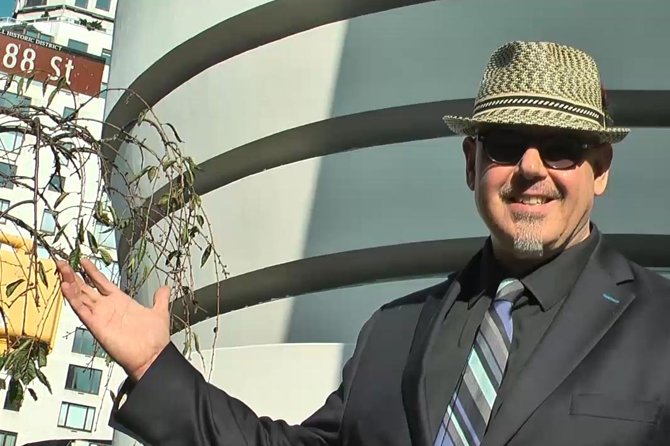
The experience ends at the Solomon R. Guggenheim Museum at 1071 5th Ave. Ending near one of New York’s most distinctive museum buildings is a great closer because it feels like you’re finishing your “Museum Mile” loop with a visual punctuation mark. If you’re already doing museum time at the beginning of the day, this tour works nicely as a connector between big stops.
Price and Value: What $125 Buys You Here
At $125 per person for about 2 hours, this is not a budget walking tour. But it’s also not trying to do everything at once like a full-city package. The value comes from focus: you’re paying for a certified New York City sightseeing guide, a tight theme (film and fiction), and a route that puts you at specific, story-relevant places.
You also get a practical format: mobile ticketing and a guide who stops often enough to make the information stick. If you’re the type who likes New York details—architecture, neighborhoods, and movie backdrops—then the price starts to feel fair because you’ll get more than just “we walked here.” You’ll understand why these streets earned their on-screen moments.
Who This Tour Is Best For (and Who Might Want Something Else)
I think this tour is ideal if you like:
- movie locations and how filming choices shape a neighborhood’s image
- walking tours that teach you to see, not just move
- Carnegie Hill’s classic residential architecture
It’s also a good fit if you plan to spend time around the Met and later want to keep your sightseeing coherent on the upper East Side.
If you hate walking, or if you want a mostly indoor experience, this may feel like too much time outdoors. The tour runs in all weather, and the route is built on a steady pace.
Should You Book This Film-and-Fiction Walk?
Book it if you want a smarter way to explore Carnegie Hill—one that turns facades into stories. The best part is that the tour makes New York feel cinematic without losing the real-world context: celebrities, writers, churches, reservoirs, and major museum architecture all connect to the theme.
Skip it if you’re only interested in broad general history or if your priority is minimizing time on your feet. This experience is about standing where scenes were set and letting the guide connect the dots.
If you’re already planning a Museum Mile day, I’d treat this as your “street-level companion.” Start near the Met, walk the film-coded blocks, then finish near the Guggenheim with a much better understanding of why this neighborhood has such a strong pull on filmmakers and storytellers.
More Tour Reviews in New York City
- NYC: SUMMIT One Vanderbilt Tickets★ 4.7 · 51,195 reviews
- NYC: Empire State Building Tickets – Observatory & Museum★ 4.7 · 25,757 reviews
- New York City: Statue of Liberty & Ellis Island with Ferry★ 4.6 · 18,683 reviews
- New York City: American Museum of Natural History Ticket★ 4.5 · 15,447 reviews
- Statue of Liberty and Ellis Island Tour: All Options★ 5.0 · 13,571 reviews
Indoors Done Right: More Museums
- NYC: Empire State Building Tickets – Observatory & Museum★ 4.7 · 25,757 reviews
- New York City: American Museum of Natural History Ticket★ 4.5 · 15,447 reviews
- NYC: Museum of Modern Art (MoMA) Entry Ticket★ 4.6 · 12,540 reviews
- 9/11 Memorial, Ground Zero Tour with Optional 9/11 Museum Ticket★ 5.0 · 6,381 reviews
- 9/11 Memorial Museum Admission Ticket★ 4.5 · 6,376 reviews
New York City, One Block at a Time
- SoHo, Little Italy, and Chinatown Walking Tour in New York★ 5.0 · 3,153 reviews
- Secrets of Grand Central Station Walking Tour New York City★ 5.0 · 1,796 reviews
- Greenwich Village Walking and Food Tasting Tour★ 5.0 · 1,572 reviews
- Artistic, Alternative Greenwich Village Walking Tour★ 5.0 · 971 reviews
- Brooklyn Bridge & DUMBO Neighborhood Tour – from Manhattan to Brooklyn★ 5.0 · 826 reviews
Just in: the newest New York City reviews on our desk




NYC Walking Tours, compared.
 ★ 5.0SoHo, Little Italy, and Chinatown Walking Tour in New YorkFrom $393,153 reviews
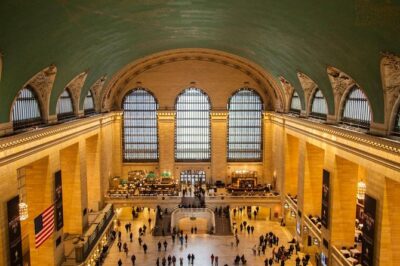 ★ 5.0Secrets of Grand Central Station Walking Tour New York CityFrom $391,796 reviews
 ★ 5.0Greenwich Village Walking and Food Tasting TourFrom $941,572 reviews
 ★ 5.0Artistic, Alternative Greenwich Village Walking TourFrom $39971 reviews
 ★ 5.0Brooklyn Bridge & DUMBO Neighborhood Tour – from Manhattan to BrooklynFrom $49826 reviews
 ★ 5.0Central Park Guided Walking TourFrom $44774 reviews
 ★ 4.6Private Walking Tour with a LocalFrom $55771 reviews
 ★ 5.0NYC Lower East Side Walking and Food TourFrom $94646 reviews
Browse the lists this tour appears in