
Reviewed · GRAND CENTRAL TERMINAL TOURS
Grand Central Terminal Walking Tour
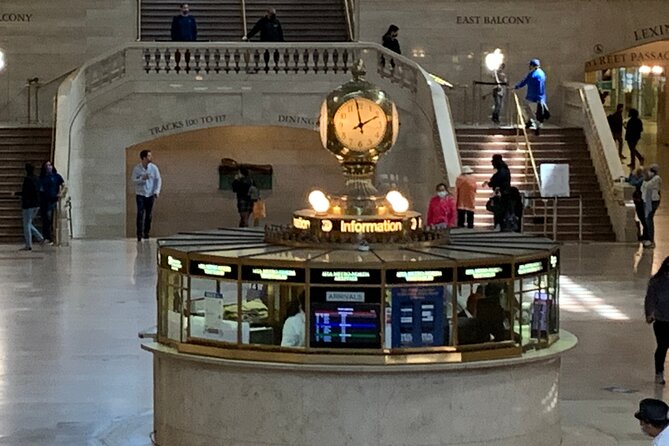
Grand Central feels like a time machine with directions. This guided walk makes Grand Central Terminal understandable fast, with stories, design details, and the station’s famous “sky” in the Main Concourse. I also like that you’re not just looking at photos—you’re learning why the terminal exists and what people keep getting wrong about it.
The tour’s best asset is the guide style. On at least one run, Martin was engaging and used historical photos to help you picture how the terminal changed over time, and a smaller group meant there was room for real questions.
One thing to plan for: this is a walking tour and it depends on good weather. If it’s cold, windy, or rainy, you’ll want layers and a backup tolerance for being outside for close to two hours.
In This Review
- Key things I’d bet you’ll care about
- Why Grand Central Makes More Sense After This Walk
- The 90 E 42nd St Meeting Point and Why Timing Matters
- What You Actually Do During the Main Tour Stop
- The Main Concourse “Sky”: Architecture You Can Spot on Your Own
- The Accident That Helped Shape What Got Built
- Vanderbilt, Power, and Why People Fought Over the Station
- Jacqueline Kennedy Onassis and the Save-Not-Just-Something-Old Story
- Myths and Urban Legends: What to Believe When Everyone Has a Story
- How the Guide Style Changes Everything (Yes, It Matters)
- Price and Value: Paying for Context, Not Just a Walk
- A Practical Game Plan Before You Go
- Who This Tour Suits Best
- Should You Book the Grand Central Terminal Walking Tour?
- FAQ
- How long is the Grand Central Terminal walking tour?
- Where does the tour start and end?
- What language is the tour offered in?
- Is there an admission ticket included?
- How large are the groups?
- What if the weather is bad or I need to cancel?
Key things I’d bet you’ll care about

- Main Concourse astronomy: You’ll get a guided explanation of the station’s ceiling “sky” features.
- Big-turning-point history: You’ll hear how a terrible accident influenced what got built.
- Vanderbilt-era stakes: The people behind the terminal’s rise get explained in plain terms.
- Jacqueline Kennedy Onassis: You’ll learn how restoration helped save the station.
- Myths and urban legends: Common stories get sorted so you can tell what’s believable.
- Small-group feel: The tour caps at 35, and some groups are very small—good for questions.
More secrets of Grand Central, booked ahead
- Secrets of Grand Central Station Walking Tour New York City
★ 5.0 · 1,796 reviews - NYC: The Secrets of Grand Central Terminal
★ 4.8 · 718 reviews - NYC: Official Grand Central Terminal Tour
★ 5.0 · 458 reviews - NYC: Official Grand Central Terminal Guided Tour
★ 4.6 · 251 reviews
Why Grand Central Makes More Sense After This Walk
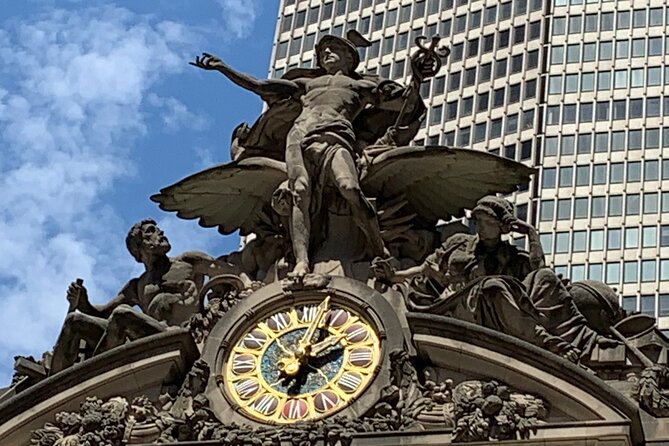
Grand Central Terminal is one of those places where the wow factor hits instantly, but the meaning takes time. The terminal has layers—transportation, money, politics, and design—and it can feel like you’re guessing unless someone points out what you’re looking at. This tour gives you a guided way to connect the dots: why it’s there, how it was reshaped, and what the building is “saying” with its architecture.
What I like is the focus on interpretation, not trivia dumping. You leave with a mental map for the main areas that matter, plus the background to understand why New York cared so much about getting this specific station right.
The 90 E 42nd St Meeting Point and Why Timing Matters
You’ll start at 90 E 42nd St. Plan to arrive a few minutes early so you’re not juggling phones and umbrellas while the group gathers. The tour ends back at the meeting point, which makes it easy to keep exploring nearby without a travel detour.
Duration runs about 1 hour 30 minutes to 2 hours. If you’re choosing between the morning or afternoon option, pick based on your day’s pace: morning works well if you want the station facts while everything is still fresh, and afternoon is great if you’re pairing the visit with other Midtown stops.
The tour also uses a mobile ticket, so you won’t be stuck hunting for paper or an email printout. Bring your phone charged, since that’s your key.
What You Actually Do During the Main Tour Stop
This experience centers on one major stop: Grand Central Terminal itself. Expect a deep guided walk through the terminal’s most important parts rather than a long, scattershot route across Midtown. That matters because Grand Central is dense—there’s a lot to see, but you don’t want to waste your limited tour time walking around without context.
You’ll likely spend your guided time focused on the station’s big architectural statements and the stories tied to them. The goal is to give you enough detail that when you look up, look around, or notice a layout feature, you know what you’re seeing and why it exists.
A small note that can help you: the tour is designed to be good for most travelers. It’s not described as a high-stamina hike, but it is still a walking experience, so wear shoes you like after 90 minutes of city surfaces.
New York City at street level, a few more walks


The Main Concourse “Sky”: Architecture You Can Spot on Your Own
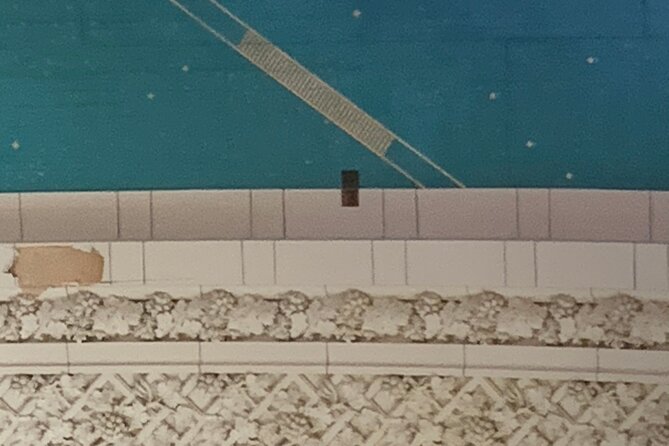
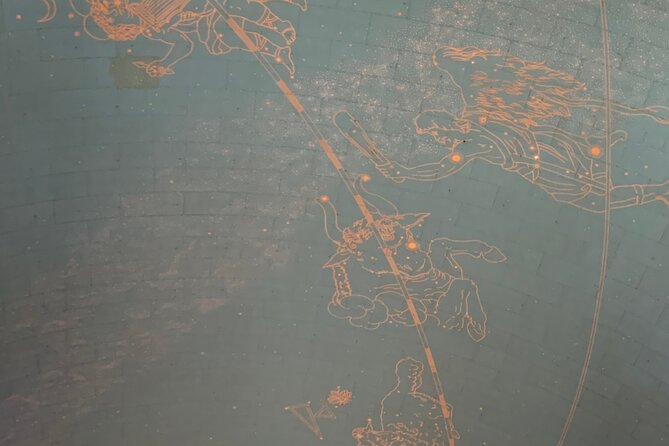
If you’re the type who looks up in churches, you’ll enjoy this part of the tour. The station’s astronomy in the Main Concourse is a standout feature, and the guide explains it so it stops being decorative and starts being meaningful.
Here’s the practical benefit: once someone points out the “sky” elements, you can keep finding them after the tour. Grand Central is filled with small cues and big visuals, and astronomy motifs are one of the easiest ways to get oriented quickly. You’ll also better understand why the Main Concourse feels special even if you’ve seen other famous transit hubs.
Even if you don’t memorize every detail, you’ll come away with at least one clear takeaway: this building wasn’t thrown together to move people. It was designed to communicate status, stability, and craft.
The Accident That Helped Shape What Got Built
The tour includes a story about how a terrible accident influenced construction. That kind of detail matters because it turns the station from a pretty landmark into a hard-nosed response to real events.
You don’t need to be a history buff to appreciate why this changes the way you look at the building. When you know something went wrong—and that the fix shaped the design—you notice the building’s intention. It feels less like a museum piece and more like a living engineering decision.
This is also where the guide’s structure helps. Instead of treating history as a list of dates, you get it tied to why features exist.
Vanderbilt, Power, and Why People Fought Over the Station
Grand Central isn’t just a train station. It’s tied to big money and big influence, especially in the era of the Vanderbilt family. The tour explains the early history and the forces behind the terminal’s creation, which helps you understand why Midtown looked the way it did and why rail travel became such a symbol.
Why this is valuable for you: when you know the players, you stop thinking of the terminal as generic. You see how personal ambition, business strategy, and city planning all show up in the architecture and layout.
And because the tour keeps the tone readable, you’re not stuck with a lecture you can’t use later. You’ll be able to interpret what you see even when you’re walking around on your own afterward.
Jacqueline Kennedy Onassis and the Save-Not-Just-Something-Old Story
One of the most memorable parts of the tour is the segment about Jacqueline Kennedy Onassis and how she helped save Grand Central. Restoration stories land differently once you understand that the station faced serious threats—because then you realize preservation is an active choice, not a passive outcome.
For your visit, this part has a practical effect: you’ll pay more attention to what’s been protected and why. Restoration also changes what you experience. It’s the difference between seeing an old building and seeing a building that survived long enough to keep its personality.
If you care about New York as a city of reinvention, this story is a strong reminder: the past doesn’t last by accident.
Myths and Urban Legends: What to Believe When Everyone Has a Story
Grand Central comes with the usual crop of common myths and urban legends. The tour doesn’t just mention them—it addresses them so you can understand what’s being repeated and why people believe it.
This is a real value add. People often share rumors about famous buildings because they sound fun or mysterious. But once someone gives you the context, you can enjoy the lore without letting it replace the facts you can actually verify by looking around.
Think of it as myth-busting with manners. You get the fun stories, plus a clearer sense of what’s grounded and what’s more like city folklore.
How the Guide Style Changes Everything (Yes, It Matters)
The strongest praise from past groups points to guide engagement. In at least one instance, Martin stood out for being enthusiastic and very knowledgeable, while also keeping the tour moving at a pace that worked for questions. Historical photos were also mentioned as part of the experience, which helps you connect the present-day interior to the earlier look of the terminal.
This matters because Grand Central can be overwhelming if you’re trying to self-guide. A good guide turns the station into a sequence you can follow—one visual and one story at a time. If you’ve ever wandered a famous site and felt like you were missing the point, you’ll understand why this kind of guided structure helps.
Price and Value: Paying for Context, Not Just a Walk
At $35 per person, this isn’t a budget-freebie, but it’s also not pricing itself like a museum ticket day. The value comes from what’s included in the experience: a guided explanation of major features, plus the station entry piece is noted as free (“Admission Ticket Free” for the tour context).
So you’re paying mainly for interpretation:
- Why Grand Central is located where it is and what came before
- How major events shaped the terminal’s construction
- How the architecture—especially the Main Concourse—was designed to communicate
- The preservation story tied to Jacqueline Kennedy Onassis
- The myths and what they’re based on (or not)
If you plan to spend more than a couple of hours in Midtown, getting this context early can make the rest of your walking more satisfying. You’ll notice more, and you’ll know why the building feels the way it does.
A Practical Game Plan Before You Go
To get the most out of a 1.5–2 hour walk, do two simple things.
First, decide what kind of visitor you are. If you like architecture cues and symbolic details, you’ll be in heaven with the astronomy focus. If you’re more of a history-and-people person, you’ll likely enjoy the accident story, the Vanderbilt connections, and the Jacqueline Kennedy Onassis preservation segment.
Second, dress for movement and temperature. The tour is weather-dependent, and you’ll be outside at least part of the time. Cold nights were mentioned as a real factor, and the guide made sure the group stayed comfortable while viewing parts of the building’s exterior. That’s your cue to bring a coat you can handle for a while, not just a light layer.
Who This Tour Suits Best
This walking tour is a strong fit if you want:
- A guided way to understand Grand Central Terminal quickly
- Architecture explanations you can actually use while you explore afterward
- A clear story arc—from early history to major turning points to preservation
- A manageable time commitment, with plenty of time left for more exploring
It’s also a good option if you’re traveling with someone who gets bored with pure sightseeing but likes “why things are the way they are.” The tour’s themes—accident, power, design, and rescue/restoration—give everyone something.
If you’re the type who hates standing still and reading, this might feel just right or just too story-focused. You’ll be moving and looking, but the point is to absorb the meaning, not just snap photos.
Should You Book the Grand Central Terminal Walking Tour?
I’d book it if you want your Grand Central visit to feel guided and intentional. For $35 and roughly two hours, you get a focused explanation of the terminal’s big ideas: why it exists, what shaped its construction, what you’re seeing in the Main Concourse, and how it survived thanks to preservation efforts.
Skip it only if you’re fully satisfied with self-guiding via signage and don’t care about myths being sorted or about architecture symbolism. If you want more than “this is famous,” and you like learning what you’re looking at, this is a solid choice.
FAQ
How long is the Grand Central Terminal walking tour?
It’s about 1 hour 30 minutes to 2 hours, approximately.
Where does the tour start and end?
The tour meets at 90 E 42nd St, New York, NY 10017, and it ends back at the same meeting point.
What language is the tour offered in?
The tour is offered in English.
Is there an admission ticket included?
For the main stop, admission is listed as free in the tour details.
How large are the groups?
The tour has a maximum of 35 travelers.
What if the weather is bad or I need to cancel?
The experience requires good weather. If it’s canceled due to poor weather, you’ll be offered a different date or a full refund. You can cancel up to 24 hours in advance for a full refund.
More Tour Reviews in New York City
- NYC: SUMMIT One Vanderbilt Tickets★ 4.7 · 51,195 reviews
- NYC: Empire State Building Tickets – Observatory & Museum★ 4.7 · 25,757 reviews
- New York City: Statue of Liberty & Ellis Island with Ferry★ 4.6 · 18,683 reviews
- New York City: American Museum of Natural History Ticket★ 4.5 · 15,447 reviews
- Statue of Liberty and Ellis Island Tour: All Options★ 5.0 · 13,571 reviews
New York City, One Block at a Time
- SoHo, Little Italy, and Chinatown Walking Tour in New York★ 5.0 · 3,153 reviews
- Secrets of Grand Central Station Walking Tour New York City★ 5.0 · 1,796 reviews
- Greenwich Village Walking and Food Tasting Tour★ 5.0 · 1,572 reviews
- Artistic, Alternative Greenwich Village Walking Tour★ 5.0 · 971 reviews
- Brooklyn Bridge & DUMBO Neighborhood Tour – from Manhattan to Brooklyn★ 5.0 · 826 reviews
Under the Clock: More Grand Central
- Secrets of Grand Central Station Walking Tour New York City★ 5.0 · 1,796 reviews
- NYC: The Secrets of Grand Central Terminal★ 4.8 · 718 reviews
- NYC: Official Grand Central Terminal Tour★ 5.0 · 458 reviews
- NYC: Official Grand Central Terminal Guided Tour★ 4.6 · 251 reviews
- SUMMIT One Vanderbilt with Grand Central Terminal Tour★ 4.1 · 98 reviews
Just in: the newest New York City reviews on our desk





Grand Central Terminal Tours, compared.
 ★ 5.0Secrets of Grand Central Station Walking Tour New York CityFrom $391,796 reviews
 ★ 4.8The Secrets of Grand Central TerminalFrom $39718 reviews
 ★ 5.0Official Grand Central Terminal TourFrom $39458 reviews
 ★ 4.6Official Grand Central Terminal Guided TourFrom $39251 reviews
 ★ 4.1SUMMIT One Vanderbilt with Grand Central Terminal TourFrom $11998 reviews
 ★ 5.0NYC Secrets of Grand Central Private Walking TourFrom $15681 reviews
 ★ 5.0Best NYC Sightseeing Tour: Times Square, Grand Central, & More46 reviews
 ★ 4.4SUMMIT One Vanderbilt Ticket and Grand Central TourFrom $13527 reviews
Browse the lists this tour appears in