
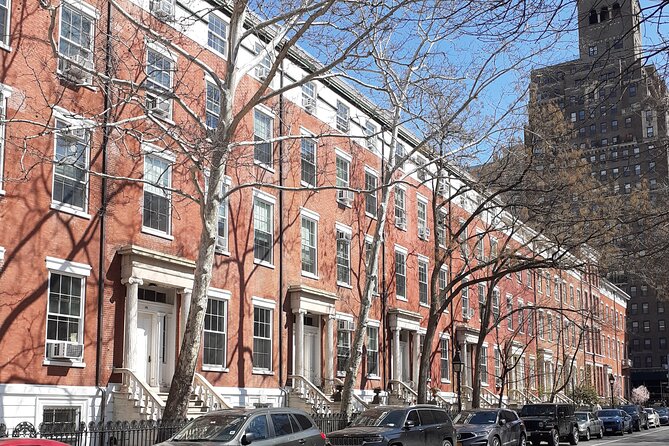
Reviewed · GREENWICH VILLAGE TOURS
Greenwich Village Historic Walking Tour
Greenwich Village feels like a living history book. This walking tour strings together landmark sites and real turning points, starting in Washington Square Park and ending near the Triangle Shirtwaist Factory tragedy. I like how the stops connect themes you care about (art, justice, activism) instead of feeling like random sightseeing, and I also like that the guide uses historical photos at each stop to make the past easier to picture.
One thing to consider: it runs on foot for 2–3 hours and depends on good weather, so wear comfortable shoes and plan for street-level, city-block walking.
In This Review
- Key highlights to notice before you go
- Walking Greenwich Village for $39: What You’re Really Buying
- Washington Square Park: Potter’s Field to Parades to Activism
- Edward Hopper’s Former Home: How a Neighborhood Shapes Art
- Jefferson Market Library: Gothic Architecture with Jailhouse Justice
- Emma Lazarus House: The Poet Linked to the Statue of Liberty
- Stonewall Inn: Raids and Resistance That Changed LGBTQ+ Rights
- Cherry Lane Theatre: Off-Broadway’s Long-Running Creative Spot
- Northern Dispensary and an 1827 Court Case
- Marie’s Crisis Café and Thomas Paine: From Democracy to a Piano Bar
- Society Cafe: The Doorstep of New York’s First Integrated Night Club
- Triangle Shirtwaist Factory: 146 Lives and the Aftermath That Changed Laws
- Pizza Option: Adding About an Hour Without Blowing Your Budget
- Who This Tour Fits Best (and Who Might Want a Different One)
- Should You Book the Greenwich Village Historic Walking Tour?
- FAQ
- How long is the Greenwich Village Historic Walking Tour?
- Where does the tour start and end?
- What is the price for the standard tour?
- Is there a pizza option, and what does it cost?
- What does the tour include?
- What language is the tour offered in?
- Is mobile ticketing used?
- Do I need good weather for the tour?
Key highlights to notice before you go
- Washington Square Park timeline: from a 1600s potter’s field to later activism and parades
- Stonewall Inn storytelling: the 1969 tensions, raids, and resistance that changed LGBTQ+ history
- Jefferson Market Library/Courthouse: Victorian Gothic building with courthouse, jail, and women’s court context
- Art stop that actually matters: Edward Hopper’s Greenwich Village influence, tied to where you’re standing
- The off-Broadway legacy: Cherry Lane Theatre, described as the oldest continuously operating off-Broadway theater
- A serious finish: Triangle Shirtwaist Factory fire with 146 lives and the labor and suffrage aftermath
More laps around the Village
- NYC: Greenwich Village Food Tour with 6 Locals Favorites Dishes
★ 5.0 · 1,812 reviews - Greenwich Village Walking and Food Tasting Tour
★ 5.0 · 1,572 reviews - Artistic, Alternative Greenwich Village Walking Tour
★ 5.0 · 971 reviews - NYC Greenwich Village Italian Food Guided Walking Tour
★ 5.0 · 627 reviews
Walking Greenwich Village for $39: What You’re Really Buying
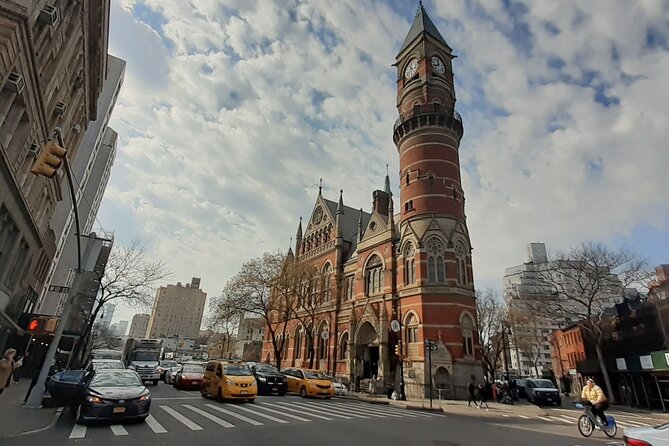
At $39 per person for about 2 to 3 hours, this isn’t the kind of tour that tries to cover every street in Greenwich Village. It’s built around specific locations that explain how the neighborhood turned ideas into action. You’ll move at a walking pace through a tight, historic area, which is a big part of the value: you see sites up close instead of treating them like quick photo backdrops.
You also get a format that’s easy to use. Your ticket is mobile, the tour is offered in English, and the group is capped at 20 people. Smaller groups usually mean questions get answered and the pacing feels less rushed. One practical plus: the meeting point is simple (Washington Square Park), and the tour ends back there too.
It’s also a good fit for a first-time Village visit if you want context fast. You’ll come away with a map in your head, not just a list of landmarks.
Washington Square Park: Potter’s Field to Parades to Activism
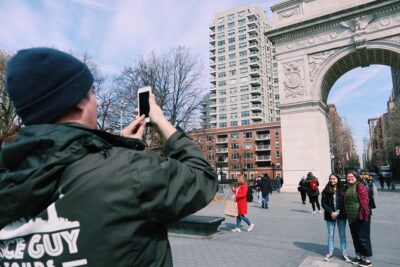
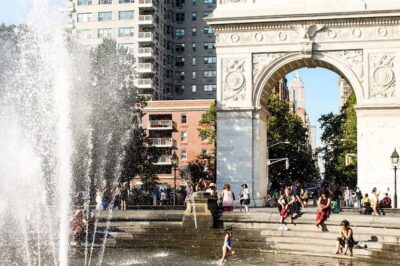
The walk starts at Washington Square Park, and this is where the tour earns its keep. You’re not just seeing the park as a place to eat a snack or take a picture. You’re being walked through what the ground has held over centuries, with stories going back to the 1600s.
You’ll hear how the area was used as a potter’s field, how it later became a parade ground, and how it evolved into a center where activism, art, and rebellion took hold. That’s the kind of timeline that makes the park’s modern role click. Once you understand the layers, you’ll notice people using the park in ways that echo earlier gatherings.
A detail I really like here is that the guide provides historical photos at each stop. It helps you connect street corners to older images without squinting through your phone.
Possible drawback: because the park is open and busy, it can feel noisy at the start. If you’re sensitive to crowds, go in expecting city sound and focus on the guide’s pace.
Edward Hopper’s Former Home: How a Neighborhood Shapes Art
Right on the Washington Square Park loop, you’ll learn about the former home of Edward Hopper. This stop works best if you like art that feels quiet and observant. The tour explains how the neighborhood’s character influenced Hopper’s stark, contemplative style—and how that time in the Village fed into some of his enduring 20th-century images.
What makes this more than an art trivia stop is that you’re not just hearing about Hopper in the abstract. You’re looking at the same general area that helped shape his vision. Even if you don’t know Hopper’s paintings already, you’ll start noticing how artists can absorb atmosphere from the place they walk every day.
One consideration: this segment is short, so don’t expect a museum-level lecture. Think of it as a focused art lens that changes how you see the surrounding streets.
New York City at street level, a few more walks
Jefferson Market Library: Gothic Architecture with Jailhouse Justice
If you want a stop with drama, Jefferson Market Library and the courthouse connection is it. You step into a building with a Victorian Gothic look that’s described as having been voted among the most beautiful in America. But the tour keeps pulling you from the aesthetics into the hard realities of justice there.
You’ll learn it was once home to a working jail from the 1870s. The space also served as a women’s court, and it held notorious criminals. The tour ties this into a surprising angle on New York’s fight for justice and women’s rights—an emotional theme that lands even harder because you’re standing in a place that shaped outcomes.
A practical note: this is an interior stop, so it’s a good place to break the walking rhythm and reset. If you prefer purely outdoor tours, you can still enjoy it, but it’s one segment that’s very much about the building itself.
Emma Lazarus House: The Poet Linked to the Statue of Liberty
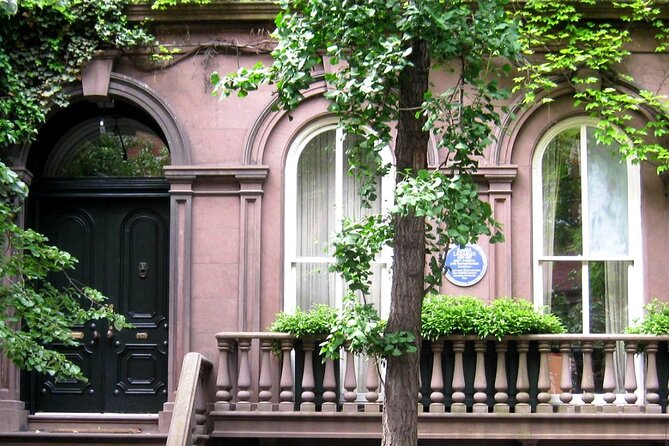
Next up is Emma Lazarus House, a stop that connects literature to civic symbolism. You’ll hear about Lazarus as one of America’s impactful, compassionate poets, and you’ll also get her ties to the Statue of Liberty.
This stop works for me because it adds a human layer to the big national iconography. Instead of treating the Statue of Liberty as a monument you’ve seen from a distance, you get a reason to connect it to the words and people who helped shape how the country frames immigration, belonging, and moral duty.
It’s also a reminder that Greenwich Village wasn’t only about nightlife and politics. It also supported thinkers and writers whose ideas traveled far beyond the neighborhood.
Stonewall Inn: Raids and Resistance That Changed LGBTQ+ Rights
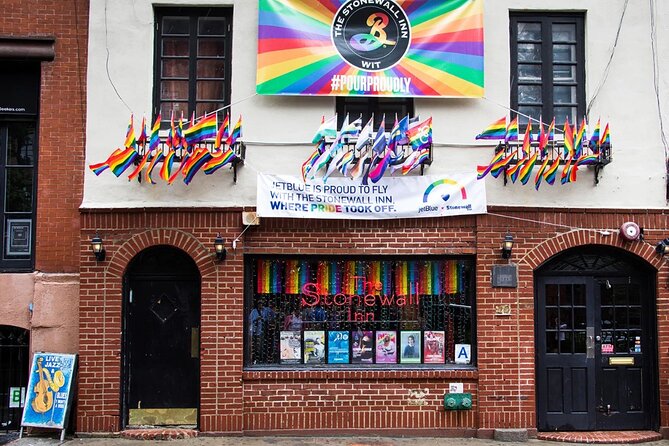
Outside the Stonewall Inn, the tone shifts in a necessary way. You’ll travel back to the summer of 1969 and hear about the tensions that led to the Stonewall Uprising. The tour doesn’t treat Stonewall as a single moment; it frames it as a chain of raids and resistance that sparked a turning point for LGBTQ+ rights.
What I find valuable here is that the stop focuses on people, not just history labels. You’ll hear stories of the brave individuals who stood up to oppression and helped launch a global movement for equality and visibility. That human angle makes the place feel less like a landmark and more like a pivot in lived experience.
Consideration: this is an iconic site, and crowds can happen. The guide will keep the storytelling moving, but you might still feel the energy of the street around you.
Cherry Lane Theatre: Off-Broadway’s Long-Running Creative Spot
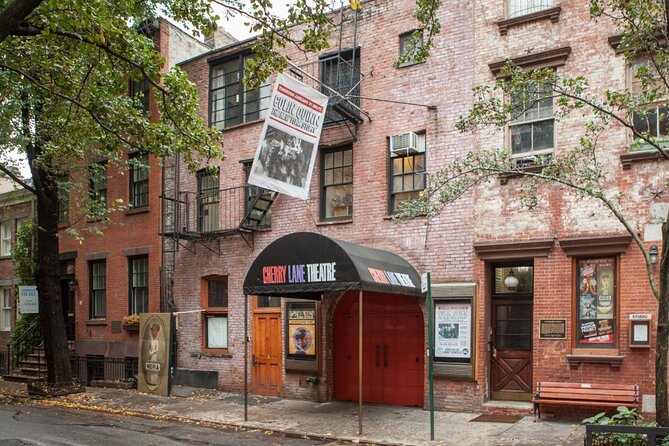
Then you shift to performance history at Cherry Lane Theatre. The tour highlights the theater as the oldest continuously operating off-Broadway theater in New York City. From there, the stories expand into how this intimate venue helped launch careers of actors, playwrights, and musicians.
Even if theater isn’t your main interest, this stop is a great example of why Greenwich Village mattered. It wasn’t only political. It was also creative space where bold work could survive and grow. The tour shares early-performance stories involving now-legendary stars, and it explains how a quieter corner location still produced big cultural momentum.
Practical tip: because it’s an off-Broadway stop in the Village, you’ll likely feel how close everything is. You can picture the theater as part of a daily neighborhood rhythm, not a distant destination.
Northern Dispensary and an 1827 Court Case
The Northern Dispensary stop brings the story back to social justice, but through a different lens: medicine, community need, and legal action. You’ll relive a landmark court case that ignited a social justice movement tied to this medical center from 1827.
This segment is short, but it’s memorable because it shows how change can start where people seek care. It also helps you see Greenwich Village as a place that shaped laws and public pressure, not just culture.
If you like political history that isn’t only about speeches and protests, this is one of the more satisfying stops.
Marie’s Crisis Café and Thomas Paine: From Democracy to a Piano Bar
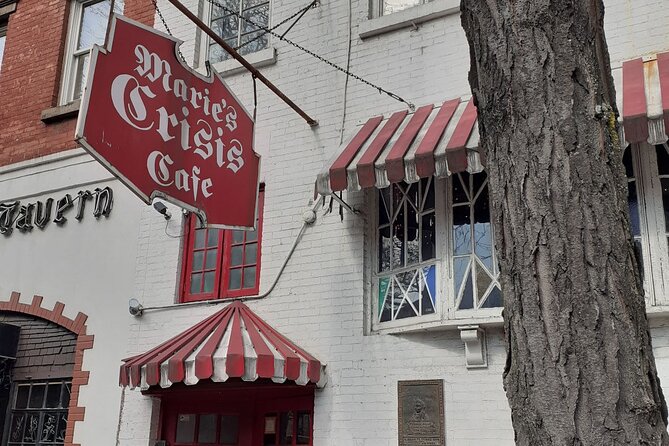
At Marie’s Crisis Café, you’ll hear a surprisingly tidy historical link: the tour frames the site as the final home of Thomas Paine, author of Common Sense and a founding voice of American democracy. You’ll learn how an unassuming bar eventually became a gathering place for show tune lovers, adding layers to the Village’s identity as both serious and silly at once.
Even better, this stop is described as an admission-free part of the tour. That’s handy for your budget and also keeps the flow moving. The guide uses the contrast between Paine’s democracy-focused legacy and the later musical culture of the bar to show how the Village rebrands itself over time.
Consideration: since it’s a café/bar area, the sound and street traffic can affect how long you can comfortably stand. The guide’s timing matters, and you’ll want to follow their cues closely.
Society Cafe: The Doorstep of New York’s First Integrated Night Club
Society Cafe is a doorstep stop that deals with race and culture. You’ll stand near the first racially integrated night club in New York and hear stories about the trailblazers who performed there.
This is one of those stops where the name alone doesn’t carry the meaning until someone connects it to the lived impact on performers and audiences. If you want your Village tour to cover more than famous names and buildings, this fits that goal well.
Practical note: because this is outdoors and brief, the best experience comes from listening closely during the guide’s explanation rather than zoning out for photos.
Triangle Shirtwaist Factory: 146 Lives and the Aftermath That Changed Laws
The walk ends back at Washington Square Park, but the final story you’ll focus on connects to the Triangle Shirtwaist Factory fire. The tour concludes at the site of this tragedy, now a designated National Historic Landmark, and you’ll reflect on the 1911 fire that claimed 146 lives.
You’ll also learn what came after: the bravery and activism of the women involved sparked lasting reforms in labor laws and helped fuel the women’s suffrage movement. That matters because it turns a horrific event into a practical lesson about how civic pressure can force legal change.
For me, this ending is emotionally heavy in the right way. It gives the tour’s earlier themes of justice and rebellion a real-world consequence.
Practical consideration: if you’re booking this with kids or anyone sensitive to tragedy, check how the group handles the tone. The tour is history-focused, and this last stop is not meant to be upbeat.
Pizza Option: Adding About an Hour Without Blowing Your Budget
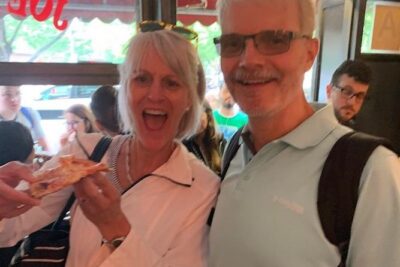
There’s an optional pizza add-on tied to the end of the walking portion. If you choose it, you’ll get slices from three top New York City pizzerias, and the pizza portion adds approximately one hour after the tour concludes.
Here’s the budgeting detail that you should know before you commit: the $19 add-on covers admission only, and food and drink are purchased separately by you. In other words, you should plan for extra spending beyond the base price if you want drinks too.
This option is a nice “Village hangout” add-on because it gives you a chance to keep talking about the stories while you eat. But if you’re trying to control your total cost, treat it as a bonus activity rather than an all-included deal.
Who This Tour Fits Best (and Who Might Want a Different One)
This is a strong choice if you want your Greenwich Village experience to have a spine. You’re moving through places tied to major themes: activism, courts and justice, LGBTQ+ history, influential art, theater, and labor rights. If you like tours that explain why a site matters, not just what it looks like, this delivers.
It’s also a good fit for people who enjoy a guide with energy and structure. The feedback around the tour repeatedly highlights Andrew Kirschner from Epic Walking Tours for being enthusiastic, friendly, and generous with his time and depth, plus using historical photos to make stories land.
Who might want a different option? If you hate walking, struggle with longer stretches on your feet, or want long, slow stops inside every building, this tour’s “many sites, short segments” style may feel intense. Still, most travelers can participate, and the short segments make it easier to keep momentum.
Should You Book the Greenwich Village Historic Walking Tour?
I’d book it if you’re in the Village for the first time and want context that goes beyond Instagram captions. The stops are well-chosen, and the guide’s photo-led storytelling helps you connect history to real street corners fast.
Pick the standard $39 ticket if you want the core walk without extra spending. Consider the pizza add-on only if you’re genuinely hungry for a shared post-tour meal and you’re okay paying separately for food and drinks.
Finally, come prepared for real walking and real street weather. If you do that, you’ll leave with a clearer understanding of how this neighborhood became the place where art and activism kept colliding.
FAQ
How long is the Greenwich Village Historic Walking Tour?
It runs about 2 to 3 hours.
Where does the tour start and end?
It starts at Washington Square Park, New York, NY 10012, and it ends back at the meeting point.
What is the price for the standard tour?
The standard tour costs $39.00 per person.
Is there a pizza option, and what does it cost?
Yes. The pizza option costs $19.00 per person and adds about one extra hour after the walking tour. The $19 price covers admission only; food and drink are purchased separately.
What does the tour include?
It includes visits to the tour locations throughout Greenwich Village.
What language is the tour offered in?
The tour is offered in English.
Is mobile ticketing used?
Yes. The tour uses a mobile ticket.
Do I need good weather for the tour?
Yes. The experience requires good weather. If it’s canceled due to poor weather, you’ll be offered a different date or a full refund.
More Tour Reviews in New York City
- NYC: SUMMIT One Vanderbilt Tickets★ 4.7 · 51,195 reviews
- NYC: Empire State Building Tickets – Observatory & Museum★ 4.7 · 25,757 reviews
- New York City: Statue of Liberty & Ellis Island with Ferry★ 4.6 · 18,683 reviews
- New York City: American Museum of Natural History Ticket★ 4.5 · 15,447 reviews
- Statue of Liberty and Ellis Island Tour: All Options★ 5.0 · 13,571 reviews
New York City, One Block at a Time
- SoHo, Little Italy, and Chinatown Walking Tour in New York★ 5.0 · 3,153 reviews
- Secrets of Grand Central Station Walking Tour New York City★ 5.0 · 1,796 reviews
- Greenwich Village Walking and Food Tasting Tour★ 5.0 · 1,572 reviews
- Artistic, Alternative Greenwich Village Walking Tour★ 5.0 · 971 reviews
- Brooklyn Bridge & DUMBO Neighborhood Tour – from Manhattan to Brooklyn★ 5.0 · 826 reviews
Still in the Village
- NYC: Greenwich Village Food Tour with 6 Locals Favorites Dishes★ 5.0 · 1,812 reviews
- Greenwich Village Walking and Food Tasting Tour★ 5.0 · 1,572 reviews
- Artistic, Alternative Greenwich Village Walking Tour★ 5.0 · 971 reviews
- NYC Greenwich Village Italian Food Guided Walking Tour★ 5.0 · 627 reviews
- Greenwich Village Food Tour | Tasty Tours NYC★ 5.0 · 549 reviews
Just in: the newest New York City reviews on our desk





Greenwich Village Tours, compared.
 ★ 5.0Greenwich Village Food Tour with 6 Locals Favorites DishesFrom $971,812 reviews
 ★ 5.0Greenwich Village Walking and Food Tasting TourFrom $941,572 reviews
 ★ 5.0Artistic, Alternative Greenwich Village Walking TourFrom $39971 reviews
 ★ 5.0NYC Greenwich Village Italian Food Guided Walking TourFrom $89627 reviews
 ★ 5.0Greenwich Village Food Tour | Tasty Tours NYCFrom $79549 reviews
 ★ 4.5New York City Ghost Tour of Greenwich VillageFrom $39466 reviews
 ★ 5.0High Line Park and Greenwich Village Food TourFrom $159398 reviews
 ★ 4.8Greenwich Village Guided Walking TourFrom $39300 reviews
Browse the lists this tour appears in