
Reviewed · 9/11 MEMORIAL & GROUND ZERO TOURS
Lower Manhattan & 9/11 Memorial Walking Tour Semi-Private 12ppl
Walk Wall Street, then stop at the names.
This semi-private Lower Manhattan tour keeps the group to a max of 12, so you get a guided pace that actually makes sense. I like how the route strings together major landmarks, from Battery Park area history to Wall Street viewpoints and then the 9/11 memorial zone, with a professional guide explaining what you’re seeing instead of just pointing.
One thing to keep in mind: admission for the 9/11 Memorial & Museum and One World Trade Center isn’t included, so you’ll want to plan for any entry fees and time inside.
In This Review
- Key highlights
- First Steps at Battery Park Underpass and Castle Clinton
- From SeaGlass Carousel to Bowling Green: recovery and the original town square
- Charging Bull, Trinity Church, and Fearless Girl Without Needing a Trader’s Pass
- Federal Hall and the Wall Street-side Civic Story
- Zuccotti Park, One World Trade Center, and the Walk’s Emotional Turn
- National 9/11 Memorial & Museum: names, pools, and how to pace yourself
- How a semi-private 12-person walking tour changes what you get
- What you’re really paying for: value at $51.94 per person
- Should you book this Lower Manhattan & 9/11 Memorial semi-private walk?
- FAQ
- How long is the Lower Manhattan & 9/11 Memorial walking tour?
- What group size is this tour?
- Where does the tour start and where does it end?
- What time does it start?
- Is the tour canceled if it rains?
- What language is the tour offered in?
- What’s included in the price?
- What’s not included?
- Can I cancel and get a full refund?
- What if the tour doesn’t meet expectations?
Key highlights
- Max 12-person group size for a more personal, questions-are-okay walk
- Castle Clinton to the harbor: early immigration-era context in the Battery Park area
- SeaGlass Carousel and recovery stories tied to Hurricane Sandy
- Wall Street icon sweep: Charging Bull, the NYSE exterior, and Fearless Girl
- Federal Hall + St. Paul’s Chapel: architecture and early civic power made walkable
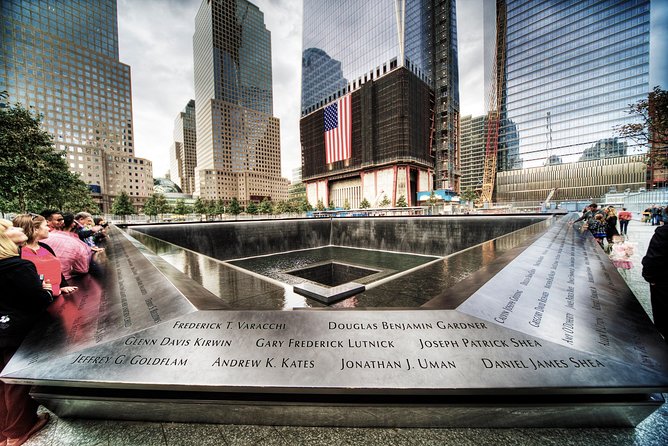
- National 9/11 Memorial: twin reflecting pools, bronze panels with names, and a serious moment of reflection
More ways to visit Ground Zero and the memorial
- NYC: One World Observatory Skip-the-Line Ticket
★ 4.7 · 12,329 reviews - 9/11 Memorial, Ground Zero Tour with Optional 9/11 Museum Ticket
★ 5.0 · 6,381 reviews - 9/11 Memorial Museum Admission Ticket
★ 4.5 · 6,376 reviews - All-Access 9/11: Ground Zero Tour, Memorial and Museum, One World Observatory
★ 5.0 · 4,886 reviews
First Steps at Battery Park Underpass and Castle Clinton
Your tour meets at the Battery Park Underpass at 2:00 pm, and you’ll work your way through Lower Manhattan on foot for about 2.5 hours. This matters because Lower Manhattan can feel like a blur if you’re just moving from subway stop to subway stop. Here, the guide builds a story as you go.
The walk starts near Castle Clinton National Monument, a site tied to how the city grew alongside the nation. Built from 1808 to 1811, it served as the first U.S. immigration station, when more than 8 million people arrived in the U.S. between 1855 and 1890. Even if you’re not a history nerd, this stop gives you a clean “why this area matters” framework before you hit the finance blocks.
Next you look toward the New York Harbor, at the mouth of the Hudson River. It’s one of the largest natural harbors in the world, and standing near it helps you remember you’re not just touring buildings—you’re touring a port city. The skyline decisions, the shipping power, and the money all connect back to the water.
If you’re visiting for the first time, this first stretch helps you get your bearings fast: where the city started, what came in, and why Lower Manhattan became the engine.
From SeaGlass Carousel to Bowling Green: recovery and the original town square
After the harbor views, you pass the SeaGlass Carousel. This fish-themed carousel is more than a cute photo stop. It’s a symbol of recovery in an area damaged by Hurricane Sandy in 2012, and the design and construction took nearly a decade. That timing detail is a reminder that rebuilding isn’t quick—and it also helps you read the neighborhood with new eyes. You’re not just seeing art. You’re seeing patience.
Then comes Bowling Green, New York’s oldest park. It’s small, but it carries big stories. The tradition here connects the park to council ground for Native American tribes, and it’s also tied to the sale of Manhattan in 1626 to Peter Minuit. For me, stops like this are where the tour earns its keep: you get a real sense that the “Wall Street era” didn’t appear out of nowhere. People were here long before finance took over the block.
Bowling Green is also where the Charging Bull story makes more sense, because the bull was placed there when it first appeared on the street. So this stop isn’t random. It’s the setup for the next phase of the walk.
A possible downside of this segment: it’s easy to expect every stop to be a full museum moment. But most stops are short—around 10 minutes—so you’ll get the main story, then move on. If you want long lingering time, treat the tour as your map first, and plan extra time on your own afterward.
Charging Bull, Trinity Church, and Fearless Girl Without Needing a Trader’s Pass
Now you hit the Wall Street core, and the tour keeps it practical. You’ll see the Charging Bull, the bronze statue by artist Arturo Di Modica. The story here is delightfully chaotic: Di Modica created it and then illegally placed the sculpture outside the New York Stock Exchange. It became instantly popular and was later set up at Bowling Green. Even if you’ve seen pictures online, seeing it in person lands differently—this is street art with financial-world energy.
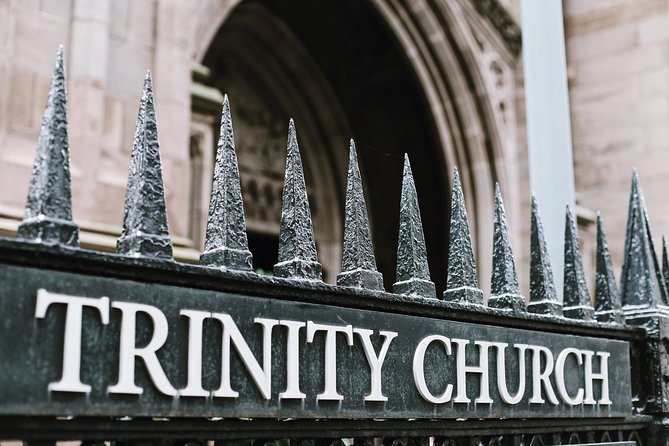
From there you visit Trinity Church NYC, a historic parish church that began in 1696. It’s located near Wall Street and Broadway, and your tour includes a look at the graves of Mr and Ms Hamilton in the Trinity churchyard, plus a monument dedicated to them near their resting place. If you’ve ever walked past Trinity without stopping, this is your chance to understand why it’s such a fixed point in the neighborhood’s identity.
Then you walk along Wall Street itself—an eight-block-long street that’s famous as part of the international financial system. The guide uses the walking time to connect street-level details to bigger systems. This is one of the best values of a walking tour here: you’re not stuck reading plaques. You’re getting the logic behind why these buildings and streets matter.
When you reach the New York Stock Exchange, you see the exterior of the NYSE, founded in 1792 and designated a National Historic Landmark. Admission isn’t included for the NYSE stop, so you’re mainly there for exterior viewing and guide context. That said, you’ll still get the feeling of standing at a place that has defined global money for a long time.
Right in front of the NYSE area is Fearless Girl, a bronze statue by Kristen Visbal. The statue depicts a four-foot-tall tour girl and is widely understood as a symbol promoting female empowerment. On this tour, it’s not treated like a random landmark. It’s used to show how public art and corporate space collide—how messages get placed exactly where people will see them.
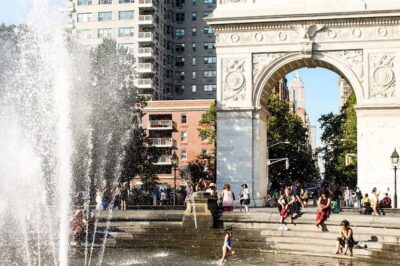
New York City at street level, a few more walks


Federal Hall and the Wall Street-side Civic Story
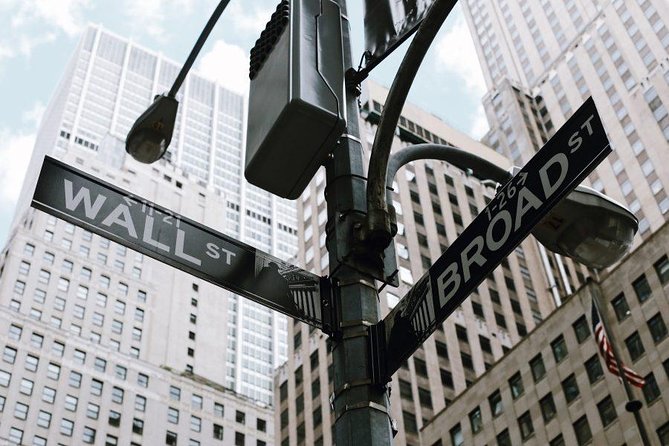
This part of the walk shifts from pure money to how law and governance grew right alongside it.
You’ll visit Federal Hall, at 26 Wall Street, described as the first of two historic buildings in the area. The original Greek Revival structure was completed in 1703, and the current structure built in 1842 is one of the best examples of neoclassical architecture in New York. The guide’s job here is to help you notice what changed over time—how civic buildings evolve even when the street outside feels like it never stops.
Nearby, you’ll also see the exterior of the House of Morgan, a building built in 1913. It’s known for its classical architecture and was designated a New York City landmark in 1965. Even though it’s an exterior viewing stop, it adds another layer: Wall Street didn’t just grow by adding new offices. It grew by making old-style grandeur feel permanent.
Then you make your way to St. Paul’s Chapel, part of the Parish of Trinity Church Wall Street. It’s described as a chapel-of-ease for those who did not want to walk a few blocks to Trinity. Completed in 1766, it was the tallest building in New York City at the time. That fact turns it from “just a chapel” into a landmark in the city’s vertical ambitions.
One of the best parts of having a guide here is the explanation you don’t get from a quick stop: how St. Paul’s Chapel fits into the area’s wider stories, including references to the Big Fire. You can think of this as a reset button from the Wall Street rush—history, but told with an actual street-level link.
Zuccotti Park, One World Trade Center, and the Walk’s Emotional Turn
After the architecture and finance stops, the tour starts moving you toward the 9/11 memorial area. Zuccotti Park is the next stop. It was formerly known as Liberty Plaza Park, and it was heavily damaged in the 9/11 attacks. Recovery efforts followed, and today the plaza is used as a site of events commemorating the anniversary of the attack.
This isn’t just “a park.” It’s a reminder that public space can get repurposed by tragedy and then slowly restored into a place for memory and civic gathering. If your day has felt like landmark after landmark, Zuccotti Park gives you a human pause before the memorial.
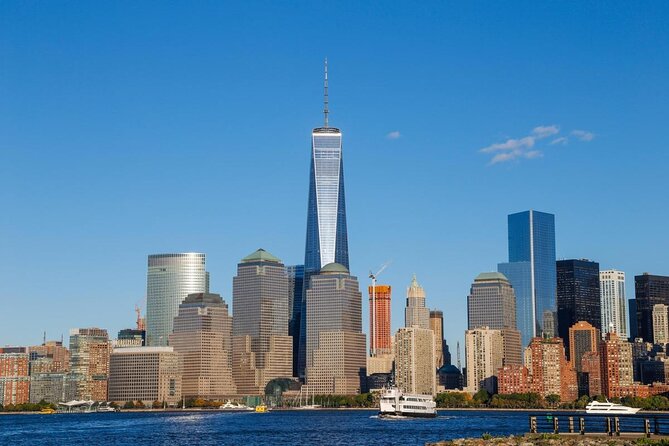
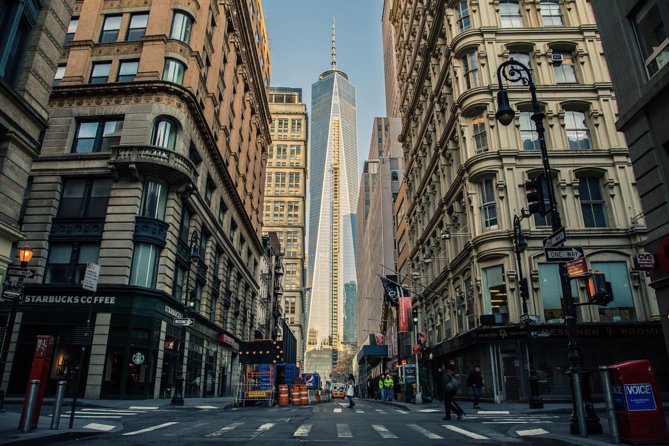
Then you see One World Trade Center, also called the Freedom Tower. It’s the tallest building in New York and stands where the Twin Towers once towered over the city. Seeing it as part of the walking line matters. You’re not just looking at a skyline photo target—you’re arriving at it through context the guide has built.
Admission for One World Trade Center isn’t included, so you’re likely there for viewing and orientation rather than a full visit unless you choose to handle it separately. Either way, the moment works best when you let it land: this is the physical reminder of what changed and what rebuilt.
National 9/11 Memorial & Museum: names, pools, and how to pace yourself
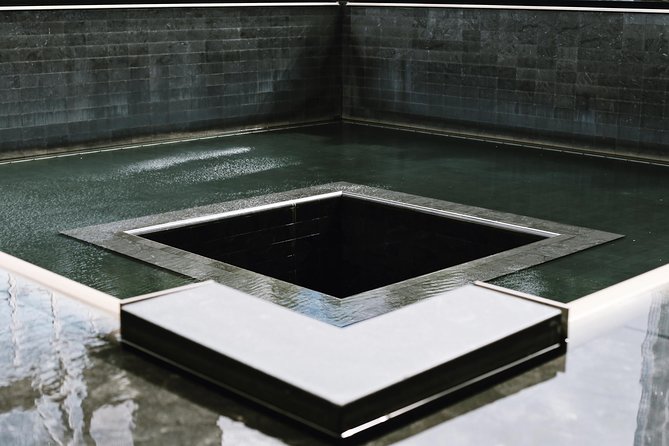
The tour’s final major stop is the National 9/11 Memorial & Museum. This is the part that should feel different in your body—slower, quieter, more thoughtful.
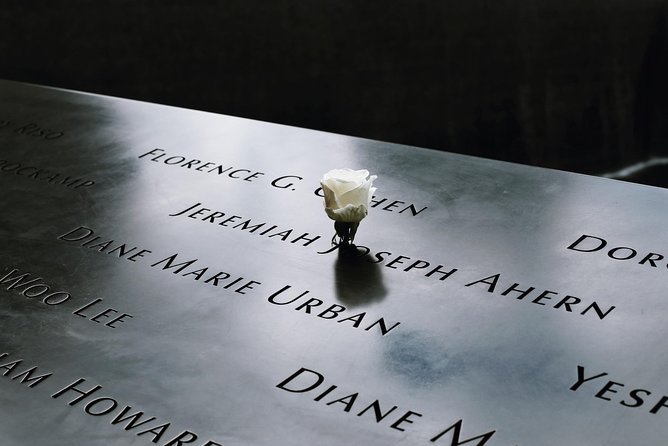
You’ll visit the National September 11 Memorial, a tribute to the remembrance and honor of those killed in 9/11. The memorial’s twin reflecting pools are described as the largest manmade waterfalls in North America. Around these pools are bronze panels inscribed with the names of every person who died in the attack.
That “every person” detail is heavy. It’s also why this stop is worth planning for. Even with a guided tour, I’d treat this as a personal moment. If you want photos, keep it respectful and brief. If you want silence, take it. The guide’s job here is to give you the structure so the place makes sense, but you still need time to absorb what you’re seeing.
Admission isn’t included for the memorial and museum portion, so budget separately if you plan to go beyond the memorial space. Also remember that areas connected to 9/11 can have longer lines at certain times, so don’t stack another big activity immediately afterward.
How a semi-private 12-person walking tour changes what you get
This tour runs rain or shine, and that’s not just fine print. Lower Manhattan sidewalks can get slippery and windy, and some of the stops are outdoors. If the weather is rough, you’ll want solid shoes and a light layer you can adjust.
The group size limit—maximum 12 guests—makes a real difference in how the tour feels. In a big group, your guide has to keep moving and answer questions fast. In a smaller group, the guide can explain the why behind the what, and you can ask a follow-up without feeling like you’re interrupting a factory line.
The tour also works because it’s built for a specific time window: about 10 minutes per stop on average. That structure is great for visitors who want to see a lot without turning the day into a sprint. If you’re the type who likes to read every plaque and stare at every detail, you’ll still enjoy the tour, but you’ll likely want to return later for deeper exploring.
And if you’re the type who gets overwhelmed by big-city scale, this is a good fix. You’ll leave with a mental map: Battery Park context, the Bowling Green preface, the Wall Street icon set, and then the 9/11 memorial framework tying it all together.
What you’re really paying for: value at $51.94 per person
At about $51.94 per person for a 2.5-hour guided walk, the value comes from the combination of time, access, and explanation.
You’re not just paying for someone to lead you from stop to stop. You’re paying for someone to connect Castle Clinton’s immigration-era role, the harbor’s importance, the recovery symbolism of SeaGlass Carousel, and the civic power visible in Federal Hall and St. Paul’s Chapel—all before you reach the memorial.
This price also makes sense when you factor in the small group size. With a max of 12, you’re less likely to feel like a number. Plus, many of the stops are free in terms of ticket access per the provided details, which keeps the tour from turning into an expense marathon.
Where your wallet may need a little extra: the stops marked as not included—especially the National 9/11 Memorial & Museum and One World Trade Center. If you’re set on going inside, you’ll want to plan that spend in advance.
If you’re in NYC for a short time and want a Lower Manhattan outline plus the required emotional context near Ground Zero, this is a practical use of an afternoon.
Should you book this Lower Manhattan & 9/11 Memorial semi-private walk?
I think this is a strong booking choice if you want three things in one go: Wall Street landmark viewing, story-driven historical context, and a guided route into the 9/11 memorial area that helps you understand what you’re seeing.
Book it if:
- You like walking tours with a small group feel (max 12).
- You want context for Federal Hall, Trinity Church, and St. Paul’s Chapel, not just photos.
- You want a structured, respectful approach to the 9/11 Memorial & Museum area.
Skip it or consider planning extra time elsewhere if:
- You know you want long, quiet time inside multiple sites. The tour is short per stop, so you may need follow-up visits.
- You’re sensitive to emotions tied to 9/11. Even with a guide, it’s an intense area.
FAQ
How long is the Lower Manhattan & 9/11 Memorial walking tour?
It runs for about 2 hours 30 minutes.
What group size is this tour?
It is semi-private, with a maximum of 12 travelers.
Where does the tour start and where does it end?
It starts at Battery Park Underpass, New York, NY 10004 and ends in Lower Manhattan, New York.
What time does it start?
The start time listed is 2:00 pm.
Is the tour canceled if it rains?
No. The tour runs rain or shine.
What language is the tour offered in?
The tour is offered in English.
What’s included in the price?
You get the semi-private walking tour, a professional guide, about 2.5 hours of tour time, and the tour runs rain or shine. A mobile ticket is also mentioned.
What’s not included?
Hotel pickup or drop-off is not included, and gratuities are optional (not included). Also, admission for certain stops is listed as not included, including the NYSE stop (as listed), House of Morgan (as listed), One World Trade Center, and the National 9/11 Memorial & Museum.
Can I cancel and get a full refund?
Yes. You can cancel up to 24 hours in advance for a full refund.
What if the tour doesn’t meet expectations?
There’s a 100% satisfaction guarantee under the condition that you contact the provider within 24 hours of your tour and give them a chance to make it right before posting negative reviews online.
More Tour Reviews in New York City
- NYC: SUMMIT One Vanderbilt Tickets★ 4.7 · 51,195 reviews
- NYC: Empire State Building Tickets – Observatory & Museum★ 4.7 · 25,757 reviews
- New York City: Statue of Liberty & Ellis Island with Ferry★ 4.6 · 18,683 reviews
- New York City: American Museum of Natural History Ticket★ 4.5 · 15,447 reviews
- Statue of Liberty and Ellis Island Tour: All Options★ 5.0 · 13,571 reviews
New York City, One Block at a Time
- SoHo, Little Italy, and Chinatown Walking Tour in New York★ 5.0 · 3,153 reviews
- Secrets of Grand Central Station Walking Tour New York City★ 5.0 · 1,796 reviews
- Greenwich Village Walking and Food Tasting Tour★ 5.0 · 1,572 reviews
- Artistic, Alternative Greenwich Village Walking Tour★ 5.0 · 971 reviews
- Brooklyn Bridge & DUMBO Neighborhood Tour – from Manhattan to Brooklyn★ 5.0 · 826 reviews
Back to Ground Zero: More to Book
- NYC: One World Observatory Skip-the-Line Ticket★ 4.7 · 12,329 reviews
- 9/11 Memorial, Ground Zero Tour with Optional 9/11 Museum Ticket★ 5.0 · 6,381 reviews
- 9/11 Memorial Museum Admission Ticket★ 4.5 · 6,376 reviews
- All-Access 9/11: Ground Zero Tour, Memorial and Museum, One World Observatory★ 5.0 · 4,886 reviews
- New York City One World Observatory Admission Ticket★ 4.5 · 2,636 reviews
Just in: the newest New York City reviews on our desk





9/11 Memorial & Ground Zero Tours, compared.
 ★ 4.7One World Observatory Skip-the-Line TicketFrom $3012,329 reviews
 ★ 5.09/11 Memorial, Ground Zero Tour with Optional 9/11 Museum TicketFrom $396,381 reviews
 ★ 4.59/11 Memorial Museum Admission TicketFrom $366,376 reviews
 ★ 5.0All-Access 9/11: Ground Zero Tour, Memorial and Museum, One World ObservatoryFrom $1094,886 reviews
 ★ 4.5New York City One World Observatory Admission TicketFrom $302,636 reviews
 ★ 4.5NYC City Tour: Statue of Liberty, 9/11 Memorial, Wall StreetFrom $392,059 reviews
 ★ 5.0NYC in a Day Tour: Lady Liberty, Times Square, Freedom TowerFrom $891,735 reviews
 ★ 4.7Ground Zero 9/11 Memorial Tour & Optional 9/11 Museum TicketFrom $391,584 reviews
Browse the lists this tour appears in