
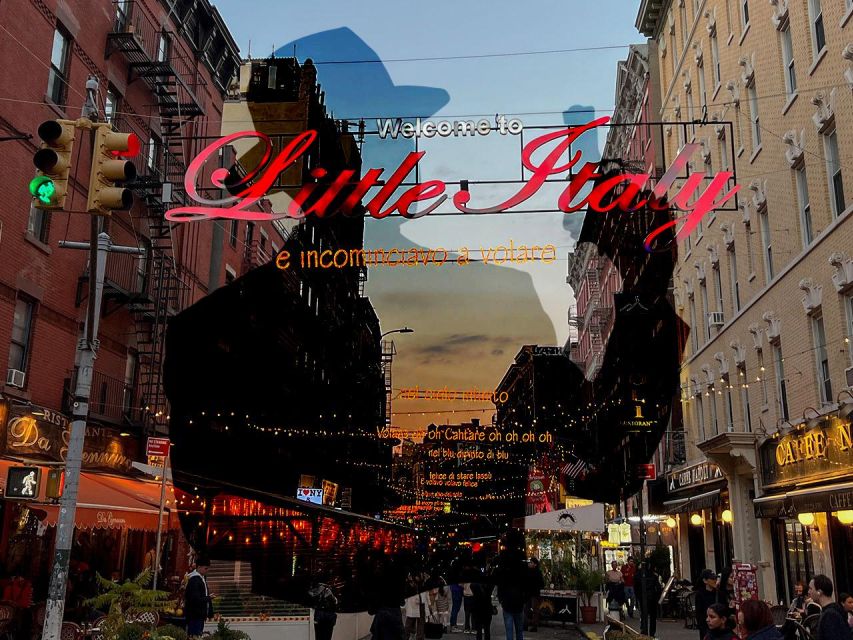
Reviewed · SOHO, CHINATOWN & LITTLE ITALY TOURS
New York: Mafia and Gangster History Tour in Little Italy
Little Italy has a way of hiding the violence in plain sight. This 2-hour walking tour guides you through the neighborhood’s gangster milestones, from early Black Hand gangs to the rise and fall of the Dapper Don. I really like how the stories connect to real street-level places, so the history feels grounded and human.
I also love the pacing and the small group size. With a maximum of 10 people, you get time for the guide’s details and asides, and many recent tours have been led by Tom, who brings photos and even newspaper-style material to help you picture what came next. One drawback to plan for: it’s not built for mobility needs, and you’ll want to wear comfortable shoes because you’ll be walking through the area’s corners and blocks.
In This Review
- Key Highlights You’ll Feel in the Streets
- Little Italy’s Mafia Map Starts at 44 Spring St
- Early Black Hand Gangs and the Prohibition-Era Liquor Fight
- Lucky Luciano, the Commission, and a Wartime Shortcut
- Ravenite Social Club and the Neighborhood’s “No One Is Above the Law” Moment
- John Gotti to Crazy Joey Gallo: The Rise and Fall Told Close-Up
- Umberto’s Clam House and the Subtle Art of Ending Where Life Still Happens
- Price, Time, and the Value of a Tight, 1-Mile Walk
- Who This Mob History Walk Is For (and Who Should Skip It)
- Should You Book This Little Italy Mafia Tour?
- FAQ
- How long is the Mafia and Gangster History Tour in Little Italy?
- Where is the meeting point?
- How far do we walk?
- How big is the group?
- What language is the tour guide speaking?
- Is the tour suitable for people with mobility impairments?
- Can I bring a pet?
- What if the tour is canceled due to weather or low bookings?
Key Highlights You’ll Feel in the Streets
- Spring and Mulberry as the launch point: You start right in the heart of Little Italy at 44 Spring St, with a prompt start that keeps the tour tight.
- From Black Hand gangs to prohibition battles: You get the early street-level power struggles that set up the later mob structure.
- Lucky Luciano’s Commission and wartime deal: You’ll hear how Luciano changed organized crime using the Commission of Five Families and a surprising World War Two connection.
- Ravenite Social Club stop: A specific landmark tied to the mob world, giving you a clearer picture of where decisions and reputation lived.
- Lt. Petrosino Square and police pressure: The tour doesn’t only track criminals; it also spotlights early crime fighting and later anti-corruption work.
- John Gotti, Crazy Joey Gallo, and Sally Bugs Briguglio: The final stretch focuses on the neighborhood’s most infamous endings, including where Joey Gallo was gunned down.
Keep tasting downtown: SoHo, Chinatown and Little Italy
- SoHo, Little Italy, and Chinatown Walking Tour in New York
★ 5.0 · 3,153 reviews - NYC: Chinatown & Little Italy Food Tour with 7 Flavorful Tastings
★ 5.0 · 2,733 reviews - Original NYC Guided Food Tour of Chinatown and Little Italy
★ 5.0 · 2,194 reviews - NYC Food Tour: Chinatown and Little Italy
★ 5.0 · 1,090 reviews
Little Italy’s Mafia Map Starts at 44 Spring St
This tour is built for people who like their crime history with geography. You meet on the sidewalk at the corner of Spring and Mulberry Streets, next to DaSalvio Playground at 44 Spring Street. The guide wears a white cap, and the tour starts promptly, so give yourself a little buffer to find the spot and get settled.
From there, you walk through Little Italy like it’s a timeline. That matters more than you’d think. Gangster lore often gets flattened into movie quotes or names on a list. Here, you’re moving block by block, so the rise of certain bosses and organizations feels like something that happened right in the same spaces you’re standing in now.
Also, the group stays small. The cap is 10 people, which keeps the experience from turning into a cattle-car lecture. On tours led by Tom (a recurring guide name in recent feedback), the pace stays lively, with plenty of story detail and a friendly, funny tone that keeps the subject from feeling like a textbook.
Early Black Hand Gangs and the Prohibition-Era Liquor Fight
The most interesting part of the opening stretch is the way it explains origins. Instead of starting with the famous bosses, you begin with the early Black Hand era and the gangs that used intimidation and violence to gain control. It’s a grim starting point, but it sets up the later shift from street crews to more organized syndicates.
Then you move into the liquor trade battles during Prohibition. This is where the neighborhood’s story starts to feel less like mythology and more like economics. When legal systems and supply lines get warped, someone has to control distribution. The tour frames that pressure as a major force behind organized crime becoming more structured, not just more violent.
You also hear how this environment helped push figures like Joe The Boss Masseria into prominence. Masseria is a key early name for understanding the next step: power structures that look less like random street fighting and more like a business model with territory, enforcement, and reputations.
What you’ll like here is the cause-and-effect storytelling. You don’t just hear what happened. You learn why the next gangster era had a reason to take off.
Lucky Luciano, the Commission, and a Wartime Shortcut
Once the tour gets into the next phase, it turns from street-level chaos into system-building. Lucky Luciano is the centerpiece, and the tour uses him to explain how organized crime evolved from competing groups into something closer to a coordinated network.
A big concept you’ll hear is The Commission of Five Families. The point isn’t just that there were families. The point is that Luciano’s model aimed to reduce constant chaos by setting rules for conflict and power. In plain terms: fewer feuds means more stable income and less attention from everyone else.
The tour also includes a World War Two angle, which many people find surprising. Luciano is described as having made an unlikely deal with the government during the war. That detail matters for how you understand organized crime in the 20th century: governments weren’t just reacting to the mob; sometimes they were trying to use it, manage it, or trade with it.
You’ll likely leave this section thinking about motive in a different way. The mob story can sound like pure brutality, but this part highlights strategy. It’s about influence, timing, and control, wrapped in violence because violence was the tool they had.
More dark corners and cold cases
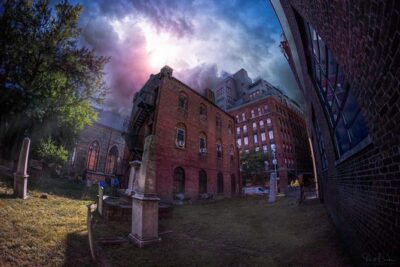
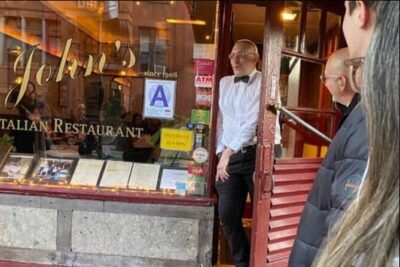
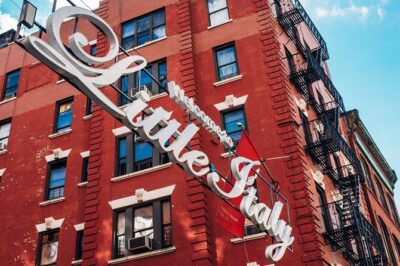

Ravenite Social Club and the Neighborhood’s “No One Is Above the Law” Moment
The tour doesn’t only chase bosses. It also gives you a side of the story that makes the whole neighborhood feel less like a crime romance.
A key stop is the Ravenite Social Club. This is treated as a real landmark tied to the mob world, which helps you connect rumor to place. Instead of asking what the mob was like in theory, you’re looking at the kind of location where power, networking, and reputation could be cultivated.
Then you shift toward the police and reform side through stops like Lt. Petrosino Square and The Police Building. Lieutenant Petrosino represents an early crime-fighting effort, and that contrast is useful. You get to see that the mob wasn’t operating in a vacuum. Law enforcement was there, pushing back, and often doing it early—long before the modern era of anti-corruption headlines.
The tour also brings in Frank Serpico, named here for risking his life to expose police corruption. That’s another important tonal shift. The mob story usually focuses on criminals versus cops. This adds a third layer: sometimes the failure wasn’t the lack of courage in the system. It was corruption inside the system, and it needed insiders willing to pay the price.
By the time you’re moving through these stops, you’re not only learning gangster names. You’re seeing how institutions react, resist, and sometimes fail from within.
John Gotti to Crazy Joey Gallo: The Rise and Fall Told Close-Up
If you’re coming for the big names, this is the section that delivers. The tour tracks the path of Dapper Don John Gotti, showing his rise and eventual fall. Gotti is a natural focus because his personality is part of the legend, but the tour frames him as a result of the organizational power structures built earlier—especially the shifts around Luciano’s era.
Then you end with the spots where two notorious deaths happened: Crazy Joey Gallo and Sally Bugs Briguglio. The tour describes visiting the restaurant where Crazy Joey Gallo was gunned down. That kind of stop is intense, and it’s also where the neighborhood’s past feels most immediate. You’re standing near places tied to events that were supposed to wipe out rivals, send messages, or settle disputes.
From a tour value standpoint, this ending is strong because it doesn’t just point at a single “famous incident.” It connects the rise of power, the enforcement, and the cost. Gotti’s saga doesn’t feel like a standalone plot twist. It feels like part of a chain that had been building for decades.
If you’re into popular culture, there’s also an optional mention of film and TV locations tied to The Godfather and one from The Sopranos. That’s a nice bonus if you want to connect what you’ve seen on screen to what’s still there on the street.
Umberto’s Clam House and the Subtle Art of Ending Where Life Still Happens
One of the final guided stops is Umberto’s Clam House. Even if you’re not ordering anything during the tour (you might find time later on your own), the point is clear: this neighborhood didn’t freeze in time. You’re walking past places where real people still eat, talk, and argue about sauce.
That contrast matters. Crime history is often framed as dust and artifacts. Here, the tour lets you keep one foot in reality: the streets still function, and the buildings still hold everyday life.
It also helps you process what you’ve learned. After the end-of-the-line deaths tied to the Gallo and Briguglio story, you don’t just walk out into blank city blocks. You finish near an active, iconic restaurant, which gives the tour a human landing instead of a grim fade to black.
Price, Time, and the Value of a Tight, 1-Mile Walk
At $40 per person for 2 hours, this tour hits a sweet spot for a first-time mob-history outing. You’re paying mostly for two things: a small-group guide and a structured walk that covers a compact stretch.
The distance is listed as 1 mile (1.5 km), which is a big reason this is doable even for people who don’t walk for fun. It’s not an all-day marathon. It’s a focused hit of context, story, and place-making.
You should still wear comfortable shoes, because “short” doesn’t mean “easy.” Little Italy sidewalks can be uneven, and the tour includes multiple stops with short guided segments. Still, if you can handle a steady 1-mile walk, you’ll likely find the pace manageable.
This also has a clear fit for people who like a guided narrative rather than museum-style reading. If you enjoy stories that tie names to specific blocks—Masseria, Luciano, Petrosino, Gotti, Gallo—this format rewards your attention fast.
Small group limits also mean you can ask questions without being ignored. That’s a real value factor, especially for a topic where people often have follow-up questions about why certain leaders changed the way the mob worked.
One more practical point: it’s not suitable for people with mobility impairments, so if accessibility is part of your planning, check other options. And pets aren’t allowed (assistance dogs are allowed), so plan accordingly if you’re traveling with a service animal.
Who This Mob History Walk Is For (and Who Should Skip It)
This is a great match if you:
- like history tied to specific street corners
- enjoy gangster stories but want real-world context
- want to hear both the criminals’ strategy and the police pushback
It may not be your best fit if you hate walking in city neighborhoods, since it’s a walking tour with multiple stop-and-go segments. Also, since the highlights include murders and other violent events, it’s best for people comfortable with crime history that doesn’t sanitize the subject.
Should You Book This Little Italy Mafia Tour?
Yes—if you want a compact, high-impact mob history walk that connects major names like Lucky Luciano and John Gotti to actual places, this is a strong booking choice. The small group size, the focused 2-hour timing, and the guide style (often Tom, with photos and printed materials used to bring the story to life) make it feel like more than a basic “see-this-building” stroll.
Skip it if accessibility is a concern or if you’re looking for something light and purely entertainment-based. This is crime history with real edges.
If you’re in New York for a short trip and you want one memorable theme tour that helps you understand why Little Italy mattered in America’s gangster era, this is one of the more practical ways to do it.
FAQ
How long is the Mafia and Gangster History Tour in Little Italy?
The tour lasts 2 hours.
Where is the meeting point?
Meet on the sidewalk on the corner of Spring and Mulberry Streets, next to DaSalvio Playground at 44 Spring Street. Look for the guide in a white cap.
How far do we walk?
The tour covers about 1 mile (1.5 km).
How big is the group?
The group is limited to 10 participants.
What language is the tour guide speaking?
The tour is guided in English.
Is the tour suitable for people with mobility impairments?
No. The tour is not suitable for people with mobility impairments.
Can I bring a pet?
Pets are not allowed, but assistance dogs are allowed.
What if the tour is canceled due to weather or low bookings?
It may be canceled due to inclement weather or not enough bookings, and you receive a full refund.
More Tour Reviews in New York City
- NYC: SUMMIT One Vanderbilt Tickets★ 4.7 · 51,195 reviews
- NYC: Empire State Building Tickets – Observatory & Museum★ 4.7 · 25,757 reviews
- New York City: Statue of Liberty & Ellis Island with Ferry★ 4.6 · 18,683 reviews
- New York City: American Museum of Natural History Ticket★ 4.5 · 15,447 reviews
- Statue of Liberty and Ellis Island Tour: All Options★ 5.0 · 13,571 reviews
After Dark: Ghosts and Cold Cases
- New York Catacombs by Candlelight★ 4.5 · 2,863 reviews
- New York City Mafia and Local Food Tour led by NYPD Guides★ 5.0 · 1,197 reviews
- Gangsters and Ghosts Tour New York City★ 5.0 · 905 reviews
- True Crime NYC: Mafia Walk w/Ret. NYPD Detective and Local Food★ 5.0 · 848 reviews
- New York City Ghost Tour of Greenwich Village★ 4.5 · 466 reviews
Downtown Bites: SoHo to Little Italy
- SoHo, Little Italy, and Chinatown Walking Tour in New York★ 5.0 · 3,153 reviews
- NYC: Chinatown & Little Italy Food Tour with 7 Flavorful Tastings★ 5.0 · 2,733 reviews
- Original NYC Guided Food Tour of Chinatown and Little Italy★ 5.0 · 2,194 reviews
- NYC Food Tour: Chinatown and Little Italy★ 5.0 · 1,090 reviews
- NYC: Chinatown and Little Italy Food Tour★ 4.7 · 703 reviews
Just in: the newest New York City reviews on our desk





SoHo, Chinatown & Little Italy Tours, compared.
 ★ 5.0SoHo, Little Italy, and Chinatown Walking Tour in New YorkFrom $393,153 reviews
 ★ 5.0Chinatown & Little Italy Food Tour with 7 Flavorful TastingsFrom $992,733 reviews
 ★ 5.0Original NYC Guided Food Tour of Chinatown and Little ItalyFrom $1302,194 reviews
 ★ 4.7Chinatown and Little Italy Food TourFrom $80703 reviews
 ★ 4.7SoHo, Little Italy, and Chinatown Guided TourFrom $30614 reviews
 ★ 4.6SoHo, Little Italy, and Chinatown 2-Hour Guided WalkFrom $39566 reviews
 ★ 5.0SoHo, Little Italy, and Chinatown NYC Guided Walking TourFrom $36443 reviews
Browse the lists this tour appears in