
Reviewed · SOHO, CHINATOWN & LITTLE ITALY TOURS
SoHo, Little Italy, and Chinatown 2-Hour Guided Walk
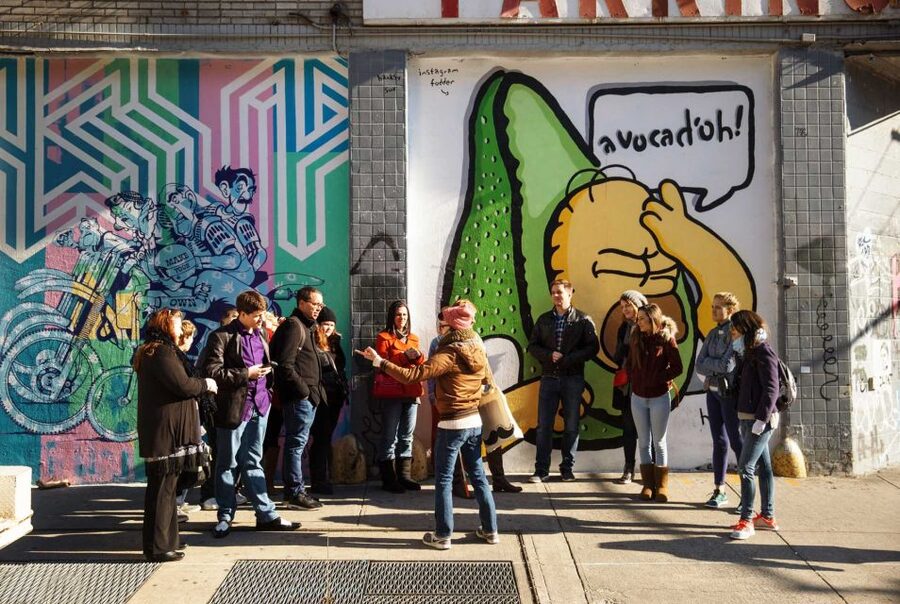
Some cities teach you by monuments. New York teaches you by streets. This SoHo, Little Italy, and Chinatown guided walk uses real addresses to tell how immigrant communities, crime, and pop culture collided in a small area. Expect a fast, focused tour with story stops that feel like you’re flipping through the city’s old chapters in order.
I love two things most: the mix of street-level history and practical place meaning, and the way guides weave in pop-culture touchpoints that make the neighborhoods feel current. On this walk you’ll stand in and around famous corners tied to the Manhattan Well Murder, the Triangle Shirtwaist Factory fire site, and gang-linked locations like the Ravenite Club and the Bloody Angle. A big bonus is that guides are often singled out by name, like Arun, Felipe, Angela, and Steve, for keeping the tour fun and easy to follow.
One drawback to consider is the tone: there’s true-crime and gang violence storytelling, including mob-related sites. If you prefer lighter sightseeing, you may find parts of the walk heavy, even when it’s explained in a historical context.
Key highlights to look for
- Cast Iron district photo moments in SoHo, framed with stories about how the neighborhood changed
- Manhattan Well Murder context at the Greene and Spring area, one of the earliest recorded NYC murders
- E.V. Haughwout Building stop tied to the first safety elevator
- Mulberry Street + Alleva Dairy for classic Little Italy atmosphere and old-school food history
- Chinatown landmarks like Doyers Street’s Bloody Angle, plus the Opium den story
- Guide-led pacing and traffic awareness, with many guides described as managing the group smoothly
In This Review
- SoHo to Chinatown in Two Hours: What You’ll Really Get
- Starting at Spring Street Park: How the Walk Sets the Tone
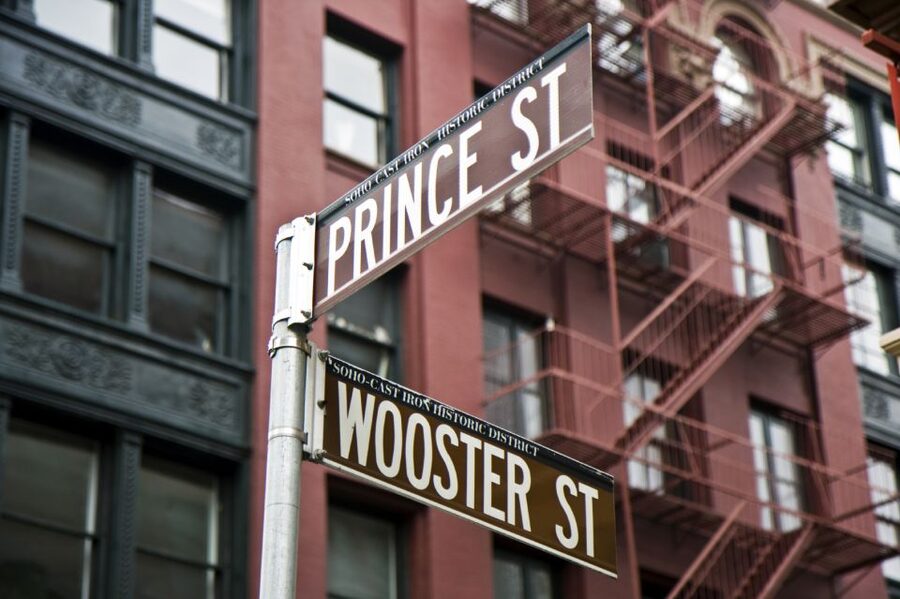
- SoHo Streets: Cast Iron District, the Manhattan Well Murder, and the First Safety Elevator
- Spring Street and Greene/Spring: The Manhattan Well Murder
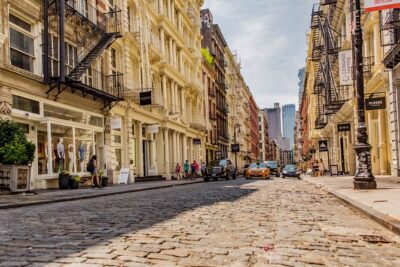
- Cast Iron district: Where celebrity vibes meet old ironwork
- E.V. Haughwout Building: Innovation that changed vertical life
- Pop Culture Footnotes and Power Structures: 421 Broome and the Old Police Station
- 421 Broome Street: Heath Ledger’s final days in a Mary Kate Olsen apartment
- Old Police Station (1909 Beaux-Arts): Public authority, repurposed
- Little Italy on Mulberry Street: Alleva Dairy, the Italian American Museum, and the Triangle Shirtwaist Fire Site
- Mulberry Street: The main strip and its survival story
- Alleva Dairy: A hundred years of cheese-making energy
- Italian American Museum: Triangle Shirtwaist Factory fire connection
- Umbertos and Joe Gallo: When mob power met neighborhood life
- Chinatown: Opium Den Lore, Doyers Street Bloody Angle, and Columbus Park Gangs of New York
- Opium den story: The darker undercurrent
- Bloody Angle on Doyers Street: Where street violence became legend
- Columbus Park: Gangs of New York fame
- Guide Style Makes or Breaks It: Arun, Felipe, Angela, and Steve’s Common Strength
- Food Is Optional, but Budget for It: What’s Included and What Isn’t
- True-Crime and Gang Violence: How to Handle the Heavier Parts
- Pace, Shoes, and Weather: Simple Prep That Helps
- Value for $39: Why This Price Can Make Sense
- Should You Book This SoHo, Little Italy, and Chinatown Walk?
- FAQ
- How long is the guided walk?
- How much does the tour cost?
- What language is the tour guide?
- Where does the tour start and end?
- Is food included in the price?
- Do I need to pay if I change my plans?
- Can I book without paying right away?
- Is this tour suitable if I have mobility issues?
SoHo to Chinatown in Two Hours: What You’ll Really Get
This is a smart “three-neighborhood” format for first-timers and returners alike. You get a guided path that compresses a lot of New York identity—design and celebrity in SoHo, immigrant grit and family streets in Little Italy, then Chinatown’s darker legends and survival history—without forcing you into separate tours.
The key value is that the stops aren’t random. They’re the kind of locations that help you read the city. A building becomes a story about innovation. A street corner becomes a story about fear and power. A church legend becomes a story about community memory. When you finish, you’re not just tired. You’re oriented.
Keep tasting downtown: SoHo, Chinatown and Little Italy
- SoHo, Little Italy, and Chinatown Walking Tour in New York
★ 5.0 · 3,153 reviews - NYC: Chinatown & Little Italy Food Tour with 7 Flavorful Tastings
★ 5.0 · 2,733 reviews - Original NYC Guided Food Tour of Chinatown and Little Italy
★ 5.0 · 2,194 reviews - NYC Food Tour: Chinatown and Little Italy
★ 5.0 · 1,090 reviews
Starting at Spring Street Park: How the Walk Sets the Tone
Most departures start at Spring Street Park (meeting point can vary by option, but Spring Street Park is a common one). From there, the tour typically moves into SoHo with enough early context to help you understand why the neighborhood looks the way it does today.
SoHo can look like polished design and shopping windows, but this walk starts you in a mindset shift: the history underneath the brick and iron. That matters because you’re about to hear about immigrant pressures, crime, and survival, not just architecture. You’ll get a clean framework early, so the grim parts don’t feel like random “scary stories.”
SoHo Streets: Cast Iron District, the Manhattan Well Murder, and the First Safety Elevator
SoHo is where the tour lets you have both the postcard and the backstory.
Spring Street and Greene/Spring: The Manhattan Well Murder
You’ll spend time around Spring Street and the Greene and Spring streets area, specifically tied to the Manhattan Well Murder, described as the first recorded murder case in New York City. The point of this stop isn’t gore. It’s how quickly an urban space can turn into a place where safety is thin—and how the city documents (and forgets) its early violence.
In practice, this makes the walk feel sharper. Instead of drifting between famous buildings, you understand why people lived with fear and what that did to neighborhoods.
New York City at street level, a few more walks
Cast Iron district: Where celebrity vibes meet old ironwork
Then comes one of the most fun parts: the Cast Iron district. You’ll be pointed toward the historic iron-front buildings that helped make SoHo iconic, plus you’ll get a reason to look up instead of just forward. The tour also encourages you to keep an eye out for celebrities, movie stars, and fashion-focused crowds that show up in this area.
This is where the walk feels like a New York experience even if it’s your first time here. You’re standing in an architectural style that reads as stylish now, but historically it was tied to the city’s growth and ambition.
E.V. Haughwout Building: Innovation that changed vertical life
The walk includes the E.V. Haughwout Building, noted for housing the first safety elevator. I like this stop because it explains why certain buildings became possible in the first place. Elevators weren’t just engineering trivia—they changed where people could live and work and how quickly the city could densify.
If you’ve ever wondered why Manhattan became Manhattan, it’s one of the answer points.
Pop Culture Footnotes and Power Structures: 421 Broome and the Old Police Station
SoHo’s story here isn’t only about design. It’s also about the way power and fame get layered on top of real places.
421 Broome Street: Heath Ledger’s final days in a Mary Kate Olsen apartment
You’ll pass 421 Broome Street, connected here to Heath Ledger’s death and described as Mary Kate Olsen’s apartment. Even if you don’t track celebrity news, this kind of stop works because it shows how New York’s addresses become cultural reference points. It’s street-level pop culture that doesn’t require a museum ticket.
Just remember what this is and isn’t. It’s not a shrine. It’s a reminder that famous people still live inside ordinary city blocks.
Old Police Station (1909 Beaux-Arts): Public authority, repurposed
You’ll also see the Old Police Station, described as a 1909 Beaux-Arts building now used as a residence. That’s an important angle for me: history doesn’t stay locked behind glass. Old institutions can change use, while the neighborhood around them keeps moving.
When the tour hits the crime-and-gang themes later, having this earlier “authority building” context helps. You understand the difference between law, street power, and the informal safety people create for themselves.
Little Italy on Mulberry Street: Alleva Dairy, the Italian American Museum, and the Triangle Shirtwaist Fire Site
The Little Italy leg is where the walk’s emotional weight often lands. This area can be pretty to photograph, but the tour helps you see the people behind the scenery.
Mulberry Street: The main strip and its survival story
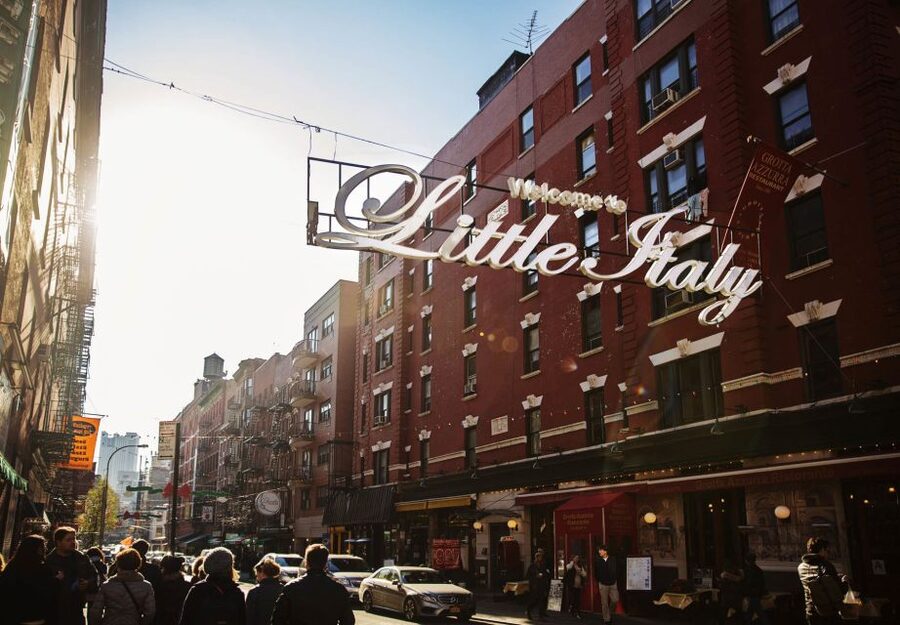
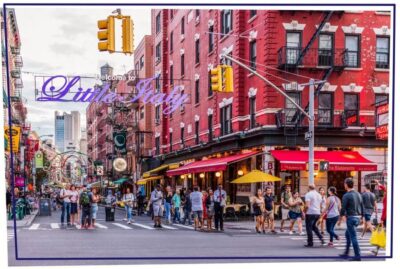
You’ll reach Mulberry Street, described as the heart of Little Italy. This is one of those “walk slower and notice everything” sections. The street is narrow and lively, and your guide’s job is to keep the story grounded so it doesn’t become just atmosphere.
Alleva Dairy: A hundred years of cheese-making energy
You’ll get a stop at Alleva Dairy, described as a place where cheese has been made for a hundred years. This is the kind of food stop I trust on tours because it’s rooted in a specific craft and timeline, not just a generic “best cannoli” pitch.
Even if you don’t buy anything, it gives you a concrete way to think about immigrant communities: not as headlines, but as daily routines that keep families fed.
Italian American Museum: Triangle Shirtwaist Factory fire connection
Another major stop is the Italian American Museum, tied here to the Triangle Shirtwaist Factory fire site. That connection changes how you read the neighborhood. The story shifts from entertainment street food to labor, tragedy, and the long tail of safety reform.
If you’re trying to understand why New York became better at protecting workers, this is the kind of stop that makes the answer feel real.
Umbertos and Joe Gallo: When mob power met neighborhood life
The walk also includes Umbertos, described as the site of the mob hit on Joe Gallo. This can feel jarring next to a museum connection like Triangle Shirtwaist, but that contrast is part of what makes the neighborhoods complicated.
My advice: don’t treat these as separate “categories” of New York. Treat them as overlapping realities—workplaces, family streets, and power structures that sometimes used the same local geography.
Chinatown: Opium Den Lore, Doyers Street Bloody Angle, and Columbus Park Gangs of New York
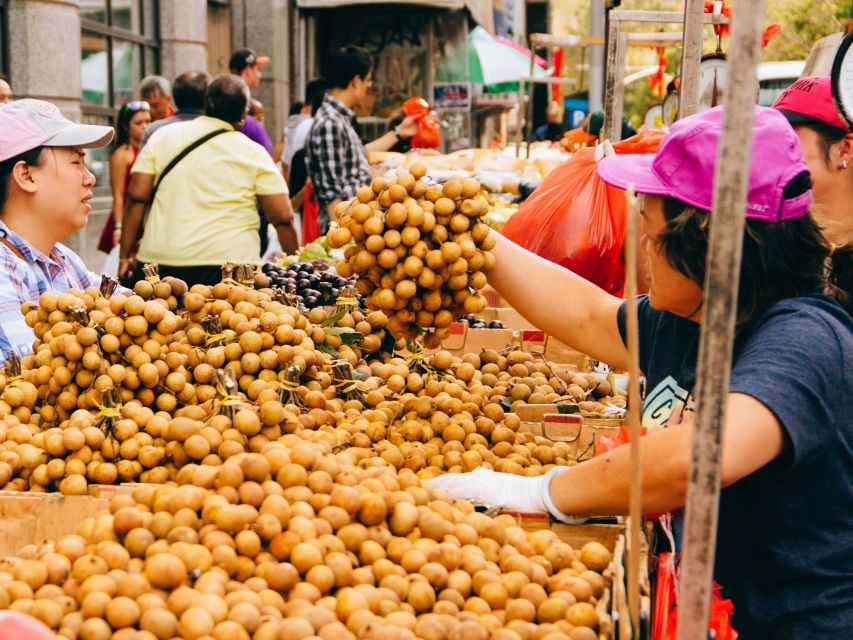
The Chinatown segment is often the most legend-filled. That doesn’t mean it’s random. The stories are aimed at showing how fear, migration, and economic pressure shaped the streets.
Opium den story: The darker undercurrent
You’ll hear about an opium den. The details aren’t presented as sensational gossip. They’re used to explain how illicit economies formed and how the city’s changing policies affected real communities.
It’s also a reminder that Chinatown, like any urban district, has always carried both hardship and creativity.
Bloody Angle on Doyers Street: Where street violence became legend
Next you’ll reach Doyers Street, referred to as the Bloody Angle. Again, this is one of those stops where the goal is orientation: which corners mattered, why they mattered, and how gang violence became part of the city’s public memory.
If you take photos, do it lightly here. I’d rather you listen first and shoot second, because the story makes the geography click.
Columbus Park: Gangs of New York fame
Finally, the walk ends at Columbus Park (drop-off). The tour ties the location to Gangs of New York fame, and that pop-culture link helps you connect a neighborhood legend to a modern reference point.
When you finish here, you’ve essentially walked an arc: SoHo’s reinvention, Little Italy’s family and labor pressures, Chinatown’s underworld lore. It all fits in about two hours if you keep a steady pace and stay attentive.
Guide Style Makes or Breaks It: Arun, Felipe, Angela, and Steve’s Common Strength
One reason this tour gets high marks is the human factor: the guide approach. People describe guides like Arun and Felipe as engaging and full of detail, while Angela and Steve get praise for energy, humor, and strong local storytelling.
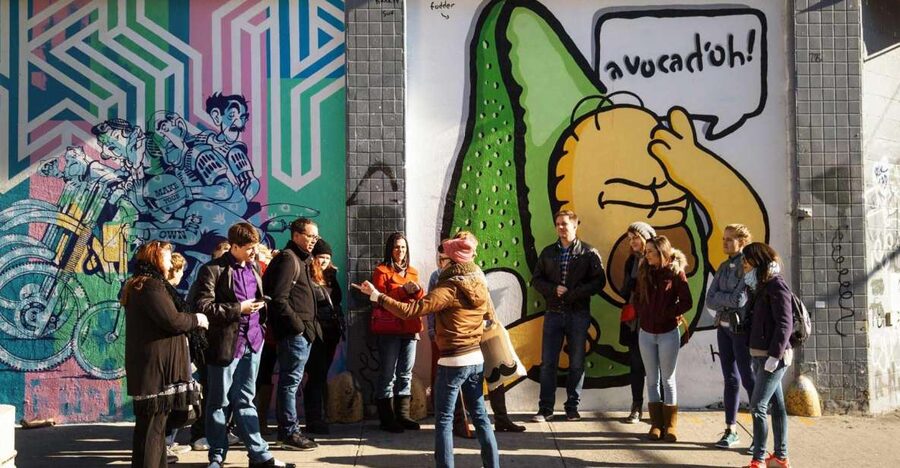
Even better, guides are often described as making it feel approachable for different walkers, and some specifically note traffic awareness and pacing. On a city walk, that’s not a small detail. It’s the difference between watching the group and feeling safe.
If you’re picking this tour for learning, choose it for the guide. If you’re picking it for photos, choose it because the guide will point you at what’s worth seeing, not just where to walk.
Food Is Optional, but Budget for It: What’s Included and What Isn’t
The tour is built around seeing places and hearing stories. Food costs aren’t included, even though you’ll get ethnic food sampling suggestions along the way.
So I’d plan a small budget for snacks or a sit-down bite if a stop like Alleva Dairy sparks your appetite. The best move is to treat food as a bonus add-on, not the core value. The core value is the guide-led context that makes the area feel understandable.
True-Crime and Gang Violence: How to Handle the Heavier Parts
This walk includes references to Mafia and Chinese gang violence, plus mob-linked sites and violent-incident stories. That can be a lot for two hours, especially if you prefer bright, casual city sightseeing.
Here’s how I’d manage it: let the stories land as social history, not entertainment. Pay attention to what the guide points out about immigrant struggles and how communities dealt with pressure. When you frame it that way, the content feels less like shock and more like explanation.
If you know you dislike crime storytelling, consider going in with a heads-up. It’s not graphic by design here, but it is still heavy.
Pace, Shoes, and Weather: Simple Prep That Helps
This is a walking tour, so comfortable shoes aren’t optional. The route is dense with stops, so you’ll spend more time on your feet than you might think from the two-hour duration.
Also bring weather-appropriate clothing. One practical detail I like is that guides are described as finding shaded spots on hot days, so you’re not stuck baking if you pack water and handle it smart.
The other note: it’s not suitable for people with mobility impairments, so plan alternatives if you need step-free access.
Value for $39: Why This Price Can Make Sense
At $39 per person for two hours, you’re paying for the guide’s ability to connect dozens of street corners into one readable story.
In New York, DIY walking can work, but you’d need to bring your own context: which building mattered, which corner was tied to which incident, and what the immigrant timeline looks like across the three neighborhoods. This tour saves you that research time and gives you a guided narrative in a compact window.
Is it perfect value for everyone? If your goal is only shopping and quick photos, you might feel constrained by the story structure. But if you want a “how did this place become this place” experience, the price is pretty reasonable.
Should You Book This SoHo, Little Italy, and Chinatown Walk?
Book it if you want a guided way to understand New York’s transformation across three neighborhoods without turning your day into a research project. The stops hit big themes—innovation in SoHo, labor tragedy and family endurance in Little Italy, and Chinatown’s legend-and-pressure history—plus you get an easy, talk-along walking pace guided by people praised for energy and clear explanations.
Skip (or consider an alternative) if you know you don’t want crime-focused storytelling, or if walking and crowds will be uncomfortable for you. Also remember that food costs are on you, so keep a small snack budget handy.
If you’re in Manhattan for a short visit, this is one of the more efficient ways to get your bearings fast and still leave feeling like you learned something real.
FAQ
How long is the guided walk?
The tour lasts 2 hours, with separate guided portions for SoHo, Little Italy, and Chinatown.
How much does the tour cost?
The price is $39 per person.
What language is the tour guide?
The tour is led by an English-speaking guide.
Where does the tour start and end?
The meeting point can vary by option, but it commonly starts at Spring Street Park and ends with a drop-off at Columbus Park.
Is food included in the price?
No. Food costs are not included, even though you may sample or be directed toward ethnic food.
Do I need to pay if I change my plans?
The experience offers free cancellation up to 24 hours in advance for a full refund.
Can I book without paying right away?
Yes. There’s a reserve now & pay later option, where you can book your spot and pay nothing today.
Is this tour suitable if I have mobility issues?
No. It is not suitable for people with mobility impairments.
If you want, tell me your travel month and your walking comfort level, and I’ll suggest a smart way to pair this with nearby sights before or after.
More Tour Reviews in New York City
- NYC: SUMMIT One Vanderbilt Tickets★ 4.7 · 51,195 reviews
- NYC: Empire State Building Tickets – Observatory & Museum★ 4.7 · 25,757 reviews
- New York City: Statue of Liberty & Ellis Island with Ferry★ 4.6 · 18,683 reviews
- New York City: American Museum of Natural History Ticket★ 4.5 · 15,447 reviews
- Statue of Liberty and Ellis Island Tour: All Options★ 5.0 · 13,571 reviews
New York City, One Block at a Time
- SoHo, Little Italy, and Chinatown Walking Tour in New York★ 5.0 · 3,153 reviews
- Secrets of Grand Central Station Walking Tour New York City★ 5.0 · 1,796 reviews
- Greenwich Village Walking and Food Tasting Tour★ 5.0 · 1,572 reviews
- Artistic, Alternative Greenwich Village Walking Tour★ 5.0 · 971 reviews
- Brooklyn Bridge & DUMBO Neighborhood Tour – from Manhattan to Brooklyn★ 5.0 · 826 reviews
Downtown Bites: SoHo to Little Italy
- SoHo, Little Italy, and Chinatown Walking Tour in New York★ 5.0 · 3,153 reviews
- NYC: Chinatown & Little Italy Food Tour with 7 Flavorful Tastings★ 5.0 · 2,733 reviews
- Original NYC Guided Food Tour of Chinatown and Little Italy★ 5.0 · 2,194 reviews
- NYC Food Tour: Chinatown and Little Italy★ 5.0 · 1,090 reviews
- NYC: Chinatown and Little Italy Food Tour★ 4.7 · 703 reviews
Just in: the newest New York City reviews on our desk




SoHo, Chinatown & Little Italy Tours, compared.
 ★ 5.0SoHo, Little Italy, and Chinatown Walking Tour in New YorkFrom $393,153 reviews
 ★ 5.0Chinatown & Little Italy Food Tour with 7 Flavorful TastingsFrom $992,733 reviews
 ★ 5.0Original NYC Guided Food Tour of Chinatown and Little ItalyFrom $1302,194 reviews
 ★ 4.7Chinatown and Little Italy Food TourFrom $80703 reviews
 ★ 4.7SoHo, Little Italy, and Chinatown Guided TourFrom $30614 reviews
 ★ 5.0SoHo, Little Italy, and Chinatown NYC Guided Walking TourFrom $36443 reviews
 ★ 4.53 Neighborhoods Tour: Soho, Chinatown & Little ItalyFrom $39275 reviews
Browse the lists this tour appears in