
Reviewed · SOHO, CHINATOWN & LITTLE ITALY TOURS
NYC: Chinatown & Little Italy Food Tour (4 Food Stops Incl.)
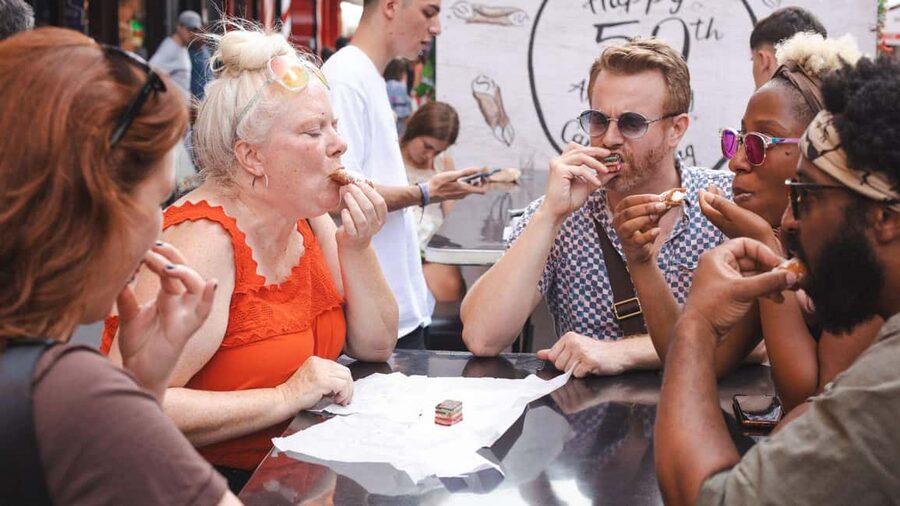
Chinatown and Little Italy taste like New York. This 2-hour food tour uses the streets you see every day, like Mott and Mulberry, to explain what immigrant life felt like when newcomers arrived in the 1800s. I love that the food is not random stops, it’s built around classic hits, from dim sum at Mei Lai Wah to the cannoli legend at Caffe Palermo.
One possible drawback: if you eat by strict rules, plan ahead, because the tour is not suitable for vegans, vegetarians, or gluten intolerance.
I also like that you get more than bites. You’ll walk through places with real visual punch, like Doyers Street with its murals and the Church of the Transfiguration, completed in 1801, which served immigrant communities for more than 200 years. That mix of photo stops, guided context, and eating is what makes the tour feel efficient instead of just snack-and-go.
In This Review
- Key points you’ll remember
- Why Mott and Mulberry Streets are the real star of this walk
- Meeting at Baxter and Canal, then getting oriented fast
- Stop with dim sum at Mei Lai Wah
- Supreme Restaurant soup dumplings for a second Chinatown flavor
- Doyers Street murals and the Church of the Transfiguration (1801)
- Mott Street Fish Market: where the neighborhood eats
- Little Italy walking time: the classic corners you should see
- Nolita Pizza: New York-style pizza that fits the tour pace
- Caffe Palermo finish: the cannoli stop you came for
- Price and value: is $95 worth it
- Who this tour fits best (and who should skip it)
- Practical tips to get the most out of the experience
- Should you book this Chinatown & Little Italy Food Tour?
- FAQ
- How long is the NYC: Chinatown & Little Italy Food Tour?
- What does the tour cost?
- Where does the tour start?
- Where does the tour end?
- What food tastings are included?
- Which places does the tour highlight for food?
- Is the tour suitable for vegans or vegetarians?
- Is it suitable for people with gluten intolerance?
- Is gratuity included in the price?
Key points you’ll remember
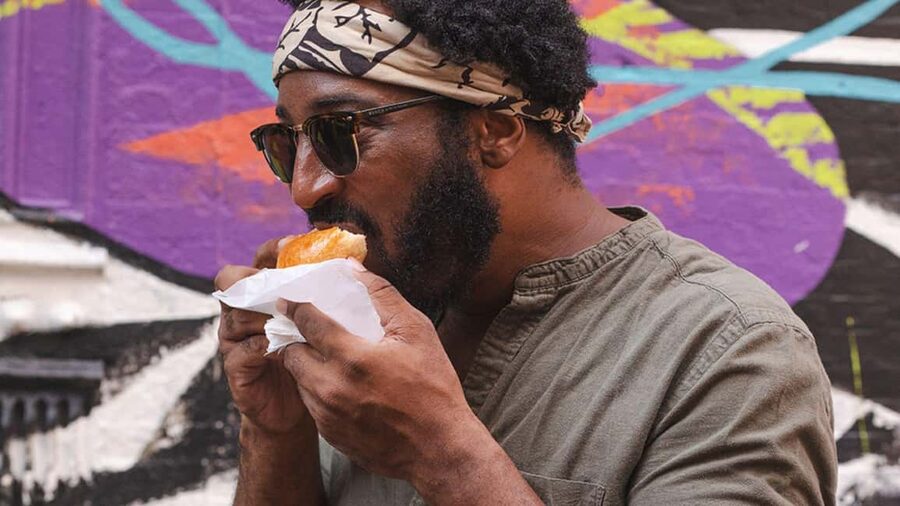
- Mei Lai Wah baked buns from a bakery known for decades of consistent dim sum
- Soup dumplings at Supreme Restaurant from a small Shanghainese spot
- Doyers Street murals + the Church of the Transfiguration (completed in 1801) for fast, memorable sightseeing
- Mott Street Fish Market for an authentic market vibe that locals actually use
- New York-style pizza at Nolita Pizza plus Italian dessert to round it out
- Caffe Palermo as the finish and home to the long-running cannoli tradition
Keep tasting downtown: SoHo, Chinatown and Little Italy
- SoHo, Little Italy, and Chinatown Walking Tour in New York
★ 5.0 · 3,153 reviews - NYC: Chinatown & Little Italy Food Tour with 7 Flavorful Tastings
★ 5.0 · 2,733 reviews - Original NYC Guided Food Tour of Chinatown and Little Italy
★ 5.0 · 2,194 reviews - NYC Food Tour: Chinatown and Little Italy
★ 5.0 · 1,090 reviews
Why Mott and Mulberry Streets are the real star of this walk
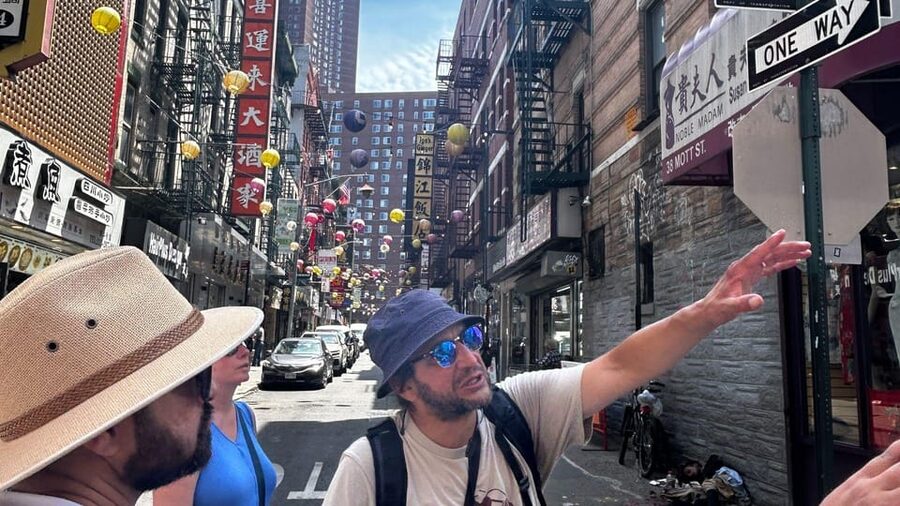
If you’ve only seen Chinatown and Little Italy from restaurant previews, this tour gives you something better: street-level context. Mott and Mulberry Streets are where you can almost read history off the blocks. You’re not just eating in a food zone. You’re walking through an area that long ago turned newcomers into neighbors.
The guide’s job here is to connect what you’re tasting with what the neighborhood was built on: arrival, settlement, and daily routines. When the food is good (and it is), that story makes the neighborhood feel less like a theme and more like a living place. You’ll also get a sense of how tight these communities were, and how quickly culinary traditions took root.
I like tours like this because they respect your time. In two hours you won’t cover all of Manhattan. But you will leave with a mental map and a clear sense of what makes these blocks matter.
Meeting at Baxter and Canal, then getting oriented fast
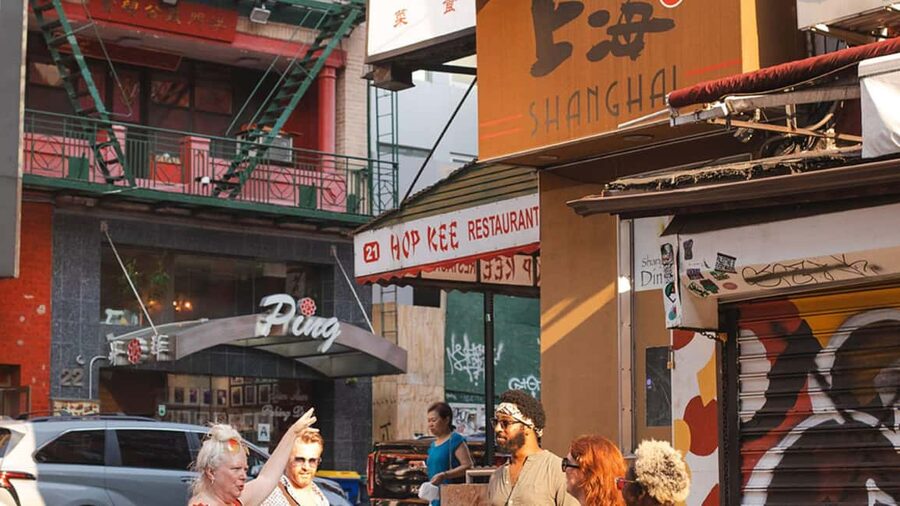
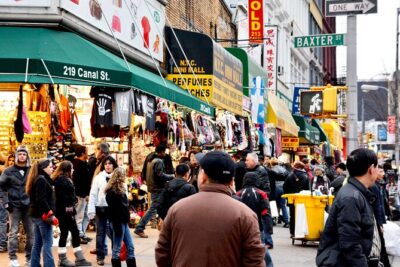
The tour starts at the Chinatown Information Kiosk on the corner of Baxter and Canal Street. That’s a smart choice. You’re already at a point where you can pivot into Chinatown’s core streets, and the walk doesn’t feel like a long “getting there” shuffle.
From the start, expect a guided rhythm: short walks, quick photo stops, and prompt tastings. This is not the kind of tour where you stroll for 45 minutes and only then remember snacks. You’re eating along the way, which keeps energy up and makes the city feel like it’s moving with you.
One practical thing: Chinatown sidewalks can be crowded, especially around market areas. Wear comfortable shoes and keep your pace steady. The group will be walking through real neighborhood foot traffic, not a closed-off pedestrian set.
Stop with dim sum at Mei Lai Wah
Your first taste is dim sum from Mei Lai Wah, a family bakery that’s been serving baked buns for decades, known for a long run since the late 1960s. This is exactly the kind of “how it should taste” stop that helps you understand Chinatown food beyond stereotypes.
Baked buns are a great way to start because they’re hearty and portable. If you’re the kind of person who worries you’ll get full too fast later, baked dim sum gives you a solid base without wiping out your appetite. And if you’re the kind of person who loves to compare, it’s also a useful reference point for how Chinese bakeries here have their own style.
I also like that the tour doesn’t treat dim sum as one thing. It frames the neighborhood’s food culture as something with variety and method, not just one signature dish.
Still hungry? More New York City food tours
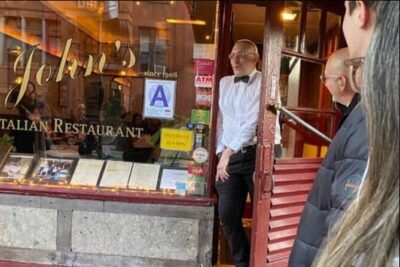
Supreme Restaurant soup dumplings for a second Chinatown flavor
In Chinatown, the tour also makes room for Supreme Restaurant, a small, laidback Shanghainese spot known for its signature soup dumplings. Soup dumplings are a different experience than baked buns. They’re all about texture and timing: the skin, the steam, the filling. You feel it more than you just taste it.
This pairing works for two reasons. First, it keeps the Chinatown section from turning into repeats. Second, it gives you a quick lesson in how Chinese cuisine can shift between bakery-style comfort and dumpling craft.
If you’re sensitive to heat or steam, just take it slow. This is one of those foods where rushing usually means burned hands and a messier first bite.
Doyers Street murals and the Church of the Transfiguration (1801)
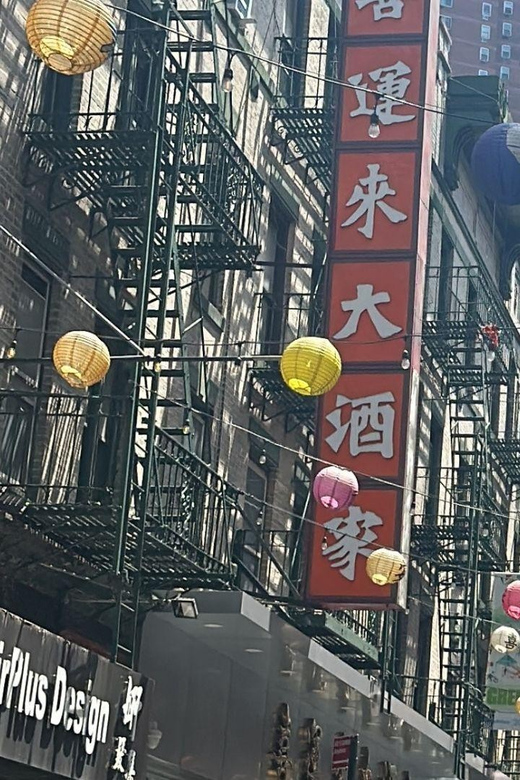
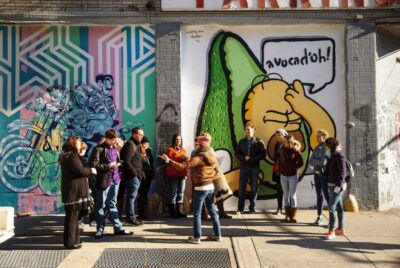
Between tastings, the walking portion adds real visual value. Doyers Street is known as Murder Alley back in 1900, and today it’s famous for murals and restaurants. It’s a fun kind of stop because you’re seeing a street with layered identities—violence and art, old reputation and new life.
Then comes a quieter, more grounded moment: the Church of the Transfiguration, completed in 1801. The church has been a center of worship for immigrant groups for over 200 years. That time span matters. It helps explain why neighborhoods like this didn’t just bring new languages and new foods—they built meeting points, routines, and community anchors.
This part of the tour is short, but it sticks. It makes your eating feel connected to where people gathered, not just what people bought.
Mott Street Fish Market: where the neighborhood eats
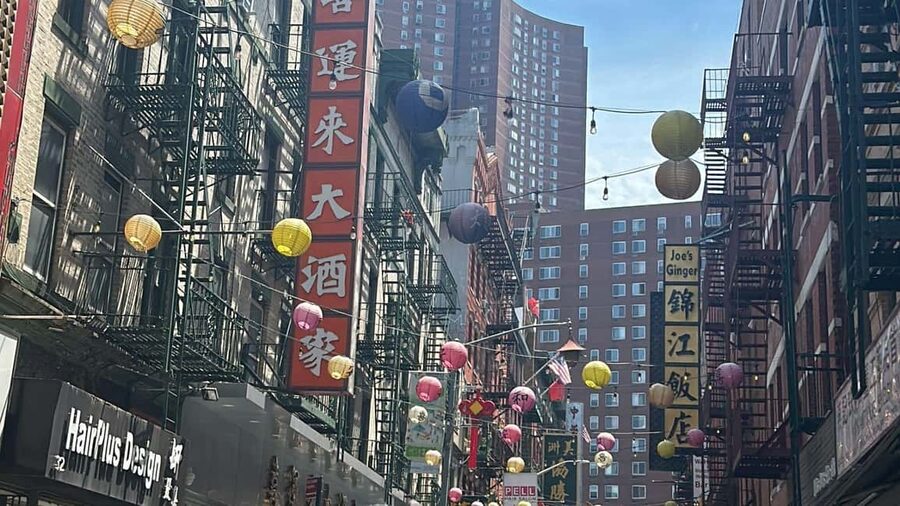
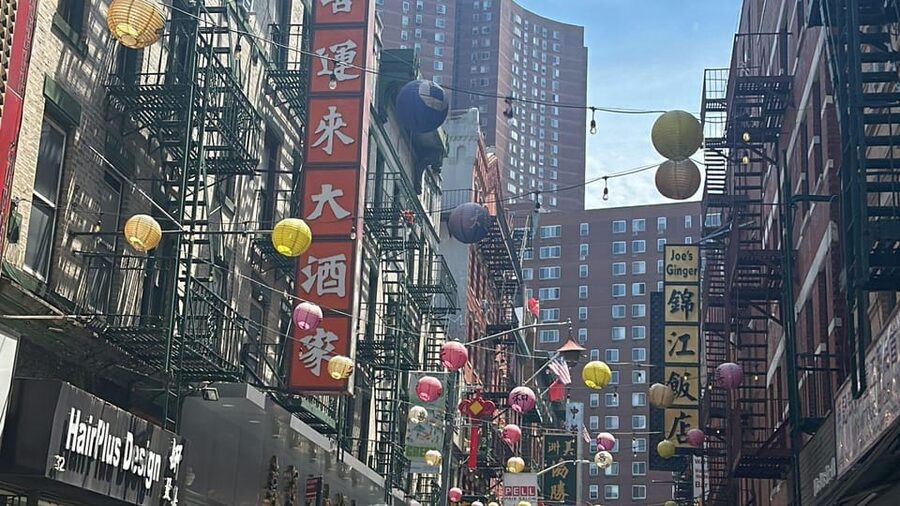
Next is Mott St Fish Market, an informal cluster of shops with fresh seafood, fruits, and vegetables. This is the place where Chinatown’s day-to-day energy shows up in a practical way. You’re not just looking at restaurants; you’re seeing supply chains and shopping habits.
I find market stops add value even if you’re not a “buy stuff” person. They change how you read the food you’re tasting. After walking through a place like this, you’re more likely to notice ingredients, freshness, and what the neighborhood clearly prefers.
Also, markets are where you get that lived-in feeling that photos alone can’t capture. It’s busy, yes, but in a functional way. If you like the sense of a neighborhood doing normal business, you’ll appreciate it here.
Little Italy walking time: the classic corners you should see
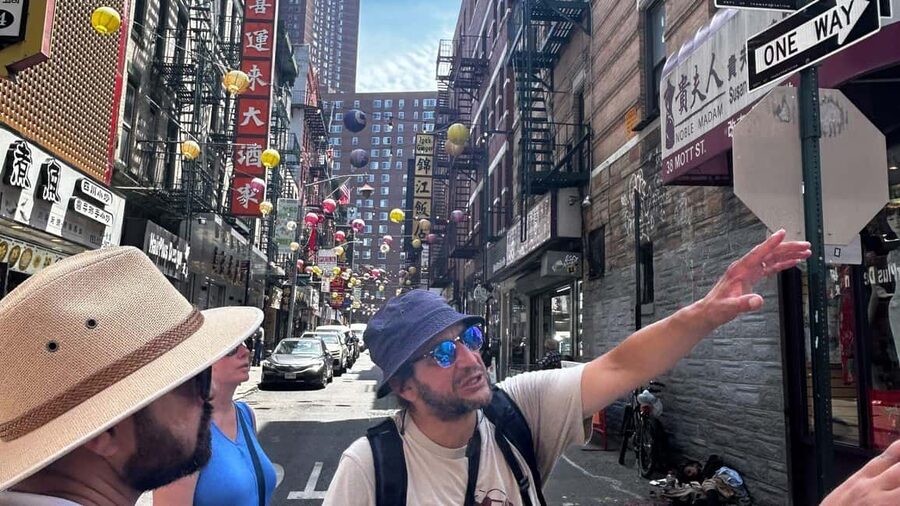
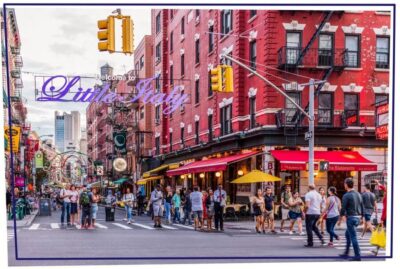
Once the tour shifts into Little Italy, you’ll slow slightly into a different vibe: more Italian storefront history, more pastry-and-pizza culture in the air. This is where the tour leans into long-running names and food institutions.
You’ll spend time in the area around famous Italian imports and long-standing cafes, with stops that help you understand how Little Italy formed its identity—through shops that served everyday needs and through family businesses that stuck around.
This section is useful even if you think you already know Little Italy. The streets are iconic, but the tour frames them in a way that makes the buildings and storefronts feel like part of a system, not just scenery.
Nolita Pizza: New York-style pizza that fits the tour pace
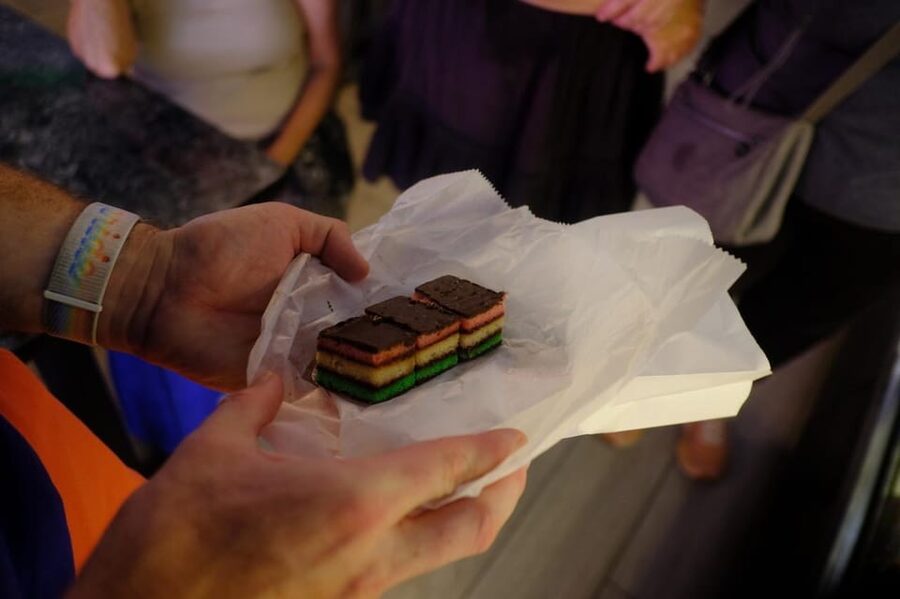
For the Italian savory hit, the tour includes Nolita Pizza, a relative newcomer that’s still managed to win love fast. It’s known for attracting locals and tourists alike and for being an Instagram-worthy kind of spot—though you’ll care more about the taste than the photo angle.
This is a smart tasting choice mid-tour. Pizza gives you something familiar but still distinct in how New York does it: the crust structure, the sauce balance, the cheese pull. And because you’re still on a walking schedule, pizza works better than something too heavy or too slow to eat.
If you’re worried about getting overly full, just remember: you’re tasting. You’re not committing to an entire meal here. Take a bite, enjoy it, and let the guide keep you moving.
Caffe Palermo finish: the cannoli stop you came for
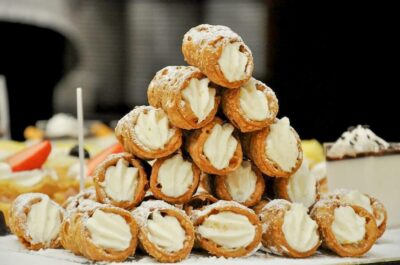
The tour ends at Caffe Palermo, a long-running pastry shop since 1973 and known for its cannoli. This is where the cannoli tradition gets highlighted—Caffe Palermo is repeatedly linked with the cannoli legend who’s been serving for decades.
A proper cannoli ending does two things. First, it gives you a sweet payoff after savory tastings. Second, it anchors the entire tour in a single iconic flavor that feels unmistakably “New York Italian.”
You’ll usually get it as a dessert tasting, not a random snack. That’s why the ending works. It’s not just sugar for the sake of it. It’s a final statement about the neighborhood’s food identity.
Price and value: is $95 worth it
At $95 per person for a roughly 2-hour tour, you’re paying for three things: a guided walk through two distinct neighborhoods, multiple structured tastings, and a licensed guide who ties it together.
If you were to do this on your own, you’d spend money anyway—on dim sum, soup dumplings, pizza, and at least one dessert. The value here is in the planning. You’re not hunting for “the right place,” and you’re not guessing whether you’ll have to wait in long lines without knowing what to order.
Also, the tour includes tastings in both Chinatown and Little Italy, which means you get a wider range of flavors than a single-neighborhood experience. That’s a big deal if it’s your first time in the area.
So yes, it’s not a budget tour. But if you like food that’s tied to real neighborhood names, and you want to cover a lot without wasting time, it’s a fair use of your NYC hours.
Who this tour fits best (and who should skip it)
This tour is best if you eat meat and dairy and enjoy classic Chinese and Italian staples. The tastings include traditional dishes like Chinese pork buns and dumplings, along with Italian pizza and dessert like cannoli. That’s why it’s marked not suitable for vegans and vegetarians.
If you have gluten intolerance, don’t plan to “figure it out on the day.” The tour isn’t designed for that, so you’d be gambling on substitutions.
If you’re a foodie who likes history told through food, you’ll have a good time. The guide’s mix of streets, murals, and community landmarks makes the eating feel like part of a story rather than a checklist.
Practical tips to get the most out of the experience
- Come hungry enough to taste, but don’t treat it like an all-you-can-eat challenge.
- Wear walking shoes. You’ll be on sidewalks through two neighborhoods with real foot traffic.
- If you don’t eat certain ingredients, this is where you’ll want to pass. The tour is not listed for vegan, vegetarian, or gluten intolerance needs.
- Bring a phone for quick photo stops around Doyers Street, since that’s part of the guided route.
Should you book this Chinatown & Little Italy Food Tour?
I’d book it if you want a high-value way to sample Chinese dim sum and soup dumplings, then pivot to New York-style pizza and a legendary cannoli, all while learning why Mott and Mulberry Streets became such a defining immigrant corridor. The tastings are structured, and the guided walking makes the whole experience feel purposeful.
I would skip it if your diet is restrictive (vegan, vegetarian, or gluten intolerance). Food isn’t an afterthought here, and the tour isn’t set up to swap dishes on demand.
If you’re looking for a compact, flavorful introduction to Chinatown and Little Italy, this is the kind of tour that can save you time and guessing.
FAQ
How long is the NYC: Chinatown & Little Italy Food Tour?
It runs for about 2 hours.
What does the tour cost?
The price is $95 per person.
Where does the tour start?
It starts at the Chinatown Information Kiosk at the corner of Baxter and Canal Street.
Where does the tour end?
The tour ends at Caffé Palermo.
What food tastings are included?
You get two tastings of traditional Chinese dishes in Chinatown and two tastings of Italian pizza and dessert in Little Italy.
Which places does the tour highlight for food?
It highlights Mei Lai Wah for dim sum and Caffé Palermo for cannoli. It also includes Nolita Pizza for pizza and mentions Supreme Restaurant for soup dumplings, plus Mott St Fish Market as a market stop.
Is the tour suitable for vegans or vegetarians?
No. It is not suitable for vegans and not suitable for vegetarians.
Is it suitable for people with gluten intolerance?
No. It is not suitable for people with gluten intolerance.
Is gratuity included in the price?
No. Gratuity is not included.
More Tour Reviews in New York City
- NYC: SUMMIT One Vanderbilt Tickets★ 4.7 · 51,195 reviews
- NYC: Empire State Building Tickets – Observatory & Museum★ 4.7 · 25,757 reviews
- New York City: Statue of Liberty & Ellis Island with Ferry★ 4.6 · 18,683 reviews
- New York City: American Museum of Natural History Ticket★ 4.5 · 15,447 reviews
- Statue of Liberty and Ellis Island Tour: All Options★ 5.0 · 13,571 reviews
Eat Your Way Through New York City
- NYC: Chinatown & Little Italy Food Tour with 7 Flavorful Tastings★ 5.0 · 2,733 reviews
- Original NYC Guided Food Tour of Chinatown and Little Italy★ 5.0 · 2,194 reviews
- NYC: Greenwich Village Food Tour with 6 Locals Favorites Dishes★ 5.0 · 1,812 reviews
- Greenwich Village Walking and Food Tasting Tour★ 5.0 · 1,572 reviews
- New York City Mafia and Local Food Tour led by NYPD Guides★ 5.0 · 1,197 reviews
Downtown Bites: SoHo to Little Italy
- SoHo, Little Italy, and Chinatown Walking Tour in New York★ 5.0 · 3,153 reviews
- NYC: Chinatown & Little Italy Food Tour with 7 Flavorful Tastings★ 5.0 · 2,733 reviews
- Original NYC Guided Food Tour of Chinatown and Little Italy★ 5.0 · 2,194 reviews
- NYC Food Tour: Chinatown and Little Italy★ 5.0 · 1,090 reviews
- NYC: Chinatown and Little Italy Food Tour★ 4.7 · 703 reviews
Just in: the newest New York City reviews on our desk


SoHo, Chinatown & Little Italy Tours, compared.
 ★ 5.0SoHo, Little Italy, and Chinatown Walking Tour in New YorkFrom $393,153 reviews
 ★ 5.0Chinatown & Little Italy Food Tour with 7 Flavorful TastingsFrom $992,733 reviews
 ★ 5.0Original NYC Guided Food Tour of Chinatown and Little ItalyFrom $1302,194 reviews
 ★ 4.7Chinatown and Little Italy Food TourFrom $80703 reviews
 ★ 4.7SoHo, Little Italy, and Chinatown Guided TourFrom $30614 reviews
 ★ 4.6SoHo, Little Italy, and Chinatown 2-Hour Guided WalkFrom $39566 reviews
 ★ 5.0SoHo, Little Italy, and Chinatown NYC Guided Walking TourFrom $36443 reviews
Browse the lists this tour appears in