
Reviewed · 9/11 MEMORIAL & GROUND ZERO TOURS
Small-Group Downtown, 911 Memorial, Wall Street Tour
Wall Street turns into a storybook at street level. In about 2 hours, you trace more than 400 years of New York City history with a local guide, from Stone Street to the 9/11 Memorial (memorial only). I especially liked the small group pace, which leaves room for real questions, and how smoothly the route connects today’s landmarks to the city’s founding. One drawback to plan for: a few major spots you see up close are not ticketed on this tour, including the 9/11 Memorial Museum and the NYSE.
The guides bring the area to life without rushing. I’m drawn to how guides like Liz, Rory, James, and Sean keep their stories clear and engaging, including tailoring explanations for kids, and making time for practical breaks. If you want lots of museum time or indoor entry, you’ll need to add those separately.
In This Review
- Key things that make this Downtown tour work
- A 2-hour Wall Street loop that gives you bearings fast
- Price and what you actually pay for
- Start at Stone Street: where New York still feels old
- The New York Stock Exchange area: see it, but plan for what’s not inside
- Trinity Church and Alexander Hamilton’s resting place
- Wall Street and Bowling Green: the old public square effect
- Federal Hall: the first capitol site in the U.S.
- Charging Bull and the Wall Street photo moment (with context)
- The 9/11 Memorial grounds: memorial-only, respectful pacing
- Alexander Hamilton U.S. Custom House and the “old commerce” thread
- Delmonico’s and Fraunces Tavern: famous names, quick context
- House of Morgan: finance history in a single street stop
- The tallest building stop and the fort-with-history moment
- Walking comfort: when shoes and timing matter
- Small-group dynamics: why the guide can make or break it
- Who this tour fits best (and who might want something else)
- Should you book the Downtown, 911 Memorial, Wall Street Tour?
- FAQ
- How long is the Small-Group Downtown, 911 Memorial, Wall Street Tour?
- How much does the tour cost?
- What’s included in the tour price?
- Is the tour offered in English?
- Is admission included for the 9/11 Memorial Museum?
- Does the tour include admission to the NY Stock Exchange or the tallest building?
- Where do I meet the guide?
- What should I bring or plan for?
- Are there any age rules or child requirements?
- What is the cancellation policy?
Key things that make this Downtown tour work
- Small group size (max 15 people) keeps questions possible and directions easy to follow
- Memorial-only 9/11 stop means you’ll see the memorial grounds, not the museum exhibits
- Many stops are outside and free to view, so your $39 focuses on guided context
- Street-level history layout links Stone Street, Wall Street, and Wall Street-adjacent landmarks fast
- Guides often match your pace, including bathroom/drink stops when needed
- Ends near Whitehall/Castle Clinton area, with helpful tickets handed out for Statue of Liberty and Ellis Island
More ways to visit Ground Zero and the memorial
- NYC: One World Observatory Skip-the-Line Ticket
★ 4.7 · 12,329 reviews - 9/11 Memorial, Ground Zero Tour with Optional 9/11 Museum Ticket
★ 5.0 · 6,381 reviews - 9/11 Memorial Museum Admission Ticket
★ 4.5 · 6,376 reviews - All-Access 9/11: Ground Zero Tour, Memorial and Museum, One World Observatory
★ 5.0 · 4,886 reviews
A 2-hour Wall Street loop that gives you bearings fast
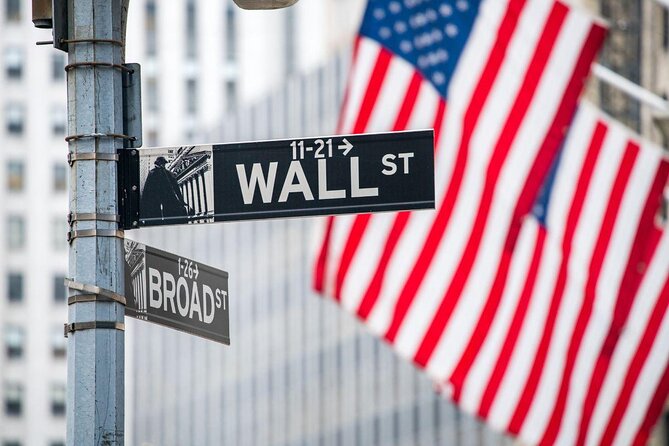
If Downtown feels like a blur when you’re on your own, this kind of guided walk is a smart fix. You’re moving on foot through a tight corridor of landmarks, so you start seeing patterns: old streets next to Wall Street power, early government sites tucked in among modern finance, and 9/11 memorial space carved into the same geography people still hustle through every day.
This tour is built for orientation. It doesn’t try to cover everything in Manhattan, and it doesn’t pretend you’ll learn every detail in one go. Instead, it gives you a fast, grounded framework: where major events happened, why specific buildings matter, and what to look for as you walk past.
You’ll also appreciate the small group format. With up to 15 people, it’s easier to hear answers and keep up—especially at busy intersections around Wall Street.
Price and what you actually pay for
At $39 per person for about 2 hours, you’re mostly paying for the guide’s storytelling and the route planning. Many stops you visit are free to see from the sidewalk, and the “value” comes from the in-the-street context you would likely miss on your own.
Just keep your expectations realistic about admissions. Some of the big-ticket places have limited inclusion here—more on that when we get to the stops that have an admission caveat.
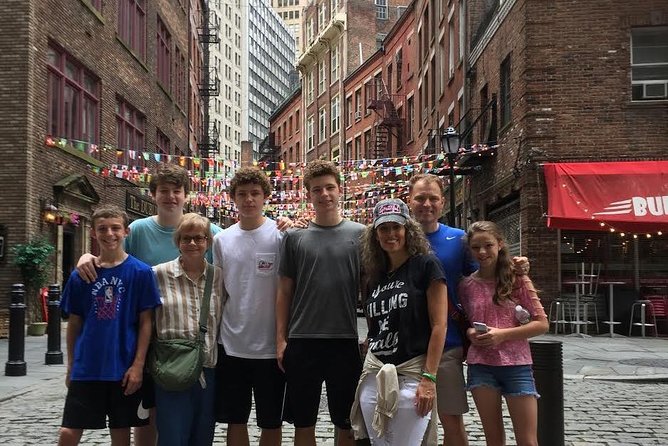
Start at Stone Street: where New York still feels old
You begin at 1 Bowling Green and early on you hit one of the city’s best “feel it in your bones” moments: Stone Street. This is one of the oldest streets in the city, and the appeal is more than just age. It’s a quick way to reset your brain from modern streetscapes to the earlier layout of Downtown.
What I like about starting here is that it sets a tone. The guide can connect the physical geography—older routes, older neighborhoods, older building logic—to later history. You’re not just seeing famous names; you’re learning how the city’s footprint shaped what happened next.
If you’re the type who takes photos, you’ll likely want a few extra seconds at Stone Street. It’s a compact start that gives you immediate payoff before you even reach the financial district core.
More history where the money moves

The New York Stock Exchange area: see it, but plan for what’s not inside
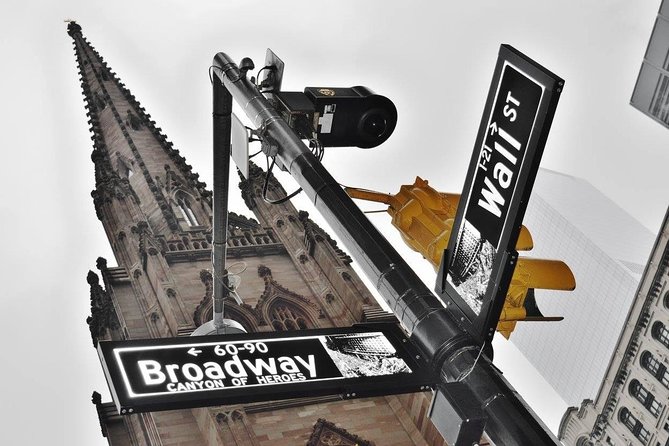
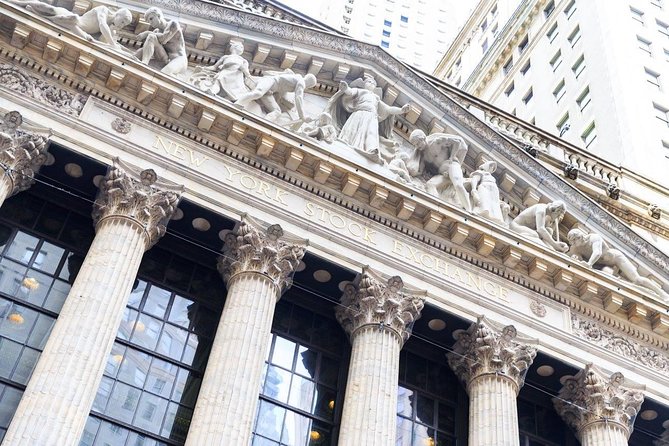
Next is the New York Stock Exchange area. You’re there briefly, and importantly, admission is not included. In other words, you’ll get the exterior and the context—where it sits, why it matters, and what the financial district represents historically.
On your own, it’s easy to walk past the NYSE and just think, OK, it’s a big building. With a guide, it turns into a landmark with a backstory: what Wall Street became, how markets and power clustered here, and why people still treat this block like the center of the universe.
If your dream is to go inside, this tour won’t cover that. But if your goal is to understand Downtown geography, this stop is still useful.
Trinity Church and Alexander Hamilton’s resting place
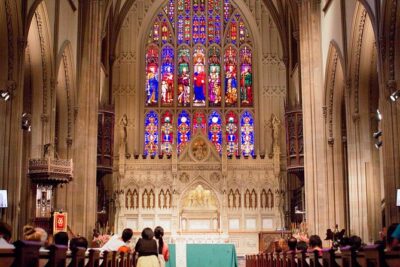
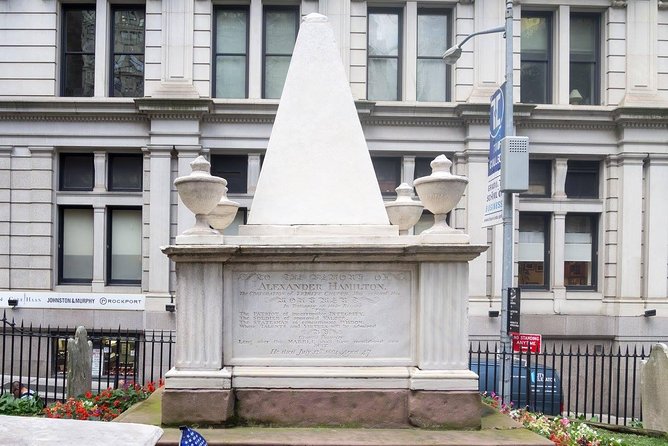
At Trinity Church Wall Street, you get one of the most meaningful “Downtown anchor points” on the route. This is one of the oldest churches in the city, and it’s also the resting place of Alexander Hamilton.
This stop is where the walk starts to feel personal. You’re not just hearing dates—you’re standing at a site that ties the early government era to the city’s ongoing story. Even if you know Hamilton only from a hit musical, there’s something grounded about being at a real place connected to him.
Admission here is free, so you’re not boxed out by ticket rules just to stand in the right spot and absorb what’s going on around you. Time is limited, but it’s a strong use of those minutes.
Wall Street and Bowling Green: the old public square effect
From Trinity, you continue through Wall Street itself and then to Bowling Green, New York’s oldest public park.
Bowling Green works well because it’s a change of pace. The park gives you breathing room from the dense energy of finance. It’s also a reminder that public space and power have always been side by side here. This isn’t just a street of skyscrapers and banks. It’s a place where ordinary life used to meet political and economic activity.
The stop length is short, but you can still do something practical: let your guide point out what you should notice as you move on—building silhouettes, street alignments, and the way blocks funnel foot traffic.
Federal Hall: the first capitol site in the U.S.
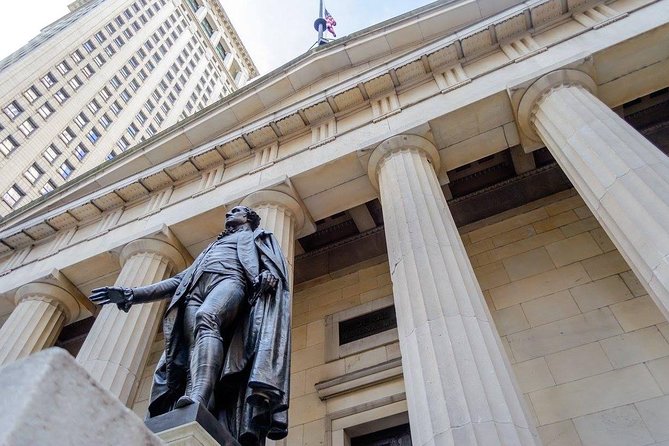
Then you hit Federal Hall, the site of the first capitol building for the United States. This is a major reason I’d recommend the tour even if you’re not a history nut. You’re walking past Wall Street while also passing through the place where the U.S. government first took physical form.
Admission is free, which makes it even more accessible. The value here is the interpretive link: how early governance sat in the same Downtown geography that later became the financial engine of the country.
If you’ve ever tried to read about early U.S. capital sites without much map context, a guided stop like this fixes that. You’ll come away with a clearer mental picture of where power began.
Charging Bull and the Wall Street photo moment (with context)

At Charging Bull (Wall Street Bull), you’ll have a quick stop. Admission is free.
Yes, it’s famous. But the point of having it on a guided walk isn’t just the photo—it’s what the guide can explain around it. This is a symbol that visitors recognize instantly, and that recognition can help you link modern culture back to Wall Street’s identity and history.
Expect a brief window here. If you want extra time for a great shot, you’ll need to be efficient with your photos and keep an eye on the group.
The 9/11 Memorial grounds: memorial-only, respectful pacing
This is the emotional center of the tour: The National 9/11 Memorial & Museum. On this walk, you’ll visit the memorial only, and museum entrance is not included.
The stop is around 20 minutes, which is enough time to see the main memorial spaces and understand what you’re looking at. But it’s not enough time to do the kind of long, quiet reading you might want if you plan to spend extra hours there on your own or add the museum afterward.
This is also a stop where pacing matters. A small group helps here. You’re not being pulled along like a luggage conveyor belt, and the guide can help you focus on details without turning the experience into a rushed checklist.
If 9/11 is a topic you want to explore more deeply, consider adding the museum on a separate trip. This tour gives you the memorial grounds with context.
Alexander Hamilton U.S. Custom House and the “old commerce” thread
Back into lighter momentum, you’ll also see the Alexander Hamilton U.S. Custom House, the former Customs House. It’s a short stop, with free admission.
Here’s what I like about including a customs building on a Wall Street tour: it connects the idea of early American trade to the financial district’s later dominance. Customs, taxes, imports, and shipping aren’t just old details—they’re part of how a port city built its economy.
Even if you don’t go inside, it helps you understand why “commerce” and “government” weren’t separate themes historically. They were intertwined in Downtown’s physical landscape.
Delmonico’s and Fraunces Tavern: famous names, quick context
The route also passes Delmonico’s, one of old New York’s most famous restaurants. This is an outside stop with free access.
Then you get Fraunces Tavern Museum, another famous name. Admission here is not included.
These restaurant-related stops might seem like a fun detour, but they do a real job on the map. Historic eateries are often markers of social life, business networks, and how Downtown functioned after work hours. In a short walking tour, these stops are useful for changing the mood while keeping the thread of “what mattered to people here.”
If you’re hoping to step into Fraunces Tavern Museum, you’ll need to plan that separately. Still, even a brief exterior stop can help you place it.
House of Morgan: finance history in a single street stop
You also visit the House of Morgan, the former office of JP Morgan. This is a short, free stop.
This is one of those moments where the guide’s role really shows. A building like this looks like a landmark because it’s big and important. But with a guide, you learn what it represents in the story of banking influence in the city.
Again, you’re not getting a long museum-style visit here. You’re getting the “why this matters” version, and it sets up your later reading if you want to research more.
The tallest building stop and the fort-with-history moment
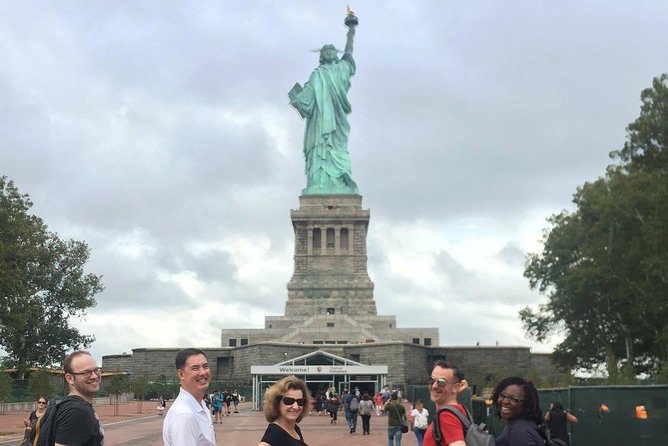
The tour includes a stop for the tallest building in the western hemisphere, with entrance not included. You also have a “fort with a colorful history” element, and the tour ends near Whitehall Terminal 4 on Whitehall St, with a drop-off outside Castle Clinton.
Even without admission, these stops matter because they give you a sense of scale. Downtown isn’t only old stone and early government sites. It also includes modern ambition. Standing at those big-view locations helps you understand why this area pulls people back again and again.
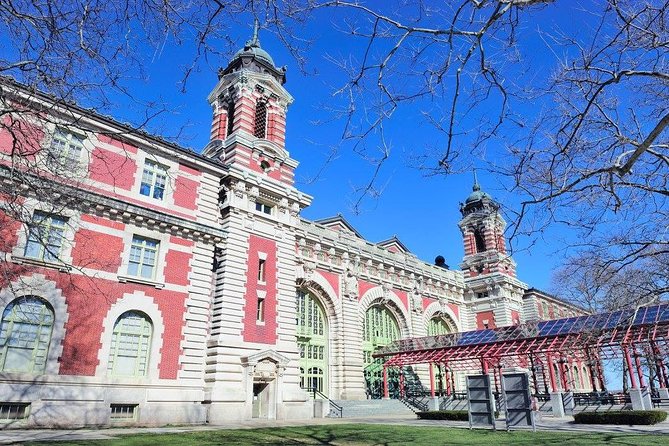
One more helpful bonus: at the Castle Clinton drop-off, your guide gives out tickets for the Statue of Liberty and Ellis Island. That’s a practical add-on that can save you time later, assuming you’re planning to do those sights in your trip.
Walking comfort: when shoes and timing matter
This is a walking tour, and there’s no getting around that. Wear comfortable shoes. The route involves steady movement through parts of Downtown where intersections are busy.
Start time is 11:00 am. The rule is simple: arrive about 15 minutes early. The tour departs promptly, and if you’re late, you may miss the tour with no refunds.
Also note: the tour operates in all weather conditions, so dress for rain or wind. This matters in New York because “a little drizzle” can feel like a full plan change if you’re not prepared.
Small-group dynamics: why the guide can make or break it
With a maximum of 15 people, you’re in a sweet spot. You get enough group energy that the walk doesn’t feel awkward or empty, but not so many people that questions die in the crowd.
The guide experience is consistently a highlight. I’ve seen different guides on similar walks, but here the pattern is clear: guides like Liz are praised for taking time to explain areas of the tour, and Sean is specifically credited with helping plan the Statue of Liberty and Ellis Island outing and keeping a good pace with time for bathroom/drink breaks.
Another strong point is flexibility with audience. Rory is noted for tailoring the tour to interests, including adding stories to keep a 10-year-old engaged.
If you’re traveling with kids, or you just learn better when a guide can answer your questions on the fly, this small-group approach is a real advantage.
Who this tour fits best (and who might want something else)
This tour is ideal if you want:
- A fast way to understand Downtown geography
- A guide to explain what you’re looking at without museum-level time
- A route that mixes Wall Street landmarks with early U.S. founding sites
- A manageable 2-hour commitment during a busy trip
It may not be ideal if you want:
- Long museum sessions, especially at the 9/11 Memorial Museum (not included)
- Interior access to places where admission is excluded on the tour, like the NYSE and the tallest building stop
- A very slow, sit-and-stare pace with extended time in one location
Should you book the Downtown, 911 Memorial, Wall Street Tour?
Yes—if your goal is to get your bearings fast and understand what you’re seeing. For $39 and about 2 hours, you’re buying expert interpretation across a compact route full of iconic stops. The small-group format keeps it from feeling like a cattle-march, and the 9/11 memorial stop is included in a memorial-focused way (not museum time).
Book it sooner rather than later if you can. This tour is often booked about 35 days in advance on average, and fewer spots can mean less flexibility.
If you’re planning to visit the Statue of Liberty and Ellis Island anyway, the end-of-tour ticket handoff near Castle Clinton is a nice bonus. Just remember: this walk is best for orientation and context. If you want deep museum time, add the museum separately.
FAQ
How long is the Small-Group Downtown, 911 Memorial, Wall Street Tour?
It lasts about 2 hours.
How much does the tour cost?
The price is $39.00 per person.
What’s included in the tour price?
A local guide is included. The memorial stop is included, but admission to the 9/11 Memorial Museum is not included.
Is the tour offered in English?
Yes, the tour is offered in English.
Is admission included for the 9/11 Memorial Museum?
No. This tour visits the 9/11 Memorial only. Museum entrance is not included.
Does the tour include admission to the NY Stock Exchange or the tallest building?
No. The New York Stock Exchange stop notes admission is not included, and the tallest building in the western hemisphere stop also notes entrance is not included.
Where do I meet the guide?
The tour starts at 1 Bowling Green, New York, NY 10004, and ends at Whitehall Terminal 4, Whitehall St, New York, NY 10004.
What should I bring or plan for?
Wear appropriate shoes because there is a decent amount of walking. The tour operates in all weather conditions, so dress for the weather.
Are there any age rules or child requirements?
Yes. Children under 18 must be accompanied by an adult who is at least 21 years of age.
What is the cancellation policy?
You can cancel for a full refund up to 24 hours in advance. If you cancel less than 24 hours before the start time, the amount you paid won’t be refunded.
More Tour Reviews in New York City
- NYC: SUMMIT One Vanderbilt Tickets★ 4.7 · 51,195 reviews
- NYC: Empire State Building Tickets – Observatory & Museum★ 4.7 · 25,757 reviews
- New York City: Statue of Liberty & Ellis Island with Ferry★ 4.6 · 18,683 reviews
- New York City: American Museum of Natural History Ticket★ 4.5 · 15,447 reviews
- Statue of Liberty and Ellis Island Tour: All Options★ 5.0 · 13,571 reviews
Where Wall Street Was Built
- NYC City Tour: Statue of Liberty, 9/11 Memorial, Wall Street★ 4.5 · 2,059 reviews
- Wall Street Insider Tour with a Finance Professional★ 4.5 · 660 reviews
- Wall Street Insider Tour with a Finance Professional★ 4.5 · 571 reviews
- Manhattan Group Tour Including Wall Street and 911 Memorial★ 5.0 · 408 reviews
- Private New York Tour: Footsteps of Alexander Hamilton★ 5.0 · 402 reviews
Back to Ground Zero: More to Book
- NYC: One World Observatory Skip-the-Line Ticket★ 4.7 · 12,329 reviews
- 9/11 Memorial, Ground Zero Tour with Optional 9/11 Museum Ticket★ 5.0 · 6,381 reviews
- 9/11 Memorial Museum Admission Ticket★ 4.5 · 6,376 reviews
- All-Access 9/11: Ground Zero Tour, Memorial and Museum, One World Observatory★ 5.0 · 4,886 reviews
- New York City One World Observatory Admission Ticket★ 4.5 · 2,636 reviews
Just in: the newest New York City reviews on our desk





9/11 Memorial & Ground Zero Tours, compared.
 ★ 4.7One World Observatory Skip-the-Line TicketFrom $3012,329 reviews
 ★ 5.09/11 Memorial, Ground Zero Tour with Optional 9/11 Museum TicketFrom $396,381 reviews
 ★ 4.59/11 Memorial Museum Admission TicketFrom $366,376 reviews
 ★ 5.0All-Access 9/11: Ground Zero Tour, Memorial and Museum, One World ObservatoryFrom $1094,886 reviews
 ★ 4.5New York City One World Observatory Admission TicketFrom $302,636 reviews
 ★ 4.5NYC City Tour: Statue of Liberty, 9/11 Memorial, Wall StreetFrom $392,059 reviews
 ★ 5.0NYC in a Day Tour: Lady Liberty, Times Square, Freedom TowerFrom $891,735 reviews
 ★ 4.7Ground Zero 9/11 Memorial Tour & Optional 9/11 Museum TicketFrom $391,584 reviews
Browse the lists this tour appears in