
Reviewed · SOHO, CHINATOWN & LITTLE ITALY TOURS
#1 Rated NYC Chinatown Food and History Walking Tour with FNYT
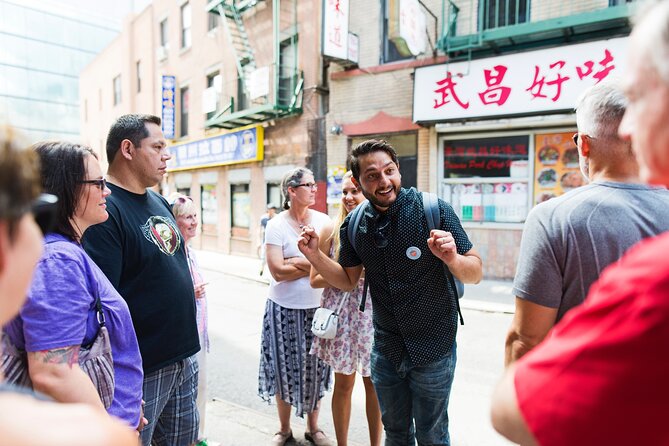
Chinatown can hit different when you eat first. This 3-hour guided walk mixes Chinatown history with generous, mostly sit-down food tastings that make the neighborhood feel personal fast. You’re not just sampling dishes; you’re learning how the area’s “micro neighborhoods” formed as different regional Chinese communities and other groups arrived over the last couple hundred years.
I especially like the sit-down tasting format. It’s a walking tour with actual restaurant time, so you can slow down, ask questions, and focus on what’s in front of you. I also love the consistent tea service—there’s coffee and/or tea at each stop—so your lunch keeps flowing without you having to think.
One thing to plan for: your food options depend on dietary needs. The tour can provide vegetarian and nut-free substitutions, but it can’t accommodate vegan, gluten-free, or other specific allergies, so message your restrictions before you book.
In This Review
- Key things to know before you go
- Chinatown on Foot: Why This Format Works
- Start Smart at Dim Sum Go Go (Your Lunch Map Begins)
- Chatham Square and Doyers Street: History Without the Lecture Tone
- Curry House Roti Canai and the Surprise of Malaysian Comfort
- Alimama Tea and Mochi Donuts: Japan Meets Chinatown
- Columbus Park: The Break That Feels Like Chinatown’s Living Room
- Peking Duck House: Watching Duck Carving Is Part of the Meal
- Golden Manna Bakery: The Egg Custard Tart Finale
- Price and Value: Is $99 Really Fair for This Much Food?
- Guides and the Storytelling Style That Makes It Stick
- Who This Tour Is Best For (and Who Might Want Another Option)
- Should You Book This Chinatown Food and History Tour?
- FAQ
- What does the $99 ticket include?
- How long is the tour?
- Where does the tour start and end?
- What kind of food will I try?
- Can the tour accommodate dietary restrictions?
- Is alcohol included?
- What’s the group size and how do I get there?
Key things to know before you go
- Sit-down indoor tastings set you up for a calmer, more food-focused lunch break
- Tea (and coffee) included at each stop means you don’t need to chase a drink
- Short photo-friendly history stops like Chatham Square and Doyers Street add context fast
- A mix of cuisines beyond “standard Chinese” includes Malaysian curry and Japanese-style mochi donuts
- Small groups (max 18) make it easier to hear the guide and ask questions
Keep tasting downtown: SoHo, Chinatown and Little Italy
- SoHo, Little Italy, and Chinatown Walking Tour in New York
★ 5.0 · 3,153 reviews - NYC: Chinatown & Little Italy Food Tour with 7 Flavorful Tastings
★ 5.0 · 2,733 reviews - Original NYC Guided Food Tour of Chinatown and Little Italy
★ 5.0 · 2,194 reviews - NYC Food Tour: Chinatown and Little Italy
★ 5.0 · 1,090 reviews
Chinatown on Foot: Why This Format Works
New York’s Chinatown can feel like a lot of noise and neon if you walk it at random. This tour is structured so you get your bearings quickly. You start with food, then you layer in the history—so every street and storefront makes more sense after you’ve learned why it’s here.
Also, the pacing is honest. It’s mostly a walking loop, but it’s broken up by indoor meals where you sit, get served, and have time to taste properly. That matters because the best parts of Chinatown food are often the details—texture, spice level, temperature, and how the dish gets eaten. When you’re standing, you miss that.
Finally, the group stays small enough that the guide can keep energy high without turning the tour into a crowd-control exercise. You’ll get the feeling you’re being shown around, not managed through.
Start Smart at Dim Sum Go Go (Your Lunch Map Begins)
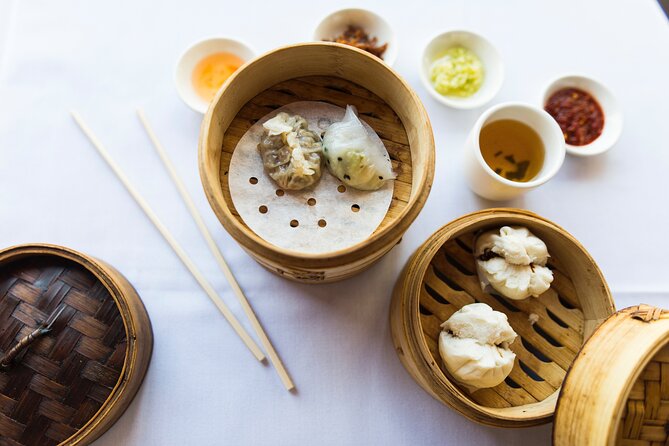
The tour kicks off at Dim Sum Go Go (5 E Broadway). You begin with a multi-course dim sum tasting—seated indoors. This is a smart opener because dim sum isn’t just a meal here. It’s a culture of snack-sized variety, and it’s also a useful way to learn what Chinatown restaurants do best: turning everyday ingredients into bite-sized hits.
You’ll be served classic dim sum items—plus the important part is that it’s described as made to order, not just pre-set platters. That’s the difference between “we ordered a bunch of dumplings” and “you’re tasting a range on purpose.” If you care about how food changes with technique, you’ll appreciate this start.
Practical tip: dim sum can be deceptively filling. Don’t treat this like a warm-up. Eat with intent. You’re building a lunch that includes several stops, and this one sets the tone for what comes next.
Chatham Square and Doyers Street: History Without the Lecture Tone
After your first meal, you shift into streetscape history for a short stretch. Chatham Square is your quick education stop—about how Manhattan’s Chinatown developed and how it became a patchwork of micro neighborhoods over time.
The value here is that you don’t get a single “Chinatown story.” You get the idea of layers: different waves of immigrants, different regional community patterns, and different reasons certain blocks gained reputations. It helps you notice things you’d otherwise walk past—like why certain businesses cluster where they do.
Then comes Doyers Street, a legendary lane that’s been featured in movies and stories. Even if you’ve seen photos, being there changes it. It’s narrow, it feels older than the surrounding streets, and it’s the kind of place where food and folklore overlap. You’ll also be pointed toward iconic restaurants and a cocktail lounge worth remembering for later.
Practical tip: these history stops are short, so keep your phone charged. Take a couple photos now, not five minutes into the next meal.
New York City at street level, a few more walks

Curry House Roti Canai and the Surprise of Malaysian Comfort
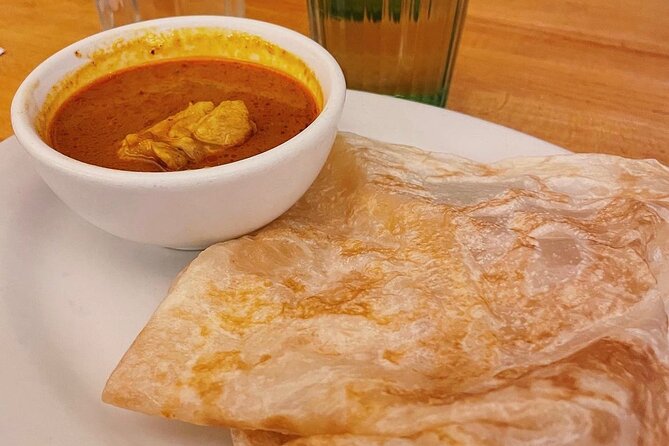
Next up is Curry House for a seated indoor tasting. Here the tour steps slightly outside the usual Chinatown dim sum track. You’ll try Roti Canai, with its flaky, croissant-like layers, served alongside a mild but flavorful curry.
This stop works because it gives your palate a new job. Dim sum trains you to notice steamed vs. fried textures and how sauces work in small bites. Roti Canai introduces a different kind of satisfaction—bread that pulls apart in layers and curry that’s more about warmth and depth than heat.
If you like food that’s comforting but not boring, this is one of the tastings that can make Chinatown feel bigger than you expected. You’re seeing how immigrant communities and cuisines mix and cross-pollinate in the same neighborhood.
Practical tip: when something is flaky and buttery, it disappears fast. Eat it while it’s fresh and take your time with the curry pairing.
Alimama Tea and Mochi Donuts: Japan Meets Chinatown
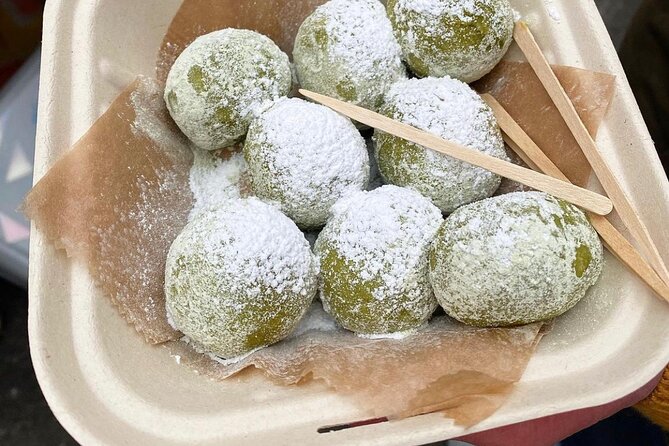
Alimama Tea is the tour’s sweet detour: mochi donuts made with Japanese mochi flour and matcha tea. It’s a trend flavor, but the real point is texture. Mochi-style dough has a chew that feels different from regular doughnuts, so the bite is memorable even if you’re not normally a dessert person.
This stop is also only about 10 minutes, so it’s not “a long line and a wait.” It’s the kind of quick sugar reset that keeps the tour momentum going toward the next full tasting.
If you’re traveling with a sweet tooth, you’ll probably want to save some hunger for this. If you’re not, one donut can still be a good palate cleanser between savory stops.
Columbus Park: The Break That Feels Like Chinatown’s Living Room
Columbus Park is Chinatown’s town square in practice, not just in theory. You’ll take a stroll there while the guide explains how locals gather daily for exercise, for traditional Chinese music and instruments, and for games tied to Chinese culture.
This part helps you understand Chinatown as more than restaurants. It’s a place people use. You see people moving at their own pace, and it makes the neighborhood feel less like a theme park.
Practical tip: this is where walking comfort matters. Wear shoes you can handle for several hours. The tour is short enough to stay fun, but you’ll still be on your feet.
Peking Duck House: Watching Duck Carving Is Part of the Meal
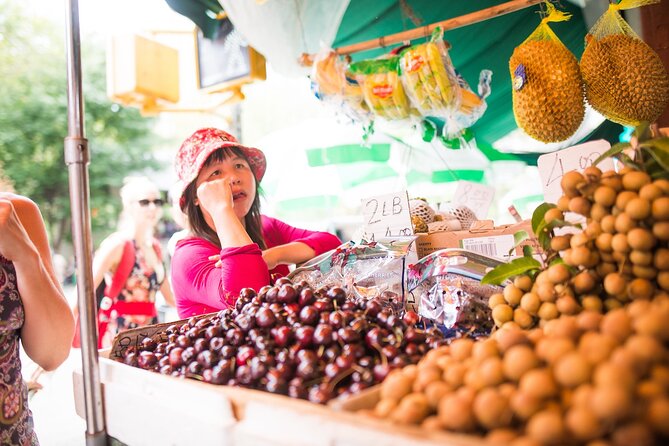
At Peking Duck House, the tour returns to a seated indoor tasting with a show element: you’ll have authentic Peking duck carved right in front of you.
Even if you’ve had duck before, watching it carved changes how you pay attention. It’s not just about the flavor; it’s about how the process connects to the final bite. The guide also shares its history and cooking techniques, which makes this stop more than “duck + photos.”
A bonus here is that you’ll get a house specialty dish in addition to the duck experience. This keeps you from thinking you’re eating the same thing in different forms. You get variety while staying anchored to a famous Chinese culinary icon.
Practical tip: duck skin can be rich. Pace yourself and keep water nearby so you don’t rush the flavors.
Golden Manna Bakery: The Egg Custard Tart Finale
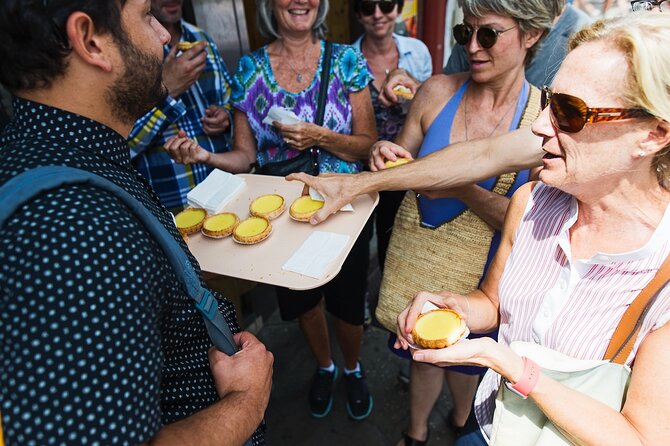
The tour ends outside Golden Manna Bakery (16 Bowery). The final tasting is egg custard tarts: a classic Chinese dessert with a lightly sweet custard inside a flaky, buttery shell.
This finish is well chosen. Custard tarts are sweet, but they also taste like comfort and routine—less about novelty, more about craft. After savory bites and multiple cuisines, this gives your meal a clean landing.
If you still have room (and if you were pacing well, you might), this is the kind of dessert you can buy again afterward. It’s the sort of final bite that makes you want to remember the taste the whole walk home.
Price and Value: Is $99 Really Fair for This Much Food?
At $99 per person for about 3 hours, this tour can feel pricey at first glance—until you tally what’s actually included.
You’re getting a licensed NYC tour guide plus a lunch-style set of tastings across multiple restaurants. Coffee and/or tea are included at each stop, and the portions are described as enough food that you shouldn’t be hungry afterward. You’re also spending time seated indoors at several meals, which means more time eating, less time “just walking and looking.”
Where you get your money’s worth is in the balance:
- you get history context without long lectures
- you get multiple cuisines and textures in one loop
- you get multiple tea/coffee pairings without having to plan drinks
- you get enough food for a hearty lunch, not a snack crawl
If you’re the type who hates overpaying for “two bites and a walking pep talk,” this is designed to feel like a real meal.
Guides and the Storytelling Style That Makes It Stick
A big part of why this tour earns high marks is the guide energy. Some groups are led by guides like Bert, who mixes laughs with history and explains each dish with meaning—not just what it is, but why it matters. Others have tours led by Farshad, noted for being funny and relatable, and even for improv-style flair that can make the group feel instantly comfortable. Chip is another guide you may run into, with a friendly approach that keeps the day light while still covering the neighborhood well.
One practical advantage of good guides: they make you feel like it’s okay to ask questions. When the tour is run well, you don’t just memorize facts. You connect the dots between the food, the streets, and the people who shaped them.
Also, there’s a pattern in the experience: you spend more time seated than you might expect on a walking route. That reduces fatigue and keeps the meal pace pleasant—especially if weather turns.
Who This Tour Is Best For (and Who Might Want Another Option)
This tour is a strong match for you if:
- you love food and want it paired with short, useful history
- you’re visiting for the first time and want Chinatown that feels more grounded
- you want enough tastings to equal lunch, not just a few samples
- you prefer sitting down part of the time instead of constant standing
It may be a weaker fit if:
- you need vegan, gluten-free, or very specific allergy handling (the tour can only do vegetarian and nut-free substitutions)
- you’re extremely picky about trying new foods—there’s enough variety that you’ll want an adventurous mindset
- you don’t like walking at all, since it is still a street tour through several blocks and parks
If you’re traveling with friends or as a couple, the small group size helps you enjoy conversations rather than shouting over a big crowd.
Should You Book This Chinatown Food and History Tour?
Yes, if you want Chinatown that’s more than a list of famous restaurants. The structure works: dim sum first, then streetscape history, then a run of tastings that actually change your palate (bread and curry, mochi donuts, Peking duck, then egg custard tarts). You finish with that satisfied, “okay, I get this neighborhood now” feeling.
Book it especially if you like tours where the guide makes the dishes and the streets connect. With guides like Bert, Farshad, or Chip, you can expect stories that are funny, friendly, and tied to what you’re eating—so you’re not just passing time.
FAQ
What does the $99 ticket include?
The ticket includes a licensed NYC tour guide, all food tastings, and coffee and/or tea served at each restaurant stop.
How long is the tour?
The tour runs about 3 hours.
Where does the tour start and end?
It starts at Dim Sum Go Go, 5 E Broadway, New York, NY 10038, and ends outside Golden Manna Bakery at 16 Bowery, New York, NY 10013.
What kind of food will I try?
You’ll taste dim sum, roti canai with curry, mochi donuts (made with mochi flour and matcha tea), Peking duck, and egg custard tarts, plus tea or coffee at the stops.
Can the tour accommodate dietary restrictions?
The tour can provide vegetarian and nut-free substitutions. It cannot accommodate vegan, gluten free, or other specific food allergies. You should mention dietary restrictions in the booking notes.
Is alcohol included?
Alcoholic beverages are not included. Non-alcoholic drinks and alcohol may be available for purchase at some establishments, and alcohol requires being 21+.
What’s the group size and how do I get there?
The tour has a maximum of 18 travelers. It’s near public transportation, and service animals are allowed.
If you want, tell me your travel dates and any dietary needs (vegetarian vs nut-free, etc.), and I’ll help you decide whether this is the best fit for your Chinatown day.
More Tour Reviews in New York City
- NYC: SUMMIT One Vanderbilt Tickets★ 4.7 · 51,195 reviews
- NYC: Empire State Building Tickets – Observatory & Museum★ 4.7 · 25,757 reviews
- New York City: Statue of Liberty & Ellis Island with Ferry★ 4.6 · 18,683 reviews
- New York City: American Museum of Natural History Ticket★ 4.5 · 15,447 reviews
- Statue of Liberty and Ellis Island Tour: All Options★ 5.0 · 13,571 reviews
New York City, One Block at a Time
- SoHo, Little Italy, and Chinatown Walking Tour in New York★ 5.0 · 3,153 reviews
- Secrets of Grand Central Station Walking Tour New York City★ 5.0 · 1,796 reviews
- Greenwich Village Walking and Food Tasting Tour★ 5.0 · 1,572 reviews
- Artistic, Alternative Greenwich Village Walking Tour★ 5.0 · 971 reviews
- Brooklyn Bridge & DUMBO Neighborhood Tour – from Manhattan to Brooklyn★ 5.0 · 826 reviews
Downtown Bites: SoHo to Little Italy
- SoHo, Little Italy, and Chinatown Walking Tour in New York★ 5.0 · 3,153 reviews
- NYC: Chinatown & Little Italy Food Tour with 7 Flavorful Tastings★ 5.0 · 2,733 reviews
- Original NYC Guided Food Tour of Chinatown and Little Italy★ 5.0 · 2,194 reviews
- NYC Food Tour: Chinatown and Little Italy★ 5.0 · 1,090 reviews
- NYC: Chinatown and Little Italy Food Tour★ 4.7 · 703 reviews
Just in: the newest New York City reviews on our desk


SoHo, Chinatown & Little Italy Tours, compared.
 ★ 5.0SoHo, Little Italy, and Chinatown Walking Tour in New YorkFrom $393,153 reviews
 ★ 5.0Chinatown & Little Italy Food Tour with 7 Flavorful TastingsFrom $992,733 reviews
 ★ 5.0Original NYC Guided Food Tour of Chinatown and Little ItalyFrom $1302,194 reviews
 ★ 4.7Chinatown and Little Italy Food TourFrom $80703 reviews
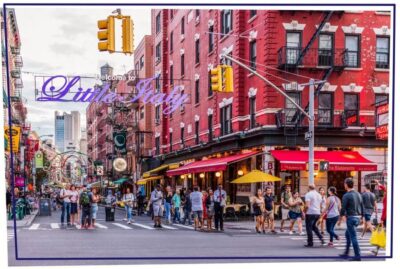 ★ 4.7SoHo, Little Italy, and Chinatown Guided TourFrom $30614 reviews
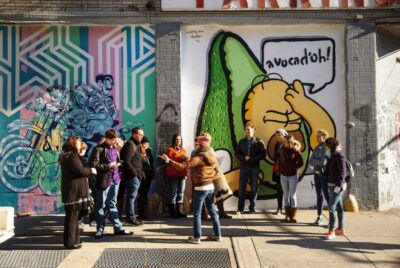 ★ 4.6SoHo, Little Italy, and Chinatown 2-Hour Guided WalkFrom $39566 reviews
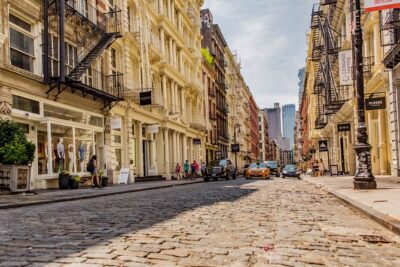 ★ 5.0SoHo, Little Italy, and Chinatown NYC Guided Walking TourFrom $36443 reviews
Browse the lists this tour appears in