
Reviewed · WALL STREET & FINANCIAL DISTRICT TOURS
The Spies of Wall Street
A spy story in the middle of Wall Street works. This Lower Manhattan tour connects Revolutionary War intelligence, Soviet sleeper agents, and covert operations to everyday landmarks you thought you already knew. I like the way the guide turns brick-and-street details into an actual story, and I also like the small, focused group feel—perfect for asking questions instead of getting swept along.
The one thing to think about is logistics: this runs about 1 hour 30 minutes, you’ll be on your feet with a moderate fitness level, and it depends on decent weather since good weather is required.
In This Review
- Why This Spy Tour Feels Different From Usual NYC Walks
- Key Highlights You’ll Actually Care About
- Starting Point at Louise Nevelson Plaza: Get Your Bearings Fast
- Wall Street Stop 1: James Rivington, British Propaganda, and Coded Patriot Messages
- From Prison to Vault: How the Federal Reserve Setting Changes the Story
- Fraunces Tavern Finish: Washington’s Officers and a Landmark Ending
- The Guide Experience: Jerry aka SpyGuideNYC Keeps It Moving
- Dead Drops and Spy Craft: What the Hands-On Moment Likely Does for You
- Price and Value: Is $175 Worth 90 Minutes of Spy Stories?
- Who This Tour Fits Best (and Who Might Prefer Another Plan)
- Practical Tips: Make the Walk Easier and More Fun
- Should You Book The Spies of Wall Street?
- FAQ
- What is the duration of The Spies of Wall Street tour?
- How much does the tour cost?
- Where does the tour start and end?
- Do I need to print a ticket?
- What fitness level do I need?
- Is the tour limited in group size?
- What if the weather is bad?
Why This Spy Tour Feels Different From Usual NYC Walks
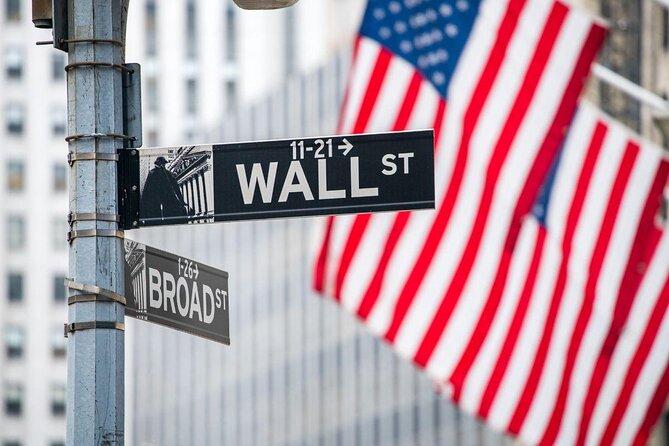
Regular NYC walking tours often skim the surface: big name building, famous date, quick photo, next stop. This one keeps pulling the curtain back. You start with Wall Street and end at Fraunces Tavern, but the emotional arc is the real draw: the tour treats spying as a system—networks, signals, secrecy, and risk—rather than just a list of facts.
What makes it especially fun is how it links three time periods that usually get separated. You get Revolutionary-era intelligence work around Washington’s circle, you get modern-era espionage ideas, and you even hear Soviet-related spy chatter tied to NYC elites. The result is that Lower Manhattan feels like a stage where different “casts” played different roles, all connected by the same geography.
I also appreciate the practical “travel brain” elements woven in. The guide shares trip recommendations and uses photos and trivia to keep you oriented, so you leave with more than just a memory of cool stories. You’ll walk away noticing details you normally ignore—names on buildings, street layouts, and the kinds of places that quietly shaped what people could and couldn’t do.
More history where the money moves
- NYC City Tour: Statue of Liberty, 9/11 Memorial, Wall Street
★ 4.5 · 2,059 reviews - Wall Street Insider Tour with a Finance Professional
★ 4.5 · 660 reviews - Wall Street Insider Tour with a Finance Professional
★ 4.5 · 571 reviews - Manhattan Group Tour Including Wall Street and 911 Memorial
★ 5.0 · 408 reviews
Key Highlights You’ll Actually Care About
- Revolutionary intelligence network stories tied directly to Wall Street sites
- Soviet sleeper agent themes connected to NYC elites and modern espionage
- A chance to get hands-on with a dead drop activity during the tour
- A guided walk capped at 25 travelers, so questions don’t get lost
- Real-world photo and trivia support plus recommendations to help you plan after
- You’ll cover 300+ years of NYC history through the lens of spying
Starting Point at Louise Nevelson Plaza: Get Your Bearings Fast
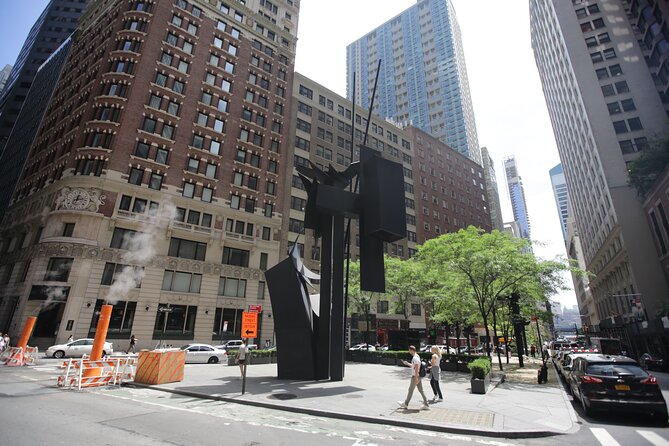
Your tour begins at Louise Nevelson Plaza in New York City (10038). This is one of those meeting spots where you can actually find your group without a scavenger hunt. Since your ticket is a mobile ticket, you’ll want your phone charged and ready before you arrive so check-in doesn’t eat into the first minutes.
The time window matters, too. At about 1 hour 30 minutes, the guide moves at a steady walking pace and keeps the story tight. That’s great if you like a purposeful route. It also means you shouldn’t plan on long photo stops every ten seconds. You can still take pictures, but think of them as moments in the plot, not the plot itself.
This is also a small-group format (max 25), which changes the vibe. It’s easier to hear what the guide is pointing at, and you’re more likely to get direct answers instead of a general lecture. If you enjoy niche topics and want to ask questions mid-walk, this is a good setup.
Wall Street Stop 1: James Rivington, British Propaganda, and Coded Patriot Messages
The first major stop is Wall Street, and the guide doesn’t start with a vague spy concept. You get specifics—locations tied to real Revolutionary-era intrigue.
One of the anchors here is the James Rivington publishing house connection. The story goes like this: Rivington’s operation printed British propaganda, while also secretly sending coded messages to General George Washington’s Patriot spy network. It’s a strong starting point because it shows how espionage often piggybacks on normal business. Publishing sounds public, but code can hide inside the mundane.
From there, you shift to a darker site tied to imprisonment: the notorious Sugar House Prison. Today, that spot is associated with the Federal Reserve Bank of New York. The contrast is part of the impact. A place that once held captives later became wrapped into the modern financial identity of the city—right on the same ground.
You also hear that beneath the building’s surface lies a vault safeguarding one of the world’s largest gold reserves. That detail isn’t just trivia. It helps you understand why secrecy matters in finance as much as it matters in intelligence. Money and information both create leverage, and leverage draws attention.
And then there’s the personal-history angle. The Sugar House Prison story includes Ethan Allen, linked to the Patriot side through the Green Mountain Boys. That kind of named connection makes the site feel less abstract. You’re not just “at a prison.” You’re at a place where specific people were caught in the gears of conflict.
Practical note: Wall Street is busy. Even on a tour, expect crowds around you. The guide’s job is to help you focus on the story while the city does its usual sprint.




From Prison to Vault: How the Federal Reserve Setting Changes the Story
A lot of tours stop once they’ve told you what happened. This tour uses the setting to explain why those events mattered.
When you hear about the Sugar House Prison becoming the Federal Reserve Bank of New York, you start connecting themes: power shifts, institutions evolve, and secrecy often moves into new forms. In the prison era, secrecy could mean keeping prisoners alive or keeping intelligence hidden. In the financial era, secrecy can mean protecting assets, information, and influence.
That’s where this experience can be more than entertainment. It trains your attention. You start reading the city as a set of systems: who controls what, what gets hidden, and how signals move.
And yes, the tour also brings in modern-era spy ideas as you go. One person specifically said the coverage runs from the beginnings of the US into the modern era. That time-jump can feel jarring in other tours. Here, it feels like the same theme wearing different costumes across centuries.
Fraunces Tavern Finish: Washington’s Officers and a Landmark Ending
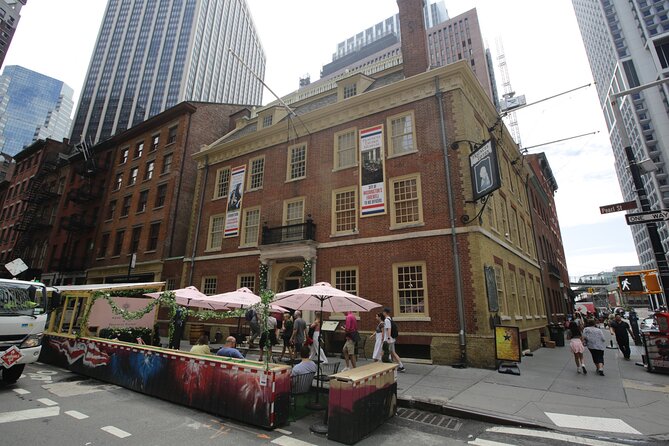
The tour ends at Fraunces Tavern, located at 54 Pearl St. Your guide wraps things up at the front of the historic tavern, and the story lands on a Revolutionary War moment: George Washington meeting with his officers after winning the war.
This ending matters because it’s not just another stop. It’s a tonal closure. You’ve spent time looking at coded messages, prisoners, propaganda, and secret operations. Ending at a place tied to Washington’s post-war leadership gives the whole theme a sense of consequence.
Fraunces Tavern is also identified as a national historic landmark and a museum. So even after the walk, you have an option to keep going on your own. If you want to turn the story into deeper context, this is a logical place to do it because the site is designed for visitors.
The Guide Experience: Jerry aka SpyGuideNYC Keeps It Moving
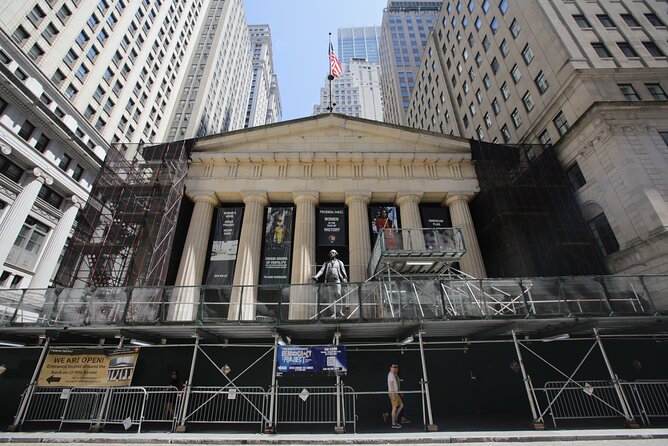
The guide energy is a big part of why this tour earns strong marks. One reviewer highlighted Jerry’s enthusiasm and knowledge, and another mentioned the guide made the route feel fun, exciting, and informative. The vibe you’re aiming for is this: story plus pace plus interaction.
Jerry (also known as SpyGuideNYC) seems to steer the tour like an instructor with theater instincts—enough structure that you don’t feel lost, enough spontaneity that the walk doesn’t feel scripted.
One review also called out a hands-on element: you can be a spy and do a dead drop. That’s exactly the kind of activity that turns “I heard a cool fact” into “I remember how it works.” You don’t need to be a history expert for it to land.
Dead Drops and Spy Craft: What the Hands-On Moment Likely Does for You
Not every tour gives you a physical or participatory piece. Here, the dead drop activity is one of the standout moments people mention. Even with no major details provided, the value is clear: it gives you a lightweight, safe way to experience the concept of secrecy and delayed exchange.
What you’ll likely take away is the mindset behind intelligence work: you’re not just learning about the spy. You’re learning about the system that allows communication without instant trust. Dead drops are all about timing, signal, and controlled exposure—three things that pop up again and again in spy history.
If you like learning by doing, this moment is one of the reasons the tour feels better than a standard landmark walk.
Price and Value: Is $175 Worth 90 Minutes of Spy Stories?
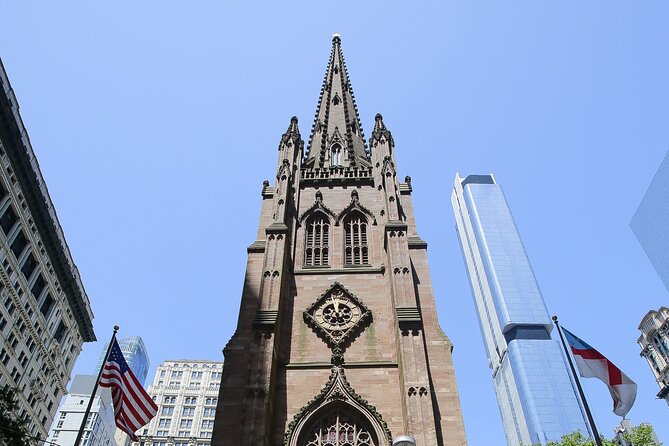
At $175 per person for about 1 hour 30 minutes, this isn’t a bargain-bin tour. But it doesn’t need to be, because the format is different from mass-market sightseeing.
You’re paying for three things:
- Niche content you won’t get on typical Lower Manhattan walks, especially the coded-message angle and the Soviet-related story threads.
- A small group ceiling (max 25) that keeps the guide’s attention from spreading too thin.
- A guided story that uses named locations and specific themes rather than generic “history highlights.”
One reviewer even said it was cool for a New Yorker—meaning locals aren’t bored, which is usually a strong signal about value. If you’ve lived here and feel like you’ve seen the obvious sights, this tour offers a different reading of the same streets.
Still, be honest with yourself. If you only want broad sightseeing or you’re not interested in espionage as a theme, this price might feel steep. But if you’re the type who likes details, code-like stories, and learning why places matter, $175 can start to make sense quickly.
Who This Tour Fits Best (and Who Might Prefer Another Plan)
This experience fits you best if you:
- Like niche topics and story-driven walking tours
- Enjoy Revolutionary-era intrigue and how it connects to later history
- Want to learn from a local guide instead of just scanning plaques
- Enjoy hands-on moments like a dead drop activity
It might be less ideal if you:
- Want only high-level sightseeing with minimal walking or minimal listening
- Dislike spy stories or coded themes
- Struggle with standing and walking for roughly 90 minutes
Also, it’s weather-dependent. The tour requires good weather, so plan for an alternate date if conditions aren’t great.
Practical Tips: Make the Walk Easier and More Fun
Here are a few things that will help you get more out of the experience without guessing beyond the facts you’ve been given.
Wear comfortable shoes. Lower Manhattan walking is not gentle, even when you’re only out for 90 minutes.
Bring your phone battery for a mobile ticket. It’s a simple detail, but it’s one less stress point at the start.
If you’re arriving via public transit, you’re set—this tour is near public transportation. You won’t need a car to make it work.
If you travel with a service animal, service animals are allowed, so you can plan with confidence.
And bring a curious mindset. This is a story tour. If you treat it like a set of clues to connect, you’ll get more out of every stop.
Should You Book The Spies of Wall Street?
Book it if you want Lower Manhattan with a twist. The tour mixes Revolutionary War intelligence, Soviet spy themes, and modern espionage ideas, and it anchors everything in real locations like the Rivington publishing connection, the Sugar House Prison site, and the Fraunces Tavern ending tied to Washington’s officers.
I’d especially recommend it if you’re a New Yorker who thinks you know Wall Street. The point here is not just to see buildings, but to learn why those buildings mattered in secret ways.
Skip it if you’re looking for generic sightseeing or you prefer long museum time. This is a tight walking experience with a story purpose, not a slow sit-down history lecture.
FAQ
What is the duration of The Spies of Wall Street tour?
The tour lasts about 1 hour 30 minutes.
How much does the tour cost?
The price is $175.00 per person.
Where does the tour start and end?
It starts at Louise Nevelson Plaza, New York, NY 10038, and ends in front of Fraunces Tavern at 54 Pearl St, New York, NY 10004.
Do I need to print a ticket?
No. It uses a mobile ticket.
What fitness level do I need?
You should have a moderate physical fitness level.
Is the tour limited in group size?
Yes. There is a maximum of 25 travelers.
What if the weather is bad?
Good weather is required. If the tour is canceled due to poor weather, you’ll be offered a different date or a full refund.
More Tour Reviews in New York City
- NYC: SUMMIT One Vanderbilt Tickets★ 4.7 · 51,195 reviews
- NYC: Empire State Building Tickets – Observatory & Museum★ 4.7 · 25,757 reviews
- New York City: Statue of Liberty & Ellis Island with Ferry★ 4.6 · 18,683 reviews
- New York City: American Museum of Natural History Ticket★ 4.5 · 15,447 reviews
- Statue of Liberty and Ellis Island Tour: All Options★ 5.0 · 13,571 reviews
Where Wall Street Was Built
- NYC City Tour: Statue of Liberty, 9/11 Memorial, Wall Street★ 4.5 · 2,059 reviews
- Wall Street Insider Tour with a Finance Professional★ 4.5 · 660 reviews
- Wall Street Insider Tour with a Finance Professional★ 4.5 · 571 reviews
- Manhattan Group Tour Including Wall Street and 911 Memorial★ 5.0 · 408 reviews
- Private New York Tour: Footsteps of Alexander Hamilton★ 5.0 · 402 reviews
Just in: the newest New York City reviews on our desk




Wall Street & Financial District Tours, compared.
 ★ 4.5NYC City Tour: Statue of Liberty, 9/11 Memorial, Wall StreetFrom $392,059 reviews
 ★ 4.5Wall Street Insider Tour with a Finance ProfessionalFrom $39660 reviews
★ 4.5Wall Street Insider Tour with a Finance ProfessionalFrom $39571 reviews
★ 4.5Wall Street Insider Tour with a Finance ProfessionalFrom $39660 reviews
★ 4.5Wall Street Insider Tour with a Finance ProfessionalFrom $39571 reviews
 ★ 5.0Manhattan Group Tour Including Wall Street and 911 MemorialFrom $39408 reviews
 ★ 5.0Private New York Tour: Footsteps of Alexander HamiltonFrom $60402 reviews
 ★ 4.6Wall Street Tour with 9/11 Memorial and Statue FerryFrom $39367 reviews
 ★ 4.9Wall Street and Financial District Walking TourFrom $34284 reviews
 ★ 5.0How Money Was Made Wall Street Walking TourFrom $49185 reviews
Browse the lists this tour appears in