
Reviewed · WALL STREET & FINANCIAL DISTRICT TOURS
How Money Was Made Wall Street Walking Tour
Wall Street can feel like a blur of towers. This short walk gives it a storyline, linking big money to the city’s early politics and trade. I especially like the guide-led context—for example, Jess’s background as a lawyer with the SEC—and the fact that the tour keeps you moving without forcing you into a headset setup.
My other big win: you get a smart mix of iconic stops and less-famous “why it matters” landmarks. One thing to consider is that key sites like the NYSE aren’t entered, so you’ll be seeing major buildings from the outside and using stories to do the heavy lifting.
In This Review
- Key Things to Know Before You Go
- A Wall Street Walk That Treats Finance Like a City Story
- From Dutch Plain to Modern Skyscrapers: Bowling Green and Battery Park
- The Alexander Hamilton Custom House: Where Trade Meets Architecture
- Fraunces Tavern and Wall Street’s Older Political Layer
- The Bull, Then the Stock Exchange Block: Seeing Wall Street Without Entering
- Federal Reserve Vaults and Trinity Church’s Hamilton Burial
- Price, Time, and Group Size: Does $49 Feel Fair?
- Who This Wall Street Walking Tour Is Best For
- Should You Book It?
- FAQ
- How long is the Wall Street walking tour?
- What does the tour cost?
- Where does the tour start and end?
- Is the NYSE included?
- What kind of ticket do I receive?
- What language is the tour offered in?
- How large are the groups?
- What’s included in the tour price?
- What should I know about cancellation?
Key Things to Know Before You Go
- 2 hours, on foot: a tight route that fits into a busy NYC sightseeing day
- Licensed guide with finance/politics focus: storytelling built around economics and governance
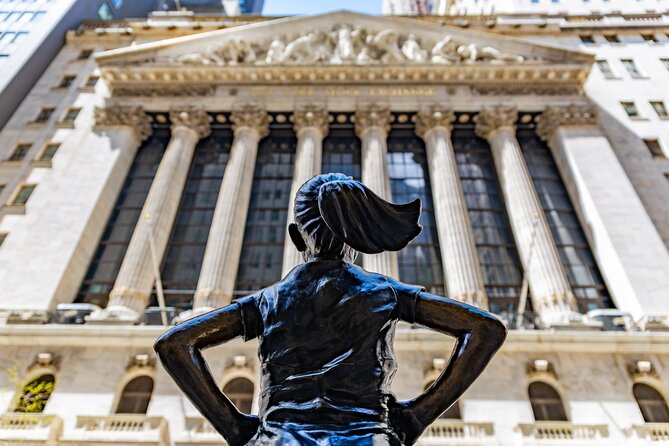
- No NYSE entry: you’ll learn from the street-level view of the Stock Exchange and nearby landmarks
- Alexander Hamilton Custom House exterior: a Hamilton-era trade symbol tied into the building’s later museum use
- Federal Reserve vaults from the outside: you’ll hear what’s stored underground, including foreign-held gold
More history where the money moves
- NYC City Tour: Statue of Liberty, 9/11 Memorial, Wall Street
★ 4.5 · 2,059 reviews - Wall Street Insider Tour with a Finance Professional
★ 4.5 · 660 reviews - Wall Street Insider Tour with a Finance Professional
★ 4.5 · 571 reviews - Manhattan Group Tour Including Wall Street and 911 Memorial
★ 5.0 · 408 reviews
A Wall Street Walk That Treats Finance Like a City Story
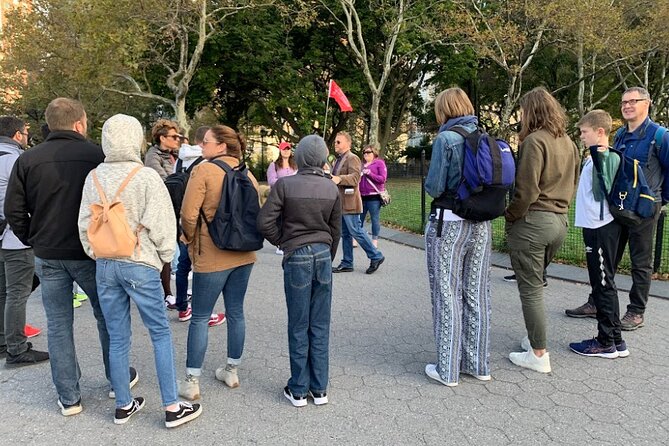
This tour is for people who want Wall Street with context, not just photos. In about two hours, you’ll connect the dots between commerce, government, and how power in New York moved from early trade routes to modern finance. If you’re interested in how political decisions shape markets, this format fits perfectly.
I also like the way the tour keeps things practical. You’re not asked to spend time lining up or paging through a guidebook while you’re on the sidewalk. And from what I’ve seen about how guides run it, you’re likely to get clear explanations for the full walk—Jess and Maia are names that come up for strong, structured guiding and staying easy to follow.
The one tradeoff is expectations. If you’re hoping for a highly controlled “inside-the-institutions” day, you’ll be a bit frustrated. The payoff is that you learn to read the neighborhood itself—especially the architecture and landmarks that explain how money became a public force.
From Dutch Plain to Modern Skyscrapers: Bowling Green and Battery Park
You start in the area that’s basically the prequel to Wall Street: Bowling Green. It’s New York City’s oldest park, and the Dutch name for the area—“the Plain”—is a great clue that this wasn’t always a finance district. Here, the ground beneath modern office life was once used for practical city purposes like meetings, parades, and even a cattle market.
That grounding matters. When a guide talks about Bowling Green this way, it helps you understand something important: the financial district didn’t appear out of nowhere. It grew on a real working city, and that’s why early public spaces show up as key story stops.
Then you move to Battery Park, which has worn many hats for centuries. You’ll hear how it served as a defense zone, a recreation area, and an immigration center over a long stretch of time. That’s a useful angle because finance in New York isn’t only about Wall Street—it’s also about people, movement, and trade flow.
Battery Park also includes a stop for the Netherland Monument, which gives you a natural pause point before you hit the more famous Wall Street visuals. It’s a nice way to shift from “early city” to “symbolic money” without feeling like you’re skipping steps.
The Alexander Hamilton Custom House: Where Trade Meets Architecture
One of the most interesting parts of the route is the exterior look at the Alexander Hamilton Custom House. Even though you don’t go inside, the building’s presence carries the message. It’s tied to the Beaux-Arts style and to the idea of customs and commerce—meaning the place where goods were processed, measured, and taxed, which is a big deal in any economy.
You’ll also see this in the context of the National Museum of the American Indian, since the exterior stop connects to the museum’s site. That pairing is worth noticing because it reminds you that a city’s wealth and its institutions can’t be separated from the people who lived here before and alongside the system. The guide context helps you hold both ideas at once: finance built cities, and cities also shaped communities in complicated ways.
This stop is not about chasing a single collectible fact. It’s about learning to see how power gets built into stone. Once you start noticing that, the rest of the walk becomes easier to follow.
New York City at street level, a few more walks


Fraunces Tavern and Wall Street’s Older Political Layer

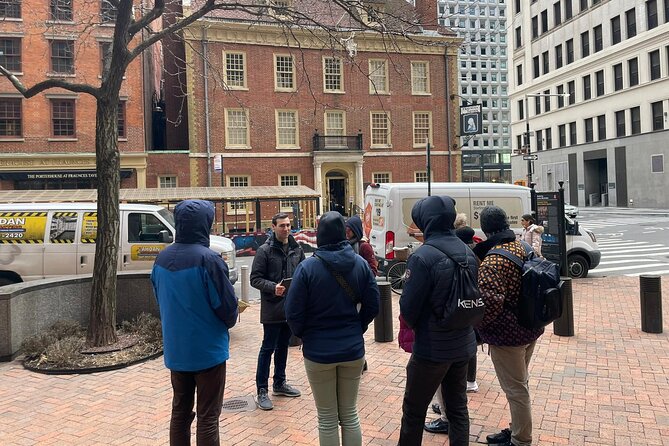
Next up is the exterior of Fraunces Tavern Museum, and this is where the tour gets especially good if you care about politics. Fraunces Tavern is linked to key Revolutionary-era moments: it served as a headquarters for George Washington, it hosted peace negotiations with the British, and later it housed federal offices in the Early Republic.
Even from the sidewalk, the story changes how you read the street. You stop thinking of Wall Street as only a modern machine and start seeing it as the descendant of a political world. In the early years of the country, governance, negotiation, and public trust were part of the economy—not separate from it.
If you’ve ever wondered why some financial systems feel moral and political at the same time, this is one of the reasons. Institutions develop in an argument over what the public is owed, what the government should do, and what commerce is for.
The Bull, Then the Stock Exchange Block: Seeing Wall Street Without Entering
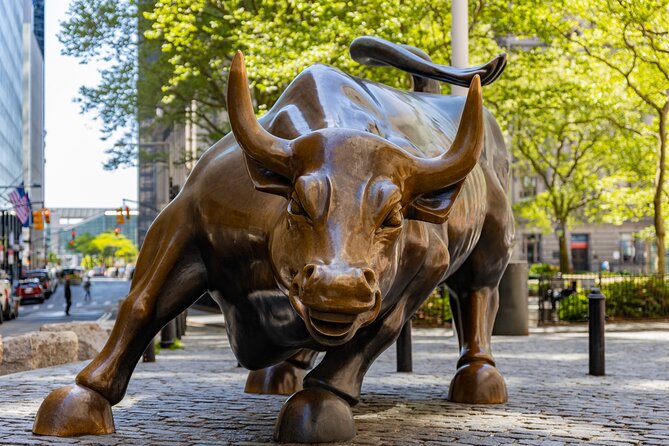
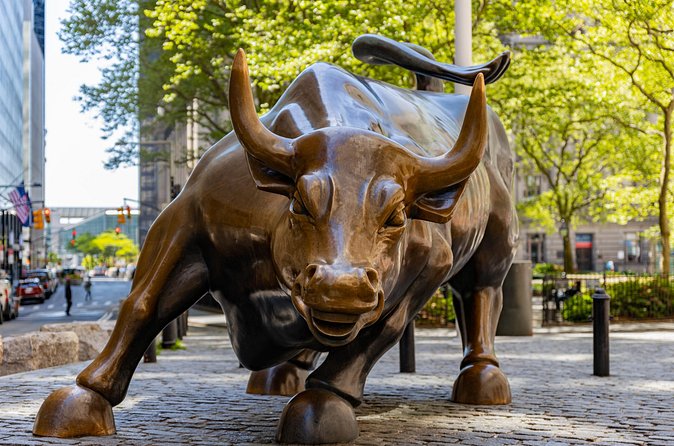
You’ll hit the Charging Bull next. Yes, it’s the famous photo stop. But what makes it work on this tour is how you’re guided beyond the obvious symbolism. The bull is presented as a sign of resilience and enduring power—basically the kind of message Wall Street likes to project, especially during shaky times.
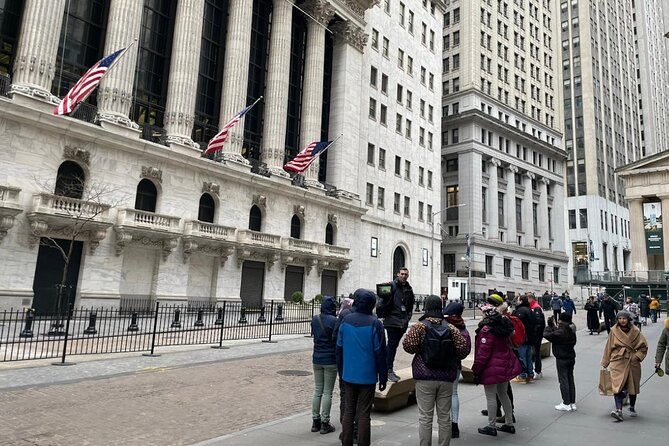
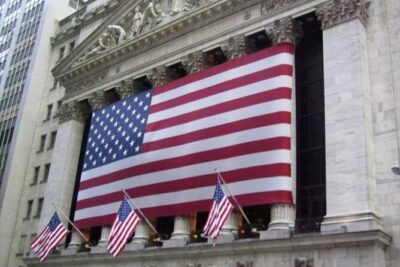
Then the tour shifts to the main exterior sweep along Wall Street. You’ll get to see key landmarks including the New York Stock Exchange (NYSE), Federal Hall, Trinity Church, and the JP Morgan building. And importantly, you’ll learn from these views without being asked to pay for entry or fight your way into a ticketed site.
That “no inside visit” approach has a real benefit. If you’re short on time, it prevents the most common NYC problem: spending hours trying to reach the one place you wanted, only to miss the connections around it. Here, your guide keeps the focus on what each building represents in the broader money-and-government story.
Also, you can still feel the scale. Even without entering the NYSE, standing near Federal Hall and Trinity Church gives you a sense of how close finance has always been to civic identity and public ceremony.
Federal Reserve Vaults and Trinity Church’s Hamilton Burial
The route finishes with an exterior look at the Federal Reserve Bank of New York. The standout detail you’ll hear is about what’s underground: the building includes a subterranean vault system where the largest reserve of foreign-held gold bullion is kept. That’s the kind of fact that makes the Federal Reserve feel less abstract and more physical—power stored, protected, and managed.
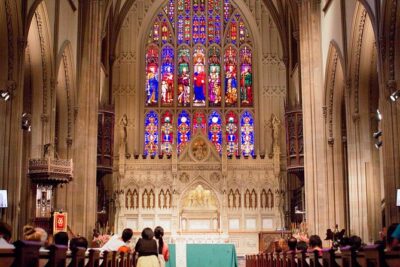
Finally, the tour ends at Trinity Church, which ties into a very specific piece of Hamilton lore. You’ll hear that Trinity Church is the oldest congregation in NYC and that it’s the burial site of Alexander Hamilton—the father of the financial system.
That ending lands well because Hamilton sits at the center of so many themes from the earlier stops. You see his influence echoed in the custom house story, in the political negotiation world around Fraunces Tavern, and then in the symbolism of how money becomes national infrastructure. It turns a “walk past famous buildings” day into something that feels like a timeline.
Price, Time, and Group Size: Does $49 Feel Fair?

At $49 per person for about two hours, this tour is priced like a thoughtful guided walk, not like a museum day. You’re paying mainly for a licensed guide and for the skill of turning busy landmarks into something you can actually remember later.
You also avoid a lot of common “hidden cost” time. There’s no NYSE entry included, and several stops are outside with free admission, so your day stays predictable. You get an organized route, a set narrative, and a cap of up to 30 people, which usually helps the guide manage questions and keep the group together.
Two small value signals stand out from how guides are described. First, guides like Jess (SEC lawyer background) can explain finance in plain language without turning it into a lecture. Second, Maia’s style is highlighted for being clear and question-friendly—plus a tour format that doesn’t rely on headphones, which can be a big comfort upgrade on long walks.
If you’re trying to squeeze in Wall Street during a trip that already has long museum days, this is one of the more cost-effective ways to get real meaning out of the Financial District.
Who This Wall Street Walking Tour Is Best For
This is a strong match if you:
- enjoy politics plus economics and want to connect them on the street
- like short walking tours that still feel like more than “look here, photo there”
- want a guided way to understand famous places like Federal Hall, the NYSE area, and the Federal Reserve zone
It’s less ideal if you want lots of indoor time or ticketed access to major financial institutions. Since the NYSE isn’t entered, your best experience comes from listening closely to the guide and paying attention to what’s right in front of you.
Practical note: the tour is marked for moderate physical fitness, so wear comfortable shoes and plan for steady walking. The route starts at 1 Bowling Green, New York, NY 10004 and ends near Trinity Church at 89 Broadway, so it’s designed as a through-walk rather than a loop.
Should You Book It?
I’d book it if you’re the type of traveler who wants Wall Street to make sense, not just look impressive. For $49 and about two hours, you get a guided storyline that connects Hamilton-era politics, trade architecture, and modern financial power, including the Federal Reserve vault fact that most people never hear until it’s too late.
Skip it only if your priority is to enter the NYSE or spend most of your time indoors. Otherwise, this is one of the cleaner ways to earn real understanding from a compact NYC day—especially if you like your finance delivered with clear explanations and room for questions.
FAQ
How long is the Wall Street walking tour?
The tour lasts about 2 hours.
What does the tour cost?
The price is $49.00 per person.
Where does the tour start and end?
It starts at 1 Bowling Green, New York, NY 10004 and ends at Trinity Church, 89 Broadway, New York, NY 10006.
Is the NYSE included?
No. The tour includes the NYE area/exteriors, but entry to the NYSE is not included.
What kind of ticket do I receive?
You receive a mobile ticket.
What language is the tour offered in?
The tour is offered in English.
How large are the groups?
The tour has a maximum of 30 travelers.
What’s included in the tour price?
Included items are a licensed guide, and stops featuring the Netherland Monument in Battery Park, the Alexander Hamilton Custom House, Bowling Green Park, and Wall Street/NYSE exteriors (without entry).
What should I know about cancellation?
You can cancel for a full refund if you cancel up to 24 hours in advance of the experience’s start time.
More Tour Reviews in New York City
- NYC: SUMMIT One Vanderbilt Tickets★ 4.7 · 51,195 reviews
- NYC: Empire State Building Tickets – Observatory & Museum★ 4.7 · 25,757 reviews
- New York City: Statue of Liberty & Ellis Island with Ferry★ 4.6 · 18,683 reviews
- New York City: American Museum of Natural History Ticket★ 4.5 · 15,447 reviews
- Statue of Liberty and Ellis Island Tour: All Options★ 5.0 · 13,571 reviews
New York City, One Block at a Time
- SoHo, Little Italy, and Chinatown Walking Tour in New York★ 5.0 · 3,153 reviews
- Secrets of Grand Central Station Walking Tour New York City★ 5.0 · 1,796 reviews
- Greenwich Village Walking and Food Tasting Tour★ 5.0 · 1,572 reviews
- Artistic, Alternative Greenwich Village Walking Tour★ 5.0 · 971 reviews
- Brooklyn Bridge & DUMBO Neighborhood Tour – from Manhattan to Brooklyn★ 5.0 · 826 reviews
Where Wall Street Was Built
- NYC City Tour: Statue of Liberty, 9/11 Memorial, Wall Street★ 4.5 · 2,059 reviews
- Wall Street Insider Tour with a Finance Professional★ 4.5 · 660 reviews
- Wall Street Insider Tour with a Finance Professional★ 4.5 · 571 reviews
- Manhattan Group Tour Including Wall Street and 911 Memorial★ 5.0 · 408 reviews
- Private New York Tour: Footsteps of Alexander Hamilton★ 5.0 · 402 reviews
Just in: the newest New York City reviews on our desk




Wall Street & Financial District Tours, compared.
 ★ 4.5NYC City Tour: Statue of Liberty, 9/11 Memorial, Wall StreetFrom $392,059 reviews
 ★ 4.5Wall Street Insider Tour with a Finance ProfessionalFrom $39660 reviews
★ 4.5Wall Street Insider Tour with a Finance ProfessionalFrom $39571 reviews
★ 4.5Wall Street Insider Tour with a Finance ProfessionalFrom $39660 reviews
★ 4.5Wall Street Insider Tour with a Finance ProfessionalFrom $39571 reviews
 ★ 5.0Manhattan Group Tour Including Wall Street and 911 MemorialFrom $39408 reviews
 ★ 5.0Private New York Tour: Footsteps of Alexander HamiltonFrom $60402 reviews
 ★ 4.6Wall Street Tour with 9/11 Memorial and Statue FerryFrom $39367 reviews
 ★ 4.9Wall Street and Financial District Walking TourFrom $34284 reviews
 ★ 5.0Wall Street and Financial District Walking TourFrom $34116 reviews
Browse the lists this tour appears in