
Reviewed · WALL STREET & FINANCIAL DISTRICT TOURS
Financial District NYC Architecture Walking Tour
Skyscrapers and sacred sites in one walk. This 2-hour architecture route stitches together Battery Park, major government buildings, and the 9/11 Memorial area with local context and plenty of time to look up.
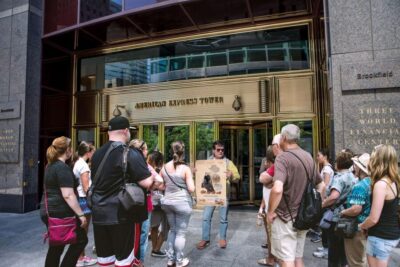
I especially like that the tour includes Ground Zero landmarks and keeps the group small enough to ask questions. Two other highlights: you’ll have professional headsets for every stop, and you also get a professional photo to take home.
One possible drawback: it’s not recommended if you have problems walking, because you’ll cover distance on city sidewalks for the full length of the tour.
In This Review
- Key things to know before you go
- Financial District starts at the Glass Carousel: Battery Park and beyond
- Trinity Church NYC: the 1846 anchor in a modern skyline
- Federal Hall and the government buildings vibe you can actually feel
- The Woolworth Building: why 1912 still teaches skyline design
- One Chase Manhattan Plaza and its public-facing modernism
- Fulton Center and the Gehry moment at 8 Spruce Street
- The National 9/11 Memorial & Museum: Ground Zero with time to absorb
- St. Nicholas Greek Orthodox Church and Calatrava’s 2020 statement
- Perelman Performing Arts Center (REX, 2023) and why culture matters here
- Liberty Park and the World Trade Center skyline: what you’re seeing and why
- Ending at the Oculus Path Station: a 2015 finish that still feels functional
- Price and value: what $59 buys you in downtown real life
- Who this tour suits best (and who should think twice)
- Should you book this Financial District architecture tour?
- FAQ
- How long is the Financial District NYC Architecture Walking Tour?
- How much does the tour cost?
- Where do I meet the guide for the tour?
- Where does the tour end?
- Is the tour group limited in size?
- Are admission tickets included for the stops?
- Does the tour include headsets?
- Is a professional photo included?
- What should I know about cancellation?
Key things to know before you go
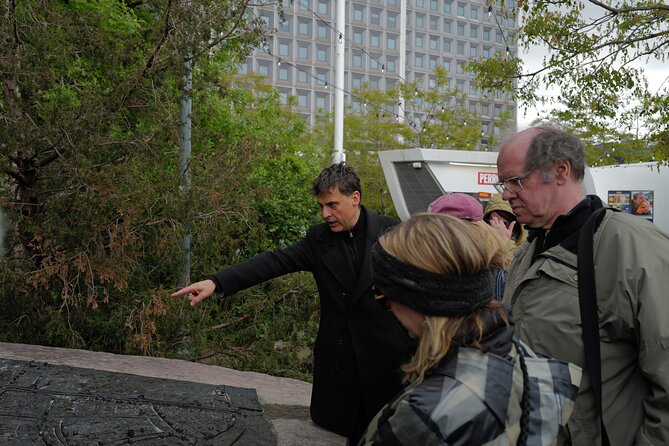
- Max 15 travelers means you won’t get lost in a crowd.
- Professional individual headsets help you hear the guide clearly on busy streets.
- Ground Zero included, not just a quick pass-by.
- Architecture stops across eras, from 1840s church and halls to 2010s transit design.
- A pro photo gives you a real trip memento, not just phone pics.
- Admission is free at the listed stops, so the focus stays on the walk and the stories.
More history where the money moves
- NYC City Tour: Statue of Liberty, 9/11 Memorial, Wall Street
★ 4.5 · 2,059 reviews - Wall Street Insider Tour with a Finance Professional
★ 4.5 · 660 reviews - Wall Street Insider Tour with a Finance Professional
★ 4.5 · 571 reviews - Manhattan Group Tour Including Wall Street and 911 Memorial
★ 5.0 · 408 reviews
Financial District starts at the Glass Carousel: Battery Park and beyond
I like tours that help you see what you’re walking past. This one starts at the Glass Carousel at Battery Park, right where the waterfront energy meets the city’s older landmarks. It’s a smart way to begin, because Battery Park is both an entry point to lower Manhattan and a good place to orient yourself before you hit the dense blocks of the Financial District.
You’ll meet the licensed guide there. The tour info names Dr. Ivan Shumkov as a starting guide, and the experience is designed to feel conversational rather than lecture-only. If you like asking questions as you go, this format is built for it.
It also matters that the tour includes professional headsets for each guest. In a place like this—where tour groups often sound like a muffled whisper over traffic—clear audio turns the whole walk from sightseeing into learning. And since the group size is capped at 15, those headsets actually get used well instead of becoming background noise.
Trinity Church NYC: the 1846 anchor in a modern skyline
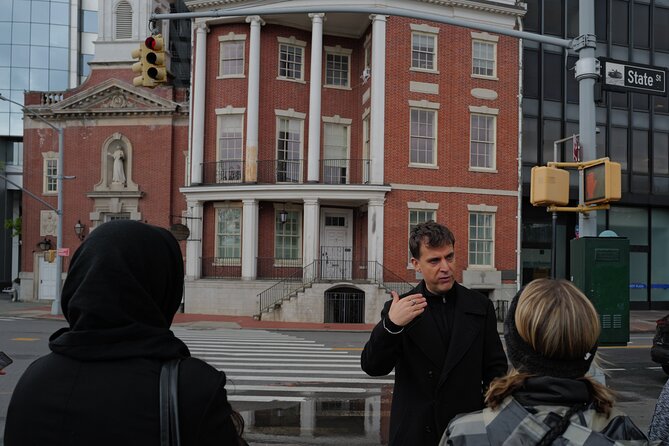
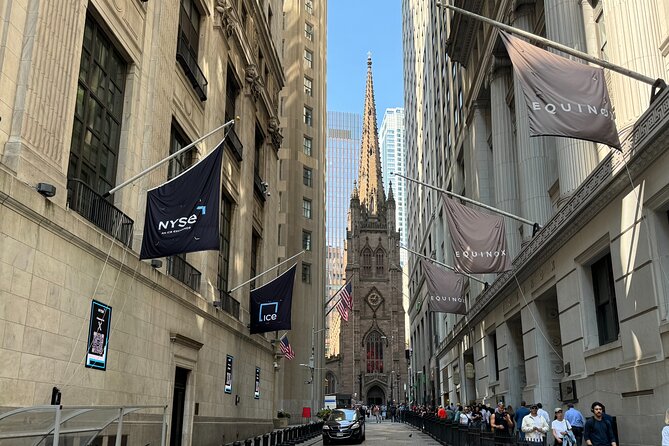
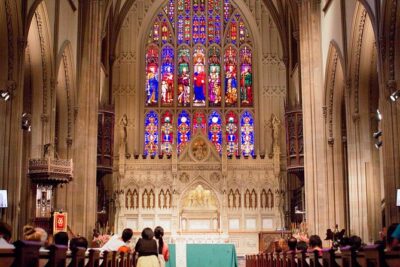
From Battery Park, you head to Trinity Church (from 1846). This is one of those stops where the point isn’t just the building—it’s the contrast. You’re moving from park-and-waterfront views to one of the older religious landmarks that helped define downtown’s early identity.
What I like about this stop is the way a guide can connect architecture to purpose. Trinity Church isn’t just a pretty facade in the middle of offices. It’s a reminder that before the Financial District became a sea of glass and stone, downtown also had civic and spiritual centers that shaped daily life.
If you’re the type who reads about downtown history but gets bored by timelines, this is a good moment to reset. The guide can make the dates feel practical: why an 1846 church still matters in the 21st-century neighborhood you’re seeing right now.
Federal Hall and the government buildings vibe you can actually feel
Next up is Federal Hall (by Town & Davis, from 1842). Even if you don’t know the details yet, this stop helps you understand that the Financial District wasn’t only about business. It was also about government and national identity.
Then you’re pointed toward the Federal Reserve building by York & Sawyer from 1924, which stores most of the gold in the world. Even if you’re not going inside, this is one of the most memorable kinds of architecture moments: a building with a job so specific you can’t help but wonder how its design supports that mission.
A quick warning for expectations: with architecture walks, you often get viewpoints and close-looking time more than full interior tours. Here, the tour keeps the focus on seeing, hearing, and connecting the buildings to the roles they play.
New York City at street level, a few more walks

The Woolworth Building: why 1912 still teaches skyline design
You’ll then see the Woolworth Building (Cass Gilbert, from 1912). This is a “look up” stop. The Financial District is full of tall buildings, but early skyscraper design is where you start to understand how the city learned to build upward.
I like when architecture tours don’t treat skyscrapers like interchangeable shapes. Woolworth is a reminder that early on, designers were already thinking about identity, symbolism, and how a building announces itself from street level.
This is also a stop where you’ll probably want a few minutes of quiet staring. The guide helps, but the building does the convincing if you slow down for a moment.
One Chase Manhattan Plaza and its public-facing modernism
After early skyscraper energy, the tour jumps forward to One Chase Manhattan Plaza (by Gordon Bunshaft of SOM, from 1960). This is a good counterpoint because it shows you mid-century corporate architecture when downtown was becoming a true business machine.
The tour mentions seeing its public art and architecture, and that’s important. Corporate buildings don’t always feel welcoming, but when public art and design details are included, you get a different perspective: this is architecture that was meant to operate in a public realm, not just inside office towers.
If you like architecture that has a “city behavior” aspect—how buildings treat the street—this stop gives you more to notice than just height. And because the group is small, you can pause for questions without losing the whole momentum.
Fulton Center and the Gehry moment at 8 Spruce Street
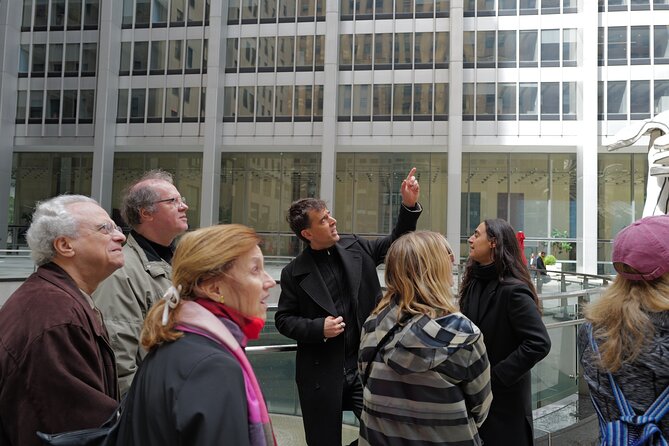
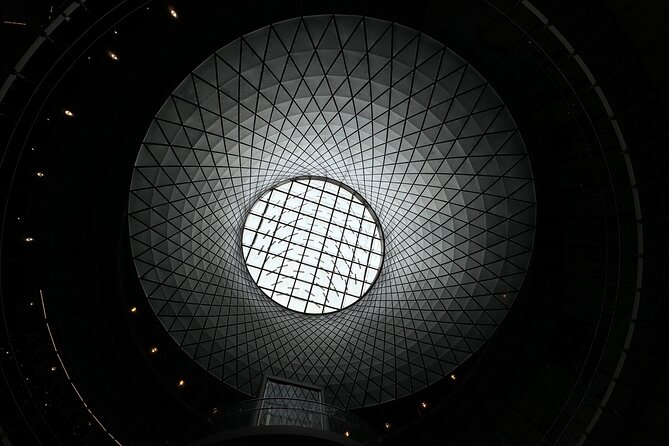
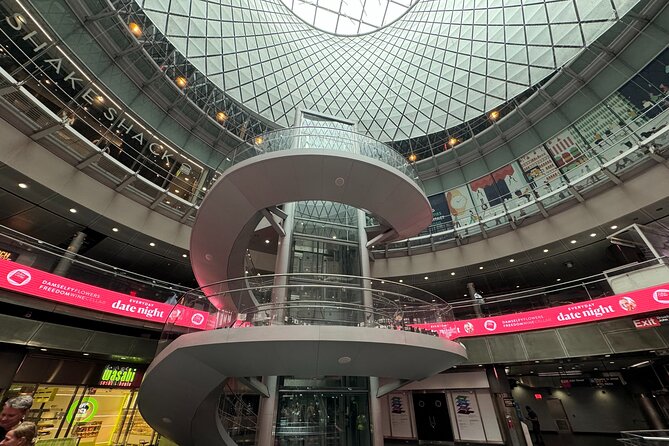
Downtown transit architecture can be hard to appreciate while you’re rushing. But this walk is built around noticing. You’ll visit Fulton Center (by Grimshaw, from 2015), a modern station space that’s worth seeing even if you don’t ride the subway that day.
Then comes By New York by Frank Gehry at 8 Spruce Street (from 2010). Gehry’s work is the kind of thing that can feel like it belongs in an art museum. Seeing it in the street-level context of the Financial District makes it click: great art here doesn’t interrupt the city—it becomes part of the city’s visual vocabulary.
A practical tip: if you tend to miss street art and sculpture because you’re staring at buildings, use this stop as your reset. Look at how the work sits relative to pedestrian flow and nearby structures.
The National 9/11 Memorial & Museum: Ground Zero with time to absorb
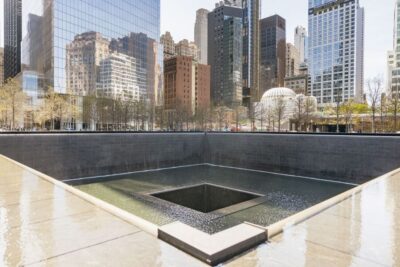
Then the tour reaches The National 9/11 Memorial & Museum (by Snohetta, Michael Arad, Peter Walker, from 2011). This is the emotional heart of the walk, and it’s also where a good guide matters most.
I’m glad this tour doesn’t treat the site like a checkbox. It’s included as part of the overall narrative of downtown—before, during, and after—so you understand the architecture in the context of real events and real rebuilding.
You’ll have time to visit the memorial and museum, and while the walk is still efficient, the tone changes here. Expect reflective looking, not just photos. If you’re traveling with teens or skeptical adults, this stop can win them over because it connects design decisions to human meaning.
St. Nicholas Greek Orthodox Church and Calatrava’s 2020 statement
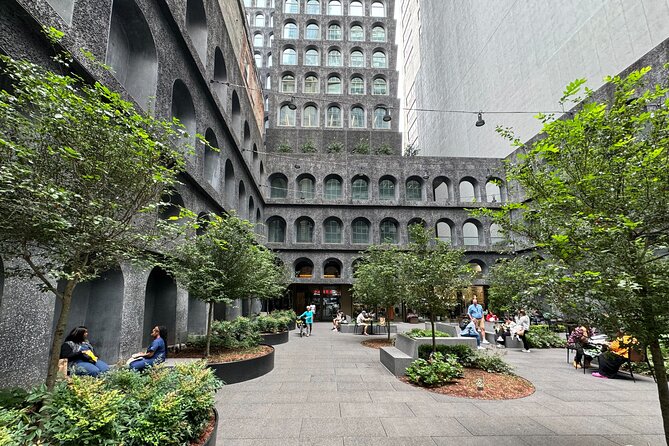
A modern church stop might not sound like “architecture tour fuel,” but Saint Nicholas Greek Orthodox Church and National Shrine (by Santiago Calatrava, from 2020) is absolutely worth the pause. Calatrava’s work tends to feel like it has motion even when it’s standing still, and this is a strong example of why contemporary architecture belongs in the same conversation as the older downtown landmarks.
This is one of those moments where the guide can help you read the building like a design language—what it suggests, how it fits in, and why a 2020 structure belongs among 19th- and early 20th-century neighbors.
Since the tour gives you a short stop here, I recommend you decide in advance what you want to notice: structural lines, the relationship to nearby streets, or the overall silhouette. Pick one focus and you’ll enjoy it more.
Perelman Performing Arts Center (REX, 2023) and why culture matters here
Next you’ll see the Perelman Performing Arts Center (by REX, from 2023). This isn’t just a modern addition; it’s proof that the Financial District area isn’t frozen in time. Downtown keeps changing, and the arts are part of that change.
I like this stop because it shifts the story from “icons and institutions” to “life after work.” The office district needs cultural anchors, and seeing a new major arts venue helps you understand the neighborhood as something people still use—especially if you’re planning dinner or a show later.
Liberty Park and the World Trade Center skyline: what you’re seeing and why
In Liberty Park, you’ll see multiple World Trade Center buildings—WTC1 (David Childs, SOM, from 2015), WTC3 (Richard Rogers, from 2018), WTC4 (Fumihiko Maki, from 2015), and WTC7 (David Childs, SOM, from 2015). The tour also references WTC2 and WTC5 as in-process at the time of the information provided, so you may see construction context depending on current conditions.
This stop is where the architecture stops start to feel like a unified story. The skyline here isn’t just an assortment of tall buildings. It’s a timeline of how downtown recovery shaped what got built, who designed it, and how the area’s identity evolved.
If you’re sensitive to emotional sites, it helps to let yourself feel what you feel here. Then let the guide bring it back to design choices, because that’s what makes this kind of walk useful rather than just moving through sadness.
Ending at the Oculus Path Station: a 2015 finish that still feels functional
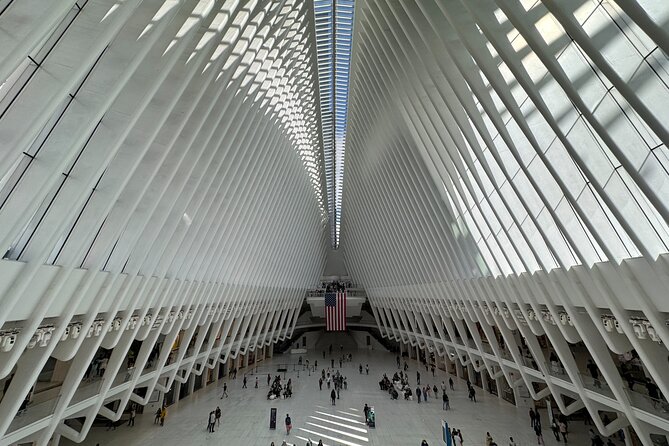
The walk ends inside the Oculus Path Station (Santiago Calatrava, from 2015) at the World Trade Center. This is a great way to close an architecture tour because you experience the end product of modern design: transit that’s meant to work while looking like a landmark.
The tour provides a clear end point at the Oculus Path Station, so you’re not left figuring out where you’ll land. That matters when you’re planning the rest of your day.
If you’re finishing and heading to lunch, shopping, or an appointment, this location also works well because it’s a central transit hub. Even if you’re not taking a train right away, you’ll likely feel better about your navigation when the tour ends at a known landmark.
Price and value: what $59 buys you in downtown real life
At $59 per person for about 2 hours, this is one of those tours that makes sense if you value time and clear guidance. You’re paying for a licensed guide, the small-group format (maximum 15), and included individual headsets—a big deal when streets are loud and stops are close together.
Admissions are listed as free at the stops, which is part of the value equation. It means your money isn’t getting eaten by ticket lines while you’re trying to learn architecture stories.
Also, the tour includes a professional photo. That’s not just a nice bonus. A pro photo helps you remember the day without spending your trip hunting for perfect angles while everyone else is already moving on.
One other value signal: the tour is booked about 27 days in advance on average, which usually means demand is steady for this specific route.
And yes, tips aren’t included—so if you want to reward great guiding, plan for that.
Who this tour suits best (and who should think twice)
This walk is a good fit if you:
- enjoy architecture and want it explained in plain language
- want Ground Zero included without turning it into a rushed stop
- like small groups where you can ask questions
- want a serious experience that still works for younger travelers (it’s been described as teen-friendly)
It may not be your best choice if:
- you have problems walking, since the tour is designed for guests who can manage a steady pace for the full duration
Also, if you hate being around crowds, the max-15 limit is a big plus. If you love city energy and don’t mind crowds, you’ll still appreciate the pacing, because the stops are short and purposeful.
Should you book this Financial District architecture tour?
I’d book it if your goal is to get your bearings fast and learn what you’re looking at as you go. The route covers a smart sweep of downtown: waterfront Battery Park, classic 1840s civic anchors, key early skyscraper design, mid-century corporate architecture, then modern transit and contemporary cultural landmarks—ending at a Calatrava 2015 finish.
The biggest reasons to choose it are practical: headsets, small group size, Ground Zero included, and that pro photo. For $59, that mix is good value when you want a guide to do the connecting between buildings and meaning.
FAQ
How long is the Financial District NYC Architecture Walking Tour?
It lasts about 2 hours.
How much does the tour cost?
The price is $59.00 per person.
Where do I meet the guide for the tour?
You meet at the Glass Carousel at Battery Park, near Castle Clinton National Monument.
Where does the tour end?
It ends at the Oculus World Trade Center, at the PATH Station.
Is the tour group limited in size?
Yes. The maximum group size is 15 travelers.
Are admission tickets included for the stops?
Admission is listed as free for the stops included on the tour.
Does the tour include headsets?
Yes. Professional individual headsets are included for each guest.
Is a professional photo included?
Yes. The tour includes a professional photo to remember your trip.
What should I know about cancellation?
You can cancel for a full refund up to 24 hours before the experience’s start time.
More Tour Reviews in New York City
- NYC: SUMMIT One Vanderbilt Tickets★ 4.7 · 51,195 reviews
- NYC: Empire State Building Tickets – Observatory & Museum★ 4.7 · 25,757 reviews
- New York City: Statue of Liberty & Ellis Island with Ferry★ 4.6 · 18,683 reviews
- New York City: American Museum of Natural History Ticket★ 4.5 · 15,447 reviews
- Statue of Liberty and Ellis Island Tour: All Options★ 5.0 · 13,571 reviews
New York City, One Block at a Time
- SoHo, Little Italy, and Chinatown Walking Tour in New York★ 5.0 · 3,153 reviews
- Secrets of Grand Central Station Walking Tour New York City★ 5.0 · 1,796 reviews
- Greenwich Village Walking and Food Tasting Tour★ 5.0 · 1,572 reviews
- Artistic, Alternative Greenwich Village Walking Tour★ 5.0 · 971 reviews
- Brooklyn Bridge & DUMBO Neighborhood Tour – from Manhattan to Brooklyn★ 5.0 · 826 reviews
Where Wall Street Was Built
- NYC City Tour: Statue of Liberty, 9/11 Memorial, Wall Street★ 4.5 · 2,059 reviews
- Wall Street Insider Tour with a Finance Professional★ 4.5 · 660 reviews
- Wall Street Insider Tour with a Finance Professional★ 4.5 · 571 reviews
- Manhattan Group Tour Including Wall Street and 911 Memorial★ 5.0 · 408 reviews
- Private New York Tour: Footsteps of Alexander Hamilton★ 5.0 · 402 reviews
Just in: the newest New York City reviews on our desk



Wall Street & Financial District Tours, compared.
 ★ 4.5NYC City Tour: Statue of Liberty, 9/11 Memorial, Wall StreetFrom $392,059 reviews
 ★ 4.5Wall Street Insider Tour with a Finance ProfessionalFrom $39660 reviews
★ 4.5Wall Street Insider Tour with a Finance ProfessionalFrom $39571 reviews
★ 4.5Wall Street Insider Tour with a Finance ProfessionalFrom $39660 reviews
★ 4.5Wall Street Insider Tour with a Finance ProfessionalFrom $39571 reviews
 ★ 5.0Manhattan Group Tour Including Wall Street and 911 MemorialFrom $39408 reviews
 ★ 5.0Private New York Tour: Footsteps of Alexander HamiltonFrom $60402 reviews
 ★ 4.6Wall Street Tour with 9/11 Memorial and Statue FerryFrom $39367 reviews
 ★ 4.9Wall Street and Financial District Walking TourFrom $34284 reviews
 ★ 5.0How Money Was Made Wall Street Walking TourFrom $49185 reviews
Browse the lists this tour appears in