
Reviewed · WALL STREET & FINANCIAL DISTRICT TOURS
Wall Street and Financial District Walking Tour
Money has a street address in Lower Manhattan. This Wall Street and Financial District walk takes you through the people, power, and symbols behind the world’s biggest money machine, with stops you’ll likely skip on your own.
I especially love how the guide turns big names into understandable stories, from Rockefeller to Buffett, and why Standard Oil became an illegal monopoly. I also like the extra-large visuals and photo-friendly pace, with guides (like Richard or Andrew, when you get them) keeping the mood light while still giving real context.
One consideration: the tour is fast-paced and finance-forward. If you only want architecture sightseeing with zero business talk, you might find some sections a bit intense—good shoes help.
In This Review
- Key highlights at a glance
- Wall Street in Two Hours: What You Really Get
- From 20 Dey St to Battery Pl: Walking the Financial District’s Best Shortcut
- Federal Hall: Where Washington Took the Oath and Democracy Got Its Start
- Rockefeller to Buffett: The Wall Street Story Without the Jargon Spiral
- Fearless Girl and Charging Bull: Modern Symbols With a Real Message
- Trinity Church: Hamilton and Fulton’s Final Resting Places
- Ending Inside the National Museum of the American Indian and the Madoff Link
- Optional Statue of Liberty and Ellis Island Upgrade: What You Gain
- Price Check: Is $34.95 Actually Good Value?
- Who Should Book This Wall Street Tour (and Who Might Skip It)
- Should You Book This Wall Street Tour?
- FAQ
- How long is the Wall Street and Financial District Walking Tour?
- What is the tour price?
- Where do I meet the tour guide?
- Where does the tour end?
- What time does the tour start?
- Is this tour offered in English?
- What’s included in the price?
- What is not included?
- Is there a max group size?
- Is the Statue of Liberty and Ellis Island upgrade wheelchair accessible?
Key highlights at a glance
- Small group, max 15: more questions and less time stuck in a crowd
- Extra-large visuals: helps the history stick without reading a textbook
- Federal Hall focus: the political origin story comes early
- Real Wall Street symbols: Fearless Girl and Charging Bull explained, not just photographed
- National Museum finish: you end inside a major landmark tied to the Madoff case
- Optional Statue of Liberty and Ellis Island: includes headset access and both inside/outside ferry seating
More history where the money moves
- NYC City Tour: Statue of Liberty, 9/11 Memorial, Wall Street
★ 4.5 · 2,059 reviews - Wall Street Insider Tour with a Finance Professional
★ 4.5 · 660 reviews - Wall Street Insider Tour with a Finance Professional
★ 4.5 · 571 reviews - Manhattan Group Tour Including Wall Street and 911 Memorial
★ 5.0 · 408 reviews
Wall Street in Two Hours: What You Really Get
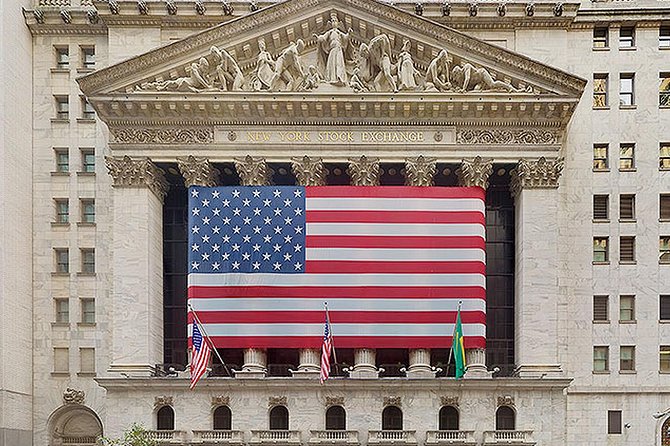
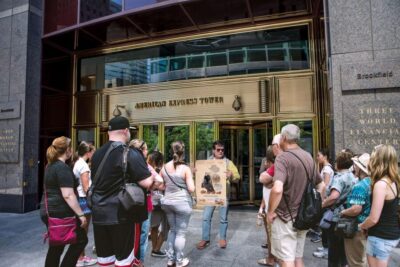
This tour is built for a simple goal: get your bearings fast, then learn how the financial world grew into what you see today. Two hours sounds short until you realize how much famous ground sits in Lower Manhattan—Federal Hall, Wall Street icons, Trinity Church, and a finish inside the National Museum of the American Indian.
What makes it work is the way the walk mixes the civic and the financial. You’re not just chasing towers and ticker symbols. You’re also stepping into places that shaped American democracy and early leadership, then snapping it to Wall Street’s rise.
And if your guide is Richard, based on past groups, you’ll likely feel the energy quickly. He’s described as funny, witty, and plugged into the financial district’s real rhythms. If you instead meet Andrew, he’s been praised for a strong, high-energy explanation style. Either way, the point is the same: you’re getting a human guide who can connect the dots without making it feel like a lecture.
From 20 Dey St to Battery Pl: Walking the Financial District’s Best Shortcut
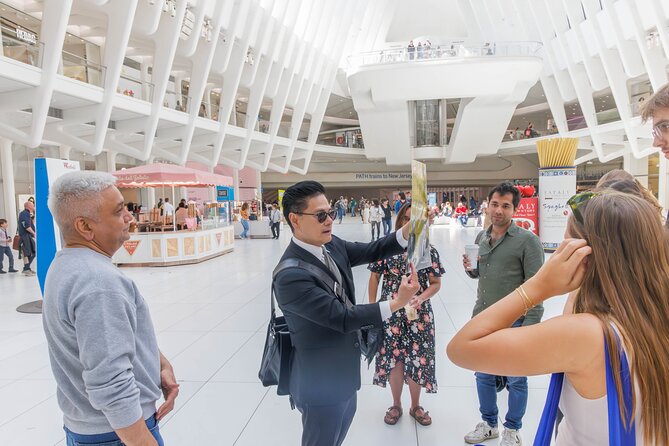
The tour starts at 20 Dey St and ends near Citi Bike at Broadway & Battery Place. That matters because this area is tight and layered: buildings, plazas, and churches packed into a small space. When you walk it solo, you often end up circling the obvious sights and missing the “why.”
Here, the route is shaped like a story. You start lower and move through the heart of the financial district, hitting major landmarks in an order that helps you understand what you’re seeing. It’s also a practical way to fit this into your trip: start mid-afternoon and still have time afterward to explore farther down or head uptown.
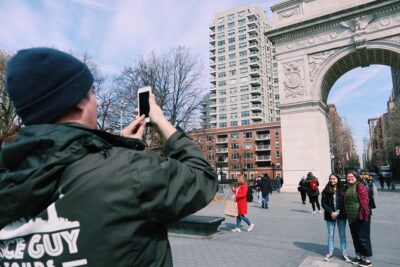
You’ll want to show up with a little stamina. Lower Manhattan sidewalks can feel crowded, and the tour keeps a brisk pace. The good part is that the guide builds in stops so you can actually take photos and ask questions.
Federal Hall: Where Washington Took the Oath and Democracy Got Its Start
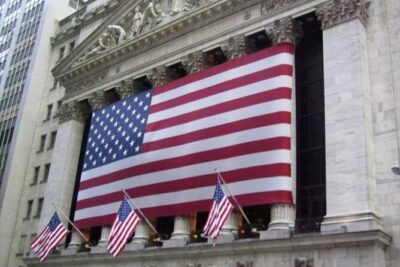
The tour begins by framing Wall Street as the “financial capital,” but the first big emotional anchor is Federal Hall. You’re not just hearing political trivia; you’re standing in a place tied to the birthplace of American democracy.
This is where you learn how the story of the U.S. intersects with commerce. You’ll hear about George Washington taking the oath as the first American President. That civic moment becomes a contrast to what comes later—finance, banking power, and the personalities who shaped the money landscape.
Then you also get the “Wall Street side” of the neighborhood. The tour connects the buildings and statues to the broader rise of institutions, including the New York Stock Exchange origins and how it grew into the world’s largest exchange, described as valued around $20 trillion.
Why it’s valuable: it makes Wall Street feel less like a random cluster of skyscrapers and more like an extension of the country’s early structure—politics creating rules, and finance growing under them.
New York City at street level, a few more walks


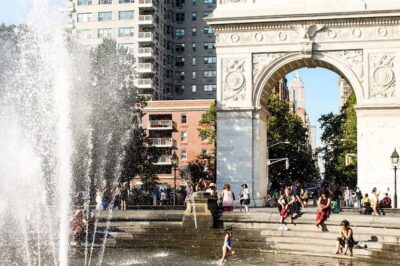
Rockefeller to Buffett: The Wall Street Story Without the Jargon Spiral
A big reason people love this tour is the cast of characters. You’ll hear about the drive and fallout behind major wealth builders, with the guide connecting the dots from Rockefeller to Buffett.
The tour highlights Standard Oil and the fact it became an illegal monopoly, then shifts to the more modern success story of Warren Buffett, including how he went from a paperboy to founding Berkshire Hathaway. Even if finance isn’t your thing, these aren’t presented like dry corporate biographies. They’re delivered as cause-and-effect stories.
This is also where the tour’s “extra-large visuals” help. When you’re looking at historic sites while hearing names and timelines, it’s easy to lose the thread. Large visuals keep the narrative anchored so you can follow the logic instead of just collecting facts.
Potential drawback: this part is where finance talk is most present. If you’re sensitive to business terminology, I’d treat this section like a history lesson you didn’t know you wanted. You don’t have to understand everything to leave with a clearer picture of how Wall Street power works.
Fearless Girl and Charging Bull: Modern Symbols With a Real Message
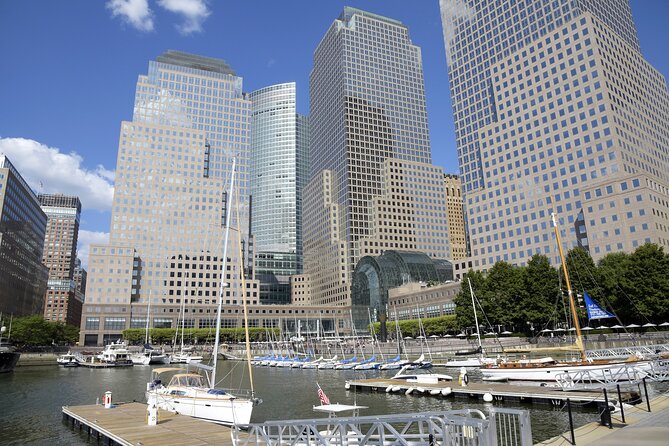
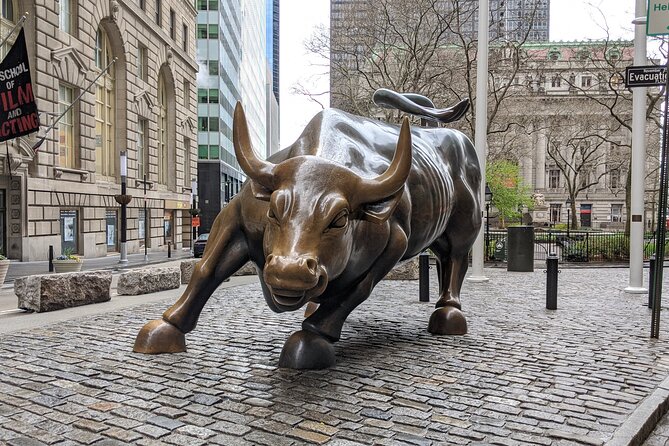
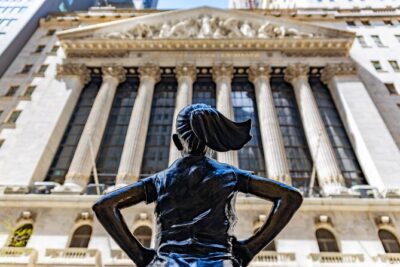
After the civic foundation, the tour moves into Wall Street’s most recognizable modern imagery: Fearless Girl and the Charging Bull. These statues are easy to spot on your own—but the guide’s value is in explaining why they matter and how they fit the broader Wall Street mindset.
Fearless Girl is often shared as a quick photo stop, but here you get context that turns the pose into a conversation about power and public messaging. Charging Bull, meanwhile, is the blunt symbol of aggressive confidence. Together, they bookend a question: what does the financial world reward, and what does it project?
If you’re the type who only takes photos and moves on, you’ll still enjoy the statue stops. But if you want meaning, this is one of the most satisfying sections. You leave with an interpretation you can actually carry around when you see other corporate symbols later.
Trinity Church: Hamilton and Fulton’s Final Resting Places
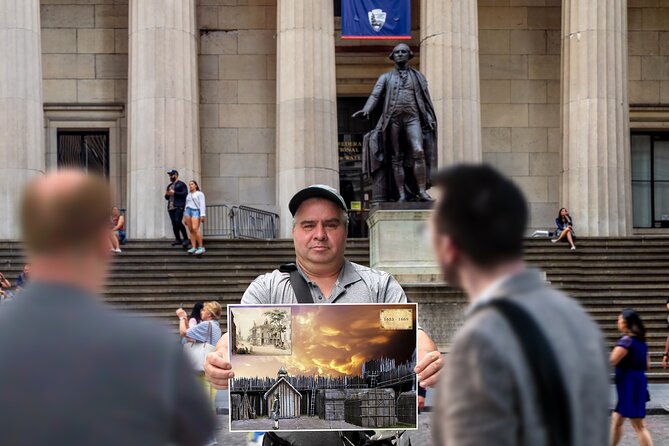
Next comes a stop that connects finance to the nation’s early builders: Trinity Church. You’ll visit the final resting places of Alexander Hamilton and Robert Fulton.
That pairing is smart. Hamilton sits in the national finance orbit—banking, financial systems, and early economic policy. Fulton is the inventor side, tied to innovation and the growth of new industries. Together, you get a sense of how the early U.S. leaned on both systems and invention.
For me, this church stop is a reminder that the financial district’s story isn’t only about markets. It’s also about people who helped create the country’s direction. When you’re walking among modern banks, it’s grounding to step into a place tied to the roots.
Watch for your attention to drift here if you’re already tired. It’s not a long detour, but it’s the kind of stop that rewards even a little quiet listening.
Ending Inside the National Museum of the American Indian and the Madoff Link
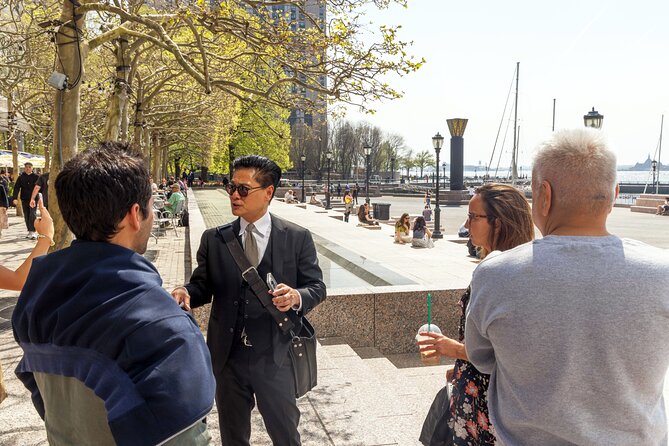
The tour finishes inside the National Museum of the American Indian. That’s not just a convenient ending—it’s a strong narrative close.
Inside this landmark building is the U.S. bankruptcy court of New York, where the Bernie Madoff case was heard. That detail changes the emotional tone. You go from learning about legendary wealth and institutional growth to understanding how the justice system catches up with fraud and collapse.
Why this ending works: it keeps your Wall Street takeaway balanced. It’s not only winners and ambition. It’s also consequences. The museum setting also gives you a chance to shift from street-level stories to a broader cultural space right at the end.
One practical note: because the finish is inside a major public building, expect that the last stretch can feel a little different than the outdoor photo stops. Build in a little extra patience for that transition.
Optional Statue of Liberty and Ellis Island Upgrade: What You Gain

If you want to extend the day, there’s a Statue of Liberty upgrade that adds general admission to the Statue of Liberty and Ellis Island. Your guide presents your tickets at the end of the tour, which keeps everything simple—you don’t have to worry about juggling paper or separate check-in instructions mid-walk.
This option includes details that matter on a real trip:
- Ferries have accommodations for inside or outside seating
- The experience is described as wheelchair accessible
- On Liberty Island, there are free headset options for self-guided tours
- Ellis Island access is included, with immigration artifacts from 1892 and 1954
- There are concessions and souvenirs on board the ferries
Here’s why the upgrade pairs so well with the Wall Street walk: you shift from finance and power to immigration and identity. Liberty and Ellis Island are about people arriving, chasing safety and opportunity—often the same kinds of hopes that drive later economic ambition. It’s a different angle on “why America grows,” and it’s a memorable contrast.
If you dislike long lines or want maximum control over pacing, this add-on can feel like a full extra day segment. But if you like structured experiences that still give you flexibility on-site via headsets, it’s a strong follow-up.
Price Check: Is $34.95 Actually Good Value?

At $34.95 per person for about two hours, the value comes from what you’re buying, not what you’re just walking past. You’re paying for a licensed professional guide, narrated route, and extra-large visuals that help you connect landmarks to stories. You’re also paying for the small-group setup—maximum 15 travelers—which tends to make questions easier and group energy better.
If you tried to DIY Lower Manhattan with a phone map, you’d likely hit many of the same places. But DIY doesn’t replace: (1) context for Washington’s oath at Federal Hall, (2) the Rockefeller-to-Buffett chain of power and policy, (3) the meaning behind Fearless Girl and Charging Bull, and (4) the Madoff bankruptcy-court connection at the museum.
Also, this is a tour format that works for first-time NYC visits. You’re getting a concentrated sense of how the city’s financial engine sits inside the larger story of the U.S.
Tip costs are separate. The tour notes that gratuities are welcomed—if you had a great guide, tipping is the normal move.
Who Should Book This Wall Street Tour (and Who Might Skip It)
This tour fits best if you want:
- A fast, organized introduction to Lower Manhattan’s financial district
- History mixed with personalities, not just dates
- A guide who can explain why Wall Street looks the way it does and how it got that way
- Photo stops with a bit of structure, so you don’t just wander from shot to shot
It also works surprisingly well if you don’t know finance. The guide’s job here is translation, and the feedback you’ll see for this tour tends to emphasize how it keeps teens and non-finance adults engaged. You don’t have to be an investor to enjoy how institutions form and how power shifts.
You might consider skipping or adjusting expectations if:
- You want a slow, quiet architecture-only walk
- You’re uninterested in business and American finance themes
- You’re easily overwhelmed by fast-paced narration in crowded areas
Should You Book This Wall Street Tour?
Yes, if you’re doing New York with limited time and you want your Wall Street visit to feel meaningful. For the money, you get a strong mix of major landmarks, story-driven context, and a small-group vibe that makes it easier to ask questions.
Book it especially if you like explanations you can remember, not just sightseeing you can scroll past. And if you’re tempted by the upgrade, it’s a nice way to add a second chapter: Liberty and Ellis Island after Wall Street.
If you want a Wall Street tour that connects the past to the present without getting lost in jargon, this one makes a lot of sense.
FAQ
How long is the Wall Street and Financial District Walking Tour?
It’s about 2 hours.
What is the tour price?
The price is $34.95 per person.
Where do I meet the tour guide?
The start meeting point is 20 Dey St, New York, NY 10007.
Where does the tour end?
The tour ends near Citi Bike at Broadway & Battery Pl, New York, NY 10004.
What time does the tour start?
The start time is 2:30 pm.
Is this tour offered in English?
Yes, it’s offered in English.
What’s included in the price?
It includes a narrated 2-hour walking tour using extra large visuals and a licensed professional tour guide.
What is not included?
Gratuities are welcomed and appreciated, and the tour description doesn’t list any other items as included.
Is there a max group size?
Yes. The tour/activity has a maximum of 15 travelers.
Is the Statue of Liberty and Ellis Island upgrade wheelchair accessible?
The Liberty upgrade is described as wheelchair accessible, and it includes access to both Liberty Island and Ellis Island.
More Tour Reviews in New York City
- NYC: SUMMIT One Vanderbilt Tickets★ 4.7 · 51,195 reviews
- NYC: Empire State Building Tickets – Observatory & Museum★ 4.7 · 25,757 reviews
- New York City: Statue of Liberty & Ellis Island with Ferry★ 4.6 · 18,683 reviews
- New York City: American Museum of Natural History Ticket★ 4.5 · 15,447 reviews
- Statue of Liberty and Ellis Island Tour: All Options★ 5.0 · 13,571 reviews
New York City, One Block at a Time
- SoHo, Little Italy, and Chinatown Walking Tour in New York★ 5.0 · 3,153 reviews
- Secrets of Grand Central Station Walking Tour New York City★ 5.0 · 1,796 reviews
- Greenwich Village Walking and Food Tasting Tour★ 5.0 · 1,572 reviews
- Artistic, Alternative Greenwich Village Walking Tour★ 5.0 · 971 reviews
- Brooklyn Bridge & DUMBO Neighborhood Tour – from Manhattan to Brooklyn★ 5.0 · 826 reviews
Where Wall Street Was Built
- NYC City Tour: Statue of Liberty, 9/11 Memorial, Wall Street★ 4.5 · 2,059 reviews
- Wall Street Insider Tour with a Finance Professional★ 4.5 · 660 reviews
- Wall Street Insider Tour with a Finance Professional★ 4.5 · 571 reviews
- Manhattan Group Tour Including Wall Street and 911 Memorial★ 5.0 · 408 reviews
- Private New York Tour: Footsteps of Alexander Hamilton★ 5.0 · 402 reviews
Just in: the newest New York City reviews on our desk



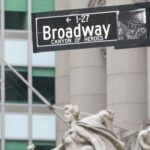

Wall Street & Financial District Tours, compared.
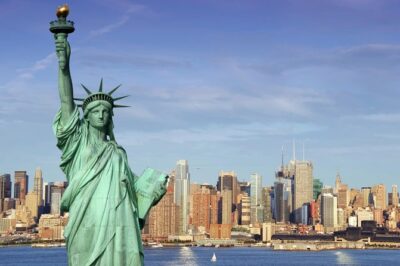 ★ 4.5NYC City Tour: Statue of Liberty, 9/11 Memorial, Wall StreetFrom $392,059 reviews
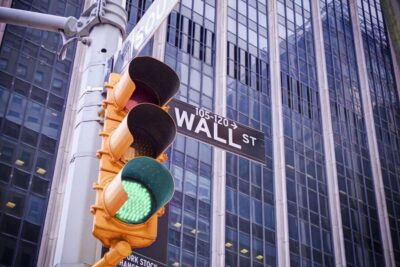 ★ 4.5Wall Street Insider Tour with a Finance ProfessionalFrom $39660 reviews
★ 4.5Wall Street Insider Tour with a Finance ProfessionalFrom $39571 reviews
★ 4.5Wall Street Insider Tour with a Finance ProfessionalFrom $39660 reviews
★ 4.5Wall Street Insider Tour with a Finance ProfessionalFrom $39571 reviews
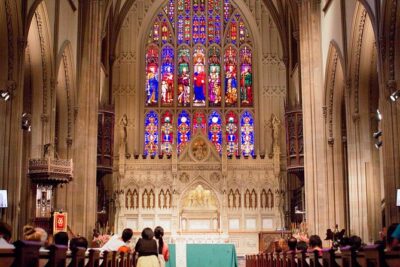 ★ 5.0Manhattan Group Tour Including Wall Street and 911 MemorialFrom $39408 reviews
 ★ 5.0Private New York Tour: Footsteps of Alexander HamiltonFrom $60402 reviews
 ★ 4.6Wall Street Tour with 9/11 Memorial and Statue FerryFrom $39367 reviews
 ★ 4.9Wall Street and Financial District Walking TourFrom $34284 reviews
 ★ 5.0How Money Was Made Wall Street Walking TourFrom $49185 reviews
Browse the lists this tour appears in