
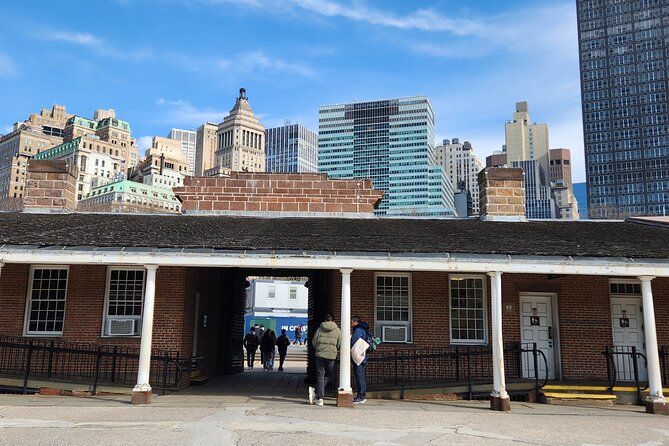
Reviewed · WALL STREET & FINANCIAL DISTRICT TOURS
Unexpected Wall Street Walking Tour
New York’s past is right on the sidewalk. This Unexpected Wall Street walk strings together Lower Manhattan’s earliest layers—plus the stuff you’d miss if you only followed guidebook highlights.
I like that this tour mixes street-level wandering with real explanations, from archaeology near the South Ferry area to the stories around today’s business skyline. The guide, Suzanne (you may also see her listed as Ms. Reisman in feedback), brings a steady sense of humor and turns “quick stops” into real understanding.
One thing to consider: it’s outdoors and weather-dependent, so you’ll want a plan for cool wind around the waterfront and a decent walking pace.
In This Review
- Key reasons this tour works so well
- Trading the skyline for the shoreline edge
- What you’ll do (and what each stop is really for)
- Stop 1: South Ferry / Terminal — archaeology and art under your feet
- Stop 2: Battery Park — small detours with big context
- Stop 3: Bowling Green, New York — a named place with multiple eras
- Stop 4: Wall Street — history between the famous corners
- Stop 5: Stone Street — cobblestones, fires, and an archaeological stop
- Stop 6: Fraunces Tavern Museum — your optional next step
- Why the small-group size changes the whole experience
- Price and value: $45 for interpretation, not just walking
- Best day and how to prepare
- Who should book this tour
- Is it worth it for a first-timer to NYC?
- Should you book this Unexpected Wall Street walking tour?
- FAQ
- How long is the Unexpected Wall Street walking tour?
- Where does the tour start?
- Where does the tour end?
- How much does it cost?
- What is included in the price?
- What is not included?
- What language is the tour offered in?
- How many people are in the group?
- Do I need an admission ticket for the stops?
- Is there a mobile ticket?
- What happens if the weather is bad?
Key reasons this tour works so well
- Small group size (max 15) keeps the pace human and questions welcome
- Local, walking-based context beats reading plaques on your own
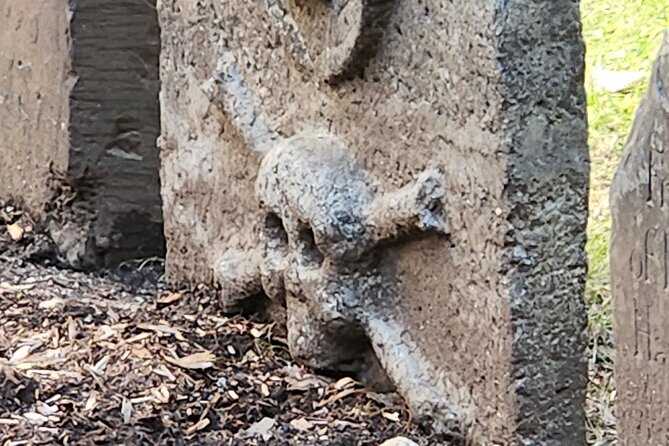
- Lower Manhattan’s layered geography comes to life, from shoreline changes to early settlements
- Focused route choices hit South Ferry, Battery Park, Bowling Green, Wall Street, Stone Street, and Fraunces Tavern
- Ends at Fraunces Tavern so you can extend the visit if you want
More history where the money moves
- NYC City Tour: Statue of Liberty, 9/11 Memorial, Wall Street
★ 4.5 · 2,059 reviews - Wall Street Insider Tour with a Finance Professional
★ 4.5 · 660 reviews - Wall Street Insider Tour with a Finance Professional
★ 4.5 · 571 reviews - Manhattan Group Tour Including Wall Street and 911 Memorial
★ 5.0 · 408 reviews
Trading the skyline for the shoreline edge
Wall Street looks like one thing from far away: glass, money, speed. Up close, it’s a different story. This tour pulls you away from the “canyon of corporations” vibe and back toward the coastline, the early streets, and the people who built the island before it looked like today’s map.
The guide keeps the walk moving, but not rushed. You’re not stuck in one lecture spot. Instead, you learn as you pass places—subway stations, parks, named streets, and that distinctive Lower Manhattan mix of old stone and newer street design. That method is the whole point. When you see a place from street level, you can actually picture what changed and why.
And at $45 for about 2 hours 15 minutes, you’re paying for time and interpretation. The route is free to access, but the value is in the guide’s “why this matters” framing: what happened here, what’s still visible, and what’s hiding in plain sight.
What you’ll do (and what each stop is really for)
This is a straightforward, easy-to-follow route through Lower Manhattan. It starts near South Ferry and works east and inland until it finishes outside Fraunces Tavern Museum at 54 Pearl St.
Stop 1: South Ferry / Terminal — archaeology and art under your feet
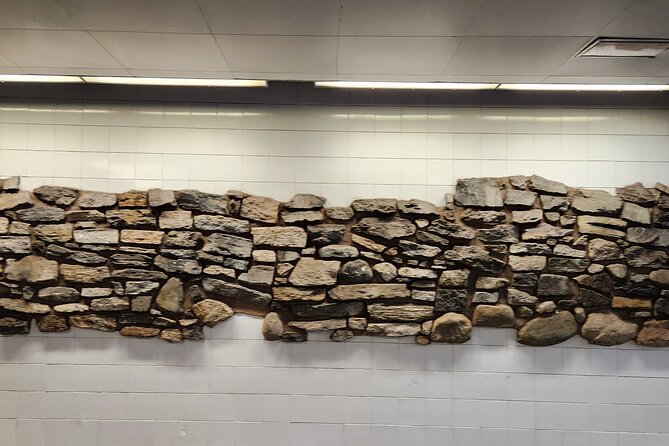
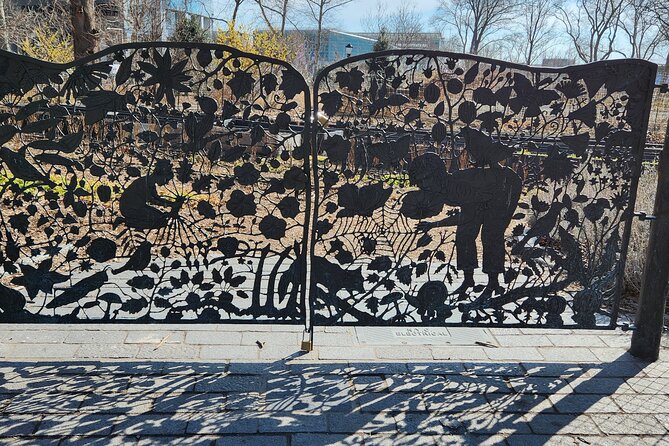
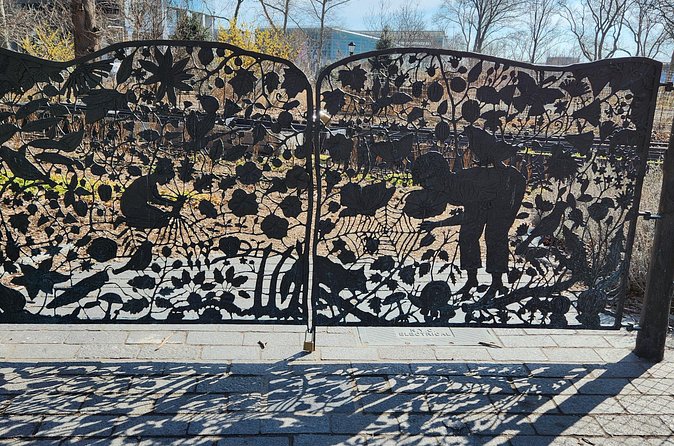
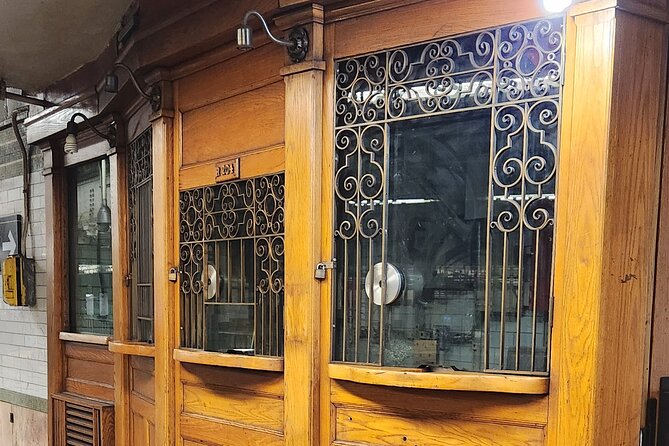
You begin at South Ferry/Terminal (South Ferry subway station area). This first stop sets the tone: you’re not just learning “Wall Street facts.” You’re learning how the waterfront area was shaped and how history can show up in unexpected ways—through archaeology and even the art connected to the area.
Why this matters: South Ferry is a natural anchor. It’s close to where you’d expect older New York to start, but the tour helps you connect that geography to what came next. You’re basically building a mental map before the walk turns into named streets and big financial landmarks.
Practical note: this part is about a 10-minute stop, and the ticket is free. You’ll get enough context to understand what you’ll see later rather than feeling like you’re arriving mid-story.
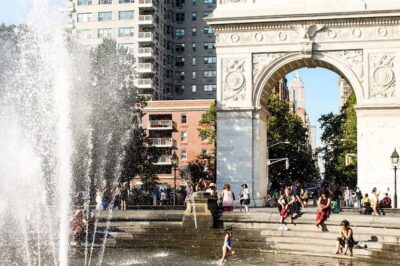
New York City at street level, a few more walks


Stop 2: Battery Park — small detours with big context
From South Ferry, you head toward Battery Park with several stops along the way. You’ll also spend time directly in the park.
Battery Park is one of those areas people pass through without thinking too hard. Here, you’ll treat it like a living timeline. The walk includes multiple “look here, notice that” moments. That’s useful because Lower Manhattan’s layers don’t sit politely in one obvious museum display. They’re scattered across streetscape, infrastructure, and the way the shoreline and districts relate to each other.
The upside: this is a good momentum builder. After the South Ferry setup, you’ll start seeing how the city’s early environment connects to later development.
The drawback: since you’re doing several brief moments here, keep your phone handy for notes, not just photos. If you want to remember the storyline, jot down what the guide points out while you’re still near it.
Stop 3: Bowling Green, New York — a named place with multiple eras
Next comes Bowling Green. This stop includes time for a discussion of what happened here, plus a visit connected to the subway station area.
Bowling Green is one of those names that sounds historic even if you don’t know the details. The tour gives you the details—enough to feel like the area has a past that’s more specific than “early New York.” You also get to connect the place to movement: subway access, street-level layout, and how people navigate this part of Lower Manhattan now versus back then.
Why it’s valuable: Bowling Green helps you connect the “geography story” from the waterfront to the “social and political story” of the city center. Once you understand that link, Wall Street stops feeling like it arrived out of nowhere.
Stop 4: Wall Street — history between the famous corners
Between Bowling Green and Wall Street, you’ll make a few additional stops. The guide discusses the sites, people, exciting events, and history that shaped what became Wall Street’s identity.
This is where the tour earns its name. You’re not just seeing the street; you’re learning the human sequence behind the street. One of the highlights from real feedback is how the walk covers New York’s shift from the edge of the island—toward places built on landfill—through areas associated with major modern-day pedestrian routes, before arriving at Wall Street proper.
If you love the “how did we get here” angle, this is your moment. You’ll also get humor along the way, which helps the long arc of time feel easier to follow.
What to watch for: the street is busy. The guide manages timing, but you should still keep your head up and your steps careful. This is a walking tour first, not a stop-at-one-spot museum visit.
Stop 5: Stone Street — cobblestones, fires, and an archaeological stop
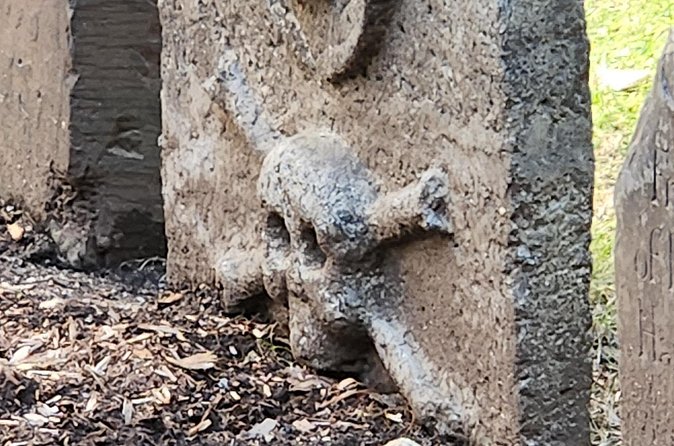
After Wall Street, the tour moves to Stone Street. You’ll hear the history of the cobblestones and fires connected to the area, then the group heads to an important archaeological site.
Stone Street is one of those streets that already looks like it belongs to the past. The value here is that the guide doesn’t treat it like a decorative postcard. You’ll learn what the cobbles mean and why fires matter for understanding how cities lived and rebuilt.
The archaeology piece is also key. It adds a layer that can’t be seen just by reading a sign. Even if you’ve visited New York before, you may not have thought about how the ground itself can store the story.
Practical tip: cobbled areas can be uneven. Wear shoes that handle rough pavement comfortably.
Stop 6: Fraunces Tavern Museum — your optional next step
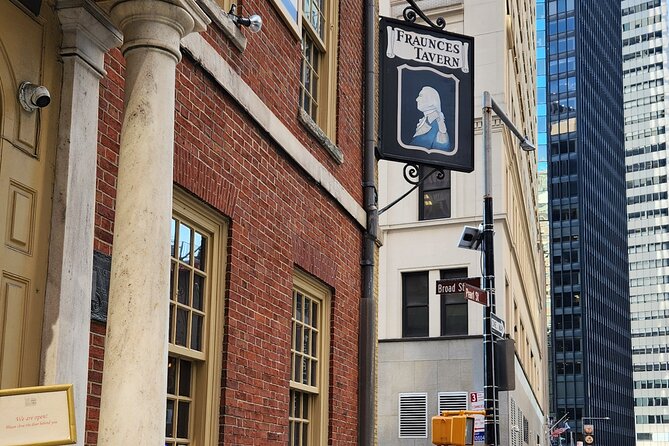
The tour wraps up outside Fraunces Tavern Museum on 54 Pearl St. You’re right where you can either continue on your own (if the museum interests you) or head back toward South Ferry.
The end point is smart. You get a natural “finish line” at a historic location. And because the museum admission isn’t included, you control how far you want to go. If you’re museum-curious, you can extend. If you’re just in for the walk and the street-level story, you’re done without feeling like you bought extra tickets you didn’t use.
Why the small-group size changes the whole experience
A lot of city tours feel like they’re designed for groups of strangers to shuffle politely. Here, the cap is 15 travelers, which matters more than it sounds.
With a smaller group:
- You hear details more clearly during stops.
- The guide can tailor explanations if your group has questions.
- The pacing stays calm even in crowded areas.
You’ll also feel more confident walking. When you’re learning a route through busy streets, it helps to know the group will move together and the guide will point out what to notice.
And for families, this setup can work well too. One piece of feedback mentioned that a teen and a younger kid enjoyed the tour as much as the adults did. That doesn’t mean it’s a kids-only thing. It just means the guide keeps the storytelling human, not robotic.
Price and value: $45 for interpretation, not just walking
At $45 per person, this isn’t a bargain tour, but it is a fair one if you’re the type of person who wants context.
Here’s how I see the value:
- The route uses public areas, so what you’re really buying is time + guidance.
- The stops focus on historical themes you might not piece together independently.
- The itinerary connects waterfront, street layout, key historic points, and archaeology so the story stays coherent.
If you plan to spend a day hopping between famous sites, you might think you can do it yourself. You can. But the gap is what you’d miss: the “why this exact stop” explanations and the way the guide links events across time while you’re standing in front of the modern street.
Best day and how to prepare
This experience requires good weather. That doesn’t mean you need sunshine perfection. It just means you’re outdoors for a meaningful stretch. If the forecast looks grim, consider waiting.
Preparation that pays off:
- Wear comfortable shoes with grip for cobbled or uneven spots.
- Bring water, since bottled water is not included.
- Use the mobile ticket on your phone.
- Have your subway plan handy. It’s near public transportation, and the guide can help with direction to the nearest subway station.
Who should book this tour
Book this if you like:
- Early New York history grounded in real places
- “Hidden in plain sight” stories you can verify by looking around
- A guide who uses humor to keep long timelines from feeling heavy
- A route that’s compact but well-connected
You might skip it if:
- You prefer very long, museum-style stays rather than a walking format
- You want a strictly modern Wall Street focus rather than the earlier layers beneath it
- Weather is poor and you know you won’t enjoy walking outdoors
Is it worth it for a first-timer to NYC?
If it’s your first visit and you only have so much time in Lower Manhattan, I think this is a strong choice. It gives you a map of meaning: you learn how South Ferry and Battery Park relate to what becomes the center of commerce.
If you’re returning to NYC, it’s still useful. One review described the surprise of learning backstory in areas they thought they already knew well. That’s the power here: you’re not chasing famous monuments. You’re learning the logic behind the district.
Should you book this Unexpected Wall Street walking tour?
I’d book it if you want more than photos of Wall Street. You’ll leave with a clearer sense of how the city’s coastline and early spaces connect to modern street names and major landmarks.
It’s also a good pick when you want a group format without feeling trapped. With max 15 travelers, the tour stays personal enough to feel like a guided walk with explanations, not a mass activity.
If your main goal is quick sightseeing and you don’t care about history details, you might feel this is too much story for your taste. But if you enjoy piecing together how New York became New York, this one is built for you.
FAQ
How long is the Unexpected Wall Street walking tour?
It lasts about 2 hours 15 minutes.
Where does the tour start?
The tour starts at South Ferry/Terminal, New York, NY 10004, USA.
Where does the tour end?
It ends at 54 Pearl St, New York, NY 10004, outside Fraunces Tavern Museum.
How much does it cost?
The price is $45.00 per person.
What is included in the price?
The walking tour and the guide are included.
What is not included?
Bottled water is not included, and museum admission at Fraunces Tavern Museum is not included.
What language is the tour offered in?
The tour is offered in English.
How many people are in the group?
The tour has a maximum of 15 travelers.
Do I need an admission ticket for the stops?
The tour description lists admission tickets for the stops as free. The Fraunces Tavern Museum visit after the tour would require separate admission.
Is there a mobile ticket?
Yes, the tour uses a mobile ticket.
What happens if the weather is bad?
This experience requires good weather. If it’s canceled due to poor weather, you’ll be offered a different date or a full refund.
More Tour Reviews in New York City
- NYC: SUMMIT One Vanderbilt Tickets★ 4.7 · 51,195 reviews
- NYC: Empire State Building Tickets – Observatory & Museum★ 4.7 · 25,757 reviews
- New York City: Statue of Liberty & Ellis Island with Ferry★ 4.6 · 18,683 reviews
- New York City: American Museum of Natural History Ticket★ 4.5 · 15,447 reviews
- Statue of Liberty and Ellis Island Tour: All Options★ 5.0 · 13,571 reviews
New York City, One Block at a Time
- SoHo, Little Italy, and Chinatown Walking Tour in New York★ 5.0 · 3,153 reviews
- Secrets of Grand Central Station Walking Tour New York City★ 5.0 · 1,796 reviews
- Greenwich Village Walking and Food Tasting Tour★ 5.0 · 1,572 reviews
- Artistic, Alternative Greenwich Village Walking Tour★ 5.0 · 971 reviews
- Brooklyn Bridge & DUMBO Neighborhood Tour – from Manhattan to Brooklyn★ 5.0 · 826 reviews
Where Wall Street Was Built
- NYC City Tour: Statue of Liberty, 9/11 Memorial, Wall Street★ 4.5 · 2,059 reviews
- Wall Street Insider Tour with a Finance Professional★ 4.5 · 660 reviews
- Wall Street Insider Tour with a Finance Professional★ 4.5 · 571 reviews
- Manhattan Group Tour Including Wall Street and 911 Memorial★ 5.0 · 408 reviews
- Private New York Tour: Footsteps of Alexander Hamilton★ 5.0 · 402 reviews
Just in: the newest New York City reviews on our desk





Wall Street & Financial District Tours, compared.
 ★ 4.5NYC City Tour: Statue of Liberty, 9/11 Memorial, Wall StreetFrom $392,059 reviews
 ★ 4.5Wall Street Insider Tour with a Finance ProfessionalFrom $39660 reviews
★ 4.5Wall Street Insider Tour with a Finance ProfessionalFrom $39571 reviews
★ 4.5Wall Street Insider Tour with a Finance ProfessionalFrom $39660 reviews
★ 4.5Wall Street Insider Tour with a Finance ProfessionalFrom $39571 reviews
 ★ 5.0Manhattan Group Tour Including Wall Street and 911 MemorialFrom $39408 reviews
 ★ 5.0Private New York Tour: Footsteps of Alexander HamiltonFrom $60402 reviews
 ★ 4.6Wall Street Tour with 9/11 Memorial and Statue FerryFrom $39367 reviews
 ★ 4.9Wall Street and Financial District Walking TourFrom $34284 reviews
 ★ 5.0How Money Was Made Wall Street Walking TourFrom $49185 reviews
Browse the lists this tour appears in