
Reviewed · WALL STREET & FINANCIAL DISTRICT TOURS
Wall Street and Lower Manhattan, New York History Walking Tour
Wall Street has a backstory you can walk. I love how this tour connects big-name finance with the oldest park and even the first paved street you’ll see right in Lower Manhattan. You also get stops tied to core turning points, from the Dutch era through early America and into the stock world.
One consideration: it’s a street-level walk with short stops, so it moves at a good pace and depends on good weather.
Key moments you’ll remember
- Peter Minuit’s Manhattan deal at Battery Park, told through the $24-in-beads legend
- Bowling Green’s 1773 fence in the city’s oldest park
- Wall Street’s name origin plus the view down the corridor of finance
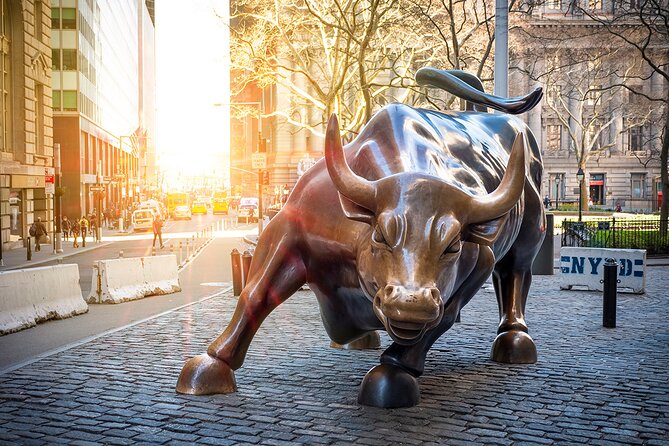
- Charging Bull and the Fearless Girl story, including why it sparked debate
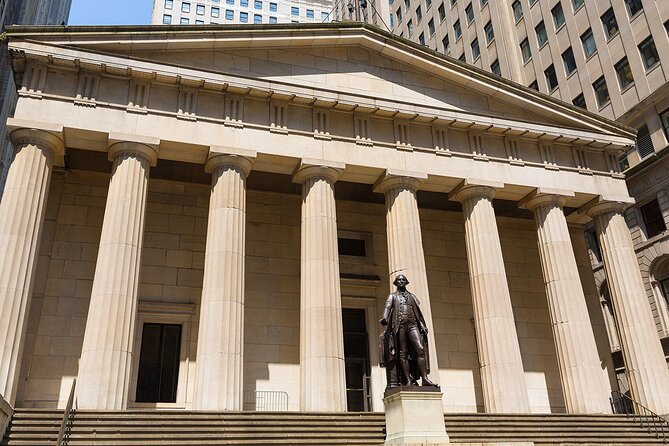
- Federal Hall and George Washington’s oath at the first U.S. capital site
- Fraunces Tavern Museum, ending at New York’s oldest tavern
In This Review
- Why This Wall Street Walk Feels Like Real City History
- Price and Timing: $30 for a Tight Two-Hour History Circuit
- Battery Park: Peter Minuit and the Beads That Started It All
- Alexander Hamilton U.S. Custom House: Dutch Fort to British Hands
- Bowling Green and the Charging Bull Moment
- Alexander Hamilton’s Gravesite and Wall Street’s Name
- New York Stock Exchange and Federal Hall: From Trading Floors to First Capitols
- Federal Reserve Bank of New York: Gold Underfoot and Money in Motion
- Stone Street and Portal Down: The First Paved Street and the Town Under the Town
- Fraunces Tavern Museum: Ending at New York’s Oldest Tavern
- Is It Worth It for You? Book or Skip
- FAQ
- How long is the Wall Street and Lower Manhattan history walking tour?
- What does the tour cost?
- Where does the tour meet?
- Is the ticket mobile?
- How many people are in a group?
- Are there admission fees for the stops?
- What happens if the weather is bad?
- Is free cancellation available?
- Are service animals allowed?
Why This Wall Street Walk Feels Like Real City History
Lower Manhattan is where New York lays its cards on the table. One block you’re staring at modern money symbols, and the next block you’re hearing about earlier New York—Dutch forts, British transitions, early U.S. capitals, and the people who shaped the story.
What makes this tour work is the mix of famous landmarks and “how we got here” explanations. You pass iconic spots like the New York Stock Exchange and Charging Bull, but you’re also meant to understand why those places exist where they do. It’s not just facts on signs. It’s the chain of events that turns a port town into a global financial center.
And the group size matters. With a maximum of 10, you’re not stuck in a loud crowd where questions die in the noise. A smaller group also makes it easier for the guide to tailor attention if someone wants more detail.
More history where the money moves
- NYC City Tour: Statue of Liberty, 9/11 Memorial, Wall Street
★ 4.5 · 2,059 reviews - Wall Street Insider Tour with a Finance Professional
★ 4.5 · 660 reviews - Wall Street Insider Tour with a Finance Professional
★ 4.5 · 571 reviews - Manhattan Group Tour Including Wall Street and 911 Memorial
★ 5.0 · 408 reviews
Price and Timing: $30 for a Tight Two-Hour History Circuit
At $30 per person for about 2 hours, you’re paying mainly for a guided route through key sites. The stops listed are marked admission ticket free, which means you’re not paying extra just to stand and learn in the right places.
It’s also built for the reality of New York. This is Lower Manhattan—lots of street crossings, lots of foot traffic, lots of “wait, where are we?” moments. Keeping stops to short chunks helps you see more without turning the day into a half-marathon.
If you’re the type who hates rushing, this is your heads-up. The schedule is designed for walking and quick storytelling at each point. You’ll get the story beats, but you won’t be hanging around for long museum-style time at every stop.
Battery Park: Peter Minuit and the Beads That Started It All

The tour begins at 1 State St, and the first major historical anchor is Battery Park. This is where you’ll hear the story behind Peter Minuit’s famed purchase of Manhattan for $24 in beads—the legend that keeps coming up whenever New York traces its roots back to the Dutch colonial era.
Even if you’ve heard the Minuit story before, the value here is learning how early trade and land deals shaped where the city grew. It’s a reminder that the island wasn’t “New York” yet—it was a strategic piece of territory in a larger European rivalry.
What to watch for: listen for how the guide frames that moment as a starting point, not a one-off trivia fact.
Possible drawback: Battery Park can be windy and open, so come dressed for the elements since the tour is weather-dependent.
Alexander Hamilton U.S. Custom House: Dutch Fort to British Hands
Next you’ll reach the Alexander Hamilton U.S. Custom House area, where the narrative shifts from mythic purchase to recorded, physical history. You’ll encounter the site connection to a fort in 1625, and you’ll hear about how control passed from the Dutch to the British—a theme that keeps repeating across Lower Manhattan’s timeline.
The key idea you’re meant to take from this stop is layered time. Buildings here don’t replace what came before so much as sit on top of it. That’s why a guide is useful: without context, you can walk right past the spot and miss why it matters.
What to watch for: pay attention to how the guide links trading power (customs/ports) to political power (who controlled the region).
Possible drawback: this kind of historical explanation is told in a short window, so if you want to absorb slowly, keep a note app handy and save follow-up questions.
New York City at street level, a few more walks



Bowling Green and the Charging Bull Moment
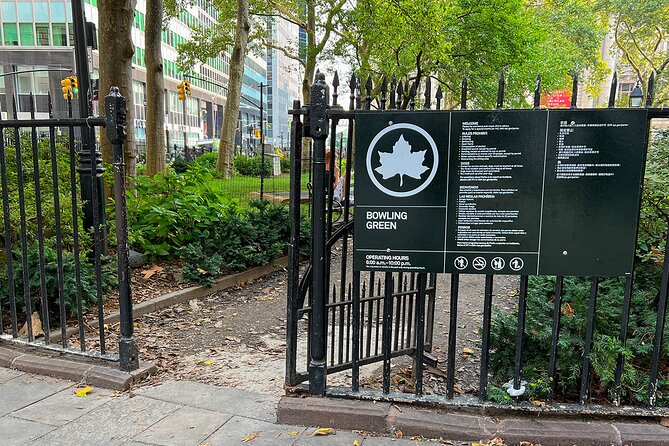
Then it’s Bowling Green, described as the city’s oldest park, including its original 1773 fence. This is one of those stops that makes you look down instead of up. The point isn’t just the age—it’s the idea that public space in New York has been shaped since the early city formed.
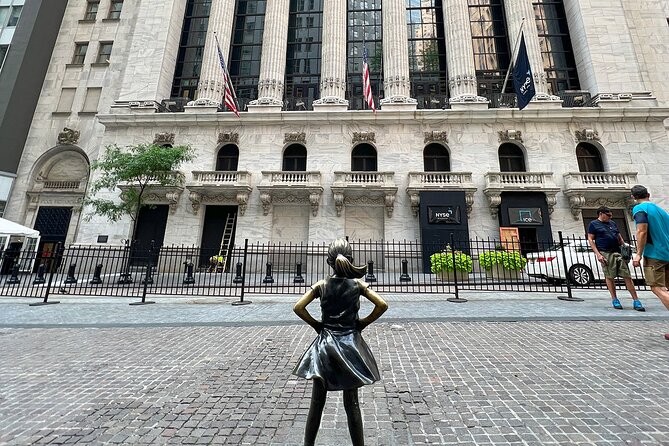
After that, you head to Charging Bull (Wall Street Bull). You’ll see it up close and get the story of the controversial Fearless Girl that came alongside it. The tour uses the statue as a shortcut into a bigger conversation: how symbols in finance can be tied to messaging, marketing, and public debate.
Why these two stops pair well: Bowling Green reminds you the city was once planned and lived-in, while Charging Bull shows how modern Wall Street uses bold imagery to project confidence and power.
Possible drawback: Charging Bull is a photo magnet, so expect a bit of crowd energy even with a small group.
Alexander Hamilton’s Gravesite and Wall Street’s Name
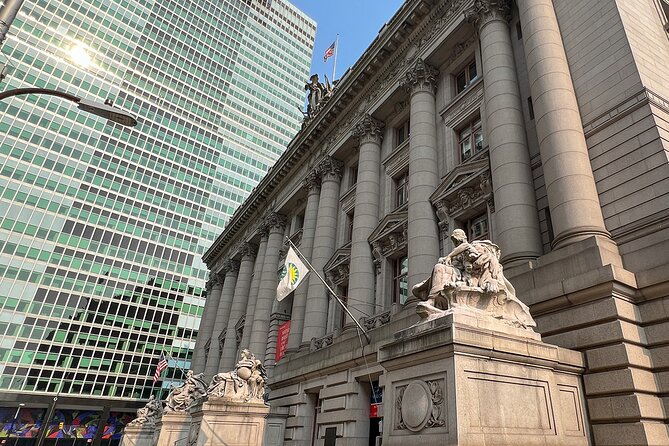
A quick but memorable stop follows at Alexander Hamilton’s gravesite. Here you’ll hear about Hamilton’s role as the first Secretary of the Treasury, and you’ll also get the story of his death in a duel with Vice President Aaron Burr.
This is where the tour stops being only about buildings. It becomes about the human stakes behind the nation’s early economic choices. Hamilton is tied directly to the financial structure of the early U.S., so this stop acts like a bridge from early America to the “money story” that Wall Street became.
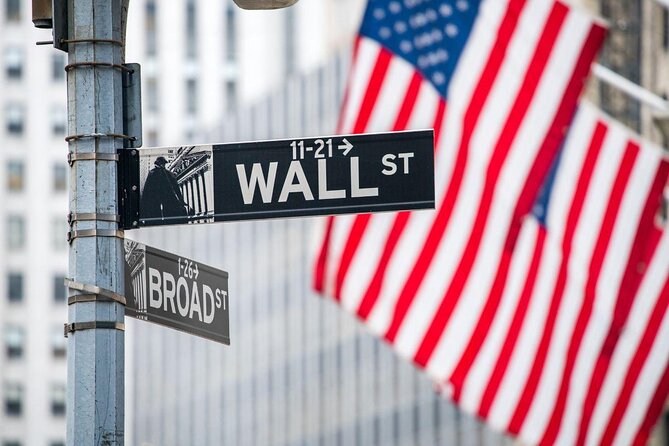
Then you move down to Wall Street itself to learn how the street got its name. It’s a small detail, but it helps you read the street as more than a set of addresses. You start to see Wall Street as an idea—built from security, commerce, and risk.
Possible drawback: Wall Street is active. Even in a two-hour tour, you’ll spend some time threading through foot traffic and street crossings.
New York Stock Exchange and Federal Hall: From Trading Floors to First Capitols
The tour takes you to the New York Stock Exchange, where you’ll see the building’s grandeur from the outside. Even if you don’t care about markets, this stop helps you understand why finance grew into a public-facing institution. The NYSE here isn’t just an office complex—it’s part of how the world recognized American capital.
From there, you move to Federal Hall, a critical landmark in the early U.S. story. This is where George Washington’s inaugural oath resounded, and it served as the country’s first capital.
That’s a powerful contrast to Wall Street: the same area of New York that would later become a symbol of private wealth once stood at the center of public authority. When you connect those dots during the walk, the geography starts to make sense.
What to watch for: in Federal Hall, listen for how early governance and economic power were intertwined.
Possible drawback: if you’re expecting a museum-like, inside-the-building experience at every stop, this tour won’t match that. Most of the learning happens in quick outdoor moments.
Federal Reserve Bank of New York: Gold Underfoot and Money in Motion
At the Federal Reserve Bank of New York, you’ll hear a striking detail: the building conceals $400 billion of gold beneath its foundations. You might not be able to see anything directly, but the point is to help you picture what’s physically backing the idea of money in a place that’s normally all screens and paperwork.
This stop is valuable because it gives you a sense of scale. People talk about finance as if it’s abstract. This turns it back into something concrete.
Why it matters to you as a visitor: it changes how you interpret the surrounding banking towers. You begin to understand that the money story is also an infrastructure story—storage, control, and the mechanics behind trust.
Possible drawback: the building area can feel tightly regulated compared with public parks or plazas, so expect to stay in the allowed viewing area.
Stone Street and Portal Down: The First Paved Street and the Town Under the Town
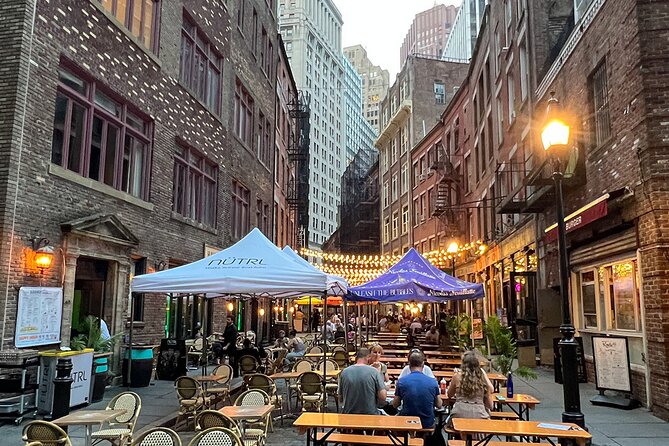
Next is Stone Street, where you’ll walk through the city’s very first paved street. This is one of those stops that shifts the tour from “history lesson” into “city experience.” You’ll see how the area supports cafes and street life now, which makes it easier to imagine daily life in earlier New York.
Then comes Portal Down to Old New York, a stop focused on physical traces. You’ll explore the footprints of a 17th-century tavern and remnants of the old City Hall of New Amsterdam. This is a great place to pay attention to how modern New York covers earlier layers without erasing them completely.
What makes these two stops special together: Stone Street shows you the survival of infrastructure (the street). Portal Down shows you the survival of memory (footprints and remnants).
Possible drawback: if you’re not comfortable standing still while stories are explained, these “look closely” stops might feel slower than you want.
Fraunces Tavern Museum: Ending at New York’s Oldest Tavern
The tour finishes at Fraunces Tavern Museum, ending at the oldest tavern in New York. Here you’ll hear about George Washington’s farewell to his officers, which gives the closing chapter a human tone after all the finance and government stops.
This ending works because it pulls the story back toward people gathering—talking, eating, making decisions, and passing along news. After two hours of names and institutions, Fraunces brings it back to social life.
What to do after the tour: if you’re curious, stick around in the area for a bit. The walk ends back at the meeting point, but you can turn this into a smooth next step—dinner, a museum visit nearby, or just more street-watching.
Is It Worth It for You? Book or Skip
I’d recommend this tour if you want a fast, guided way to understand how Lower Manhattan evolved—Dutch beginnings, British shifts, early U.S. landmarks, and the rise of Wall Street. It’s also a good value fit because the key stops are listed as admission ticket free, so your money goes to narration and routing.
It’s not ideal if your travel style is slow, deep, and museum-heavy. This is a walking circuit with short stop times, and it requires good weather. Also, if you’re extremely into stock-market mechanics, you’ll get symbols and context more than trading-floor details.
If you want a history walk that helps you see the city’s timeline instead of just reading it, this one is an easy yes—especially with a small group and a guide who’s prepared to answer questions. One standout detail from what I’ve seen highlighted: guide Tom has a way of keeping people engaged and even giving extra time when the group is smaller, which can make the whole experience feel less rushed.
FAQ
How long is the Wall Street and Lower Manhattan history walking tour?
It lasts about 2 hours.
What does the tour cost?
The price is $30.00 per person.
Where does the tour meet?
The meeting point is 1 State St, New York, NY 10004, USA.
Is the ticket mobile?
Yes, it uses a mobile ticket.
How many people are in a group?
The tour has a maximum of 10 travelers.
Are there admission fees for the stops?
The listed stops show admission ticket free.
What happens if the weather is bad?
The tour requires good weather. If it’s canceled due to poor weather, you’ll be offered a different date or a full refund.
Is free cancellation available?
Yes. You can cancel up to 24 hours in advance for a full refund.
Are service animals allowed?
Yes, service animals are allowed.
More Tour Reviews in New York City
- NYC: SUMMIT One Vanderbilt Tickets★ 4.7 · 51,195 reviews
- NYC: Empire State Building Tickets – Observatory & Museum★ 4.7 · 25,757 reviews
- New York City: Statue of Liberty & Ellis Island with Ferry★ 4.6 · 18,683 reviews
- New York City: American Museum of Natural History Ticket★ 4.5 · 15,447 reviews
- Statue of Liberty and Ellis Island Tour: All Options★ 5.0 · 13,571 reviews
New York City, One Block at a Time
- SoHo, Little Italy, and Chinatown Walking Tour in New York★ 5.0 · 3,153 reviews
- Secrets of Grand Central Station Walking Tour New York City★ 5.0 · 1,796 reviews
- Greenwich Village Walking and Food Tasting Tour★ 5.0 · 1,572 reviews
- Artistic, Alternative Greenwich Village Walking Tour★ 5.0 · 971 reviews
- Brooklyn Bridge & DUMBO Neighborhood Tour – from Manhattan to Brooklyn★ 5.0 · 826 reviews
Where Wall Street Was Built
- NYC City Tour: Statue of Liberty, 9/11 Memorial, Wall Street★ 4.5 · 2,059 reviews
- Wall Street Insider Tour with a Finance Professional★ 4.5 · 660 reviews
- Wall Street Insider Tour with a Finance Professional★ 4.5 · 571 reviews
- Manhattan Group Tour Including Wall Street and 911 Memorial★ 5.0 · 408 reviews
- Private New York Tour: Footsteps of Alexander Hamilton★ 5.0 · 402 reviews
Just in: the newest New York City reviews on our desk





Wall Street & Financial District Tours, compared.
 ★ 4.5NYC City Tour: Statue of Liberty, 9/11 Memorial, Wall StreetFrom $392,059 reviews
 ★ 4.5Wall Street Insider Tour with a Finance ProfessionalFrom $39660 reviews
★ 4.5Wall Street Insider Tour with a Finance ProfessionalFrom $39571 reviews
★ 4.5Wall Street Insider Tour with a Finance ProfessionalFrom $39660 reviews
★ 4.5Wall Street Insider Tour with a Finance ProfessionalFrom $39571 reviews
 ★ 5.0Manhattan Group Tour Including Wall Street and 911 MemorialFrom $39408 reviews
 ★ 5.0Private New York Tour: Footsteps of Alexander HamiltonFrom $60402 reviews
 ★ 4.6Wall Street Tour with 9/11 Memorial and Statue FerryFrom $39367 reviews
 ★ 4.9Wall Street and Financial District Walking TourFrom $34284 reviews
 ★ 5.0How Money Was Made Wall Street Walking TourFrom $49185 reviews
Browse the lists this tour appears in